
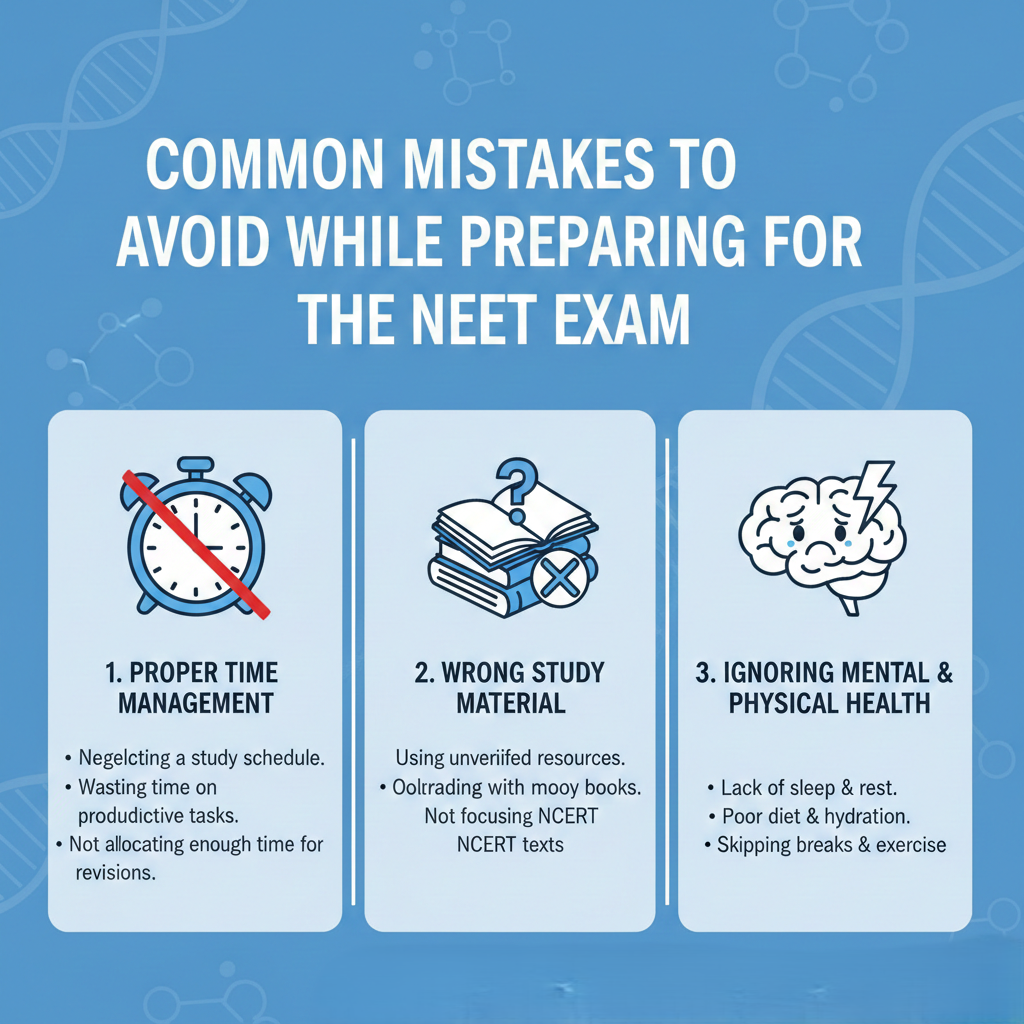

The NEET Exam is one of the toughest and most competitive entrance examinations in India. It is the gateway for admission into medical courses such as MBBS, BDS, AYUSH, and other allied health programs. Every year, more than 20 lakh students appear for the NEET Exam, but only a limited number of seats are available. Due to this intense competition, even small mistakes during preparation can significantly impact a student’s final score and rank.
Many students spend months or even years preparing for the NEET Exam 2026, yet fail to achieve their desired results. In most cases, the reason is not a lack of effort, but common preparation mistakes that go unnoticed. Understanding these mistakes early and correcting them can make a huge difference in your NEET performance.
1. Not Understanding the NEET Exam Structure Properly
One of the most basic mistakes students make is starting preparation without clearly understanding the structure of the NEET Exam. Many aspirants do not study the exam pattern, marking scheme, or subject-wise weightage in detail. The NEET Exam consists of questions from Physics, Chemistry, and Biology. Biology carries the highest weightage, followed by Chemistry and Physics. There is also negative marking, which means incorrect answers can reduce your overall score.
Without understanding these details, students often fail to prioritize subjects correctly. To avoid this mistake, it is essential to thoroughly understand the exam format before beginning preparation. This helps in planning time, effort, and focus in the right direction.
Why this is a problem:
-
Students don’t know the weightage of chapters
-
Poor time management during the exam
-
Confusion during question attempts
How to avoid it:
-
Understand total questions, marking scheme, and negative marking
-
Know section-wise distribution (Physics, Chemistry, Biology)
-
Practice mock tests based on the latest exam pattern
2. Studying Without a Clear and Realistic Study Plan
Preparing for the NEET Exam without a structured study plan is a major reason behind poor performance. Many students study randomly, choosing subjects or chapters based on convenience rather than strategy. A lack of planning leads to incomplete syllabus coverage, poor revision, and unnecessary stress during the final months. Students often realize too late that important topics are still left untouched.
A proper study plan should include daily goals, weekly targets, and time for revision. It should balance all three subjects and allow flexibility for improvement. A realistic timetable helps maintain discipline and keeps preparation on track throughout the year.
3. Ignoring NCERT Textbooks
Ignoring NCERT textbooks is one of the most serious mistakes in NEET preparation. The NEET Exam is heavily based on NCERT content, especially in Biology and Chemistry. Many questions are directly picked from NCERT lines, diagrams, and examples. Some students focus only on coaching notes or reference books, assuming NCERT is too basic. This assumption often leads to missing factual questions and simple scoring opportunities.
To avoid this mistake, NCERT books should be read multiple times, especially Biology. Every line, diagram, table, and summary should be clearly understood and revised regularly.
Why NCERT is crucial:
-
Most Biology questions are directly based on NCERT lines
-
Chemistry concepts and facts are taken from NCERT
-
Even Physics theory is aligned with NCERT basics
What you should do:
-
Read NCERT Biology line by line
-
Revise diagrams, tables, and definitions
-
Solve questions directly related to NCERT content
Using Too Many Books and Study Materials
Another common mistake is collecting too many books and resources for NEET preparation. Students often believe that studying from multiple sources will increase their knowledge, but it usually results in confusion and lack of clarity. Using too many books makes revision difficult and prevents deep understanding of concepts. Students end up spending more time switching between materials rather than actually learning.
It is better to select limited, reliable books and revise them thoroughly. Consistent revision of the same material improves retention and builds confidence, which is essential for the NEET Exam.
Common issues:
-
Information overload
-
Difficulty revising
-
Lack of clarity
Ideal method:
-
Stick to limited, trusted resources
-
NCERT + 1 reference book per subject is enough
-
Focus on revision rather than collecting materials
Avoiding Difficult Topics and Weak Subjects
Many NEET aspirants avoid subjects or chapters they find difficult, such as Physics numericals or Organic Chemistry reactions. While this may reduce stress temporarily, it negatively affects overall performance. Every subject contributes to the final NEET score. Ignoring weak areas creates gaps in preparation and reduces the chances of scoring well. Even a few unanswered questions can make a significant difference in rank.
The best approach is to identify weak topics early, break them into smaller concepts, and practice them regularly. With consistent effort, even difficult topics can become manageable.
Focusing Only on Theory and Ignoring Practice
Reading theory without practicing questions is a major mistake in NEET preparation. The NEET Exam tests not just knowledge, but also application, speed, and accuracy. Students who avoid solving questions often struggle during exams, even if they understand concepts well. Without practice, time management becomes a serious issue.
Regular practice of topic-wise questions helps reinforce concepts and improves problem-solving skills. As preparation progresses, students should also attempt full-length mock tests to simulate real exam conditions.
Skipping Previous Year Question Papers
Many students underestimate the importance of solving previous year question papers of the NEET Exam. These papers provide valuable insight into question patterns, difficulty levels, and frequently asked topics. Skipping previous year questions means missing an opportunity to understand how concepts are tested. Often, similar questions appear repeatedly with slight variations.
Solving previous year papers also helps students evaluate their preparation level and identify weak areas. It is one of the most effective tools for NEET success.
Benefits:
-
Understand question patterns
-
Identify important topics
-
Improve accuracy and speed
Recommendation:
-
Solve at least last 10 years’ NEET papers
-
Analyze recurring topics
-
Practice them thoroughly
Poor Time Management During Preparation
Time management is crucial while preparing for the NEET Exam. Many students spend too much time on one subject while neglecting others. Some focus excessively on theory and leave no time for revision or practice. Poor time management leads to incomplete preparation and unnecessary pressure as the exam approaches. Students often feel overwhelmed due to lack of balance in their study routine.
To avoid this mistake, time should be divided wisely among all subjects. Regular self-evaluation and adjustment of the study plan help maintain balance and efficiency.
Common mistakes:
-
Spending too much time on difficult questions
-
Panic in the exam hall
-
Leaving easy questions unattempted
How to improve:
-
Practice timed mock tests
-
Learn to skip tough questions initially
-
Attempt easy and moderate questions first
Neglecting Regular Revision
Revision is one of the most important aspects of NEET preparation, yet many students ignore it. Studying new topics continuously without revising older ones leads to poor retention. Without regular revision, concepts fade from memory, and confidence decreases. Students often realize this during mock tests when they fail to recall basic information.
Effective revision involves reviewing notes, formulas, diagrams, and important concepts at regular intervals. Short notes and revision schedules can make this process easier and more productive.
-
Burnout
-
Loss of concentration
-
Reduced motivation
Healthy habits:
-
Get proper sleep
-
Eat balanced meals
-
Take short breaks
-
Practice meditation or light exercise
Not Giving Enough Importance to Biology
Biology is the most scoring subject in the NEET Exam, but many students fail to utilize its full potential. Some aspirants focus more on Physics and Chemistry, assuming Biology is easy and requires less effort. This approach is risky because Biology carries the highest number of questions. Even a small improvement in Biology score can significantly boost overall rank.
Reading NCERT thoroughly, revising diagrams, and practicing objective questions are essential for strong performance in Biology.
Studying for Long Hours Without Proper Breaks
Many students believe that studying continuously for long hours will improve their chances of cracking the NEET Exam. In reality, this often leads to mental fatigue and reduced productivity.
Long study sessions without breaks decrease concentration and increase the chances of burnout. Quality of study is far more important than the number of hours spent. Taking short breaks, maintaining a healthy routine, and following a balanced schedule help sustain long-term consistency and focus.
Ignoring Physical and Mental Health
Health is often neglected during NEET preparation, but it plays a crucial role in academic performance. Lack of sleep, unhealthy eating habits, and constant stress negatively affect memory and concentration.
Students should prioritize adequate sleep, balanced nutrition, and physical activity. Maintaining mental well-being helps manage exam pressure and improves overall efficiency.
Effects:
-
Burnout
-
Loss of concentration
-
Reduced motivation
Healthy habits:
-
Get proper sleep
-
Eat balanced meals
-
Take short breaks
-
Practice meditation or light exercise
Panic and Last-Minute Strategy Changes
As the NEET Exam approaches, many students panic and change their study strategy, books, or routine. This creates confusion and reduces confidence at a critical time. Last-minute changes often lead to incomplete revision and unnecessary stress. Instead, students should focus on revising what they have already studied and trust their preparation. Staying calm and confident is essential for performing well on exam day.
Why it fails:
-
Increases anxiety
-
Leads to confusion
-
Reduces confidence
Final days strategy:
-
Focus only on revision
-
Revise formulas and key concepts
-
Avoid new study material
Also Read: How to Make Short Notes for NEET 2026 Preparation?
Conclusion
Preparing for the NEET Exam requires more than just hard work—it requires the right strategy, discipline, and awareness of common mistakes. Understanding the exam structure, following a proper study plan, focusing on NCERT, practicing regularly, and maintaining physical and mental health are key factors for success. Avoiding these common mistakes can significantly improve performance and boost confidence.
For students seeking reliable academic guidance, exam-related insights, and accurate college information, CollegeDwar aims to support aspirants throughout their educational journey. With the right approach and consistent effort, clearing the NEET Exam and achieving your medical career goals is absolutely possible.
FAQs
1. What is the biggest mistake students make in NEET preparation?
Ignoring NCERT books and not revising regularly are the biggest mistakes.
2. How many mock tests should I attempt for NEET?
You should attempt at least 30–50 full-length mock tests before the exam.
3. Is NCERT enough for the NEET Exam?
NCERT is essential and forms the base, especially for Biology and Chemistry.
4. When should I start revising for NEET?
Revision should start from the beginning of your preparation and increase as the exam approaches.
5. Can avoiding common mistakes really improve NEET rank?
Yes, avoiding mistakes helps improve accuracy, confidence, and overall performance.