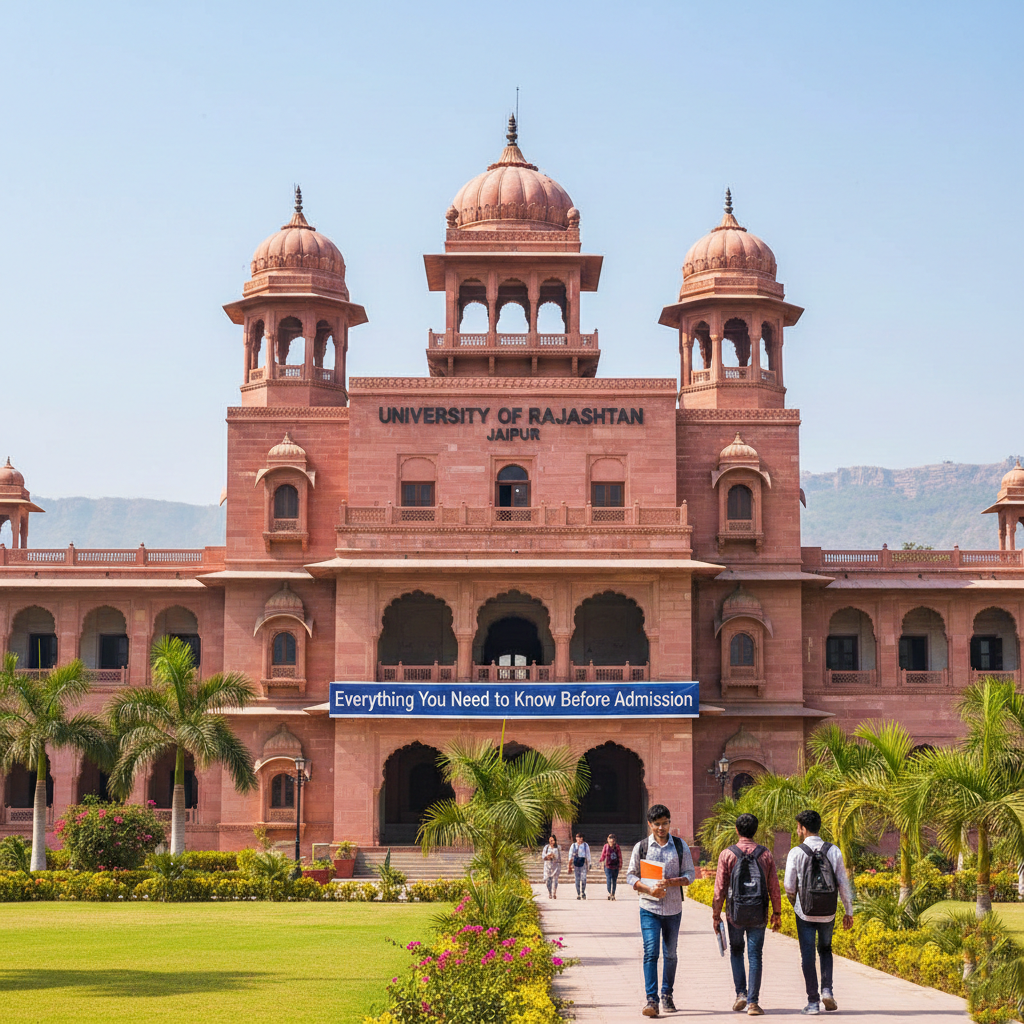

Choosing a Right university is a serious decision that shapes your academic future, career path, and personal growth. For students planning higher education in Rajasthan, the University of Rajasthan in Jaipur is one of the most well-known public universities. It attracts thousands of students every year because of its wide range of courses, affordable education, and long-standing academic presence.
We provide you with complete, detailed, and student-focused information about the University of Rajasthan (UNIRAJ, Jaipur). It explains every important aspect you should know before taking admission, written in clear and simple language for easy understanding.
Introduction to the University of Rajasthan
The University of Rajasthan is one of the oldest and largest state universities in India. Located in Jaipur, the capital city of Rajasthan, it has played a major role in shaping higher education in the state. The university is known for its academic diversity, experienced faculty, and a large number of affiliated colleges spread across Jaipur and nearby districts.
Over the years, the university has built a strong reputation in fields such as arts, science, commerce, law, education, and social sciences. Students from different parts of Rajasthan and other states apply here every year, making the campus academically and culturally diverse.
The university functions through:
-
Its main campus departments
-
Postgraduate and research centers
-
A large network of affiliated colleges
Location and Campus Environment
The university is situated in Jaipur, a major educational and cultural hub. Jaipur is well connected by road, rail, and air, making travel convenient for students coming from other districts or states.
The campus environment is academic and student-oriented. It includes teaching departments, libraries, laboratories, hostels, sports facilities, and open areas for student activities. Being located in a capital city also gives students access to competitive exam coaching, internships, libraries, and career opportunities.
Academic Structure and Teaching System
The University of Rajasthan follows a structured academic system divided into faculties and departments. Most courses operate under a semester-based pattern, which includes internal assessments and final examinations. Faculty members generally hold postgraduate and doctoral degrees and are involved in teaching, mentoring, and research. The focus is on building conceptual clarity, subject knowledge, and academic discipline.
Teaching methods include:
-
Classroom lectures
-
Seminars and presentations
-
Practical and laboratory sessions
-
Tutorials and group discussions
-
Projects and assignments
Courses and Programs Offered
The university offers a wide range of programs to suit different academic interests and career goals.
Undergraduate Courses
Most undergraduate courses are of three years duration, while some professional courses may extend to four years depending on academic regulations. Undergraduate programs are designed to build a strong foundation in the chosen field. Major streams include:
Postgraduate Courses
Assessment methods include written examinations, internal tests, practical exams, seminars, and project work. Postgraduate programs focus on specialization and advanced learning. These programs are generally of two years duration and include:
-
Master of Arts
-
Master of Science
-
Master of Commerce
-
Management-related programs
-
Computer application programs
-
Education and law programs
Research and Doctoral Programs
Admission to research programs usually involves an entrance test, interview, and evaluation of the candidate’s academic background and research interest. Students interested in academic research can pursue MPhil and PhD programs. These programs emphasize:
-
Independent research work
-
Academic writing and publications
-
Research ethics and methodology
Diploma and Certificate Courses
The university also offers diploma and certificate programs in selected fields. These courses are usually short-term and focus on skill development, professional enhancement, or subject-specific training.
Eligibility Criteria for Admission
Eligibility conditions vary by course, but general requirements are as follows:
Undergraduate Eligibility
-
Completion of 10+2 or equivalent from a recognized board
-
Required subjects based on the selected course
-
Minimum qualifying marks as prescribed by the university
Postgraduate Eligibility
-
Bachelor’s degree in a relevant discipline
-
Minimum percentage requirement depending on the course
Research Program Eligibility
-
Postgraduate degree in the related subject
-
Qualification in entrance test and interview
-
Reservation and relaxation rules apply as per government norms.
Admission Process Explained Step by Step
The admission process is conducted in a transparent and systematic manner, mainly through online mode. For merit-based courses, selection depends on academic performance. For entrance-based programs, exam scores and interviews are considered.
Admission Steps
-
Release of official admission notification
-
Online registration and application form submission
-
Uploading academic and personal documents
-
Payment of application fee
-
Publication of merit list or entrance exam results
-
Counseling and document verification
-
Final admission confirmation
Documents Required for Admission
Providing correct and complete documents is essential to avoid cancellation of admission. Students should prepare the following documents in advance:
-
10th and 12th mark sheets and certificates
-
Graduation mark sheets and degree certificate (for PG applicants)
-
Valid identity proof
-
Passport-size photographs
-
Category or caste certificate, if applicable
-
Domicile certificate, if required
-
Migration or transfer certificate
Fee Structure and Cost of Education
Being a public university, the University of Rajasthan offers education at a relatively affordable cost. Fees depend on:
-
Course level
-
Department
-
Category of the student
Common fee components include:
-
Tuition fees
-
Examination fees
-
Library and laboratory charges
-
Hostel and mess fees, if applicable
Scholarships and Financial Support
Scholarships are awarded based on academic performance, category, and income criteria. Students must apply within the specified time period with proper documentation. Various scholarships and financial assistance options are available for eligible students, including:
-
Merit-based scholarships
-
Government scholarships for reserved categories
-
Need-based financial assistance
Hostel and Accommodation Facilities
Students who do not receive hostel accommodation can choose private hostels or rented rooms near the campus. The university provides hostel facilities for both male and female students, subject to availability. Hostels generally offer:
-
Furnished rooms
-
Mess and dining facilities
-
Security arrangements
-
Common study and recreation areas
Libraries, Laboratories, and Academic Resources
Science and technical departments are equipped with laboratories that allow students to gain practical and hands-on experience related to their subjects. The university has a central library along with departmental libraries that support academic learning and research. These libraries provide:
-
Textbooks and reference materials
-
Academic journals and research papers
-
Reading rooms for students
Student Life and Extracurricular Activities
These activities help students develop confidence, communication skills, leadership qualities, and social awareness. Student life at the University of Rajasthan is not limited to academics. The university encourages participation in:
-
Cultural events
-
Seminars and academic workshops
-
Sports and physical activities
-
Student clubs and societies
Placements and Career Opportunities
Placement opportunities vary by department and course. Professional and postgraduate programs generally receive better placement support. Students are encouraged to build employable skills alongside academic learning for better career prospects.
Career development initiatives include:
-
Placement cells or departmental placement activities
-
Internship guidance
-
Career counseling sessions
-
Skill development programs
Discipline, Safety, and Academic Ethics
A grievance redressal system is in place to address student concerns. Students are expected to follow attendance rules and maintain academic honesty. The university follows rules related to:
-
Examination conduct
-
Academic integrity
-
Research ethics
-
Student discipline
Important Points to Consider Before Admission
-
Select a course aligned with your interests and career goals
-
Understand eligibility criteria clearly
-
Review the fee structure and financial requirements
-
Keep documents ready in advance
-
Track admission schedules and merit lists carefully
Also Read: University of Rajasthan Admission 2026: Courses, Eligibility & Important Dates
Conclusion
The University of Rajasthan is a well-established public university that offers a wide range of academic programs at an affordable cost. Its long academic history, structured admission process, and diverse learning environment make it a suitable choice for students seeking higher education in Rajasthan.
By understanding the courses offered, eligibility conditions, admission process, facilities, and career prospects, students can make an informed decision. With careful planning and timely action, admission to the University of Rajasthan can be a strong step toward a successful academic and professional future.
1. What is the University of Rajasthan Jaipur known for?
The University of Rajasthan Jaipur is known for its long academic history, affordable education, and wide range of undergraduate, postgraduate, and research programs. It is one of the most recognized public universities in Rajasthan.
2. What courses can students apply for at the University of Rajasthan?
Students can apply for UG, PG, diploma, and research programs in Arts, Science, Commerce, Management, Computer Applications, Education, and Law through university departments and affiliated colleges.
3. What is the eligibility for admission to the University of Rajasthan Jaipur?
For undergraduate courses, students must have passed 10+2 from a recognized board. For postgraduate courses, a relevant bachelor’s degree is required. Research programs require a postgraduate degree and entrance test qualification.
4. How does the admission process work at the University of Rajasthan?
Admission is conducted mainly through online application. Selection is based on merit or entrance examinations, depending on the course, followed by counseling and document verification.
5. Does the University of Rajasthan provide hostel and scholarship facilities?
Yes, the university offers hostel facilities for boys and girls and provides access to government and merit-based scholarships for eligible students, subject to availability and criteria.