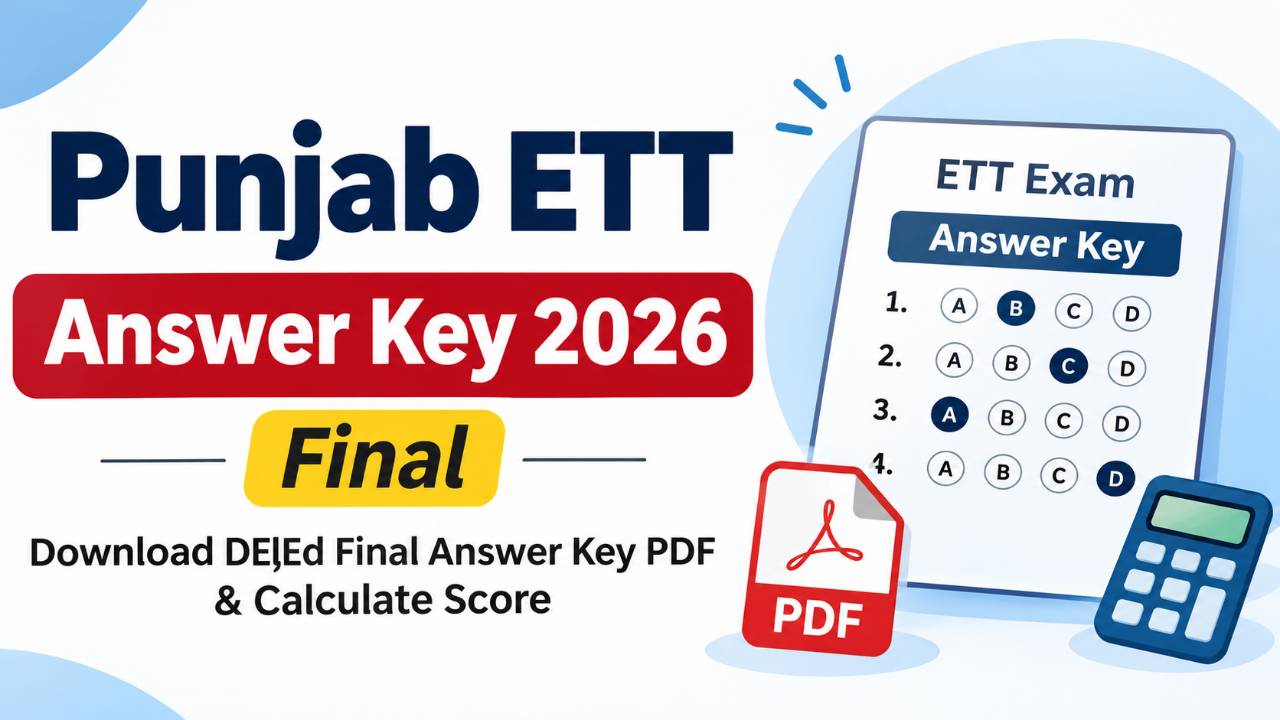
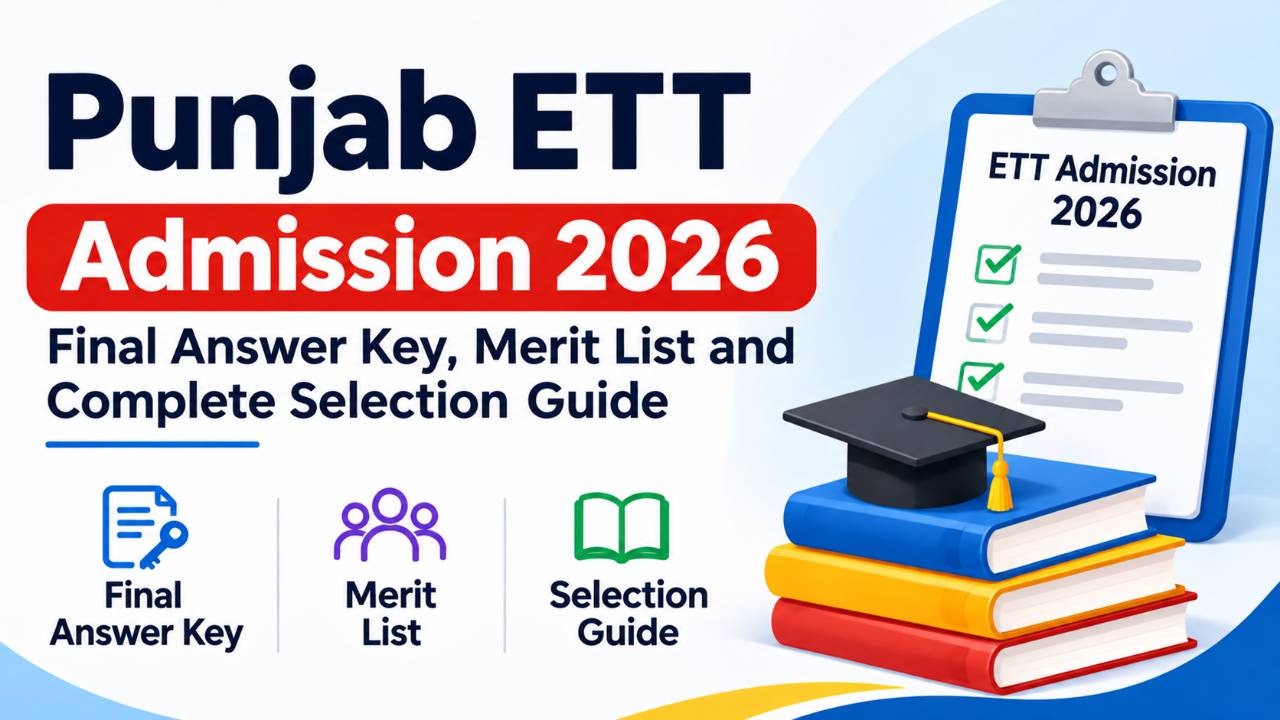
If you dream of becoming a primary or upper-primary teacher in Punjab government and affiliated schools, the Punjab ETT Admission 2026 pathway is one of the most important doors open to you this year. Conducted by the State Council of Educational Research and Training (SCERT) Punjab, the Elementary Teacher Training (ETT) process leads to a two-year Diploma in Elementary Education (D.El.Ed.) for the academic session 2026–28. With the final answer key and result expected on the official portal, thousands of graduates are now tracking merit lists and preparing for centralised counselling.
Unlike generic degree admissions at universities such as Punjabi University Patiala or Central University Of Punjab Bathhinda, ETT is a professional licensure-style programme tied directly to school teaching roles. Understanding timelines, cut-offs, and document rules helps you avoid losing a seat after months of preparation. This article explains what Punjab ETT is, who can apply, how selection works after the exam, and what to do once your name appears on the merit list.
What Is Punjab ETT Admission 2026?
Punjab ETT (often referred to alongside DElEd or D.El.Ed.) is a state-level teacher education admission process. SCERT Punjab conducts a Combined Entrance Test; qualified candidates are offered seats in government District institute of Education and Training (DIET) centres and private affiliated teacher-training institutions across the state.
The programme trains you for elementary education—typically Classes 1 to 8—through coursework in pedagogy, child development, school internships, and classroom practice. Successful completion positions you for recruitment in Punjab’s school system and for professional growth in the education sector. If you are comparing broader higher-education options in the state, institutions like I K Gujral Punjab Technical University Jalandhar or open-learning routes at Jagat Guru Nanak Dev Punjab State Open University serve different career goals; ETT remains the focused route for aspiring school teachers.
Quick Facts at a Glance
- Conducting body: SCERT Punjab
- Course: Diploma in Elementary Education (D.El.Ed.)
- Session: 2026–28 (two academic years; maximum completion window often up to three years)
- Admission basis: Entrance exam merit and centralised counselling
- Application mode: Online
- Official portal: ps.ctestservices.com/etadee/
Punjab ETT 2026: Final Answer Key and Result Timeline
After the Combined Entrance Test, SCERT Punjab typically releases a provisional answer key on the same day or shortly after the exam. Candidates get a short objection window—often around 24 hours—to challenge specific questions with supporting reasoning. Once objections are reviewed, the board publishes the final answer key, which forms the basis for score calculation.
For the 2026 cycle, candidates could raise objections against the provisional key until mid-November, with the final answer key and result declaration lined up for 18 November 2026 on the official website. You should log in with the credentials used during registration to download scorecards and verify subject-wise performance before the merit list is prepared.
Why the Answer Key Stage Matters
Many aspirants skip reviewing the answer key and only focus on the final merit list. That is risky. The key stage is your only formal opportunity to correct scoring errors before results are frozen. Actionable tips include:
- Compare your response sheet (if provided) or memory notes with each set (A, B, C, D) of the published key.
- File objections only with clear academic references—not guesswork—to improve acceptance rates.
- Screenshot login pages and key PDFs with timestamps for your personal records.
Eligibility Criteria for Punjab ETT 2026
Before applying, confirm that you meet SCERT Punjab’s academic, age, and subject requirements. Incomplete eligibility is a common reason for rejection at document verification, even after counselling allotment.
Educational Qualification
- General category: Graduation with at least 50% aggregate marks.
- SC/OBC: Graduation with at least 45% aggregate marks.
- Class 10/Matric subjects: Candidates are expected to have studied Punjabi, Science, Hindi, Computer, and Mathematics at the matriculation level, as prescribed in the notification.
Age Limit
The upper age limit for general applicants is typically 37 years, with relaxations for reserved categories—commonly an additional five years for SC/OBC and ten years for persons with disabilities, as per state rules. Always cross-check the exact birth-date cut-off in the official prospectus for your year.
Residency and Language
Punjab teacher-training admissions usually require proof of state domicile or residency and comfort with Punjabi as a school language. Keep domicile and category certificates ready in the name that matches your graduation records.
Application Fees and How to Register
The Punjab ETT application is completed online on the SCERT portal. Fee payment is mandatory for most categories before the form is treated as complete.
| Category | Application Fee (approx.) |
|---|---|
| General, BC/OBC, EWS, Freedom Fighter, Sports | ₹1,250 |
| SC/ST | ₹650 |
| Handicapped/PwD | ₹650 |
| Ex-Serviceman (Self) | No fee |
Use a valid email ID and mobile number linked to your identity documents. Upload scanned photographs and signatures in the prescribed format to prevent form rejection at the verification stage.
Punjab ETT Selection Process Explained
Selection is entrance-based, not on graduation marks alone—though graduation and Class 12 marks act as tie-breakers when two candidates score equally in the test.
Stage 1: Online Registration and Admit Card
Register on the portal, pay fees, and download the admit card. Note exam centre, reporting time, and prohibited items. Reach early on exam day to avoid disqualification for late entry.
Stage 2: Combined Entrance Test
The test assesses subject knowledge, reasoning, general awareness, and teaching aptitude. Prepare with previous-year patterns, Punjab school curriculum basics, and time-bound mock tests.
Stage 3: Result and Minimum Qualifying Marks
Results appear after the final answer key. Minimum qualifying standards are generally:
- General: 50% of maximum marks
- SC/BC/PwD: 45% (five percentage points relaxation)
Merely qualifying does not guarantee a seat; it only makes you eligible for counselling.
Stage 4: Merit List Preparation
SCERT Punjab compiles a state merit list from entrance scores. The first merit list for 2026 is expected in November, followed by subsequent lists if seats remain vacant. Tie-breaking order usually considers higher graduation marks, then Class 12 marks, then older age.
Stage 5: Online Counselling and Seat Allotment
Qualified candidates register for counselling, fill institute preferences, and lock choices. Allotment depends on merit rank, category reservation, seat matrix, and your preference order.
Stage 6: Document Verification and Fee Payment
Report to the allotted DIET or college with originals. Pay the institutional course fee within the deadline to confirm admission. Missing the deadline often leads to forfeiture and passage of the seat to the next merit list.
Seats, Institutes, and Reservation Policy
Government teacher-training institutes fill seats entirely through counselling merit. In private affiliated colleges, a significant share—commonly around 60%—is filled through SCERT counselling based on entrance merit; the remaining seats may fall under management quota per Punjab government rules.
Reservation Quota (Indicative)
| Category | Reservation % |
|---|---|
| General | 39 |
| Backward Classes | 10 |
| SC (Rural & Other) | 10 |
| SC (Malwa & Doaba) | 10 |
| General Ex-Serviceman | 7 |
| BC Ex-Serviceman | 2 |
| SC Ex-Serviceman | 4 |
| General Freedom Fighter | 1 |
| General Sports | 2 |
| SC Sports | 1 |
| Physically Handicapped | 4 |
| Economically Weaker Section (EWS) | 10 |
Carry valid category certificates issued by competent authorities. For sports quota, maintain tournament certificates exactly as notified.
D.El.Ed Course Structure and Training Components
The D.El.Ed programme under Punjab ETT spans two academic years. Training blends theory and intensive school practice.
- Child development and inclusive education
- Teaching methods and lesson planning
- Educational psychology and classroom management
- Language, mathematics, and environmental studies pedagogy
- Assessment, evaluation, and learning materials
- School internship and teaching practice
Graduates often serve in government and private schools across Punjab districts. Those who later wish to diversify into other fields may pursue further degrees through universities such as Maharaja Ranjit Singh Punjab Technical University Bathinda, Punjab Agricultural University Ludhiana, or skill-focused campuses like Lamrin Tech Skills University Punjab—but ETT itself is your teaching foundation.
Documents Required for Admission
Keep originals and self-attested copies organised in a folder before counselling opens:
- Class 10 and Class 12 mark sheets and certificates
- Graduation mark sheets and degree/provisional certificate
- Recent passport-size photographs
- Government photo ID (Aadhaar, PAN, driving licence, etc.)
- Punjab domicile or residency proof
- Caste, EWS, PwD, sports, freedom fighter, or ex-serviceman certificates if applicable
- Migration certificate if required by the admitting board or university
- Admit card and result printouts from the ETT portal
Any admission secured through forged documents can be cancelled at any stage—SCERT and colleges verify records strictly.
Important Guidelines for Applicants
- Verify eligibility—including Punjabi at matric level—before applying.
- Enter spelling of names exactly as on Class 10 certificates to avoid mismatch during verification.
- Track official notifications on ps.ctestservices.com/etadee/ rather than relying on unofficial social media forwards.
- Qualifying the exam alone does not confirm a seat; complete counselling, reporting, and fee payment on time.
- If allotted a college you do not prefer, understand upgrade rules in later counselling rounds before declining.
What Happens After the Punjab ETT Entrance Exam?
Post-exam workflows follow a predictable sequence that you can plan around:
- Provisional answer key release and short objection window
- Final answer key and result on the portal
- Merit list publication for counselling registration
- Choice filling and seat allotment rounds
- Reporting to institutes for verification and admission confirmation
Teacher training shares the professional seriousness of regulated programmes elsewhere in Indian higher education—for example, law schools such as Rajiv Gandhi National University Of Law Punjab or technical institutes like Punjab Engineering College Chandigarh—but ETT’s outcome is measured in classrooms, not corporate placements.
Preparing for Counselling: Practical Tips
Research DIET locations, hostel availability, and travel costs before locking preferences. High merit candidates should still list realistic lower choices to avoid blank allotment if top picks fill early. Mid-rank candidates should balance government and affordable private institutes. Keep fee arrangements ready—late bank transfers have cost many students their seats.
Applicants interested in sports-focused higher education may also explore The Maharaja Bhupinder Singh Punjab Sports University for different career paths, but ETT sports quota seats follow SCERT’s own certificate rules.
Comparing Teacher Training with Other Education Pathways
Some candidates wonder whether B.Ed., integrated teacher programmes, or open degrees are better. ETT/D.El.Ed is specifically oriented to elementary teaching and aligns with Punjab’s recruitment norms for primary levels. Mission-driven colleges elsewhere—such as Md Mission College Kota or Ramakrishna Mission Vivekananda Educational And Research Institute Howrah—illustrate how values-based education models differ from state SCERT pipelines. For engineering aspirants, campuses like Dmi College Of Engineering Chennai sit in an entirely different admissions ecosystem (entrance exams such as JEE). Choose ETT when your goal is stable school teaching in Punjab.
Entrance Exam Pattern and Preparation Strategy
While SCERT publishes the exact blueprint each year, Punjab ETT papers generally blend academic content with reasoning, general awareness, and teaching aptitude. Think of it as screening both what you know and whether you can connect that knowledge to a primary classroom.
Subject Areas Aspirants Should Revise
- Language skills: Punjabi and Hindi comprehension, grammar, and vocabulary—essential for teachers in Punjab schools.
- Mathematics and Science: Concepts taught at elementary level, not advanced university theory.
- General awareness: Current affairs, Punjab history and geography, and basic civics relevant to school education.
- Reasoning: Verbal and non-verbal items that test logical thinking under time pressure.
- Teaching aptitude: Questions on learner motivation, inclusive education, and classroom communication.
Smart Study Plan for Working Graduates
Many ETT applicants are working professionals or fresh graduates juggling jobs. A practical eight-week plan might include two hours daily on weekdays and one mock test each weekend. Prioritise official-style MCQ practice, analyse wrong answers, and strengthen weak topics (often environmental studies pedagogy or computer fundamentals) without neglecting Punjabi language prep.
Understanding Merit, Cut-Offs, and Vacant Seats
Cut-off scores are not announced as a fixed number before the exam; they emerge from the merit list once results are compiled. Government DIET seats typically close at higher ranks than many private institutes because of fee advantages and reputation. In counselling round one, top preferences fill quickly; later rounds and spot admissions may open opportunities for middle ranks if candidates fail to report.
If your rank is borderline, stay registered for subsequent merit lists and read the upgradation policy carefully. Withdrawing without understanding rules can block you from later rounds. Preserve your login ID and password until admission is fully confirmed—many students need portal access weeks after the first result day.
Career Scope After Punjab D.El.Ed
Completing D.El.Ed through Punjab ETT qualifies you for teaching roles in elementary schools and strengthens your profile when Punjab education departments or schools announce recruitment. Beyond classroom teaching, trained educators move into roles such as remedial instruction, NGO-led literacy programmes, curriculum support at block level, and private school leadership with experience.
D.El.Ed is also a stepping stone if you later pursue B.Ed. or postgraduate education. The foundation you build—in lesson design, assessment literacy, and child psychology—transfers across formal qualifications. However, always verify latest government notifications on eligibility for specific recruitment exams, because rules can change between sessions.
Common Mistakes That Cost Candidates Their Seat
- Wrong category claim: Uploading invalid or expired caste or income certificates leads to cancellation at verification.
- Name mismatch: Differences between Aadhaar, graduation, and Class 10 spellings delay admission.
- Missing counselling registration: Assuming automatic allotment after passing the exam.
- Late reporting: Reaching the institute after the reporting window closes, even by one day.
- Ignoring fee deadlines: Banks and holidays can delay transfers—plan payments two days early.
- Single preference only: Listing one institute without backup risks a blank seat if merit is slightly short.
Keeping a checklist against each stage dramatically reduces stress when November counselling notifications arrive in quick succession.
Who Should Apply—and Who Should Wait
Apply if your graduation percentage and age fit the rules, you intend to teach in Punjab’s school ecosystem, and you can commit to two years of full-time training including internships. Consider waiting or building eligibility if your aggregate is below the category minimum, required Class 10 subjects are missing from your school record, or you cannot complete residency documentation—fixing these first saves application fees and exam anxiety.
Parents and mentors should treat ETT as a career decision, not only a stopgap. Compare it honestly with other paths you might pursue at established universities, but recognise that only a recognised teacher-training pipeline unlocks elementary teaching roles at scale within the state.
Conclusion
Punjab ETT Admission 2026 is entering its decisive phase: final answer keys, results, and merit-based counselling will convert exam performance into confirmed D.El.Ed seats for 2026–28. Stay proactive—check the SCERT portal daily, prepare documents early, and approach counselling with a clear preference strategy. Teaching is a long-term profession; the effort you invest in understanding this process protects both your rank and your future classroom. For authoritative updates on answer keys, merit lists, and schedules, rely on official SCERT communications and trusted education reporting such as the reference linked below.