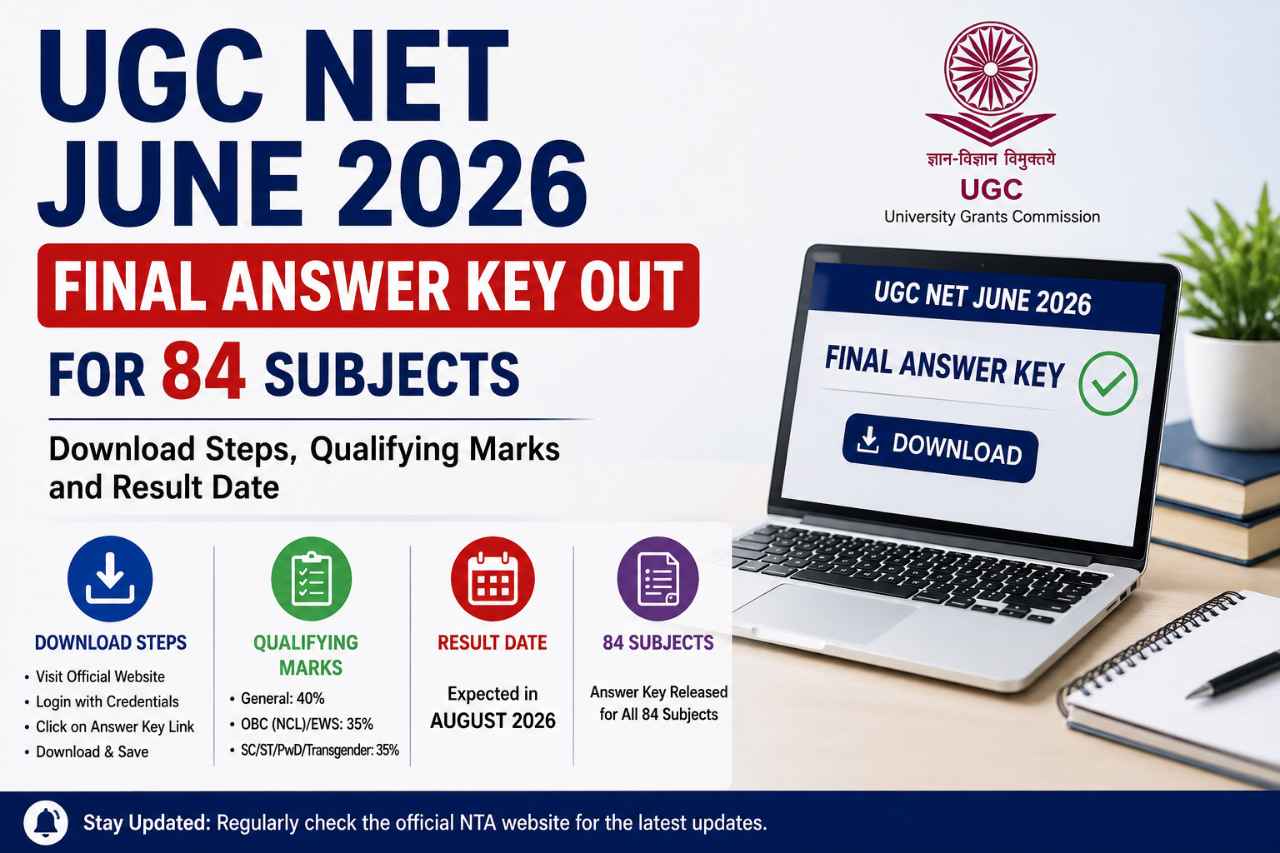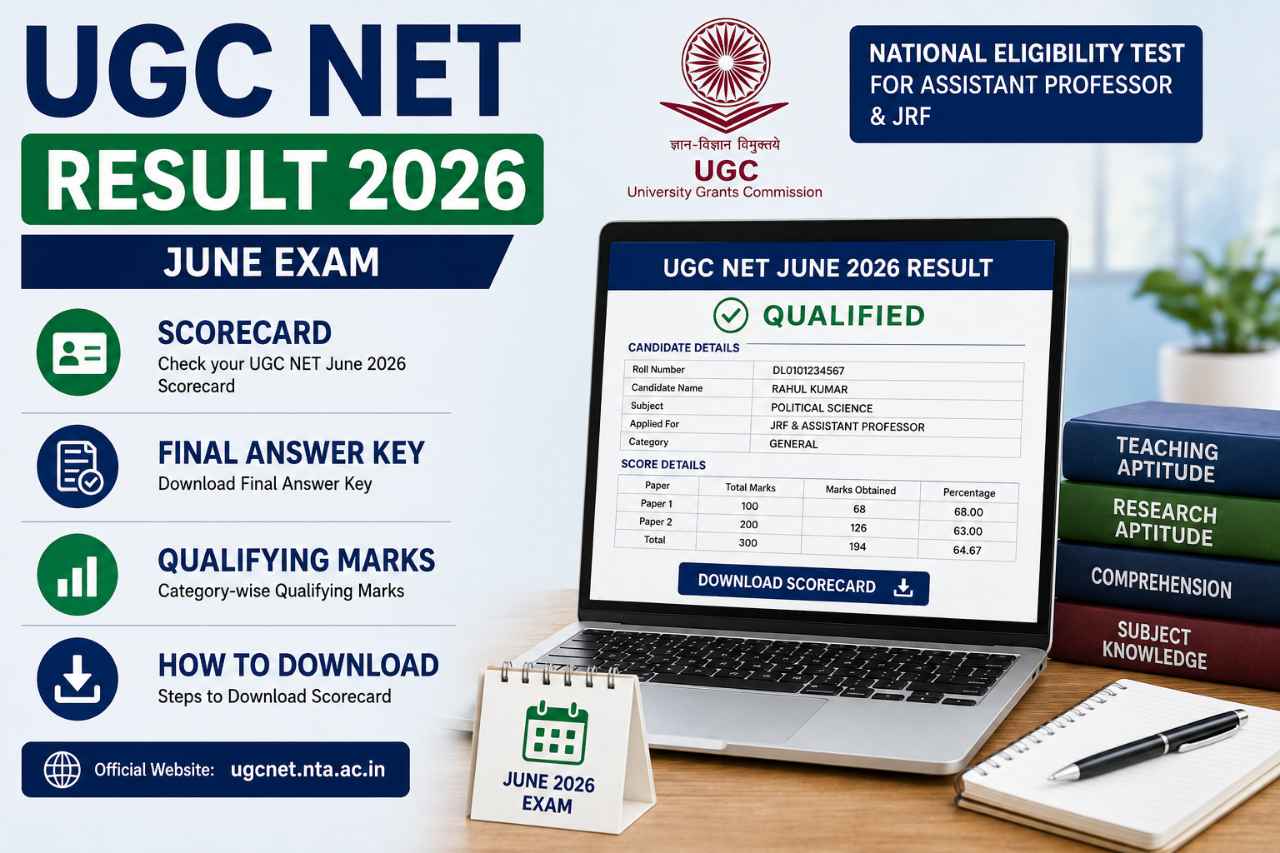
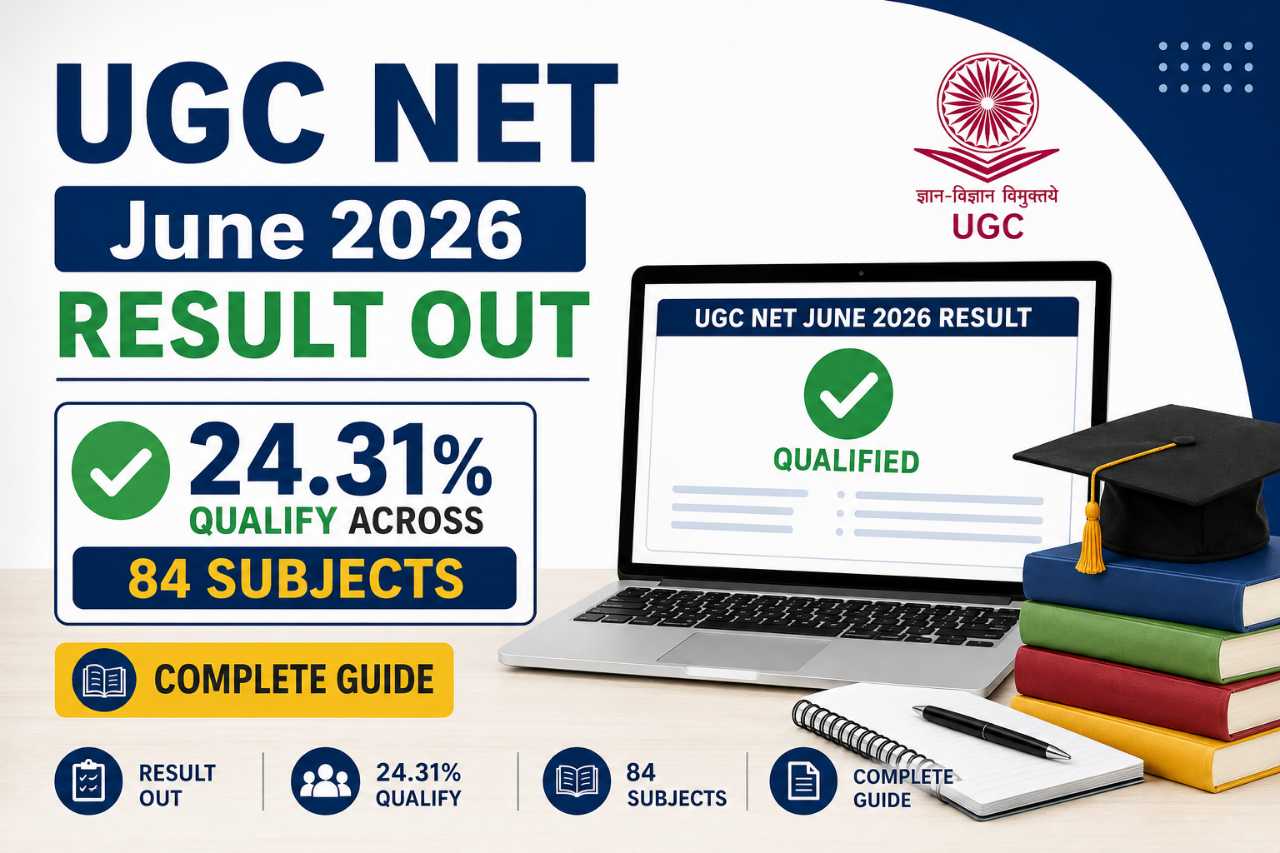

The National Testing Agency (NTA) has declared the UGC NET June 2026 result on August 28, 2026, for candidates who appeared across 84 subjects. Out of 6,07,151 candidates who took the exam, roughly 24.31% have qualified in at least one category Junior Research Fellowship (JRF), Assistant Professor eligibility, or PhD admission eligibility. If you appeared between June 22 and June 30, 2026, this guide explains what the result means, how to download your scorecard from ugcnet.nta.nic.in, and what to do next for research fellowships, teaching careers, and doctoral admissions at Indian universities.
What Is UGC NET and Why Does the June 2026 Result Matter?
The University Grants Commission National Eligibility Test (UGC NET) is India's benchmark examination for determining eligibility for the Junior Research Fellowship (JRF), appointment as an Assistant Professor in universities and colleges, and admission to PhD programmes at participating institutions. Conducted twice a year typically in June and December the exam assesses candidates through Paper 1 (Teaching and Research Aptitude) and Paper 2 (subject-specific knowledge).
The June 2026 session holds special significance because NTA expanded the subject list to 84 disciplines, adding Forestry and Statistics for the first time. With over 7.73 lakh registrations and more than 6 lakh actual appearances, this cycle reflects the growing demand for research and academic careers across India from metro hubs like Delhi and Mumbai to emerging education centres in Rajasthan and Tamil Nadu.
Who Should Check the UGC NET June 2026 Result?
- Postgraduate students aiming for JRF stipends and research positions
- Master's degree holders seeking Assistant Professor eligibility in colleges and universities
- PhD aspirants who need NET qualification as an admission prerequisite at many institutions
- Working professionals in academia who missed earlier sessions and appeared in June 2026
- Candidates affected by the Jalandhar centre re-exam held on July 5, 2026, after technical issues
UGC NET June 2026 Result Highlights at a Glance
Before diving into category-wise details, here is a snapshot of the key numbers from the June 2026 session:
| Particulars (84 Subjects) | Details |
|---|---|
| Candidates registered | 7,73,806 |
| Candidates appeared | 6,07,151 |
| Overall qualification rate | 24.31% |
| Qualified for JRF and Assistant Professor | 4,241 |
| Qualified for Assistant Professor and PhD admission | 45,904 |
| Qualified for PhD admission only | 97,434 |
| Exam dates | June 22–30, 2026 |
| Jalandhar re-exam | July 5, 2026 |
| Result declaration | August 28, 2026 |
| New subjects added | Forestry, Statistics |
The overall pass percentage of 24.31% means that approximately one in four candidates who appeared has qualified in at least one category. This figure combines all three qualification buckets and should not be confused with the much smaller JRF success rate, which involves a separate, stricter cut-off. Notably, 1,66,635 candidates registered but did not appear underscoring the importance of checking your result promptly if you sat for the exam.
Understanding the Three Qualification Categories
UGC NET results are not simply pass or fail. NTA assigns candidates to one of three eligibility categories based on aggregate marks in Paper 1 and Paper 2, subject-wise qualifying criteria, and JRF-specific cut-offs. Understanding these categories is essential before planning your next move.
1. JRF and Assistant Professor (Category I)
4,241 candidates qualified for both Junior Research Fellowship and Assistant Professor eligibility in the June 2026 session. JRF awardees receive a monthly fellowship from UGC for pursuing PhD research at recognised universities, IITs, IISERs, and research institutes such as the Jawaharlal Nehru Centre for Advanced Scientific Research, Bangalore or the Indian Association for the Cultivation of Science.
JRF qualification is the most competitive outcome. Candidates must meet a higher aggregate cut-off and are typically among the top performers in their subject. If you hold JRF, you can simultaneously pursue doctoral research and retain Assistant Professor eligibility for future faculty recruitment.
2. Assistant Professor and PhD Admission (Category II)
45,904 candidates qualified for Assistant Professor eligibility along with eligibility for PhD admission. This is the largest group among NET qualifiers who can enter academia. These candidates meet the minimum qualifying marks for lectureship and are also eligible to apply for PhD programmes at universities that accept UGC NET scores.
Institutions ranging from central universities to state colleges including women's colleges such as Lady Shri Ram College for Women, Delhi, Indraprastha College for Women, Delhi, and Bharathidasan Government College for Women, Chennai may consider NET qualification during faculty hiring or PhD screening, subject to their own regulations.
3. PhD Admission Only (Category III)
97,434 candidates qualified exclusively for PhD admission eligibility. They did not meet the Assistant Professor cut-off but scored enough to be considered for doctoral programmes at participating universities. This category has grown in importance since UGC regulations increasingly recognise NET as a valid PhD entrance criterion, reducing dependence on separate university entrance tests.
Research-focused institutes like the International Institute for Population Sciences, Mumbai, the Regional Centre for Biotechnology, and the ICFAI Foundation for Higher Education, Hyderabad often align their PhD admission policies with UGC NET benchmarks.
84 Subjects: Expanded Scope with Forestry and Statistics
The June 2026 cycle tested candidates across 84 subjects, up from 82 in previous sessions. NTA added two new papers:
- Forestry (Subject Code 89) relevant for candidates from agricultural universities, forest research institutes, and environmental science backgrounds
- Statistics (Subject Code 90) important for data science, econometrics, actuarial science, and social science research aspirants
Existing popular subjects English, Commerce, Education, Political Science, Economics, Management, and Computer Science continued to draw the highest registration volumes. Candidates in education disciplines, including graduates from B.Ed. and M.Ed. programmes at institutions like Shekhawati College for Education, Losal, Sikar, often choose Education or their postgraduate subject for Paper 2.
Subject-Wise Cut-Off Trends to Remember
While NTA publishes category-wise qualifying marks along with the result, cut-offs vary significantly by subject. Humanities and social science papers typically have different thresholds compared to science and commerce subjects. Candidates who narrowly missed the Assistant Professor cut-off in competitive subjects should review their marks against the official qualifying criteria before deciding on a reattempt in the December 2026 session.
Exam Timeline: From June Tests to August Result
Understanding the timeline helps candidates contextualise their preparation and plan reattempts:
- June 22–30, 2026: UGC NET June session conducted across exam centres nationwide in multiple shifts
- July 5, 2026: Re-examination held for candidates at the Jalandhar centre due to reported technical issues during the original schedule
- August 2026: Provisional and final answer keys released; objection window closed
- August 28, 2026: Results declared for all 84 subjects on ugcnet.nta.nic.in
Candidates who appeared at the Jalandhar re-exam centre should verify that their result reflects the corrected session. If your result shows "Absent" or incomplete data despite appearing, contact NTA through the official helpdesk immediately.
How to Download Your UGC NET June 2026 Result
NTA publishes results exclusively on the official portal. Follow these steps carefully to access and save your scorecard.
- Visit the official website at ugcnet.nta.nic.in
- Click on the link for UGC NET June 2026 Result on the homepage
- You will be redirected to the candidate login portal
- Enter your application number, password, and the security code (captcha) displayed on screen
- Your UGC NET June 2026 scorecard will open as a PDF document
- Verify your name, subject, marks in Paper 1 and Paper 2, total marks, and qualification category
- Download the PDF and save at least two backup copies on your device and cloud storage
- Take a colour printout for counselling, PhD applications, and future recruitment processes
Tip: If you forgot your password, use the "Forgot Password" option on the login page. Keep your application number from the UGC NET June 2026 admit card handy before starting.
What to Check on Your UGC NET Scorecard
Once your result PDF opens, review every field before celebrating or planning a reattempt:
- Candidate name and roll number ensure they match your admit card exactly
- Subject name and code confirm you are viewing the correct Paper 2 subject
- Paper 1 marks out of 100 (50 questions, +2 per correct answer)
- Paper 2 marks out of 200 (100 questions, +2 per correct answer)
- Total marks aggregate of both papers out of 300
- Category (General/OBC/EWS/SC/ST/PwD) affects qualifying cut-offs
- Qualification status JRF and AP / AP and PhD / PhD only / Not qualified
- Percentile or rank if displayed, useful for JRF cut-off comparison
Errors in personal details should be reported to NTA within the stipulated correction window. Do not attempt to modify the PDF; institutions verify results directly through NTA databases during recruitment and admission.
Cut-Off Marks and Normalisation Explained
UGC NET uses a multi-step evaluation process. NTA first applies the marking scheme (+2 for correct, no negative marking in recent cycles), then normalises scores across shifts using equipercentile equating where multiple shifts exist for the same subject. Finally, subject-wise and category-wise qualifying cut-offs are applied.
Minimum Qualifying Marks (General Guideline)
| Category | Paper 1 Minimum | Paper 2 Minimum | Aggregate Minimum |
|---|---|---|---|
| General / Unreserved | 40% | 40% | 50% |
| OBC (Non-Creamy Layer) / EWS / PwD | 35% | 35% | 45% |
| SC / ST | 35% | 35% | 40% |
Note: JRF cut-offs are determined separately and are typically higher than lectureship minima. Always refer to the official qualifying criteria PDF released with the June 2026 result.
Next Steps After Qualifying UGC NET June 2026
If You Qualified for JRF
- Register on the UGC JRF portal and complete fellowship formalities within the validity period (typically two years from result date)
- Apply for PhD admission at your preferred university or research institute
- Explore fellowship opportunities at CSIR labs, IITs, IISERs, and institutes like Sree Chitra Tirunal institute for Medical Sciences and Technology, Thiruvananthapuram
- Prepare research proposals and identify supervisors in your Paper 2 subject area
If You Qualified for Assistant Professor
- Update your CV and academic profiles with NET qualification details
- Monitor faculty recruitment notifications from universities, colleges, and state public service commissions
- Consider pursuing PhD alongside teaching preparation many colleges prefer NET-qualified candidates with doctoral degrees for permanent posts
- Explore opportunities at institutions such as Indira Gandhi Delhi Technical University for Women or SRD Modi College for Women, Kota during recruitment cycles
If You Qualified for PhD Admission Only
- Shortlist universities whose PhD regulations accept UGC NET (PhD) qualification
- Prepare for university-specific interviews even if NET exempts you from written entrance tests
- Consider the December 2026 UGC NET session if you also want Assistant Professor eligibility
If You Did Not Qualify
- Analyse subject-wise performance Paper 1 (Teaching Aptitude) or Paper 2 (Subject) may need targeted improvement
- Register for UGC NET December 2026 when notification releases (typically September–October)
- Compare preparation strategies with related exams like CSIR NET if your subject overlaps (Life Sciences, Physical Sciences, Chemical Sciences, Mathematical Sciences, Earth Sciences)
- Join structured test series and revise previous years' question patterns
UGC NET vs CSIR NET: Which Path Fits You?
Many science postgraduate students wonder whether to appear for UGC NET or CSIR NET. Here is a quick comparison:
| Feature | UGC NET | CSIR NET |
|---|---|---|
| Conducting body | NTA for UGC | NTA for CSIR |
| Subjects covered | 84 humanities, social science, commerce, and science subjects | 5 science streams only |
| JRF stipend | UGC JRF fellowship | CSIR JRF fellowship |
| Assistant Professor | Yes, for all 84 subjects | Not applicable |
| PhD eligibility | Yes | Yes, at CSIR labs and affiliated institutions |
Candidates from engineering or interdisciplinary backgrounds at institutions like Jaipur Engineering College (JEC), Jaipur or design schools such as the Centre for Design Excellence, Jaipur should choose the exam aligned with their postgraduate degree subject.
PhD and Research Landscape After UGC NET 2026
India's doctoral ecosystem has expanded significantly under the National Education Policy (NEP) 2020 framework. UGC NET qualification streamlines entry into PhD programmes at central universities, state universities, deemed universities, and private institutions that follow UGC regulations.
Notable research destinations for NET-qualified scholars include:
- Avinashilingam Institute for Home Science and Higher Education for Women, Coimbatore strong in home science and women's higher education research
- Noorul Islam Centre for Higher Education, Kanyakumari multidisciplinary PhD programmes in southern India
- Mohammad Ali Jauhar University, Rampur emerging private university with expanding research intake
- Lokbharti University for Rural Innovation focused on rural development and innovation studies
- Sri Sathya Sai University for Human Excellence humanities and value-based research programmes
Even coaching and training centres that prepare candidates for competitive exams such as the International Academy for Certification and Training, Kota increasingly integrate UGC NET modules into their postgraduate guidance curriculum, reflecting the exam's importance in India's academic job market.
Validity, Certificate, and E-Certificate Process
UGC NET qualification certificates are issued electronically through the UGC NET certificate portal after result declaration. Key points to remember:
- JRF award letter is valid for two years from the date of issue for fellowship activation
- Assistant Professor eligibility has lifetime validity unless revoked by UGC policy changes
- PhD eligibility through NET is accepted by most UGC-recognised universities; always verify with your target institution
- Download your e-certificate promptly and verify all details match your scorecard
Preparing for UGC NET December 2026 Session
Candidates who did not qualify or want to upgrade from PhD-only to JRF/AP categories should begin preparing for the December 2026 cycle now. Expected timeline:
- Notification: Likely September–October 2026 on ugcnet.nta.nic.in
- Application window: Approximately 3–4 weeks after notification
- Exam dates: Expected December 2026 (tentative)
- Result: Typically within 6–8 weeks of exam completion
Focus revision on Paper 1 topics research methodology, communication, reasoning, and teaching aptitude alongside subject-specific Paper 2 depth. Previous session analysis shows that strong Paper 1 performance often determines whether candidates cross aggregate cut-offs. Build a weekly schedule that balances concept revision, mock tests, and previous-year paper analysis for maximum improvement before the December attempt.
Conclusion
The UGC NET June 2026 result marks a milestone for over six lakh candidates who appeared across 84 subjects, with an overall qualification rate of 24.31%. Whether you secured JRF, Assistant Professor eligibility, or PhD admission qualification, the result opens distinct pathways in India's higher education ecosystem. Download your scorecard from the official NTA portal, verify every detail, and take prompt action fellowship registration, faculty job applications, or PhD admissions before validity windows close.
Did not qualify this time? Treat the June 2026 attempt as a diagnostic exercise. Identify weak areas, refine your Paper 1 strategy, and target the December 2026 session with a structured study plan. UGC NET rewards consistent preparation over rote memorisation, and thousands of candidates improve their category qualification with each attempt.