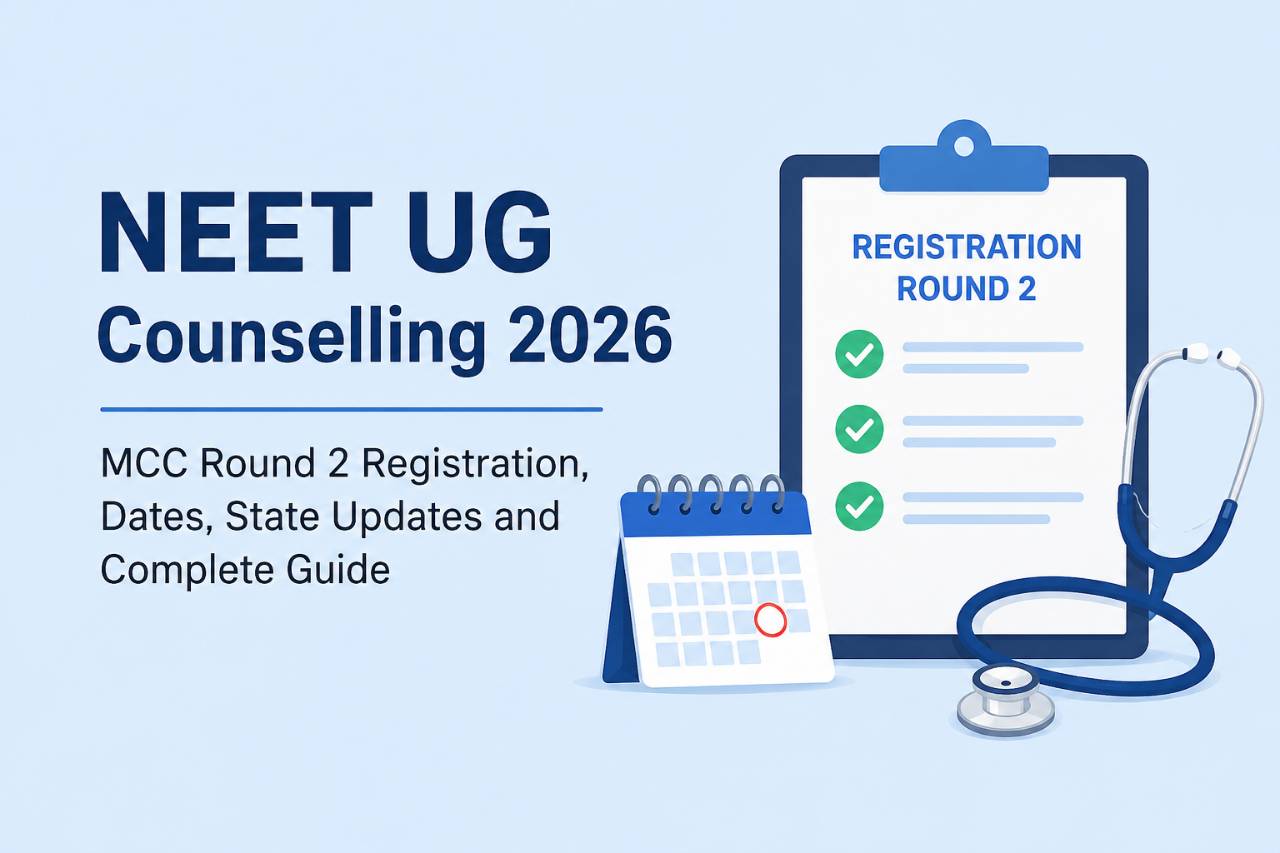
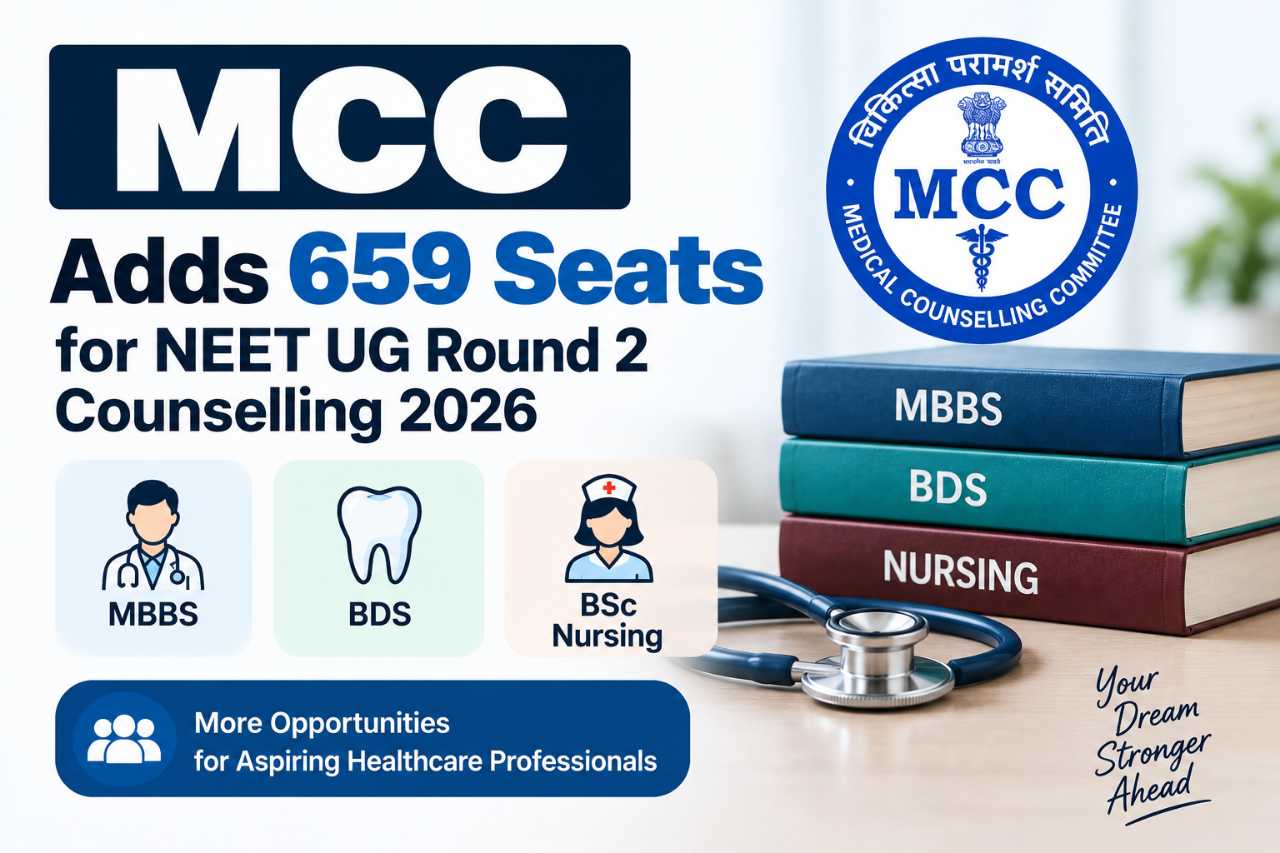

The Medical Counselling Committee (MCC) has released the updated seat matrix for NEET UG counselling 2026 Round 2, adding 659 new seats across MBBS, BDS, and BSc Nursing programmes. For lakhs of medical aspirants who missed a seat in Round 1 or wish to upgrade to a better college this update opens a meaningful second window at the all-India quota level. Alongside the fresh seats, MCC has published two vacancy lists: 11,302 clear vacancies and 12,283 virtual vacancies, giving candidates a clearer picture of what is realistically available versus what may open if upgradation requests succeed.
Round 2 registration and fee payment close on 8 September 2026, choice filling and locking on 9 September, allotment results on 11 September, and reporting to allotted colleges between 12 and 18 September. Whether you are a first-time participant or returning after not joining your Round 1 seat, understanding the revised matrix, vacancy types, and counselling rules is essential to make informed choices. This guide explains everything in plain language aligned with official MCC updates reported on 4 September 2026.
What Is the MCC NEET UG Round 2 Seat Matrix 2026?
The seat matrix is an official document published by MCC on mcc.nic.in that lists every seat category-wise All India Quota (AIQ), central institutions, deemed universities, ESIC, AFMC-related categories, and nursing colleges for Round 2 of NEET-based counselling. It tells you how many seats exist in each college, course, and reservation category before you fill choices.
For 2026, MCC has refreshed this matrix by adding 659 seats in three core streams:
- MBBS undergraduate medical degrees at government, private, and deemed institutions
- BDS dental undergraduate programmes
- BSc Nursing four-year nursing degrees at institutes participating in central counselling
These additions typically reflect late approvals from the National Medical Commission (NMC), Dental Council of India (DCI), or Indian Nursing Council (INC), or seats that were not included in the Round 1 matrix. Fresh seats often appear in newly permitted colleges, expanded intake in existing institutes, or categories that were held back pending verification.
Clear Vacancy vs Virtual Vacancy: Know the Difference
One of the most confusing parts of Round 2 counselling is the two vacancy lists. Treat them differently when building your college list:
- Clear vacancy (11,302 seats): These seats are genuinely empty. No candidate currently holds them from Round 1. If you rank these choices highly and your NEET score meets the cut-off, allotment is straightforward.
- Virtual vacancy (12,283 seats): These seats are occupied by candidates who opted for upgrade in Round 2. The seat will become available only if that candidate gets a better allotment and releases it. Virtual seats carry uncertainty you may not get them even if you rank them first.
Actionable tip: Build your choice list with a mix of clear-vacancy colleges (higher certainty) and a few virtual-vacancy dream options (lower certainty). Never rely solely on virtual vacancies if you need a confirmed seat this round.
659 New Seats: Where MBBS, BDS, and Nursing Opportunities May Rise
While MCC publishes college-wise details in the downloadable PDF on its portal, the headline addition of 659 seats signals that Round 2 is not merely leftover inventory it includes genuinely new capacity. Here is how each stream typically benefits:
MBBS Seats
New MBBS seats often appear in deemed universities, newly recognised private medical colleges, and central institutions that received enhanced intake letters. In Round 1 2026, MCC offered 31,728 seats and allotted more than 29,000. The gap between offered and allotted seats, combined with non-joining candidates and fresh approvals, shapes Round 2 availability.
Candidates with ranks in the extended merit list should scan the matrix for:
- Deemed universities with historically lower cut-offs in later rounds
- Private colleges in tier-2 cities where fees may be more manageable than metro institutions
- ESIC and other special categories if you meet eligibility
BDS Seats
Dental seats frequently remain available longer than MBBS seats because competition is relatively lower. The 659-seat addition may include BDS intake at colleges that received dental wing approvals or expanded batch sizes. If your NEET score is below typical MBBS cut-offs but strong for dentistry, Round 2 remains a viable path to a professional healthcare degree.
BSc Nursing Seats
Nursing has emerged as a high-demand allied health pathway, especially after expanded hospital infrastructure across India. New seats in BSc Nursing may appear at INC-recognised institutes listed in the MCC matrix. For students interested in patient care, community health, or hospital administration, nursing offers strong employment prospects with a shorter course duration than MBBS.
States like Rajasthan have a dense network of nursing colleges. Aspirants from the region may explore options such as Rajasthan College of Nursing Jaipur, Rajasthan College of Nursing Sikar, or Government Nursing College Kota when comparing state-quota and institutional choices alongside MCC-listed seats.
NEET UG Counselling 2026 Round 2: Important Dates
Missing a deadline in MCC counselling can cost you an entire admission cycle. Mark these dates from the official Round 2 schedule:
| Event | Date (2026) |
|---|---|
| Round 2 registration and fee payment ends | 8 September |
| Choice filling and locking deadline | 9 September |
| Seat allotment processing | 9–10 September |
| Round 2 allotment result | 11 September |
| Reporting to allotted college | 12–18 September |
Registration requires payment of the counselling fee on mcc.nic.in. Keep your NEET application number, password, and category certificates ready. After locking choices on 9 September, you cannot edit them so review your list at least twice before the final lock.
Who Can Participate in MCC NEET UG Round 2 Counselling?
Eligibility for Round 2 is broader than many candidates assume. You can register if you fall into any of these groups:
- New registrants who did not participate in Round 1 MCC counselling
- Round 1 non-joiners who were allotted a seat but did not report to the college (subject to forfeiture rules and security deposit terms)
- Round 1 joiners opting for upgrade who accepted a seat and now wish to participate again typically using the float or upgrade option as per MCC guidelines
- Candidates who registered in Round 1 but received no allotment and want to refill choices against the updated matrix
Always verify your exact status freeze, float, or upgrade from your Round 1 allotment letter before Round 2 choice filling. Wrong options can lead to seat cancellation or ineligibility for further rounds.
Freeze, Float, and Upgrade Options Explained
After Round 1 allotment, MCC allows three responses:
- Freeze: Accept the seat and exit further upgradation in subsequent MCC rounds. Best if you are satisfied with your college.
- Float: Accept the seat provisionally but remain open to upgradation within the same category in the next round. Your current seat is held until upgrade succeeds.
- Upgrade (Round 2 only for eligible candidates): Participate in Round 2 specifically to move to a higher-preferred college. If upgrade fails, you may retain the previous seat depending on rules active for 2026.
Virtual vacancies exist largely because float and upgrade candidates still occupy Round 1 seats while hoping for better allotments.
How to Read the MCC Round 2 Seat Matrix PDF
The seat matrix PDF can look intimidating at first glance, but a structured approach makes it manageable. Follow this reading order:
- Identify your category column Open category, EWS, OBC, SC, ST, or PwBD as applicable. Allotment is category-specific; never rely on another category's cut-off.
- Filter by course Separate MBBS, BDS, and BSc Nursing tabs or sections. Confirm the course code matches your intent before adding a college to your choice list.
- Check quota type AIQ, deemed university, central institute, or nursing institute. Fee rules and bond conditions differ by quota.
- Cross-reference vacancy type Match each shortlisted college against the clear vacancy list first. Mark virtual-vacancy options separately with a lower confidence tag.
- Note seat count A college showing one clear vacancy in your category is high risk for competition; several clear vacancies offer better odds.
Print or annotate your top 30–50 choices before entering them online. Typing directly into the portal without preparation leads to ordering mistakes that are costly once choices are locked. Parents and students should review the list together, since preference order directly determines which college you receive when multiple options remain open at your rank.
How Round 1 Results Shape Round 2 Strategy
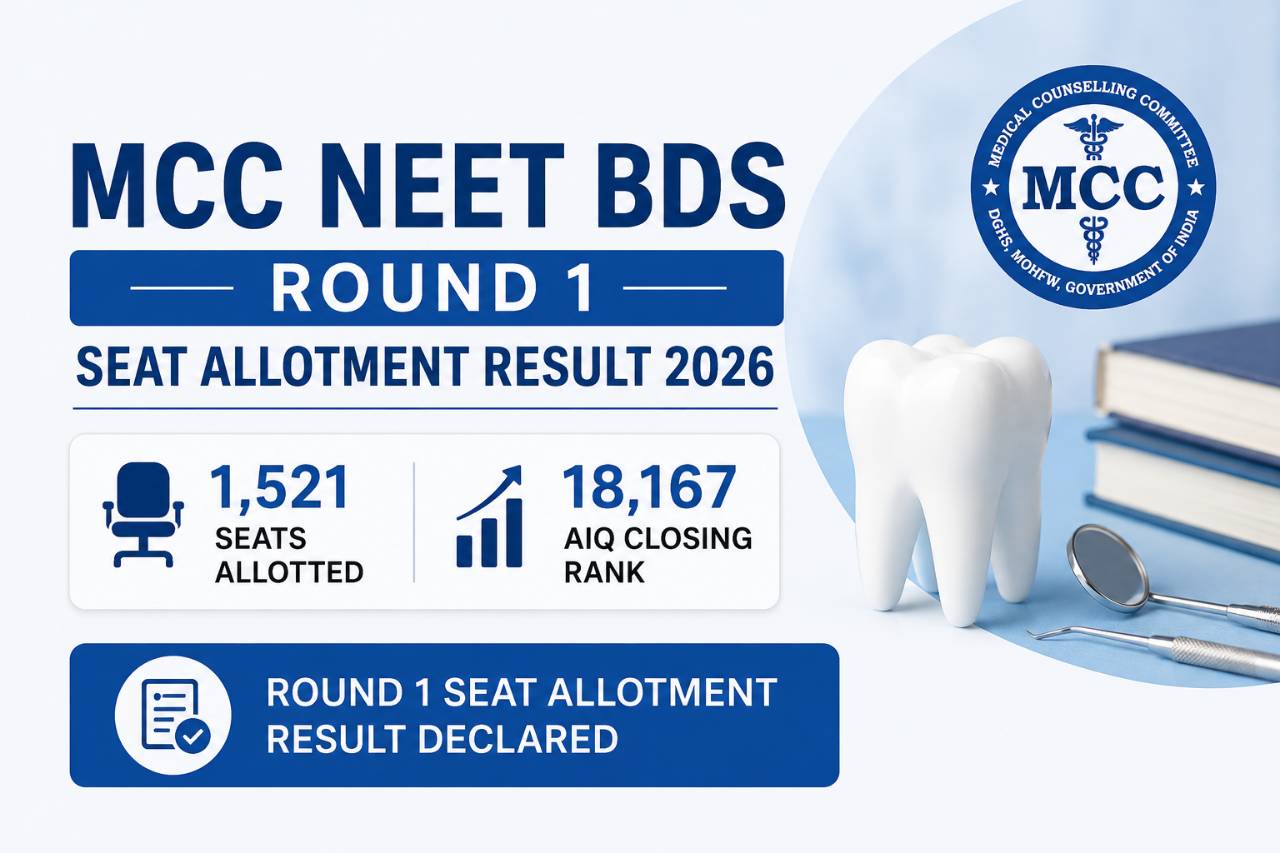
Context helps you set realistic expectations. In NEET UG counselling 2026 Round 1, MCC made more than 29,000 allotments from 31,728 offered seats. That means roughly 2,700+ seats were not allotted in Round 1, in addition to seats where candidates did not join. Combined with 659 newly added seats and the clear/virtual vacancy framework, Round 2 represents one of the largest remaining pools at the all-India level before MCC moves to mop-up or stray rounds.
Strategy tips for different rank bands:
- High rank (top percentiles): Use Round 2 mainly for upgrade to preferred central institutes or better deemed universities. Prioritise clear vacancies if upgrading is optional.
- Mid rank: Balance government MBBS in peripheral states with strong private or deemed options. Check fee structures some deemed universities charge premium tuition.
- Lower rank / extended list: Consider BDS, BSc Nursing, or Ayush courses. Nursing institutes in Kota and Sikar such as Jaiswal Nursing College Kota, Sudha College of Nursing Kota, Madhav College of Nursing Kota, Swami Keshwanand College of Nursing Sikar, and Sikar Nursing College illustrate the regional depth of nursing education beyond MCC central counselling.
Security Deposit and Fee Rules in MCC Round 2
MCC counselling involves a non-refundable registration fee plus a refundable security deposit that varies by institution type. Government institute deposits are typically lower than deemed or private university deposits. If you accept a seat and fail to join without proper withdrawal within the reporting window, the deposit may be forfeited and you could face restrictions in future rounds.
Before locking choices, calculate the total outlay: counselling fee, security deposit, first-year tuition, hostel charges, and miscellaneous college fees. Parents and students should jointly review the fee policy on each college's official website. High-fee deemed universities may offer seats in later rounds at ranks that would not qualify for comparable government colleges plan finances before allotment, not after.
State Quota Counselling Runs Parallel to MCC Round 2
MCC Round 2 covers AIQ and central-institution seats only typically 15% of government college seats and seats in central universities, deemed universities, AIIMS, JIPMER, ESIC, and similar bodies. The remaining 85% state quota is handled by state counselling authorities (for example, Rajasthan, UP, Maharashtra cells).
If you are targeting state government medical colleges, monitor your state portal alongside MCC. A candidate can hold different processes in sequence, but double-allotment rules apply you cannot join two seats simultaneously. Many nursing and paramedical admissions also run through state boards; for instance, institutions like SRM College of Nursing Chennai and Daswani Nursing College Kota may fall under state or institutional counselling depending on category.
Documents and Fees for Round 2 Reporting
Once Round 2 results are declared on 11 September, allotted candidates must report physically or as directed by the college between 12 and 18 September. Prepare these documents in original plus photocopies:
- NEET UG 2026 admit card and scorecard
- MCC Round 2 allotment letter
- Class 10 and 12 mark sheets and certificates
- Category certificate (SC/ST/OBC/EWS/PwBD) if applicable
- Domicile certificate if required by institution
- Photo ID (Aadhaar, passport, or driving licence)
- Passport-size photographs
- Medical fitness certificate if requested by college
- Fee payment receipts and bank challan for tuition/security deposit
MBBS fees vary sharply government colleges charge relatively nominal amounts, while some private and deemed institutions charge significantly higher annual tuition. Research the fee schedule on the college website before locking choices to avoid financial surprises after allotment.
Nursing and Allied Health: A Practical Alternative Path
Not every NEET qualifier secures MBBS in Round 2. That is not the end of a meaningful healthcare career. BSc Nursing graduates work in ICU care, operation theatres, public health programmes, and overseas markets with additional certification. The 659-seat expansion includes nursing capacity, reflecting national demand for trained nurses.
Rajasthan alone hosts numerous INC-affiliated institutes, including Aditi Ayurved Nursing Institute Sikar, Aditi Vikas Ayurved Nursing Training Centre Sikar, Annpurna Medical Training Nursing Institute Sikar, Dhanwantri Ayurved Nursing Training Centre Sikar, Mahatma Gandhi General Nursing School Sikar, Khawaja Garib Nawaz College of Nursing Sikar, Satya Sai School of Nursing Sikar, Government Girls School of Nursing Sikar, Florence Nursing College Kota, Sarvodaya College of Paramedical and Nursing Education Kota, and Arihant College of Nursing Kota. Compare course fees, hostel facilities, hospital tie-ups for clinical training, and INC recognition status before enrolling through MCC or state processes.
Candidates planning postgraduate medical education later should note that NEET PG remains the gateway for MD/MS seats MBBS is one route; nursing leads to MSc Nursing and specialisation through separate exams.
Common Mistakes to Avoid in Round 2
- Ignoring the matrix update: Always download the latest Round 2 PDF; Round 1 lists are outdated.
- Overloading virtual vacancies: Do not fill only upgrade-dependent seats if you need a confirmed admission.
- Missing the choice-lock deadline: Unlocked choices are not considered for allotment.
- Confusing MCC with state counselling: Register on both portals if eligible, but follow each authority's rules.
- Not reading forfeiture clauses: Skipping Round 1 joining without formal withdrawal may affect Round 2 eligibility and security deposits.
- Choosing colleges without fee research: Allotment is binding once you join; financial planning matters.
What Happens After Round 2?
If MCC conducts further rounds such as mop-up or stray vacancy rounds unfilled clear seats from Round 2 may roll forward. Candidates who freeze their Round 2 seat exit MCC upgradation. Those who float may continue depending on 2026 rules published in the official information bulletin.
State counselling bodies conduct their own Round 2, Round 3, and stray rounds on separate timelines. A comprehensive admission plan tracks both MCC and home-state schedules through September and October 2026. Institutes under bodies such as the Rajasthan Ayurvedic Nursing Council may follow separate admission calendars for Ayush-linked nursing programmes verify each pathway independently.
Conclusion
The MCC NEET UG Round 2 seat matrix 2026 is a pivotal update for medical aspirants: 659 newly added MBBS, BDS, and BSc Nursing seats, alongside 11,302 clear and 12,283 virtual vacancies, reshape what is achievable in the second all-India counselling round. With registration closing on 8 September, choice locking on 9 September, results on 11 September, and reporting through 18 September, the window is narrow but opportunity-rich.
Download the official matrix from mcc.nic.in, separate clear from virtual vacancies, align your choices with your NEET rank and budget, and keep state counselling on your radar. Whether your goal is MBBS at a central institute, BDS at a dental college, or BSc Nursing at an INC-recognised school, informed choice filling in Round 2 can turn an uncertain wait into a confirmed seat provided you act before the deadlines pass.