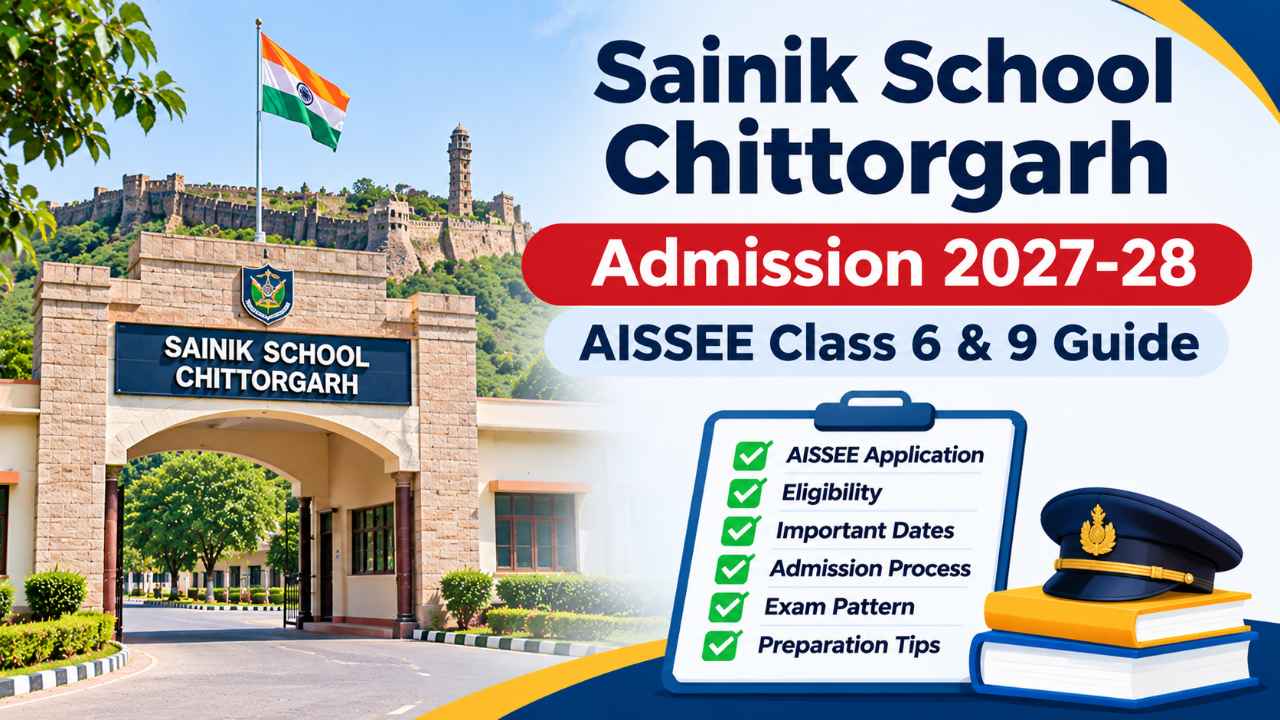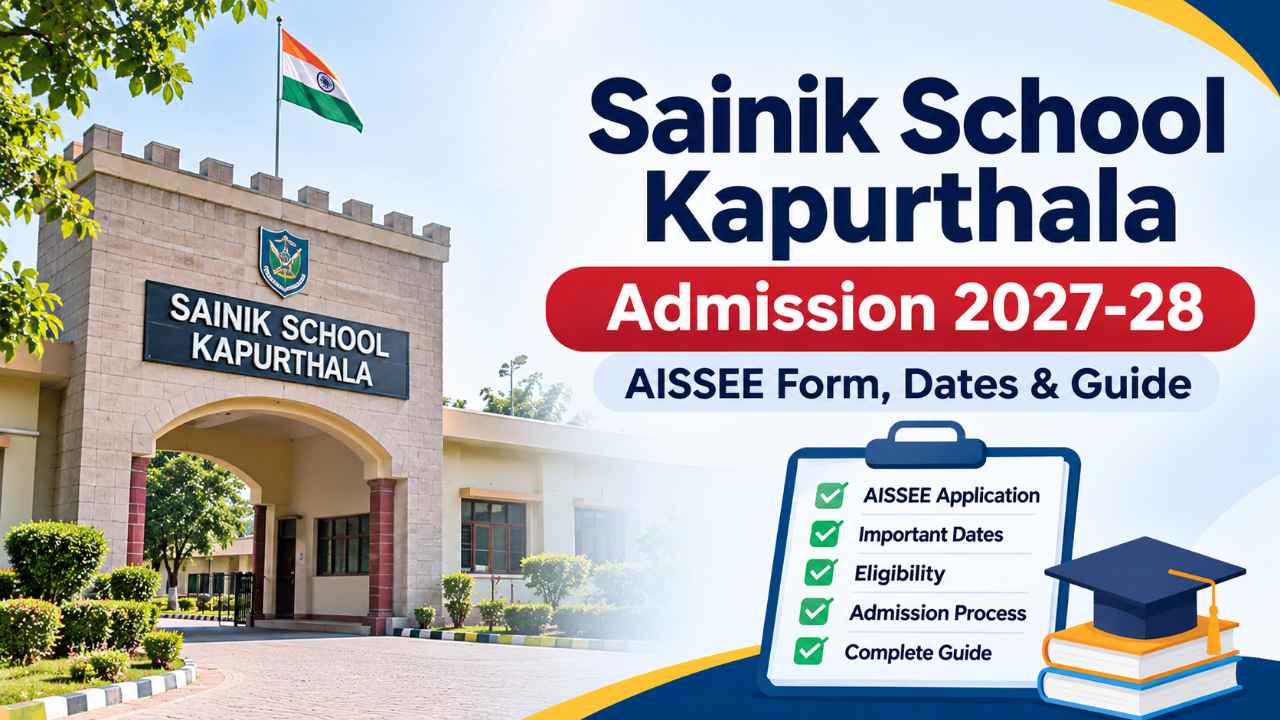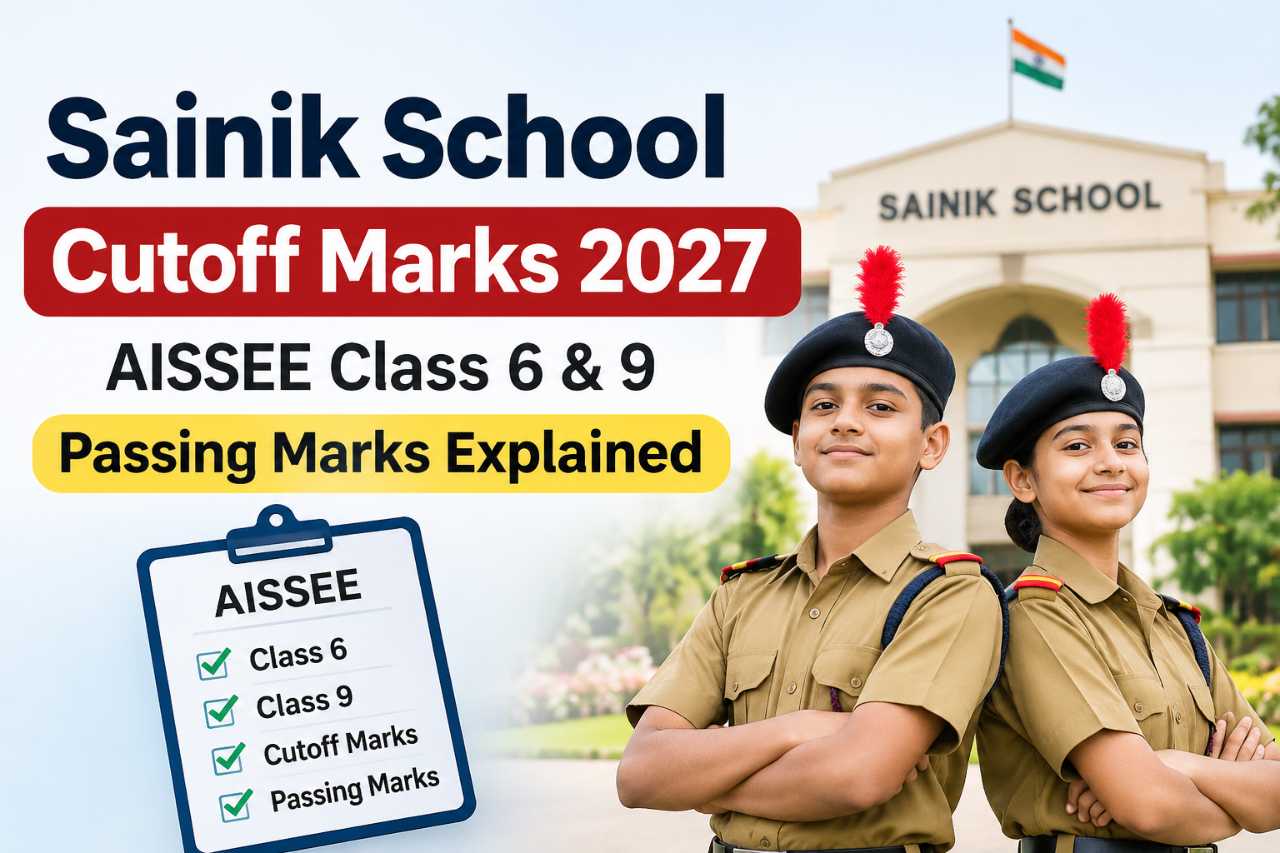
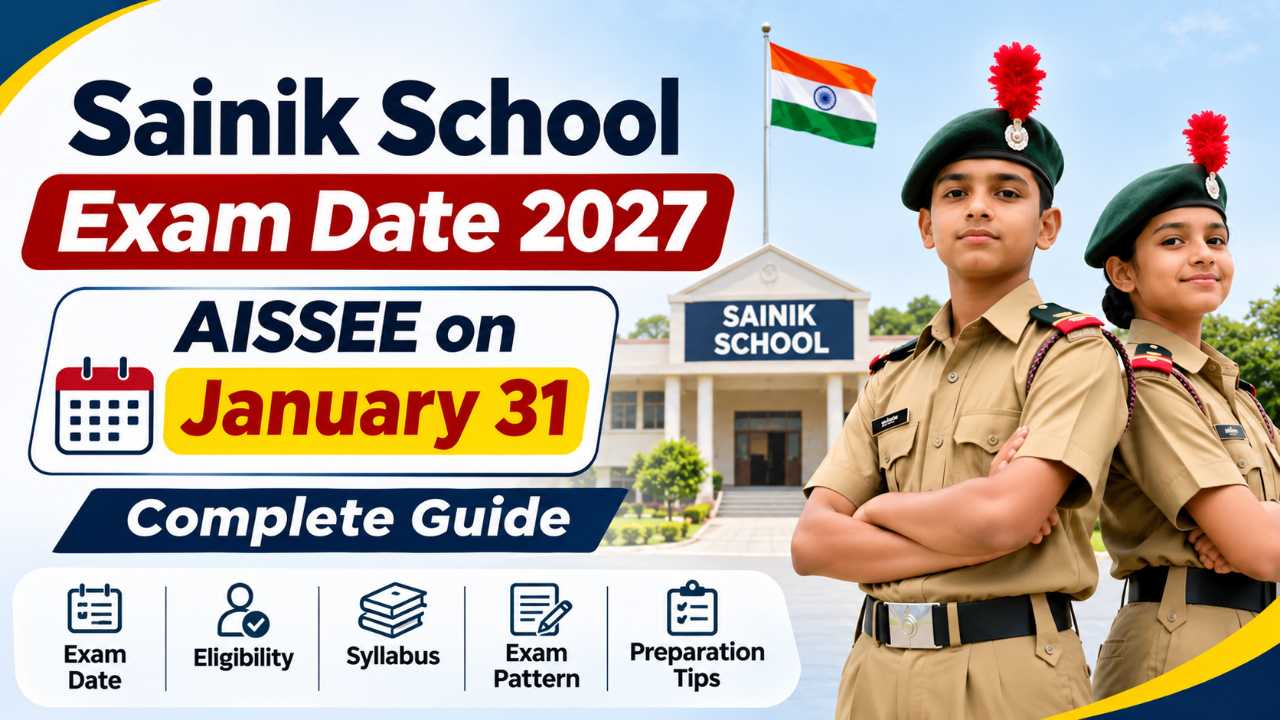
The Sainik School exam date 2027 is now official: the National Testing Agency (NTA) will hold the All India Sainik Schools Entrance Examination (AISSEE) on 31 January 2027 (Sunday). If your child aims for Class 6 or Class 9 in a Sainik School or an approved New Sainik School, this single offline test is the gateway for the 2027–28 academic session. Applications opened on 3 November 2026 and the regular deadline is 2 December 2026, so families should not wait until the last week to upload documents and pay fees.
Sainik Schools combine academic rigour with discipline, sports, and leadership training, and many graduates later pursue careers in the armed forces, public service, or higher studies at top institutions. Whether you are comparing AISSEE with other national entrances such as the NIFT entrance exam or design tests like NID DAT, Sainik School admission remains one of the most structured routes for students who thrive in a residential, values-driven environment. This guide explains dates, eligibility, pattern, preparation, and what happens after the exam written for parents and students across India.
What Is AISSEE and Why the 2027 Exam Date Matters
The All India Sainik Schools Entrance Examination (AISSEE) is a centralised entrance test conducted by NTA on behalf of the Sainik Schools Society. It selects students for Class VI and Class IX in existing Sainik Schools, and also covers admissions to approved New Sainik Schools (Class 6 for schools in their intake phase, and Class 9 where applicable). One exam, one merit-based counselling process: your rank, medical fitness, and document verification together decide the seat.
Knowing the Sainik School entrance exam date 2027 early helps you plan school leave, travel to the exam city, and balance board or term tests. The test is always pen-and-paper on OMR sheets, not an online exam so practice should match that format. Official updates, the information bulletin, and the application portal live at exams.nta.nic.in/sainik-school-society/.
Who Should Consider Sainik School Admission?
Sainik Schools suit students who enjoy routine, physical activity, teamwork, and clear goals. Boys and girls are eligible under current rules. The pathway is different from purely academic residential schools or city day schools: daily life includes drills, games, and house systems alongside NCERT-aligned studies. After Class 12, alumni often appear for NDA, technical entries, or university programmes some later study at places such as the Indian Institute of Technology Indian School of Mines Dhanbad or professional colleges. If your child is unsure between defence-oriented schooling and other streams, map backup options early (for example law via National Law School of India University Bangalore or architecture through School of Planning Architecture New Delhi) while still giving AISSEE full attention.
Sainik School Exam Date 2027 and Complete Schedule
The headline date is 31 January 2027. The session below the exam is equally important for a smooth application and exam day.
| Event | Date / timeline |
|---|---|
| Application form start | 3 November 2026 |
| Last date to apply (regular fee) | 2 December 2026 (11:50 PM) |
| Late application window | 3–6 December 2026 (with late fee ₹500) |
| Application correction window | 7–9 December 2026 |
| Advance city intimation slip | 11 January 2027 |
| Admit card download | From 25 January 2027 |
| AISSEE 2027 exam date | 31 January 2027 (Sunday) |
| Class 6 exam timing | 2:00 PM – 4:30 PM (150 minutes) |
| Class 9 exam timing | 2:00 PM – 5:00 PM (180 minutes) |
Mark these dates on a shared family calendar and set reminders one week before each milestone. NTA occasionally adjusts minor windows; always confirm on the official portal before booking non-refundable travel.
After the Exam: Answer Key, Result, and Counselling
NTA typically releases the attempted question paper and provisional answer keys after the exam; exact dates are announced on the AISSEE website. Candidates can challenge keys within the prescribed window by paying a small processing fee per question. There is no negative marking in AISSEE, which changes how you attempt the paper you should try every question once you have eliminated obvious wrong options.
Final results feed into e-counselling. You will choose schools in order of preference; allotment depends on rank, category, availability, and medical standards. Keep checking the website of each Sainik School you prefer, not only the NTA portal.
Eligibility for AISSEE 2027 (Class 6 and Class 9)
Eligibility is strict on age and schooling. NTA uses 31 March 2027 as the age reference date.
Class 6 eligibility
- Age: 10 to 12 years as on 31 March 2027 (date of birth between 1 April 2015 and 31 March 2017, inclusive).
- Studying in / passed Class 5 from a recognised school.
- Nationality: Indian citizens; rules for certain categories of defence wards and others are detailed in the official bulletin read the latest PDF before applying.
Class 9 eligibility
- Age: 13 to 15 years as on 31 March 2027 (date of birth between 1 April 2012 and 31 March 2014, inclusive).
- Studying in / passed Class 8 from a recognised school.
- Medium: Exam paper is in English only for Class 9.
If your child misses the age band by even one day, the application may be rejected at verification. When in doubt, calculate from the official bulletin rather than school records alone.
AISSEE 2027 Exam Pattern and Marking
Both papers use multiple-choice questions (MCQs) on OMR. Wrong answers are not penalised there is no negative marking.
Class 6 pattern (300 marks, 125 questions, 150 minutes)
| Section | Subject | Questions | Marks each | Total |
|---|---|---|---|---|
| A | Language | 25 | 2 | 50 |
| B | Mathematics | 50 | 3 | 150 |
| C | Intelligence | 25 | 2 | 50 |
| D | General Knowledge | 25 | 2 | 50 |
Class 6 candidates may take the paper in English or Hindi (as per bulletin options at the time of application).
Class 9 pattern (400 marks, 150 questions, 180 minutes)
| Section | Subject | Questions | Marks each | Total |
|---|---|---|---|---|
| A | Mathematics | 50 | 4 | 200 |
| B | Intelligence | 25 | 2 | 50 |
| C | English | 25 | 2 | 50 |
| D | General Science | 25 | 2 | 50 |
| E | Social Science | 25 | 2 | 50 |
Mathematics carries the highest weight in both classes. Build speed without sacrificing accuracy OMR filling errors cost marks even when you know the answer.
Syllabus Overview and Smart Preparation Plan
NTA publishes detailed syllabi in the AISSEE information bulletin (Appendices for Class 6 and Class 9). Broadly, Class 6 topics align with upper primary NCERT-level concepts; Class 9 draws from middle-school Maths, Science, Social Science, and English grammar and comprehension.
Class 6 preparation tips
- Master Class 5–6 Mathematics: fractions, decimals, geometry basics, and word problems 50 questions worth 150 marks.
- Split Language practice between reading comprehension, vocabulary, and basic grammar.
- For Intelligence, use pattern, analogy, and series questions daily (15–20 minutes).
- General Knowledge: India, sports, awards, and current affairs at a child-friendly level; use a weekly news quiz.
Class 9 preparation tips
- Revise Class 8 NCERT for Maths, Science, and Social Science; make formula and map sheets.
- English section rewards consistent reading practice unseen passages and editing.
- Take full-length timed tests on OMR printouts to build stamina for the three-hour paper.
Students juggling multiple entrances should block separate study slots. Design aspirants might parallel-track portfolio work for International School of Design Jaipur or Sir J J School of Art Architecture and Design, but AISSEE prep should stay non-negotiable until January 2027.
Application Fees, Documents, and Common Mistakes
Application is online only through the NTA AISSEE portal. Fee categories (general, OBC-NCL, SC, ST, defence wards, etc.) are listed in the bulletin; indicative fees are around ₹850 for general/OBC categories and ₹700 for SC/ST confirm exact amounts before payment. Late applications incur an additional ₹500 late fee.
Keep scanned copies ready: photograph, signature, category certificate if applicable, and date-of-birth proof. Typical mistakes include wrong date of birth, selecting the wrong class, blurry uploads, and paying without final submission. Use the correction window (7–9 December 2026) for permitted edits only.
Admit Card, Exam City, and Exam-Day Instructions
The AISSEE admit card 2027 will be available from 25 January 2027. Download it using application number and password/date of birth. Check name spelling, photograph, class, gender, category, and exam centre address immediately.
An advance city intimation slip (around 11 January 2027) helps you plan travel before the admit card. Visit the centre once if it is in an unfamiliar city; identify parking and entry gates.
Exam-day checklist
- Reach the centre at the reporting time on the admit card not just the exam start time.
- Carry admit card, valid ID, and only items allowed in the bulletin.
- Use a black or blue ballpoint pen suitable for OMR.
- Fill roll number, booklet code, and answers carefully; no stray marks on the sheet.
- Do not carry phones, smart watches, or study material into the hall.
- Follow invigilator instructions for rough work and submission.
Life After Sainik School: Education Paths Parents Should Know
Sainik School is a foundation, not the final destination. Many students target the National Defence Academy; others move into engineering, management, civil services, or social sectors. Exploring higher-ed options early reduces stress in Class 11–12. Management programmes at institutes such as Fore School of Management Delhi, Delhi School of Management, or Thiagarajar School of Management Chennai remain open through separate entrance exams after graduation. Similarly, economics and policy courses at Madras School of Economics Chennai or Bengaluru Dr BR Ambedkar School of Economics University require their own tests not AISSEE scores.
In Rajasthan, families sometimes compare local professional colleges for instance nursing institutes like Satya Sai School of Nursing Sikar or Mahatma Gandhi General Nursing School Sikar as parallel options for siblings with different career interests. The key is to match the child to the right pathway rather than forcing one exam for every child.
How AISSEE Compares With Other School-Level Entrances
AISSEE is offline, once a year, and tied to a national network of residential schools. Jawahar Navodaya Vidyalaya (JNVST) and other central schemes use different schedules and formats. Creative and professional entrances NIFT, NID DAT, or architecture aptitude tests for School of Planning Architecture Bhopal and School of Planning Architecture Vijaywada measure different skills. A student strong in discipline and general academics may excel in AISSEE; a student strong in drawing and design may prioritise those exams instead.
Medical Standards, Reservation, and Counselling Explained
Scoring well in AISSEE is necessary but not sufficient. Sainik Schools follow defence-linked medical standards. After the written result, shortlisted candidates undergo medical examination at designated facilities. Vision, hearing, height-weight norms, and general fitness are assessed. If a child has a manageable health condition, discuss it with a physician early and carry required reports to counselling do not hide information, as discrepancies can lead to cancellation of admission.
Reservation and seat allocation rules for categories such as SC, ST, OBC-NCL, defence wards, and others are defined in the official bulletin each year. Merit lists are prepared accordingly, and e-counselling lets you lock choices in real time based on your rank band. Prepare a realistic preference list: include dream schools, balanced options, and safe backups across different states so you are not left without a seat if top choices fill quickly.
Documents usually needed at verification
- Original and photocopies of birth certificate or school leaving certificate showing date of birth.
- Class 5 or Class 8 mark sheet and transfer certificate from the previous school.
- Category or defence ward certificates issued by competent authorities.
- Passport-size photographs and parent or guardian ID proof.
- AISSEE scorecard and counselling allotment letter from NTA.
Start a folder physical and digital so nothing is missing on verification day. Schools may also communicate hostel requirements, uniform lists, and fee schedules on their individual websites listed in the NTA bulletin appendices.
Month-by-Month Preparation Timeline Before 31 January 2027
A long runway beats last-minute cramming. Use this sample timeline from the day applications open to exam day.
November 2026
Complete registration in the first fortnight. Diagnostic test: one full sample paper for your class to find weak sections. Begin daily Maths practice (45 minutes) and weekly intelligence drills.
December 2026
After application correction closes, shift fully to study mode. Solve two previous-year papers per week under timed conditions. Maintain a mistake notebook patterns repeat across years.
January 2027 (until exam)
Light revision only in the final 72 hours; avoid new topics. Download city intimation and admit card promptly. Rehearse travel to the centre on a similar weekday if possible. Sleep well on 30 January; a fresh mind beats one extra chapter on exam eve.
Parent’s Role: Support Without Pressure
Parents shape exam outcomes through logistics and emotional steadiness more than by teaching every topic. Assign one parent as the “calendar owner” for NTA deadlines. Reduce screen distractions during study blocks but allow sport physical fitness supports Sainik School life anyway. Compare your child only to their past performance, not to neighbours. If anxiety rises, break goals into weekly targets (for example, “finish 200 MCQs this week”) rather than rank promises.
Residential schooling means separation. Visit school websites, read alumni experiences, and discuss homesickness openly. Institutions such as Galgotias Business School or Al Falah School of Management illustrate how different post-school paths look use them as conversation starters about long-term interests, not as distractions from AISSEE.
Mock Tests, Previous Papers, and OMR Practice
Because AISSEE is OMR-based, technical practice matters. Print blank OMR sheets and bubble answers for every mock. Train your child to mark lightly first, then darken final choices in the last minutes. Previous-year papers reveal topic frequency Mathematics dominates Class 6 scoring; Class 9 rewards balanced speed across five sections.
Official mock tests, when released on the NTA portal, should be attempted in one sitting with the same break rules as the real exam. Analyse each mock: time spent per section, accuracy, and bubbling errors. Improvement in mock scores two months before January often translates directly to better ranks.
New Sainik Schools and Expanded Seat Matrix
AISSEE 2027 also feeds admissions to approved New Sainik Schools, expanding access beyond traditional campuses. The same application form covers both legacy and new schools; your preference order during counselling determines allocation. Research each school’s location, hostel facilities, and transport links before locking choices geography affects weekly travel for parents and holiday planning.
Students interested in allied fields social work at Madras School of Social Work Chennai, architecture at School of Architecture Anna University Chennai, or environmental studies at Teri School of Advanced Studies New Delhi may still benefit from Sainik School discipline even if they pivot after Class 10 or 12. The entrance exam you take at age 11 or 14 is not the last exam of your life; it is an early milestone.
Conclusion
The Sainik School exam date 2027 31 January 2027 is the fixed target for thousands of aspirants seeking Class 6 and Class 9 seats nationwide. Register between 3 November and 2 December 2026, download your admit card from 25 January 2027, and align preparation with the OMR-based MCQ pattern and zero negative marking. Read the official AISSEE information bulletin, practise on timed OMR sheets, and keep medical fitness and counselling steps on your radar after results. With a clear calendar and steady daily study, your child can walk into the exam centre confident and well prepared.