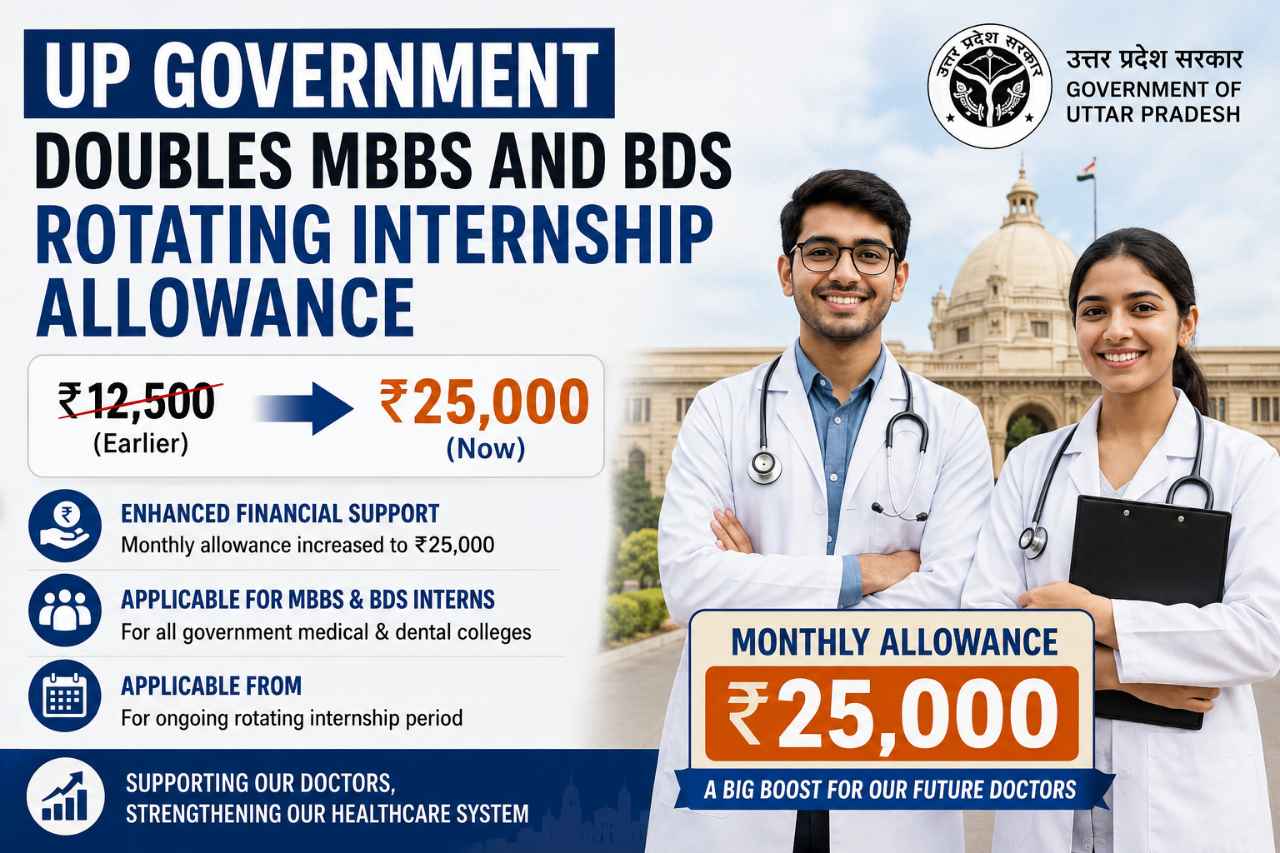

The Uttar Pradesh governemnt has taken a major step to support young doctors and dentists at a critical stage of their careers. In a cabinet meeting chaired by Chief Minister Yogi Adityanath, the state approved doubling the monthly rotating internship allowance for MBBS and BDS graduates from Rs 12,000 to Rs 25,000. The move is expected to benefit approximately 3,928 students enrolled in compulsory internship programmes at government medical colleges, affiliated institutions, and state medical universities.
For medical aspirants planning admissions through NEET and state counselling, this announcement adds a practical financial dimension to choosing government medical seats in Uttar Pradesh. Rotating internship is not optional—it is a mandatory bridge between graduation and full professional registration. Understanding what the revised stipend means, who it covers, and how it fits into the wider medical education pathway can help students and parents make informed decisions.
What Is Rotating Internship in MBBS and BDS?
Rotating internship—often called compulsory rotatory internship (CRI)—is a structured one-year training period that MBBS and BDS graduates must complete after passing their final university examinations. During this phase, interns rotate through different clinical departments such as medicine, surgery, paediatrics, obstetrics and gynaecology, community medicine, and emergency care.
The National Medical Commission (NMC) and National Dental Commission (NDC) regulate internship standards across India. Completion of internship is typically required before a graduate can obtain permanent registration with the State Medical Council or State Dental Council and begin independent practice or pursue postgraduate specialisation through exams like NEET PG.
Key Features of Rotating Internship
- Duration: Usually 12 months for MBBS; BDS internship duration follows NDC norms.
- Setting: Primarily at the parent medical or dental college hospital, with rotations across departments.
- Responsibilities: Patient care under supervision, ward duties, OPD assistance, emergency postings, and night shifts.
- Documentation: Logbooks, assessments, and completion certificates are mandatory for registration.
- Stipend: Paid by the state government or institution; amounts vary widely across states.
In Uttar Pradesh, interns at government institutions perform frontline clinical work alongside faculty and resident doctors. The revised allowance recognises the long hours, night duties, and real patient-load exposure that interns handle daily.
UP Government Decision: From Rs 12,000 to Rs 25,000
According to reports, the Uttar Pradesh cabinet approved increasing the rotating internship stipend to Rs 25,000 per month. This is more than double the previous rate of Rs 12,000 and represents one of the most significant hikes in recent years for government medical interns in the state.
The decision reflects the government’s stated aim of reducing financial stress on medical graduates during internship and encouraging them to serve in the public health system. Given rising living costs in cities like Lucknow, Kanpur, Varanasi, Agra, and Gorakhpur—where many government medical colleges are located—the higher allowance is expected to help interns manage accommodation, transport, and basic expenses without relying entirely on family support.
Timeline of UP Internship Allowance Revisions
Understanding the history of stipend revisions helps put the 2026 announcement in context:
- Pre-2021: Rotating internship allowance was Rs 7,500 per month.
- 2021: UP government raised the stipend to Rs 12,000 per month.
- August 2026: Allowance increased to Rs 25,000 per month for MBBS and BDS interns in government institutions.
This steady upward revision signals that state policymakers are responding to long-standing demands from medical student associations and intern welfare groups who argued that earlier stipends did not reflect the workload or inflation.
Who Will Benefit From the Revised Allowance?
The UP government has indicated that around 3,928 MBBS and BDS interns across government medical colleges, institutions, and medical universities will receive the enhanced allowance. This includes interns posted at established colleges as well as newer institutions that have expanded medical seat capacity in recent years.
Notably, the benefit applies to interns in government medical institutions. Students completing internship at private medical colleges may receive stipends set by their respective college management or state norms for private institutions, which can differ from government rates. Aspirants should verify stipend policies during counselling and college selection.
Major Government Medical Institutions in UP
Uttar Pradesh hosts a growing network of government-funded medical education institutions. Interns at colleges such as King George’s Medical University (KGMU) Lucknow, GSVM Medical College Kanpur, LLRM Medical College Meerut, and newer AIIMS campuses in the state stand to gain from the revised allowance.
Students comparing options across states may also look at institutions like All India Institute Of Medical Science Gorakhpur and All India Institute Of Medical Sciences Aiims Raebareli, which form part of the broader government medical ecosystem in Uttar Pradesh. While AIIMS stipend structures may follow central norms in some cases, the overall push for better intern compensation in UP aligns with national conversations on medical workforce welfare.
What Do MBBS and BDS Interns Do During Rotating Internship?
Rotating internship is often described as the first year of real-world medical practice. Interns are not mere observers—they actively participate in patient care under licensed supervision.
Typical Duties During Internship
- Ward postings: Daily rounds, vitals monitoring, case sheet updates, and assisting in procedures.
- OPD support: History taking, preliminary examination, and patient counselling.
- Emergency and casualty: Triage, stabilisation, and assisting in trauma and acute care settings.
- Night duties: On-call responsibilities across departments, often the most demanding part of internship.
- Community health: Rural postings, immunisation drives, and public health programmes in some rotations.
- Documentation: Maintaining intern logbooks required for council registration.
BDS interns similarly rotate through oral medicine, oral surgery, prosthodontics, periodontics, and community dentistry departments. The clinical exposure during this year builds skills that classroom teaching alone cannot provide.
Given this workload, financial support matters. A stipend of Rs 25,000 per month allows interns to focus on learning rather than worrying about basic living expenses—especially for graduates from middle-income families who have already invested heavily in NEET preparation and medical education.
Why the Stipend Hike Matters for Medical Education in India
Medical education in India involves significant investment—NEET coaching, college fees, hostel costs, books, and equipment. For government college students, tuition may be subsidised, but internship-year expenses in metro and tier-2 cities remain substantial.
Broader Impact of the UP Announcement
- Retention in public health: Better pay during internship may encourage graduates to continue in government service rather than immediately shifting to private practice or abroad pathways.
- Equity: Higher stipends reduce dependence on parental support and make medical careers more accessible to students from non-metropolitan backgrounds.
- Benchmark for other states: UP’s revision may prompt neighbouring states to review their own intern allowances.
- Morale and wellbeing: Acknowledging intern contributions through fair compensation supports mental health during a demanding training year.
For students exploring medical colleges beyond UP, comparing internship stipends is a practical exercise. Institutions such as Shri Kalyan Government Medical College Sikar and Government Medical College Kota in Rajasthan illustrate how different states structure government medical education. While stipend amounts vary, the trend toward recognising intern work is gaining momentum nationally.
BDS Internship Update: NDC and Provisional Registration
The UP stipend hike comes at a time of broader regulatory changes for dental graduates. In July 2026, the National Dental Commission announced that BDS students would no longer require provisional registration before commencing compulsory rotary internship. This change followed complaints from dental graduates who faced delays in permanent registration when provisional registration was not processed in time.
For BDS interns in Uttar Pradesh, the combination of simplified registration norms and a higher stipend reduces two common pain points—bureaucratic delays and financial strain. Dental aspirants should still confirm registration procedures with the Uttar Pradesh State Dental Council and their parent institution, as state-level implementation details may take time to standardise after NDC circulars.
How UP’s Rs 25,000 Stipend Compares With Other States
Internship stipends in India are not uniform. States like Delhi, Maharashtra, Karnataka, and Tamil Nadu have historically offered varying amounts depending on budgets and policy priorities. UP’s revised Rs 25,000 monthly allowance positions the state competitively among major medical education hubs.
When evaluating colleges during NEET counselling, students should consider the full package—not just stipend, but also clinical exposure, PG seat availability, hospital patient load, faculty strength, and location. A higher stipend is meaningful, but it works best alongside quality training infrastructure.
Factors to Compare During College Selection
- Monthly internship stipend and payment schedule
- Hostel availability and fees during internship year
- Hospital bed strength and daily patient footfall
- Number of PG seats and in-house quota trends
- City living costs and connectivity
- State bond or service obligations, if applicable
Institutions like All India Institute Of Medical Sciences Jodhpur and All India Institute Of Medical Sciences Bhopal remain popular alternatives for students weighing central institute benefits against state government college advantages such as lower fees and regional language familiarity.
Pathway to Internship: From NEET to Rotating Posting
Understanding how internship fits into the admissions pipeline helps Class 12 students and repeaters plan realistically.
Step-by-Step Overview
- NEET UG: Qualify the National Eligibility cum Entrance Test for MBBS/BDS admissions.
- Counselling: Participate in MCC counselling for AIQ seats and UP state counselling for state quota seats at government and private colleges.
- MBBS/BDS course: Complete 4.5 years of academic study plus one year of compulsory rotating internship (MBBS pattern as per NMC).
- Final examination: Pass university final professional exams.
- Internship posting: Begin rotatory internship at the designated hospital.
- Registration: Apply for permanent registration with the state medical or dental council after successful internship completion.
- Next steps: Pursue NEET PG, state PG exams, UPSC CMS, or clinical practice.
Aspirants targeting government seats in UP should monitor notifications from the Directorate of Medical Education, King George’s Medical University, and individual college websites for internship posting orders and stipend disbursement schedules.
Financial Planning Tips for Medical Interns
Even with Rs 25,000 per month, smart financial planning during internship helps. Here are actionable suggestions:
- Track stipend credit dates: Government allowances may follow treasury cycles; maintain a buffer for the first month.
- Shared accommodation: Pooling rent with fellow interns reduces costs in college cities.
- Minimise new liabilities: Avoid large EMIs during internship when work hours are unpredictable.
- PG exam preparation: Allocate a portion of the stipend for NEET PG study materials if planning immediate postgraduate entry.
- Keep registration documents ready: Delays in paperwork can affect stipend eligibility in some institutions.
Students from Rajasthan or other states who chose UP government colleges purely on merit and fee structure will find the enhanced allowance especially helpful when living away from home.
Role of Government Medical Colleges in Public Health
Government medical colleges serve as the backbone of affordable healthcare in India. Interns posted at district hospitals and medical college campuses often manage high patient volumes that private setups may not expose them to early in their careers.
The UP stipend increase should be viewed alongside other investments in medical infrastructure—new colleges, upgraded trauma centres, and expanded PG programmes. When government institutions treat interns fairly, they strengthen the pipeline of doctors willing to serve in public hospitals, rural postings, and emergency response systems.
For comparison, states with strong government college networks—such as Rajasthan with institutions including Government Nursing College Kota for allied health pathways—continue expanding health education beyond MBBS alone. Aspiring healthcare professionals should explore the full spectrum of courses while keeping MBBS and BDS as primary clinical routes.
What Medical Aspirants Should Watch Next
Several developments could affect UP medical students in the coming academic cycles:
- Implementation orders detailing effective date of the Rs 25,000 allowance for current versus upcoming intern batches
- NEET UG and PG counselling timelines through MCC and UP state authorities
- Further NDC and NMC circulars on internship norms and registration
- Possible stipend revisions in other states responding to UP’s benchmark
- Budget allocations for medical education in Uttar Pradesh’s annual financial planning
Staying updated through official government portals—not unverified social media posts—ensures students act on accurate information.
Annual Internship Earnings: Before and After the Hike
Looking at the stipend change in annual terms helps interns and families budget more clearly. At the previous rate of Rs 12,000 per month, a full 12-month internship yielded Rs 1,44,000 before tax or deductions. At Rs 25,000 per month, the same period brings Rs 3,00,000—a difference of Rs 1,56,000 over one year.
Compared to the pre-2021 allowance of Rs 7,500 per month (Rs 90,000 annually), the 2026 rate represents more than a threefold increase over five years. This progression mirrors inflation in rent, food, and transport costs that interns face in UP's medical college cities.
Quick Comparison of UP Internship Stipend Rates
- Rs 7,500/month: Rs 90,000 per year (pre-2021 rate)
- Rs 12,000/month: Rs 1,44,000 per year (2021–2025 rate)
- Rs 25,000/month: Rs 3,00,000 per year (2026 revised rate)
While central institutions such as All India Institute Of Medical Sciences Delhi Aiims Delhi follow their own stipend frameworks, state government hikes like UP's create a stronger financial case for domicile and all-India quota candidates who prioritise affordability during the five-and-a-half-year medical course cycle.
NEET Counselling and Choosing UP Government Medical Seats
Students enter the internship pipeline only after securing an MBBS or BDS seat through NEET UG counselling. The Medical Counselling Committee (MCC) handles All India Quota seats, while the Uttar Pradesh state authority conducts counselling for state quota seats at government and private colleges.
When filling choices, aspirants should note that the Rs 25,000 internship allowance applies after graduation—not during the undergraduate years. However, knowing the post-course benefit helps estimate the total return on investment for a government seat, where tuition fees are typically lower than private colleges.
Actionable Tips for NEET Aspirants Targeting UP
- Check previous year cut-offs for government medical colleges in UP through official counselling brochures.
- Compare total course fees, hostel charges, and expected internship stipend together—not in isolation.
- Read bond or service obligations, if any, attached to state quota seats before locking choices.
- Follow UP Directorate of Medical Education and MCC websites for verified announcements on stipends and admissions.
- Speak with current interns at your target college about stipend payment timelines and hostel availability during internship.
Students who also explore allied health sciences at institutions like Government Ayurved Mahavidyalaya Sikar or Government Yoga And Naturopathy Medical College Sikar should note that stipend norms for AYUSH internship programmes follow separate state and commission guidelines, distinct from the MBBS and BDS allowance covered in this announcement.
Expert Take: Why This Policy Aligns With India's Doctor Shortage Challenge
India continues to face a shortage of doctors relative to WHO recommended ratios, particularly in rural and semi-urban areas. Uttar Pradesh, with one of the largest populations in the country, depends heavily on government medical colleges to train physicians who will serve in public hospitals.
Internship is the stage where graduates decide whether to continue in government service, pursue super-specialisation, or move to the private sector. Fair compensation during this formative year sends a signal that the state values intern contributions to emergency care, maternal health, infectious disease management, and routine hospital operations.
Policy moves like the Rs 25,000 allowance, when paired with infrastructure upgrades and PG seat expansion, contribute to a more sustainable medical workforce pipeline. For parents and students evaluating long-term career stability, government medical training in UP increasingly offers both clinical depth and improved financial support during internship.
Conclusion
The Uttar Pradesh government’s decision to raise MBBS and BDS rotating internship allowance from Rs 12,000 to Rs 25,000 per month is a meaningful policy shift for nearly 4,000 medical and dental interns serving in government institutions. It acknowledges the essential clinical work interns perform in wards, emergency units, OPDs, and night duties across the state’s public health network.
For NEET aspirants, the announcement adds another reason to consider government medical seats in UP alongside traditional factors like fees, seat matrix, and college reputation. Combined with recent NDC reforms easing BDS provisional registration requirements, dental graduates face a smoother path from internship to professional practice.
As always, verify stipend details with your allotted college at the time of admission and again before internship commencement. Policies are most reliable when confirmed through official university and government communications. With proper planning, the enhanced allowance can support a focused, productive internship year—the foundation of a responsible medical career in India.