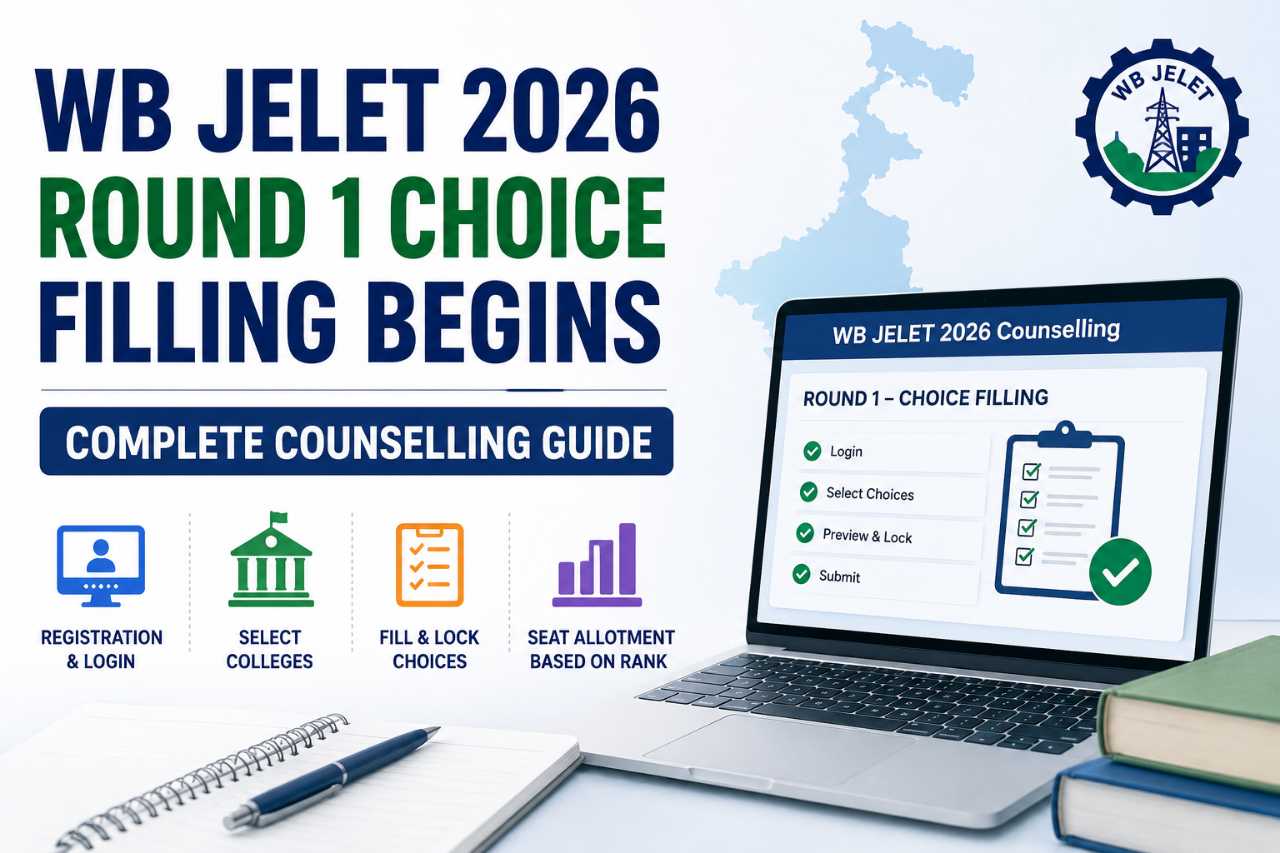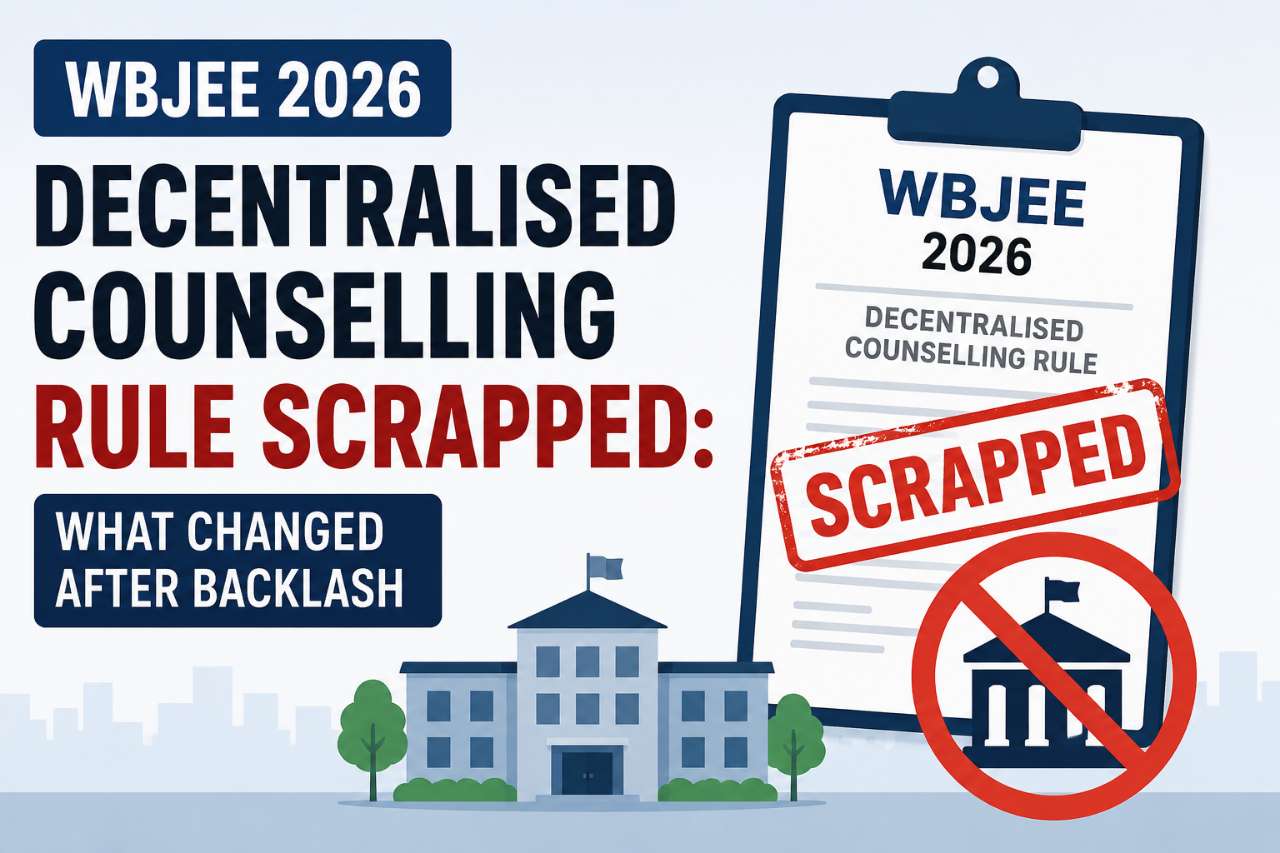
The West Bengal Joint Entrance Examinations Board (WBJEEB) has updated the WBJEE decentralised counselling 2026 brochure and announced revised dates for filling vacant BTech and BPharm seats across participating colleges and institutes in the state. For thousands of students who appeared in WBJEE but could not secure their preferred branch or institution during the main counselling rounds, this decentralised admission window offers a structured second chance to complete their engineering journey in West Bengal.
Unlike the centralised e-counselling conducted earlier in 2026, decentralised counselling focuses on leftover seats at individual colleges. WBJEEB coordinates the process online, but document verification and final admission confirmation happen at the allotted institute. The revised brochure, published in early September 2026, reflects important changes in eligibility especially for candidates who already hold a seat from earlier WBJEE counselling rounds but wish to upgrade to a different college or stream.
This article breaks down everything you need to know: who can apply, how Phase 1 and Phase 2 work, the complete date schedule, fees, reporting rules, and practical tips to avoid disqualification. Whether you are targeting core branches in government colleges or exploring options in private institutes, understanding these rules will help you make informed decisions during a fast-moving admission cycle.
What Is WBJEE Decentralised Counselling 2026?
WBJEE decentralised counselling is the final admission mechanism through which unfilled seats in West Bengal engineering and pharmacy programmes are offered to eligible WBJEE 2026 rank holders. After the main counselling rounds conclude, many colleges still have vacant seats in specific branches Mechanical Engineering, Electrical Engineering, Computer Science and Engineering, Civil Engineering, Electronics, and BPharm, among others. Decentralised counselling pools these vacancies and allows candidates to register, fill choices, and receive fresh seat allotments.
The process is conducted in two phases Phase 1 and Phase 2 with multiple rounds within each phase. WBJEEB publishes a vacant seat matrix before each registration window so applicants know exactly which college-stream combinations are open. Candidates participate through the official portal at wbjeeb.nic.in and pay a one-time registration fee of Rs 250.
How Decentralised Counselling Differs From Main WBJEE Counselling
Main WBJEE counselling typically follows a centralized seat allotment model with state-level merit lists and multiple rounds of choice filling. Decentralised counselling, by contrast, is designed specifically for leftover inventory after those rounds end. Key differences include:
- Seat availability: Only vacant seats listed in the official matrix are open for choice filling.
- Timeline: The entire decentralised process runs over a compressed schedule in September 2026, with tight reporting deadlines.
- Institute-level verification: After online allotment, candidates must visit the allotted college for physical document verification (DV) and admission confirmation.
- Revised eligibility in 2026: Candidates who already received a seat in main counselling may now participate, subject to restrictions explained below.
Students comparing West Bengal options with National-level exams often look at JEE Main or state-specific routes elsewhere. However, for WBJEE rank holders, decentralised counselling remains the most direct path to a Bachelor of Technology (BTech) seat within West Bengal without starting a completely new admission cycle.
Revised Eligibility Criteria in the 2026 Brochure
One of the most significant updates in the revised WBJEE decentralised counselling 2026 brochure relates to who can register. Following feedback from students, teachers, and academic stakeholders, WBJEEB expanded participation rules for candidates who were already allotted seats during the main WBJEE counselling process.
Who Can Apply
Generally, candidates who appeared in WBJEE 2026, meet the academic and category requirements specified in the brochure, and have not violated reporting or withdrawal norms from earlier rounds may apply. The 2026 revision specifically allows candidates who already hold a seat from WBJEE counselling to enter decentralised rounds if they want admission in a different stream or a different college.
Important Restriction: Same College-Stream Combination
The revised guidelines make one rule absolutely clear: if you are already admitted or hold an active allotment for a specific college and stream combination (for example, College X in Mechanical Engineering), you cannot apply for the exact same combination again through decentralised counselling. This prevents duplicate claims on the same seat while still giving students room to upgrade or switch disciplines.
Practical example: A student allotted Information Technology at a private engineering college in Kolkata may participate in decentralised counselling to seek BTech CSE at another institute or a core branch at a government college. However, that same student cannot re-apply for IT at the same college where they already hold a confirmed seat.
Non-Reporting Penalty
WBJEEB has issued a strict warning on seat acceptance behaviour. If a candidate locks an allotted seat, pays the seat acceptance fee, and then fails to report to the institute for physical verification within the notified window, their candidature will be treated as non-reporting. Such candidates will be immediately debarred from all remaining decentralised counselling rounds. Treat every provisional allotment as a binding commitment unless you formally withdraw within the prescribed timeline.
WBJEE Decentralised Counselling 2026 Dates: Phase 1 and Phase 2
The board has announced a detailed schedule covering vacant seat publication, registration, merit list release, provisional admission, and physical document verification. Missing even one deadline can cost you a seat, so mark these dates carefully.
Phase 1 Round 1 Schedule
| Event | Date(s) |
|---|---|
| Vacant seat matrix publication | September 6, 2026 |
| Registration window | September 7 to 8, 2026 |
| Merit and allocation list publication | September 10, 2026 |
| Provisional admission (fee payment and admission receipt) | September 10 to 11, 2026 |
| Physical DV and admission confirmation | September 10 to 12, 2026 |
Phase 1 Round 2 Schedule
| Event | Date(s) |
|---|---|
| Post Round 1 allocation list publication | September 13, 2026 |
| Provisional admission (fee payment and admission receipt) | September 13 to 14, 2026 |
| Physical DV and admission confirmation | September 14 to 15, 2026 |
| Seat withdrawal confirmation deadline (vacant seats returned to matrix) | September 15, 2026 |
| Publication of vacant seat information (college/institute–stream) | September 16, 2026 |
| Active registration window (fee, profile creation, choice selection) | September 16 to 18, 2026 |
Phase 2 Round 1 Schedule
| Event | Date(s) |
|---|---|
| Merit and allocation publication | September 20, 2026 |
| Provisional admission (fee payment and admission receipt) | September 20 to 21, 2026 |
| Physical DV, admission, and withdrawal confirmation | September 20 to 22, 2026 |
Phase 2 Round 2 Schedule
| Event | Date(s) |
|---|---|
| Post Round 1 allocation list publication | September 23, 2026 |
| Provisional admission (fee payment and admission receipt) | September 23 to 24, 2026 |
| Physical DV and admission confirmation | September 24 to 25, 2026 |
Registration for Phase 1 Round 1 opens on September 7, 2026, on wbjeeb.nic.in. Because the window spans only two days initially, complete your profile and choice selection as early as possible to avoid last-minute server congestion.
Registration Fee and Documents Required
Candidates must pay a one-time registration fee of Rs 250 to participate in WBJEE decentralised counselling 2026. This fee is separate from any seat acceptance or admission fees charged by the allotted institute. Keep digital and printed payment receipts safe they may be required during verification.
Documents Commonly Needed for Physical Verification
While the exact checklist may vary slightly by institute, prepare the following in original and photocopy form:
- WBJEE 2026 admit card and rank card
- Class 10 and Class 12 mark sheets and pass certificates
- Category certificate (SC/ST/OBC-A/OBC-B/PwD), if applicable
- Domicile or residency proof, if required by the institute
- Photo identity proof (Aadhaar, voter ID, or passport)
- Passport-size photographs
- Seat allotment letter and fee payment receipt from the WBJEE portal
- Medical fitness certificate, if mandated by the college
Arrive at the institute with a file folder organized in the order specified on the college admission notice. Incomplete documentation is one of the most common reasons for delayed or rejected admission even after online allotment.
How Seat Allotment Works in Decentralised Counselling
Understanding the allotment logic helps you fill choices strategically rather than randomly listing every open seat.
Merit and Vacant Seat Matrix
WBJEEB publishes a vacant seat matrix showing institute-wise and stream-wise availability before each registration period. Your WBJEE rank, category, and seat type (government, management quota where applicable) determine your position on the merit list for decentralised rounds. Higher rank generally means better access to preferred combinations, but vacant seat inventory also shapes outcomes popular branches at top colleges may still fill quickly.
Choice Filling Strategy for BTech Aspirants
When filling choices for a BTech programme, balance ambition with realism:
- Prioritize branches you will actually join. Do not list CSE at a top college if you will refuse it and risk non-reporting penalties.
- Mix reach, match, and safe options. Include at least two to three combinations where your rank historically aligns with past cutoffs.
- Check location and fees. A seat in a distant district may involve hostel costs; factor in total expense before locking choices.
- Review Phase 2 opportunities. If Phase 1 does not yield a satisfactory allotment, monitor the refreshed vacant seat list before Phase 2 registration.
Students interested in specialized technology pathways sometimes explore programmes beyond West Bengal institutions such as the Central Institute of Technology Kokrajhar or private universities like Vel Tech Chennai appear on National radars. However, if your WBJEE rank is active and West Bengal remains your home state for education, decentralised counselling is the most time-efficient route to secure a seat without re-appearing for entrance exams.
Phase 1 vs Phase 2: Which Round Should You Target?
Both phases follow a similar round structure, but the seat landscape changes between them as candidates confirm, withdraw, or fail to report.
Phase 1: First Access to Vacancies
Phase 1 Round 1 opens immediately after the first vacant seat matrix is published on September 6. This is the best window for candidates who missed main counselling entirely or want to switch from an unsatisfactory allotment. Round 2 within Phase 1 captures seats freed through withdrawal by September 15, followed by a fresh registration window from September 16 to 18.
Phase 2: Final Opportunities
Phase 2 begins with a new merit and allocation cycle on September 20. By this stage, the seat matrix reflects confirmed admissions and withdrawals from Phase 1. Candidates who did not register earlier may still get a chance if they meet eligibility norms, but options may be narrower especially for high-demand branches like CSE and ECE.
If you are currently admitted elsewhere in India through exams like JEE Advanced or another state counselling, weigh the cost of switching against the benefit of a West Bengal seat. Decentralised counselling moves quickly; deferring a decision beyond the reporting window can close the door permanently.
Withdrawal, Seat Cancellation, and Upgradation Rules
The revised brochure clarifies how withdrawals affect the vacant seat pool. If a candidate withdraws from an allotted seat, the college or institute must confirm admission cancellation on the portal by the notified deadline September 15 for Phase 1 Round 2 withdrawals. Only after formal cancellation does the seat return to the matrix for subsequent rounds.
Candidates upgrading from an existing WBJEE seat should complete withdrawal at their current institute before accepting a new decentralised allotment, unless the brochure specifies a concurrent process. Holding two confirmed admissions violates admission norms and can lead to cancellation of both seats.
BTech and BPharm Seats: What Aspiring Engineers Should Know
Although this admission cycle covers both engineering and pharmacy vacancies, BTech programmes attract the largest applicant pool. West Bengal hosts a mix of government engineering colleges, university departments, and private self-financing institutes participating under WBJEE. Branch availability varies widely:
- High-demand branches: Computer Science, Electronics and Communication, Electrical Engineering
- Moderate-demand branches: Mechanical, Civil, Information Technology
- Emerging options: Artificial Intelligence, Data Science, and interdisciplinary programmes at select institutes
BPharm seats follow the same decentralised framework but require pharmacy-specific eligibility and may have different document requirements at the institute level. Engineering candidates should not fill pharmacy choices unless they genuinely intend to pursue that degree path.
For a broader view of undergraduate engineering qualifications nationwide, explore guides on BTech and MTech pathways and compare how state-level counselling like WBJEE fits into your long-term academic plan.
Common Mistakes to Avoid During Decentralised Counselling
The compressed September schedule leaves little room for error. Avoid these frequent pitfalls:
- Late registration: Portal traffic spikes on the final day of each window. Register on day one if possible.
- Ignoring the vacant seat matrix: Choices outside the published matrix are invalid for that round.
- Accepting a seat without planning to report: Non-reporting leads to immediate debarment from remaining rounds.
- Applying for the same college-stream combination: Ineligible under revised 2026 rules if you already hold that allotment.
- Missing physical verification: Online fee payment alone does not confirm admission; institute-level DV is mandatory.
- Incomplete document files: Carry originals, attested copies, and category certificates as applicable.
Actionable Tips for Parents and Students
Decentralised counselling can feel stressful because decisions must be made within days, not weeks. Use this checklist to stay organized:
- Download the revised brochure from wbjeeb.nic.in and read the eligibility section line by line.
- Save the vacant seat matrix PDF and highlight colleges within your travel and budget range.
- Discuss branch preferences as a family before registration opens last-minute arguments delay choice filling.
- Keep Rs 250 plus seat acceptance fees ready in your bank account for smooth online payment.
- Plan travel to allotted colleges in advance, especially if physical verification falls on consecutive days.
- Save screenshots of every portal transaction: registration, choice locking, allotment, and fee payment.
- Contact the allotted institute's admission cell by phone to confirm document requirements and office hours.
Students who also appeared in other entrance exams should maintain a parallel list of backup options. National-level alternatives and central universities such as the Central University of Jharkhand Ranchi or the Mahatma Gandhi Central University Motihari serve different admission channels, but keeping alternatives visible reduces panic if decentralised allotment does not match your first preference.
Official Portal and Where to Find Updates
All official notifications, revised brochures, vacant seat matrices, merit lists, and registration links for WBJEE decentralised counselling 2026 are published on wbjeeb.nic.in. Avoid relying on unofficial social media posts or third-party PDFs that may contain outdated eligibility rules from before the September 2026 revision. Bookmark the WBJEEB homepage and check it at least twice daily during the active admission window, as date extensions or clarifications though uncommon are communicated only through the board's website.
If you face technical issues during registration or payment, note the transaction reference number and contact WBJEEB helpline numbers listed on the portal. Colleges cannot override WBJEEB allotment rules at the institute level, so any dispute about eligibility or seat status must be resolved through the board's official channels rather than informal requests at the admission counter.
Conclusion
WBJEEB's revised decentralised counselling 2026 brochure marks an important shift in West Bengal engineering admissions, particularly the expanded eligibility for candidates who already hold main counselling seats but seek a better college or stream match. With Phase 1 registration beginning September 7, vacant seat matrix publication on September 6, and the entire process concluding by September 25, WBJEE rank holders have a narrow but valuable window to secure a BTech seat before the academic year advances.
Success in decentralised counselling depends on three factors: timely registration, realistic and well-researched choice filling, and strict adherence to reporting deadlines. Pay the Rs 250 registration fee promptly, monitor wbjeeb.nic.in for merit lists and vacant seat updates, and treat every provisional allotment as a commitment unless you formally withdraw within the prescribed timeline. For West Bengal students aiming to begin their engineering education without delay, this revised schedule is the most current and authoritative path to vacant BTech and BPharm admissions in 2026.