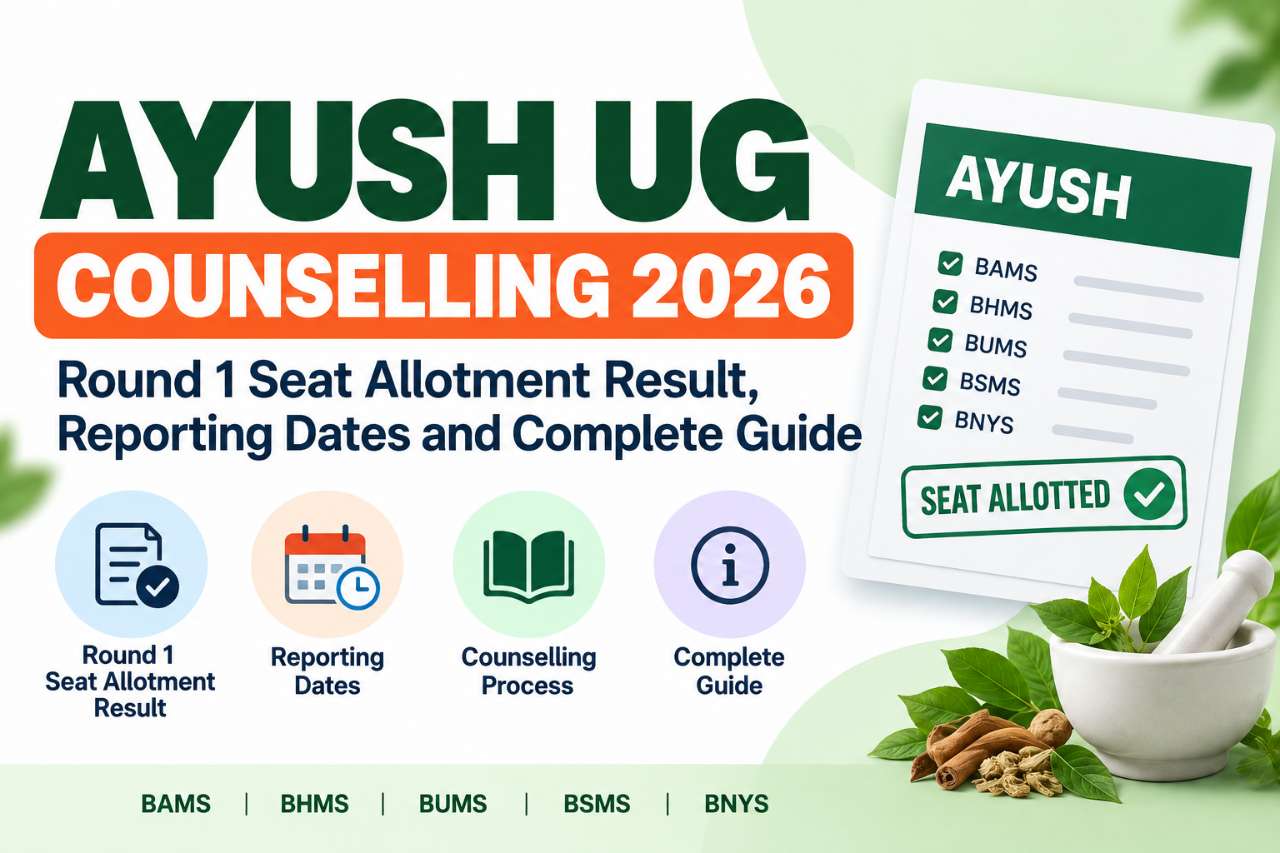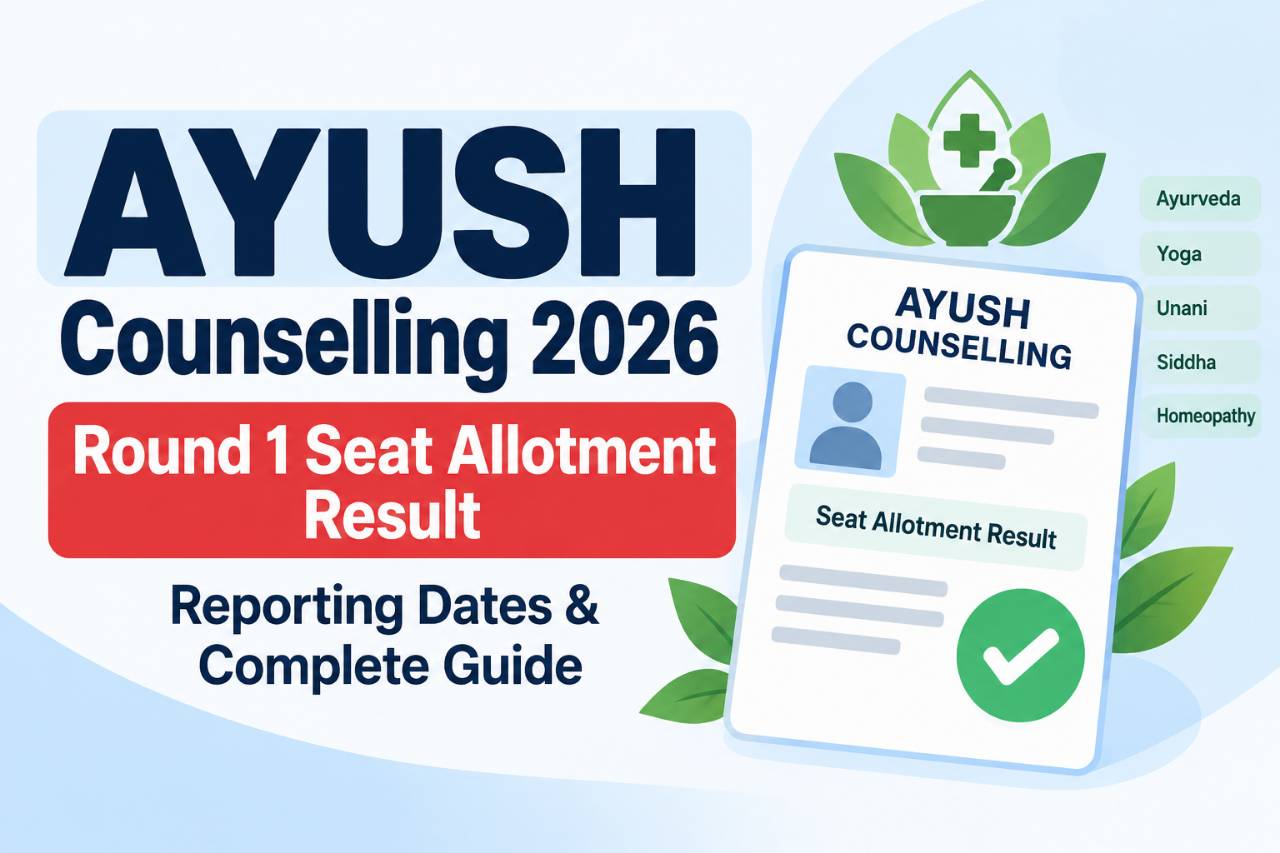
If you cleared NEET UG 2026 and want to build a career in Ayurveda, Homoeopathy, Unani, Siddha, or Naturopathy, AYUSH Counselling 2026 is the central gateway to thousands of undergraduate seats across India. The AYUSH Admission Central Counselling Committee (AACCC) announced the Round 1 seat allotment result on September 16, 2026, and candidates who received a seat must complete reporting at their allotted college between September 17 and 23, 2026.
Unlike standalone entrance exams for every stream, AYUSH admissions are tied to your NEET UG rank. AACCC manages All India Quota seats, central university seats, national institute seats, and all seats in deemed universities. State authorities handle the remaining 85% state quota seats separately. Whether you are aiming for a government BAMS seat or exploring options at dedicated Ayush universities such as Mahayogi Guru Gorakhnath Ayush University, understanding the counselling timeline, fee structure, and document checklist is essential to avoid losing your allotment.
AYUSH Counselling 2026 at a Glance
AYUSH counselling covers five major undergraduate programmes: BAMS (Ayurveda), BHMS (Homoeopathy), BNYS (Naturopathy and Yoga), BSMS (Siddha), and BUMS (Unani). Together, these courses offer access to India's traditional and integrative healthcare systems, which continue to see strong demand in clinics, hospitals, research, and wellness sectors.
According to the latest admission cycle data, more than 52,720 seats are available across approximately 914 colleges offering BAMS, BHMS, BNYS, BSMS, and BUMS programmes. The official portal for central counselling is aaccc.gov.in.
Key Highlights
- Conducting body: AYUSH Admission Central Counselling Committee (AACCC)
- Qualifying exam: NEET UG 2026
- Round 1 result: September 16, 2026
- Round 1 reporting: September 17 to 23, 2026
- Total UG AYUSH seats: 52,720+
- Total participating colleges: 914+
- Official website: aaccc.gov.in
Who Conducts AYUSH NEET Counselling and Which Seats Are Covered?
The AACCC is the competent authority for centralised AYUSH counselling linked to NEET. It allocates seats under multiple categories:
- 15% All India Quota (AIQ) government UG seats in BAMS, BSMS, BUMS, and BHMS across states and union territories
- 100% seats in central universities and national institutes offering AYUSH courses
- 100% AYUSH seats in deemed universities
- Seats in government-aided institutes participating in central counselling
Central counselling typically runs across three main rounds, followed by stray vacancy rounds for remaining seats primarily in deemed universities, central universities, and national institutes. If you miss Round 1, you can still participate in subsequent rounds subject to registration windows and seat availability.
For the 85% state quota, each state conducts its own AYUSH counselling through its respective health or medical education department. For example, students targeting colleges in Chhattisgarh should follow the state schedule alongside central counselling and may explore institutions like Pt Deendayal Upadhyay Memorial Health Sciences And Ayush University Of Chhattisgarh as part of their preference list.
AYUSH Counselling 2026 Important Dates
Missing a deadline in medical and AYUSH admissions can cost you a seat even with a good NEET rank. Below is the Round 1 schedule and an overview of later rounds for planning purposes. Always confirm dates on aaccc.gov.in before acting, as authorities may issue corrigenda.
Round 1 Schedule
- Seat matrix verification: August 25–26, 2026
- Registration: August 31–September 13, 2026
- Choice filling and locking: September 9–13, 2026
- Seat allotment processing: September 14–15, 2026
- Round 1 allotment result: September 16, 2026
- Reporting at allotted college: September 17–23, 2026
- Verification of joined candidates: September 24, 2026
Round 2, Round 3, and Stray Vacancy Rounds
Round 2 registration runs from September 26 to 30, 2026, with choice filling during September 27–30. The allotment result is expected on October 2, 2026, and reporting is scheduled from October 3 to 9, 2026.
Round 3 opens registration from October 14 to 20, 2026, with choice filling on October 21–22. Reporting for allotted candidates is from October 24 to 29, 2026.
Stray vacancy rounds typically follow in November 2026 for unfilled seats. Candidates who did not join earlier or wish to upgrade in limited cases should monitor AACCC notifications closely during this phase.
Eligibility Criteria for AYUSH Admission Through NEET 2026
Only NEET UG 2026 qualified candidates are eligible for AYUSH counselling. Your eligibility is primarily determined by NTA's NEET criteria, though individual colleges may publish additional requirements on their websites.
Academic and Age Requirements
- Qualifying exam: Class 12 or equivalent with Physics, Chemistry, Biology/Biotechnology, and English in both Classes 11 and 12 from a recognised board
- Minimum age: 17 years as on December 31, 2026
- Maximum age: No upper age limit for NEET and AYUSH admissions
- Attempts: No restriction on number of NEET attempts
NEET Qualifying Percentiles
- General (UR): 50% aggregate in PCB subjects
- OBC/SC/ST: 40% aggregate in PCB subjects
- PwBD: 45% aggregate in PCB subjects
Nationality: Indian nationals, NRIs, OCIs, PIOs, and foreign nationals may participate as per AACCC and institute-specific rules.
Because NEET is common to MBBS, BDS, and AYUSH streams, students often compare pathways. Those interested in modern allopathic medicine pursue MBBS counselling through separate authorities, while institutes such as All india institute Of Medical Sciences Delhi Aiims Delhi follow their own admission routes outside AACCC AYUSH counselling. AYUSH aspirants should therefore focus on AACCC and state Ayush portals rather than AIQ MBBS counselling links.
AYUSH Counselling 2026 Registration Fee and Security Deposit
During AACCC registration, candidates pay two components: a non-refundable registration fee and a refundable security deposit. The security amount is refunded after admission formalities if you join the allotted seat as per rules, or adjusted according to AACCC refund policy if you exit the process correctly.
Non-Refundable Registration Fee
- AIQ government / government-aided / central university / national institute: Rs 1,000 for UR/EWS/OBC-NCL; Rs 500 for SC/ST/PwBD
- Deemed university: Rs 5,000 for all categories
Refundable Security Deposit
- AIQ government / government-aided / central university / national institute: Rs 10,000 (all categories)
- Deemed university: Rs 50,000 (all categories)
Budget for both fees at registration and keep your payment receipt. Deemed university seats involve a significantly higher security deposit, so plan finances before locking choices.
Choice Filling, Seat Allotment, and Reporting Process
AYUSH seat allotment is merit-based. AACCC considers your NEET rank, category, seat availability, and order of preferences you submit during choice filling. If you do not manually lock choices before the deadline, the system may auto-lock your last saved preferences still, manual locking is strongly recommended to avoid errors.
After Round 1 Allotment: What to Do Next
If you received a seat in Round 1 on September 16, 2026:
- Download and print your allotment letter from aaccc.gov.in
- Verify college name, course, quota, and reporting dates
- Prepare original documents and photocopies
- Report physically to the allotted institute between September 17 and 23, 2026
- Pay institute fees and complete admission formalities within the college timeline
- Ensure AACCC verifies your joined status on September 24, 2026
Failure to report within the stipulated window without valid reason typically leads to cancellation of the allotted seat and possible penalties depending on round and institute type.
Documents Required for AYUSH Counselling and Reporting
- Class 10 mark sheet and certificate
- Class 12 mark sheet and certificate
- NEET UG 2026 admit card
- NEET UG 2026 scorecard/result
- Category certificate (SC/ST/OBC/EWS/PwBD), if applicable
- Valid photo ID (Aadhaar, passport, or other accepted proof)
- Passport-size photographs
- Allotment letter downloaded from AACCC portal
- Domicile certificate, if required by state quota or institute
- Transfer/migration certificate, as requested by college at admission
AYUSH Courses Explained: BAMS, BHMS, BNYS, BSMS, and BUMS
Choosing the right AYUSH discipline shapes your clinical training and career path. All five courses require NEET qualification, but curriculum focus and practice settings differ.
BAMS – Bachelor of Ayurvedic Medicine and Surgery
BAMS is typically a 5.5-year programme (including internship) blending classical Ayurveda with modern medical sciences. Core areas include Ayurvedic anatomy and physiology, pharmacology, toxicology, general medicine, surgery, gynaecology, paediatrics, Panchakarma, and classical Ayurvedic texts. Graduates work in Ayurvedic hospitals, wellness centres, research, and integrative clinics. Dedicated Ayush universities such as Shri Krishna Ayush University offer structured BAMS pathways with affiliated teaching hospitals.
BHMS – Bachelor of Homoeopathic Medicine and Surgery
BHMS trains students in homoeopathic principles, materia medica, organon of medicine, and clinical practice using diluted remedies that stimulate the body's self-healing response. Career options include homoeopathic clinics, hospitals, pharmacy, paediatrics, psychiatry, and skin speciality practice.
BNYS – Bachelor of Naturopathy and Yoga Sciences
BNYS emphasises natural healing through nutrition, yoga, acupuncture, botanical medicine, and lifestyle modification. It suits students interested in preventive health, wellness coaching, and naturopathic therapy centres.
BSMS – Bachelor of Siddha Medicine and Surgery
BSMS focuses on the Siddha system of medicine, particularly prominent in Tamil Nadu. Subjects include Siddha general medicine, pharmacology (Gunapadam), special medicine, paediatrics, pathology, and toxicology. Siddha practice is rooted in balancing bodily elements to restore health.
BUMS – Bachelor of Unani Medicine and Surgery
BUMS covers the Unani system based on humoral theory and natural elements. Training includes regimental therapy, pharmacotherapy, dietotherapy, and surgery. Unani practitioners commonly treat chronic conditions such as arthritis, skin disorders, and lifestyle-related diseases.
State AYUSH Counselling 2026: What Students Must Know
While AACCC handles central and deemed seats, 85% state quota seats are filled through state-level counselling bodies. Each state publishes its own registration dates, fee structure, domicile rules, and document requirements. A student from Uttar Pradesh, for instance, may participate in both AACCC (for AIQ and deemed seats) and UP state Ayush counselling (for state quota seats), maintaining separate registrations and choice lists.
State counselling merit lists are derived from NEET scores, but cutoffs vary widely by course and college type. Government seats generally close at higher ranks (lower cutoff scores) than private seats. Always fill state choices in order of genuine preference not based on guesswork alone.
Regional institutes across India participate in both central and state processes. Students exploring options in multiple states should compare fee structures, hostel facilities, hospital exposure, and internship quality not just cutoff trends. For instance, North Indian students may evaluate Ayush universities in Uttar Pradesh and neighbouring states, while students in central India might consider institutions affiliated with state health universities. Domicile requirements can restrict certain state quota seats, so read the state prospectus before assuming eligibility based on NEET rank alone.
Many states also conduct mop-up or special rounds after main Ayush counselling rounds. These rounds absorb vacant seats and can offer a second chance to candidates who missed earlier deadlines. Keep mobile alerts active for SMS and email updates from both AACCC and your state counselling authority.
Top Colleges and Regional Options Under AYUSH Counselling
AYUSH admissions are distributed across government medical colleges with Ayush departments, standalone Ayush colleges, deemed universities, and state Ayush universities. While national rankings and cutoffs shift every year, students commonly prioritise:
- Established government Ayush colleges with high patient inflow
- Central and state Ayush universities with dedicated campuses
- Deemed universities with modern infrastructure (often at higher fees)
- Colleges in home state for domicile advantage in state quota
When researching colleges, cross-check AACCC seat matrix data with official college websites. Verify whether a college is government, aided, private, or deemed, as this affects tuition fees and bond conditions. Some states require service bonds for government Ayush seats, meaning graduates must serve in rural or public health postings for a specified period.
For students comparing allied health pathways, note that MBBS institutions including regional AIIMS such as All India Institute Of Medical Sciences Bhopal, All India Institute Of Medical Sciences Patna, All India Institute Of Medical Sciences Guwahati, All India Institute Of Medical Science Gorakhpur, and All India Institute Of Medical Sciences Jodhpur operate under separate counselling systems and are not substitutes for Ayush seat allotment through AACCC. Choosing Ayush over MBBS should be a deliberate career decision based on interest in traditional medicine systems, not merely on lower cutoff ranks.
AYUSH Counselling 2026 Cutoffs and Merit: Practical Tips
Cutoffs depend on NEET difficulty, number of applicants, seat matrix changes, and category. Rather than relying on a single expected rank, use previous year trends as reference and build a balanced choice list:
- Realistic choices: Colleges where your rank historically secured seats in your category
- Moderate choices: Colleges slightly above your expected range
- Aspirational choices: Top institutes worth listing early in preference order if you prioritise them
Remember: preference order matters as much as rank. AACCC allots the highest preferred available seat you will not receive a lower preference if a higher one is still vacant at your rank. Before final submission, simulate your list: if you receive seat number three on your list, would you still join happily? If not, reorder preferences.
For deemed university seats, factor total five-year cost including tuition, hostel, and security deposit into your decision. A lower NEET rank may still secure a deemed seat, but the financial commitment is significantly higher than most government Ayush colleges.
Common Mistakes to Avoid
- Missing choice locking deadline in Round 1 or later rounds
- Listing only high-demand colleges with no backup options
- Ignoring state counselling while focusing only on AACCC
- Not reporting within five to seven days after allotment
- Uploading incorrect category or PwBD certificates
- Confusing MBBS AIQ counselling login with AACCC Ayush portal
Career Scope After AYUSH Degrees in India
AYUSH graduates are eligible for clinical practice after completing internship and registering with respective state councils or national boards, as applicable. Career avenues include:
- Private clinical practice and polyclinics
- Government Ayush dispensaries and hospitals
- Wellness, spa, and integrative medicine centres
- Teaching and research in Ayush universities
- Pharmaceutical and nutraceutical industries
- Public health and community medicine roles
The Government of India continues to promote Ayush integration in primary healthcare, which supports long-term demand for qualified practitioners. Initiatives such as Ayush wellness centres, integrative medicine departments, and research funding under the Ministry of Ayush have expanded employment channels beyond traditional private clinics.
Post-graduation options include MD/MS equivalents in respective Ayush systems, hospital administration, public health programmes, and academic roles. Students should verify state-specific registration rules with the State Ayush Board or Council before setting up independent practice, as requirements differ across BAMS, BHMS, BUMS, BSMS, and BNYS pathways.
Conclusion
AYUSH Counselling 2026 Round 1 seat allotment result is out, and the reporting window from September 17 to 23, 2026 is the most urgent milestone for allotted candidates. If you have a seat, complete document verification and fee payment at your institute without delay. If you did not receive a preferred allotment, prepare for Round 2 registration starting September 26, 2026, and parallel state counselling where eligible.
Success in AYUSH admissions combines a solid NEET score, careful choice filling, timely fee payment, and disciplined reporting. Use aaccc.gov.in as your primary source, maintain a checklist of original documents, and keep both central and state counselling dashboards active until you secure admission. Bookmark official notices rather than relying on social media rumours, and contact allotted colleges directly if reporting instructions are unclear. With more than 52,000 seats across hundreds of colleges, informed planning gives every qualified NEET candidate a realistic path into Ayurveda, Homoeopathy, Unani, Siddha, or Naturopathy education in India.