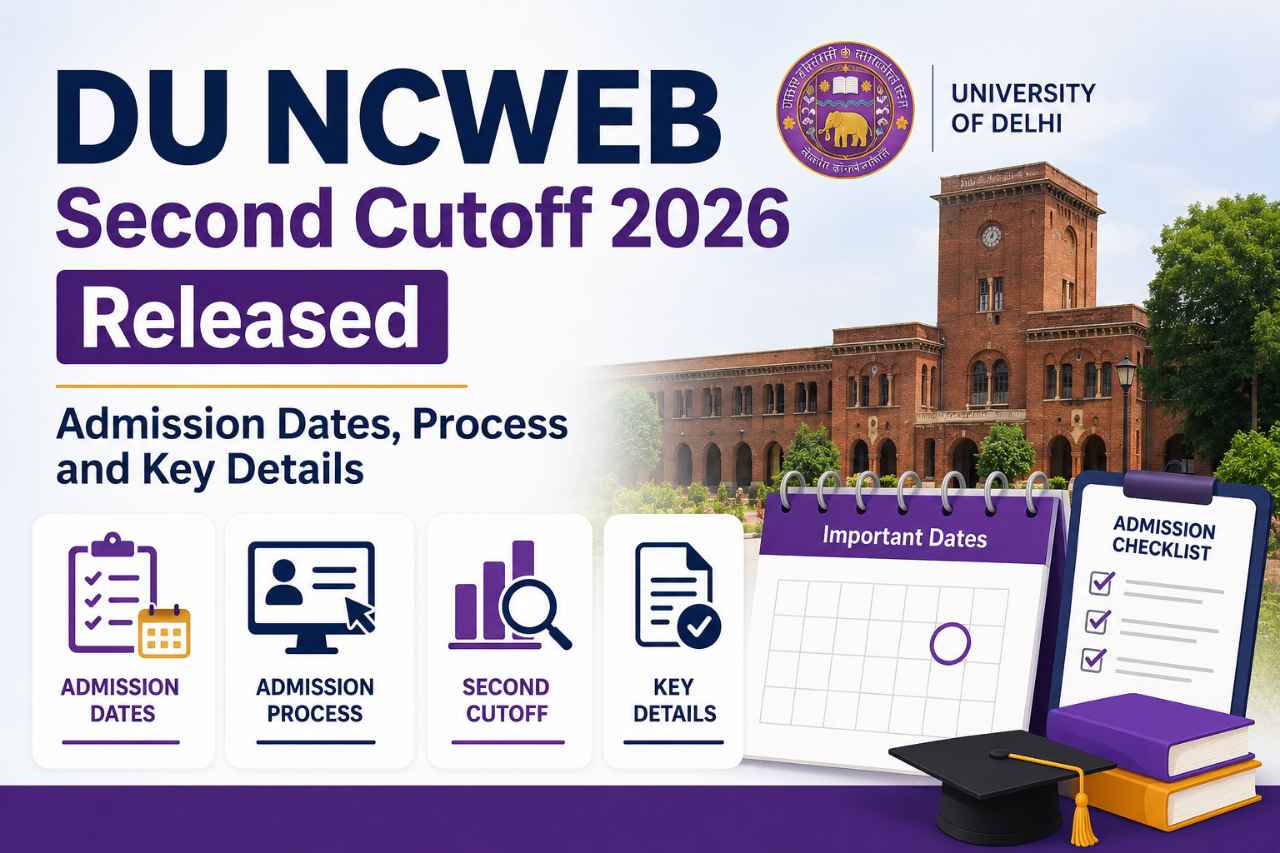

The University of Delhi (DU) has released the Non-Collegiate Women's Education Board (NCWEB) third cutoff 2026 on August 10, 2026, for the Bachelor of Arts (BA) Programme and Bachelor of Commerce (B.Com). Women residents of the National Capital Territory (NCT) of Delhi who registered on the common admission portal can now apply against this list at admission.uod.ac.in. This guide explains what the third cutoff means, college-wise percentages, eligibility rules, documents, and the step-by-step admission process—so you can act quickly before seats close.
What Is DU NCWEB and Why Does the Third Cutoff Matter?
NCWEB is a dedicated board of the University of Delhi that offers weekend-only undergraduate classes for women who permanently reside in Delhi NCT. Unlike the regular DU undergraduate intake through CUET and CSAS, NCWEB admissions are based on Class 12 board marks and subject-combination rules published by the board.
Classes are held on Saturdays and Sundays at teaching centres attached to established DU colleges. This model helps working women, homemakers, and students who could not join regular weekday programmes to earn a full DU degree without relocating or leaving daily responsibilities. Partner centres include well-known institutions such as Hansraj College Delhi, Miranda House, Kalindi college, and Deshbandhu College Delhi.
The third cutoff is a critical stage in the 2026 admission cycle. By this round, many high-demand centres have closed General category seats, but openings remain for OBC, SC, ST, EWS, and in some cases PwD categories—especially in B.Com. Candidates who missed the first list (July 27) or second list (August 3) still have a meaningful chance if their aggregate meets the revised percentages.
Key Facts About DU NCWEB Third Cutoff 2026
- Release date: August 10, 2026
- Programmes covered: BA Programme and B.Com
- Official portal: admission.uod.ac.in
- Admission basis: Class 12 merit (not CUET)
- Eligibility: Women permanent residents of NCT of Delhi
- Next possible list: Fourth cutoff on August 17, 2026, if seats remain vacant
DU NCWEB Cutoff Schedule 2026: All Rounds at a Glance
DU follows a phased cutoff calendar for NCWEB admissions. Each round opens only for a limited window; candidates must apply and pay fees within the deadline announced alongside the list. Additional rounds are released only when vacant seats exist after the previous round closes.
| Cutoff Round | Release Date |
|---|---|
| First Cutoff | July 27, 2026 |
| Second Cutoff | August 3, 2026 |
| Third Cutoff | August 10, 2026 |
| Fourth Cutoff (if required) | August 17, 2026 |
| Fifth Cutoff (if required) | August 24, 2026 |
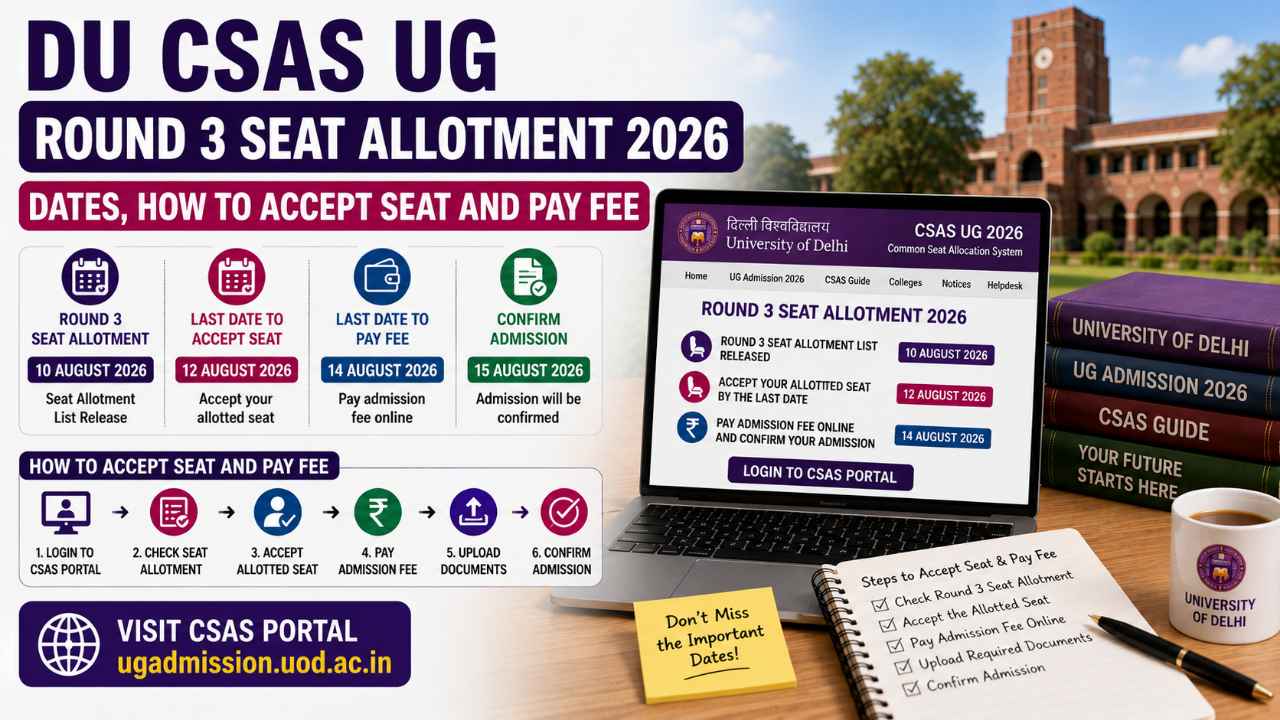
If you are comparing NCWEB with the parallel regular DU UG process, note that CSAS Round 3 cutoffs were also released around the same time in August 2026. NCWEB and CSAS are separate tracks—meeting a CSAS cutoff does not automatically qualify you for NCWEB, and vice versa.
DU NCWEB BA Programme Third Cutoff 2026: College-Wise Percentages
The BA Programme third cutoff varies widely across teaching centres. Several colleges have already closed General category seats, while others still accept applications at moderate percentages. Always match your category and your NCWEB-approved subject combination before selecting a centre.
Major Teaching Centres — BA Third Cutoff 2026
| Institute | General | OBC | SC | ST | EWS |
|---|---|---|---|---|---|
| Aditi Mahavidyalaya | 46 | 42 | 41 | 40 | 44 |
| Bhagini Nivedita College | 46 | 42 | 41 | 40 | 44 |
| Aryabhatta College | Closed | 55 | 52 | 50 | 55 |
| Bharati College | Closed | 56 | 53 | 52 | 56 |
| Dr. B.R. Ambedkar College | Closed | 49 | 53 | 45 | 49 |
| J.D.M. College | Closed | 57 | Closed | 53.75 | 57 |
| Kalindi College | 55 | 50 | 50 | 45 | 50 |
| Keshav Mahavidyalaya | 61 | 53 | 55 | 49 | 53 |
| Mata Sundri College | Closed | 50 | Closed | 45 | 50 |
| PGDAV College | Closed | 51 | 48 | 47 | 51 |
| Shyama Prasad Mukherji College | 50 | 47 | 48 | 45 | 47 |
| Vivekananda College | Closed | 54 | 52 | 51 | 55 |
| Hansraj College Delhi | Closed | 80 | Closed | 75 | 80 |
| Miranda House | Closed | 80 | Closed | 75 | 80 |
What the BA table shows: Entry-level centres such as Aditi Mahavidyalaya and Bhagini Nivedita College still accept General category candidates at 46%. Premium centres like Hansraj and Miranda House have closed General and SC seats but remain open for OBC, ST, and EWS at 75–80%. If your aggregate is between 45% and 55%, focus on Kalindi College, SPM College, and PGDAV College rather than high-cutoff names.
How to Read BA Cutoff Percentages Correctly
NCWEB calculates the aggregate using subject-combination rules—not always the same as your school best-four or best-five. Before applying:
- Download the official BA third cutoff PDF from the DU admission portal.
- Recalculate your aggregate as per NCWEB guidelines for BA Programme.
- Compare your percentage in the correct category column (General, OBC, SC, ST, or EWS).
- Apply only where your marks are equal to or above the listed cutoff—never assume buffer marks.
Centres linked to reputed DU colleges often attract higher demand even in NCWEB. For context, regular weekday programmes at colleges like Kirori Mal College Delhi, Ramjas College Delhi, and Lady Shri Ram College for Women LSR Delhi typically require much higher CUET percentiles—but NCWEB at the same brand-name centre can still be competitive in later rounds.
DU NCWEB B.Com Third Cutoff 2026: Teaching Centre List
B.Com under NCWEB generally shows lower cutoffs than BA at comparable centres, with several colleges accepting candidates at 40–50% in General category. However, top centres such as Hansraj College, Miranda House, and SGGSCC (Sri Guru Gobind Singh College of Commerce) still demand 60% or above in reserved categories.
Complete B.Com Third Cutoff 2026 Table
| Teaching Centre | General | OBC | SC | ST | EWS | PwD |
|---|---|---|---|---|---|---|
| Aditi Mahavidyalaya | 40 | 40 | 40 | 40 | 40 | 40 |
| Bhagini Nivedita College | 40 | 40 | 40 | 40 | 40 | 40 |
| Aryabhatta College | 47 | 45 | 45 | 45 | 45 | 45 |
| Bharati College | 47 | 45 | 45 | 45 | 45 | 45 |
| College of Vocational Studies | 47 | 45 | 45 | 45 | 45 | 45 |
| Deen Dayal Upadhyaya College Delhi | Closed | 54 | 53 | 52 | 54 | 52 |
| Dr. B.R. Ambedkar College | 47 | 45 | 45 | 45 | 45 | 45 |
| J.D.M. College | Closed | 51 | 50 | 49 | 51 | 49 |
| Deshbandhu College Delhi | 50 | 48 | 45 | 45 | 45 | 45 |
| Kalindi College | 47 | 45 | 45 | 45 | 45 | 45 |
| Keshav Mahavidyalaya | 55 | 50 | 50 | 50 | 50 | 50 |
| Lakshmi Bai College | 50 | 48 | 48 | 48 | 48 | 48 |
| Maharaja Agrasen College | Closed | 50 | 48 | 48 | 48 | 48 |
| Maitreyi College | Closed | 59.75 | Closed | 58 | 60 | 58 |
| Mata Sundri College | Closed | 50 | 50 | 50 | 50 | 50 |
| Moti Lal Nehru College | 45 | 40 | 40 | 40 | 40 | 40 |
| PGDAV College | 40 | 40 | 40 | 40 | 40 | 40 |
| Rajdhani College | 55 | 52 | 52 | 52 | 52 | 50 |
| Ramanujan College | Closed | 48 | 48 | 45 | 48 | 45 |
| Satyawati College | 50 | 48 | 48 | 48 | 48 | 48 |
| SGGSCC | Closed | 63.75 | Closed | 59.5 | 61.75 | 60 |
| SPM College | 50 | 48 | 48 | 48 | 48 | 48 |
| Sri Aurobindo College | 48 | 45 | 45 | 40 | 45 | 40 |
| Vivekananda College | 50 | 48 | 45 | 45 | 48 | 45 |
| Hansraj College Delhi | Closed | 79.75 | Closed | 74.5 | 79.75 | 69.75 |
| Miranda House | Closed | 79.5 | 74.5 | 74.5 | 79.75 | 69.75 |
Actionable tip for B.Com applicants: If you scored near 40% in General category, Aditi Mahavidyalaya, Bhagini Nivedita College, PGDAV College, and Moti Lal Nehru College (OBC at 40%) are practical options. For 45–50%, consider Dyal Singh College Delhi-linked centres, Satyawati College, and Deshbandhu College. Commerce aspirants who also explore professional courses may later consider institutions like Galgotias College of Management for postgraduate pathways—but NCWEB B.Com remains one of the most affordable routes to a DU degree in Delhi.
Who Is Eligible to Apply Under the Third Cutoff?
Not every woman who applied to DU can use the NCWEB third list. Eligibility is strict and non-negotiable. Understanding these rules saves time and prevents rejected applications.
Core Eligibility Criteria
- Gender: Only women candidates are eligible for NCWEB admissions.
- Residence: Permanent resident of the NCT of Delhi (proof required at verification).
- Registration: Must have registered on the common DU admission portal during the open registration window.
- Merit: Class 12 aggregate must meet or exceed the third cutoff for the chosen course and teaching centre in the applicable category.
- Subject combination: Must satisfy NCWEB rules for BA Programme or B.Com, including required subjects in Class 12.
Who Cannot Apply or Upgrade Through This List
Candidates who already took admission in an earlier NCWEB cutoff round cannot upgrade their seat through the third list. The third cutoff is meant for fresh applicants who did not secure a seat in Round 1 or Round 2, and for those who now meet the revised lower percentages.
If you hold a confirmed seat in regular DU CSAS UG admission, accepting NCWEB admission may have implications—read the official guidelines carefully before switching tracks. Women exploring other Delhi options such as Gargi College Delhi, Kamala Nehru College Delhi, or Jesus and Mary College Delhi through regular admission should confirm they are not double-enrolled.
Documents Required for NCWEB Admission 2026
Document verification is done online during the application window. Keep scanned copies ready in the prescribed format and file size before logging in. Incomplete uploads are a common reason for delayed or cancelled admissions.
- Class 10 marksheet and certificate
- Class 12 marksheet and certificate
- Proof of permanent residence in NCT of Delhi (Aadhaar, voter ID, ration card, or other accepted proof)
- Category certificate (OBC, SC, ST, EWS, or PwD), if applicable
- Passport-size photograph and signature as per portal specifications
- Valid photo identity proof (Aadhaar, passport, or driving licence)
- Transfer or migration certificate, where applicable
Pro tip: Name spellings on all documents should match exactly. Category certificates must be issued in the candidate's name and valid for the current admission year. Delhi NCT residence proof should clearly show the candidate's name and address.
NCWEB vs Regular DU Admission: What Students Should Know
Many candidates confuse NCWEB with the main CSAS undergraduate process. Both lead to a University of Delhi degree, but the learning experience and entry route differ significantly.
Comparison at a Glance
| Feature | NCWEB | Regular DU UG (CSAS/CUET) |
|---|---|---|
| Entrance exam | Not required; Class 12 merit | CUET-UG required |
| Class schedule | Weekends (Sat–Sun) | Weekdays |
| Gender | Women only | All genders |
| Residence | NCT of Delhi mandatory | No Delhi residence requirement |
| Degree | DU degree (same university) | DU degree |
NCWEB suits women who need flexibility—whether they are employed, managing family responsibilities, or could not secure a high enough CUET score for weekday colleges like Hindu College Delhi or St Stephen's College Delhi. The degree certificate does not label the programme as "non-collegiate" in a way that limits most government jobs or higher studies, but students should verify specific employer or university requirements if they plan specialised careers.
Why NCWEB Is a Valuable Option for Delhi Women
NCWEB is the only University of Delhi board designed specifically for women who cannot attend full-time weekday classes. Its benefits extend beyond convenience:
- Affordable fees: NCWEB fee structure is generally lower than many private colleges in NCR.
- DU brand value: Graduates receive a degree from India's largest central university.
- Weekend flexibility: Ideal for working professionals and caregivers.
- Multiple teaching centres: Classes at colleges across Delhi, including Daulat Ram College Delhi, Indraprastha College for Women Delhi, and Janki Devi Memorial College Delhi networks.
- Merit-based transparency: Cutoffs are published openly each round.
Women who complete BA or B.Com through NCWEB often pursue MA, MBA, CA, banking exams, or government competitive tests. The programme builds the same foundational knowledge as regular DU courses, with examinations conducted under university norms.
Action Plan: What to Do After the Third Cutoff Release
Speed matters once a cutoff list is published. Seats fill quickly at popular centres, and the admission window for each round is time-bound. Follow this checklist immediately after verifying your eligibility.
- Download the official third cutoff PDF for BA or B.Com from admission.uod.ac.in.
- Recalculate your Class 12 aggregate using NCWEB subject rules.
- Shortlist all centres where your percentage meets the cutoff in your category.
- Log in to the admission portal with your registered application number and password.
- Select the preferred eligible college and upload verified documents.
- Wait for college approval of your candidature on the portal.
- Pay the admission fee online before the deadline to confirm your seat.
- Save payment receipt and admission confirmation for future reference.
If you miss the third cutoff window, monitor the portal for the fourth cutoff on August 17, 2026. Historically, later rounds show further relaxation at centres that still have vacant seats—especially in B.Com General category at mid-tier colleges.
Common Mistakes to Avoid During NCWEB Third Cutoff Admission
Even eligible candidates lose seats due to avoidable errors. Stay alert for these pitfalls:
- Applying above your marks: Selecting a centre where your aggregate is below the cutoff leads to rejection.
- Wrong category column: Using General cutoff when you belong to OBC, SC, ST, EWS, or PwD wastes an attempt.
- Missing residence proof: NCWEB strictly requires NCT of Delhi domicile.
- Delayed fee payment: Approval without fee payment does not guarantee the seat.
- Poor document scans: Blurry or cropped uploads delay verification.
- Ignoring subject combination rules: B.Com typically requires Mathematics or equivalent; verify before applying.
What Happens After Admission? Academic Life at NCWEB
Once admission is confirmed, students receive details about orientation, timetable, and examination schedules from their assigned teaching centre. Classes are concentrated on weekends, which means self-study on weekdays is essential for strong results.
Teaching centres share infrastructure and faculty networks with their parent DU colleges. A student admitted through NCWEB at a centre linked to Atma Ram Sanatan Dharma College Delhi or Keshav Mahavidyalaya attends lectures on campus but follows the NCWEB academic calendar. Internal assessments, university examinations, and degree conferral are managed by the University of Delhi.
Students aiming for careers in commerce, civil services, teaching, or social work often use NCWEB as a stepping stone. Those interested in science or professional degrees later explore options such as Bhaskaracharya College of Applied Sciences for regular UG programmes or engineering colleges in NCR—but NCWEB remains unmatched for flexible DU arts and commerce degrees in Delhi.
Looking Ahead: Fourth and Fifth Cutoff Rounds
The University of Delhi has scheduled a fourth NCWEB cutoff for August 17, 2026, and a possible fifth list on August 24, 2026, depending on seat vacancy. These rounds typically benefit candidates who were slightly below third-cutoff percentages or who could not complete payment in time.
Candidates waiting for lower cutoffs should prepare documents in advance and keep portal login credentials accessible. Checking the official website daily during admission season prevents missing sudden announcements or deadline extensions.
Conclusion
The DU NCWEB third cutoff 2026 opens a significant admission window for Delhi women seeking a BA Programme or B.Com degree through weekend classes at established DU teaching centres. Released on August 10, 2026, the list shows that while premium centres like Hansraj College and Miranda House have closed many General category seats, numerous colleges still accept candidates at 40–55%—especially in B.Com and reserved categories.
Eligible applicants should act fast: verify residence and category documents, match Class 12 marks against the official cutoff tables, apply at admission.uod.ac.in, and complete fee payment within the round deadline. If seats remain after this round, the fourth cutoff on August 17, 2026, may offer another opportunity. For women who value a DU degree without weekday classroom commitment, NCWEB remains one of Delhi's most practical and respected pathways to higher education.