For thousands of Class 12 students in India, JEE Main is the gateway to B.Tech seats at top institutes such as Indian Institute of Technology Bombay and Indian Institute of Technology Delhi. What fewer candidates realise is that the same exam and the rank it generates can also support entry into structured government career paths in defence and rail engineering. From 2027, organisations including the Indian Army, Indian Navy, and Indian Railways use JEE Main performance as part of shortlisting for technical entry schemes; they do not treat the exam as a standalone hiring test.
If you are in PCM and exploring options beyond conventional engineering colleges, understanding how these schemes work can save months of confusion. You still need to meet age, nationality, medical, and academic rules, and you must clear organisation-specific stages such as SSB interviews or the Railways Common Entrance Test (CET). This CollegeDwar guide explains eligibility, indicative timelines for JEE Main 2027, how Army TES, Navy cadet entry, and Railways SSE training differ, and practical steps to prepare without derailing your college plan.
Understanding Government Jobs Through JEE Main 2027
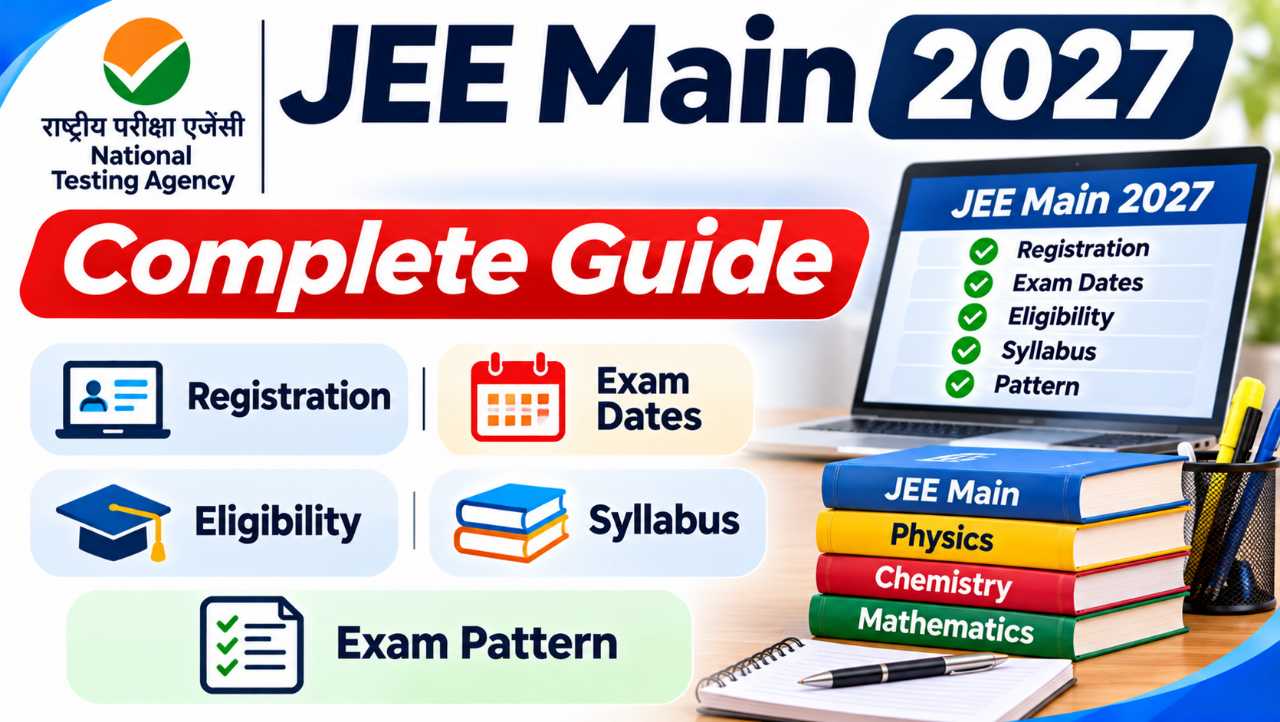
JEE Main is conducted by the National Testing Agency (NTA) as a national-level engineering entrance. For 2027, the January session is scheduled across multiple days (including 20–24 and 28 January 2027, per official notifications cited in admission cycles). NTA has also made Meri Pehchaan authentication mandatory for registration candidates typically verify identity through DigiLocker, e-Pramaan, or Jan Parichay before completing the application.
Here is the critical distinction for students: JEE Main rank or score is used for shortlisting, not final selection by itself. The Army and Navy call eligible applicants for Services Selection Board (SSB) testing; Railways invites JEE-ranked candidates to CET and then to specialised training. Missing a good rank can close the door early even if you meet all other criteria.
Quick Comparison: Army, Navy, and Railways
| Organisation | Scheme Name | Typical Outcome | JEE Role |
|---|---|---|---|
| Indian Army | 10+2 Technical Entry Scheme (TES) | Permanent Commission as Lieutenant after training | Shortlisting + valid JEE Main 2027 appearance/score |
| Indian Navy | 10+2 B.Tech Cadet Entry | Permanent Commissioned Officer with B.Tech | Shortlisting via JEE Main Common Rank List (CRL) |
| Indian Railways | 10+2 TES (GSV route) | Senior Section Engineer (SSE) after course and training | Shortlisting for CET by JEE Main rank |
Students preparing from coaching hubs often align PCM preparation with both college targets and defence timelines institutes such as Indian Institute of Information Technology Kota sit in an ecosystem where structured test practice is routine, which indirectly helps JEE ranks used by these schemes.
JEE Main 2027: Dates, Registration, and Rank That Matters
Before you map defence or Railways forms, secure a clean JEE Main strategy. Registration opens on the official NTA portal; keep class documents, category certificates, and a working mobile number ready. Because Meri Pehchaan is linked to registration, complete digital ID setup early to avoid last-day lockouts.
Indicative Timeline for 2027 Aspirants
- NTA JEE Main 2027 (Session 1): Exam days include 20, 21, 22, 23, 24, and 28 January 2027.
- Indian Navy application: Often opens around January 2027, overlapping with exam season pre-fill scans and keep CRL updated after results.
- Indian Army TES application: Expected around May–June 2027 after JEE results are available for uploading.
- Railways CET: Follows separate RRB/GSV notifications after JEE-based shortlists are published.
Why Your Rank or CRL Is Non-Negotiable
- Indian Army TES: You must have appeared in JEE Main 2027 with PCM at 10+2 (typically 60% aggregate in PCM for application eligibility) and hold a valid scorecard for verification.
- Indian Navy: Shortlisting references the JEE Main Common Rank List (CRL); aim for a competitive percentile rather than merely qualifying.
- Indian Railways: Vacancy-wise shortlisting for CET follows JEE Main rank order; intake is capped (often described as around 5% of SSE vacancies or GSV training capacity, whichever is lower).
Even if your primary goal is a seat at an Indian Institute of Information Technology or a state engineering college, appearing in both sessions of JEE Main 2027 (when eligible) can improve rank and keep government scheme options alive.
Indian Army Recruitment Through JEE Main 2027: 10+2 TES
The Army’s 10+2 Technical Entry Scheme (TES) targets unmarried male candidates who want an engineering degree and a Permanent Commission. Training spans roughly four years across Cadet Training Wings and the Indian Military Academy (IMA), combining military and technical education.
Eligibility Highlights
- Nationality: Indian citizen, or categories permitted under Army rules (including specified Nepalese and Indian-origin criteria).
- Age: Between 16½ and 19½ years on the first day of the month in which the course commences.
- Education: 10+2 with Physics, Chemistry, and Mathematics; generally minimum 60% aggregate in PCM, plus JEE Main 2027.
- Gender: Unmarried male candidates only for this entry.
Application Window and Portal
Indicative application timing for the 2027 cycle is May–June 2027 on joinindianarmy.nic.in. Forms are online only. After the window closes, a printable application with roll number is usually available shortly after closure carry a self-attested copy to the selection centre for SSB.
Documents to Keep Ready
- Class 10 certificate and marksheet (date of birth proof)
- Class 12 pass certificate and marksheet (original)
- Photo ID proof
- JEE Main 2027 scorecard/result
Selection Process: Beyond JEE
- JEE-based shortlisting: Candidates are filtered using JEE Main 2027 performance.
- SSB interview: Shortlisted applicants undergo the five-day SSB at allotted centres.
- Medical examination: SSB-recommended candidates are tested at military hospitals.
- Final merit: Prepared based on SSB marks (not JEE marks alone).
- Joining letter: Medically fit, meritorious candidates proceed to training.
Training Structure and Career Outcomes
Training is split into integrated basic military and engineering phases at institutions such as CME (Pune), MCTE (Mhow), and MCEME (Secunderabad) for about three years, followed by a year at IMA, Dehradun. On successful completion, cadets are commissioned as Lieutenant. Stipend during training at IMA is often cited around ₹56,100 per month (as per Army publicity materials for the scheme). Post-commission packages are frequently quoted in the ₹17–18 LPA CTC range at entry level, excluding benefits such as medical cover figures change with pay commissions and should be verified on official notifications.
After commissioning, officers progress through ranks with defined pay levels. Illustrative monthly pay bands publicised for planning include Lieutenant (Level 10), Captain (Level 10B), Major (Level 11), and higher ranks up to Chief of Army Staff (Level 18). Allowances, field postings, and seniority rules further shape take-home income.
Physical fitness, discipline, and leadership readiness matter as much as PCM marks. Students comparing this path with a civilian B.Tech at Indian Institute of Engineering Science and Technology Shibpur or private universities should weigh service commitment, location mobility, and long-term rank progression.
Indian Navy Recruitment Through JEE Main 2027: B.Tech Cadet Entry
The Navy inducts cadets for a four-year B.Tech programme in branches such as Applied Electronics and Communication, Mechanical Engineering, and Electronics and Communication, aligned to service requirements. The degree is awarded through Jawaharlal Nehru University (JNU). Training costs, books, clothing, and messing are borne by the Navy for selected cadets.
Eligibility Highlights
- Education: 10+2 with at least 70% in PCM and 50% in English (Class X or XII).
- Exam: Valid JEE Main 2027 score; shortlisting uses CRL.
- Gender: Unmarried male and female candidates (check current entry notification for branch-wise details).
Application Process and Timeline
Navy applications for the JEE-linked entry commonly open around January 2027 on joinindiannavy.gov.in. Scan originals or high-quality copies of birth proof, 10th and 12th marksheets, JEE scorecard showing CRL, and a recent passport photograph in prescribed formats before uploading.
Selection Stages
- Shortlisting by JEE Main 2027 CRL
- SSB interview (notification via email/SMS)
- Merit based on SSB performance
- Medical fitness, police verification, and character verification
- Final appointment subject to vacancy
Cadets may be distributed between Executive and Technical branches per Naval policy at the time of training. Because the Navy funds education end-to-end, competition is stiff; students with both strong JEE percentiles and communication skills in English typically stand out in later SSB stages.
Navy preparation overlaps with JEE syllabus in Physics, Chemistry, and Mathematics the same NCERT backbone that helps in exams for Indian Institute of Information Technology Pune or Indian Institute of Information Technology Lucknow. Add swimming fitness and awareness of service life if you prioritise this entry.
Indian Railway Recruitment Through JEE Main 2027: SSE Pathway
Railway Recruitment Boards (RRBs) conduct their own examinations for most vacancies. For the 10+2 Technical Entry Scheme linked to Senior Section Engineer (SSE) cadres, however, initial shortlisting for CET follows JEE Main rank. This is not a direct “JEE equals job” route you must qualify CET and complete a four-year special course.
Eligibility Snapshot
- Indian citizen
- Age generally 17 to 24 years (category relaxations as per rules)
- Class 12 with Physics, Chemistry, and Mathematics
- Valid JEE Main rank/score
Selection and Training Flow
- Shortlisting by JEE Main rank for CET
- Common Entrance Test (CET): All-India, computer/tablet based MCQ exam
- Merit-based admission to a four-year special course at GSV, equivalent to B.Tech with rail engineering specialisations (Civil, Electrical, Mechanical, or ECE with rail focus)
- Initial training with stipend during prescribed phases
- Posting as SSE after successful completion; seniority in the cadre follows normal railway regulations
CET Pattern (Indicative)
- Duration: Up to 120 minutes
- Maximum marks: 100
- Part A – General Aptitude: Up to 60 questions (mental ability, numeracy, reasoning, GK)
- Part B – Domain: Up to 40 questions from Class 12 PCM (NCERT-aligned)
- Negative marking: Typically one mark deducted for every three incorrect answers (confirm in the active notification)
- Medium: English, Hindi, and other languages as notified
- Tie-breaking: Total CET marks first; if tied, older candidate may get higher merit per notified rules
Slot allocation to engineering branches depends on CET merit and seat availability. Treat CET as a second competitive exam even after a decent JEE rank many aspirants lose out by under-preparing aptitude and current affairs.
Rail engineering roles suit students who want stable public-sector technical careers with nationwide postings. Compare this with private-sector placements from metro colleges or with management paths later some officers eventually pursue an MBA from institutes such as Indian Institute of Management Udaipur after gaining experience, though that is a separate long-term plan.
How to Prepare for JEE Main 2027 With Defence and Railways in Mind
Academic Strategy
- Build PCM on NCERT first; both JEE and Railways CET domain sections reward conceptual clarity.
- Attempt regular full-length mocks on the JEE Main pattern; track percentile trends, not just raw marks.
- Maintain English proficiency for Navy eligibility (50% criterion).
- Secure documented PCM percentages Army and Navy thresholds (60% and 70% respectively) are strict filters.
- Revise high-weightage chapters consistently; balance Mechanics, Calculus, and Physical Chemistry with board practicals.
Parallel Non-Academic Readiness
- Start a basic fitness routine: running, bodyweight strength, and flexibility for upcoming medical standards.
- Learn SSB basics (officer-like qualities, group discussion, psychological tests) without neglecting board and entrance prep.
- For Railways CET, practise speed in aptitude and current affairs after JEE January session.
- Follow credible defence newsletters for vacancy updates instead of unverified Telegram channels.
Documentation Calendar
Create a single folder (physical and digital) for birth proof, boards, category certificates, JEE admit card, scorecard, and organisation-specific printouts. Missing originals at SSB or verification is a common, preventable rejection reason. If your school name on certificates differs slightly from Aadhaar or DigiLocker, obtain a correction affidavit before form deadlines.
Who Should Consider These Schemes?
These pathways fit students who want early leadership responsibility, structured benefits, and technical depth in uniformed or rail services. They are less ideal if you need immediate urban corporate internships or want to postpone physical standards. Use a simple decision checklist: Are you comfortable with national postings? Can you meet medical benchmarks? Is your JEE target rank ambitious enough for shortlists? If yes, integrate scheme deadlines into your study planner alongside JoSAA preferences.
Families comparing return on investment should note that Army and Navy entries include sponsored education and defined career ladders, while Railways SSE roles offer long tenures in core infrastructure. A parallel B.Tech from colleges such as Indian Institute of Information Technology Ranchi may offer faster private-sector salaries but different job security trade-offs.
Common Mistakes Students Should Avoid
- Assuming a qualifying JEE score is enough competitive shortlists demand strong ranks or percentiles.
- Missing narrow application windows (Navy around January 2027; Army around May–June 2027) while focusing only on counselling.
- Ignoring medical or age cut-offs on the course commencement date.
- Treating Railways path as RRB direct recruitment without preparing for CET aptitude.
- Submitting incorrect Meri Pehchaan or DigiLocker details during NTA registration, leading to form rejection.
- Arriving at SSB without self-attested printouts or original marksheets listed in the Army notification.
Balancing College Admission and Government Schemes
Many students secure a B.Tech seat through JoSAA or state counselling while pursuing defence entries. Have a written priority list: if SSB merit and medical clearance arrive before college locking, understand withdrawal rules and financial implications. Institutes across India from ABVIITM Gwalior to IIIT Guwahati offer excellent engineering education; government technical entries add service, pension structures, and leadership roles that private jobs may not replicate early in a career.
Parents and counsellors should discuss service bonds, location postings, and the mental demands of training honestly. E-E-A-T-friendly planning means verifying every figure vacancies, stipends, and dates from official Army, Navy, RRB, and NTA notifications rather than relying on social media forwards. CollegeDwar recommends bookmarking the JEE Main exam page for syllabus and pattern updates that affect both college and government shortlists.
Expert Tips for Students, Parents, and School Counsellors
School counsellors in India increasingly meet students who ask whether defence entries are a “backup” to JEE Main counselling. The honest answer is that these schemes reward students who treat JEE as a primary goal, not an afterthought. Encourage pupils to declare realistic target percentiles based on past shortlist trends, and to keep one parent email ID active for Navy SMS alerts.
Parents should attend open-house sessions at institutes like Indian Institute of Foreign Trade Delhi or local engineering fairs only after the child lists service versus corporate preferences in writing. Medical fitness for SSB differs from routine school health camps; schedule a sports-medicine check if the child has vision or posture concerns.
Finally, authenticity matters for Google’s helpful content standards: cite official PDF notifications, date-stamp your notes, and refresh this plan when NTA or the Ministry of Defence issues amendments. That habit protects students from outdated cutoffs and builds trust in your guidance.
Conclusion
JEE Main 2027 is more than an engineering entrance: for eligible PCM students, it is a shortlisting key for Indian Army TES, Indian Navey B.Tech cadet entry, and the Indian Railways SSE training pipeline via CET. Success requires a strong exam rank, timely applications on joinindianarmy.nic.in and joinindiannavy.gov.in, SSB or CET performance, and medical fitness. Start early with identity verification for NTA, disciplined PCM study, and organised documents. Whether you eventually wear uniform or pursue a degree at a leading tech institute such as Indian Institute of Information Technology Nagpur, treating JEE as a dual-purpose milestone keeps your options open through 2027 and beyond.