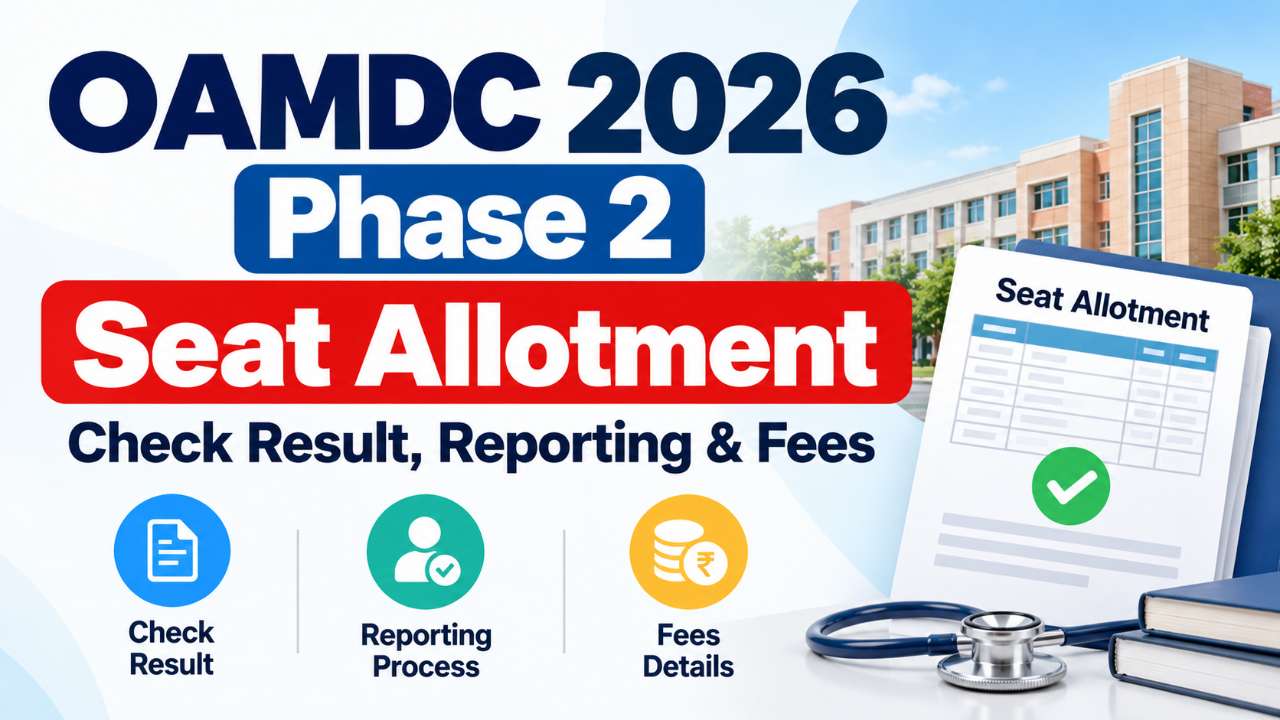

If you are a Class 12 pass-out or final-year student in Andhra Pradesh, the OAMDC 2026 Phase 2 seat allotment is one of the most important updates on your admission calendar. The Andhra Pradesh State Council of Higher Education (APSCHE) releases allotment results through the Common Admissions Portal so that thousands of candidates can secure seats in government, aided, and private degree colleges across the state. Phase 2 typically serves candidates who registered later, revised their options, or did not confirm admission in the earlier round.
This guide explains what OAMDC is, what Phase 2 allotment means for you, how to check and download your allotment order, and what to do before the reporting deadline. Whether you are aiming for BA, BSc, BCom, BBA, or vocational programmes, the steps after allotment are largely the same: verify your seat online, pay fees, report physically, and complete document verification at the college. Read through each section carefully and keep your registration number, date of birth, and mobile number handy.
What Is OAMDC and Who Conducts It?
OAMDC stands for Online Admissions Module for Degree Colleges. It is the unified online system through which APSCHE manages undergraduate admissions to non-professional degree courses in Andhra Pradesh. Unlike national entrance exams that funnel students into a single institute, OAMDC connects you with hundreds of colleges affiliated to ten state universities through one application and counselling workflow.
The official admission portal is cap.apcfss.in, also referred to as the AP Common Admissions Portal (CAP). Counselling is merit-based: your Intermediate (Class 12) performance, reservation category, and the order of your web options decide which college and course you receive when seats are allotted.
Quick facts about OAMDC 2026
- Conducting body: Andhra Pradesh State Council of Higher Education (APSCHE)
- Admission basis: Merit in Class 12 / Intermediate (plus category rules)
- Typical counselling structure: Multiple phases, including a final Phase 2 round for remaining seats
- Participating institutions: Government, aided, private, and university degree colleges
- Programmes covered: BA, BSc, BCom, BBA, B.Voc, BFA, and selected integrated postgraduate programmes (excluding engineering and pharmacy professional streams handled elsewhere)
Understanding this framework helps you interpret your Phase 2 result correctly. A Phase 2 allotment is a genuine admission offer if you complete self-reporting and college reporting within the notified window not a waiting-list hint you can ignore.
OAMDC 2026 Phase 2 Seat Allotment: What Was Announced?
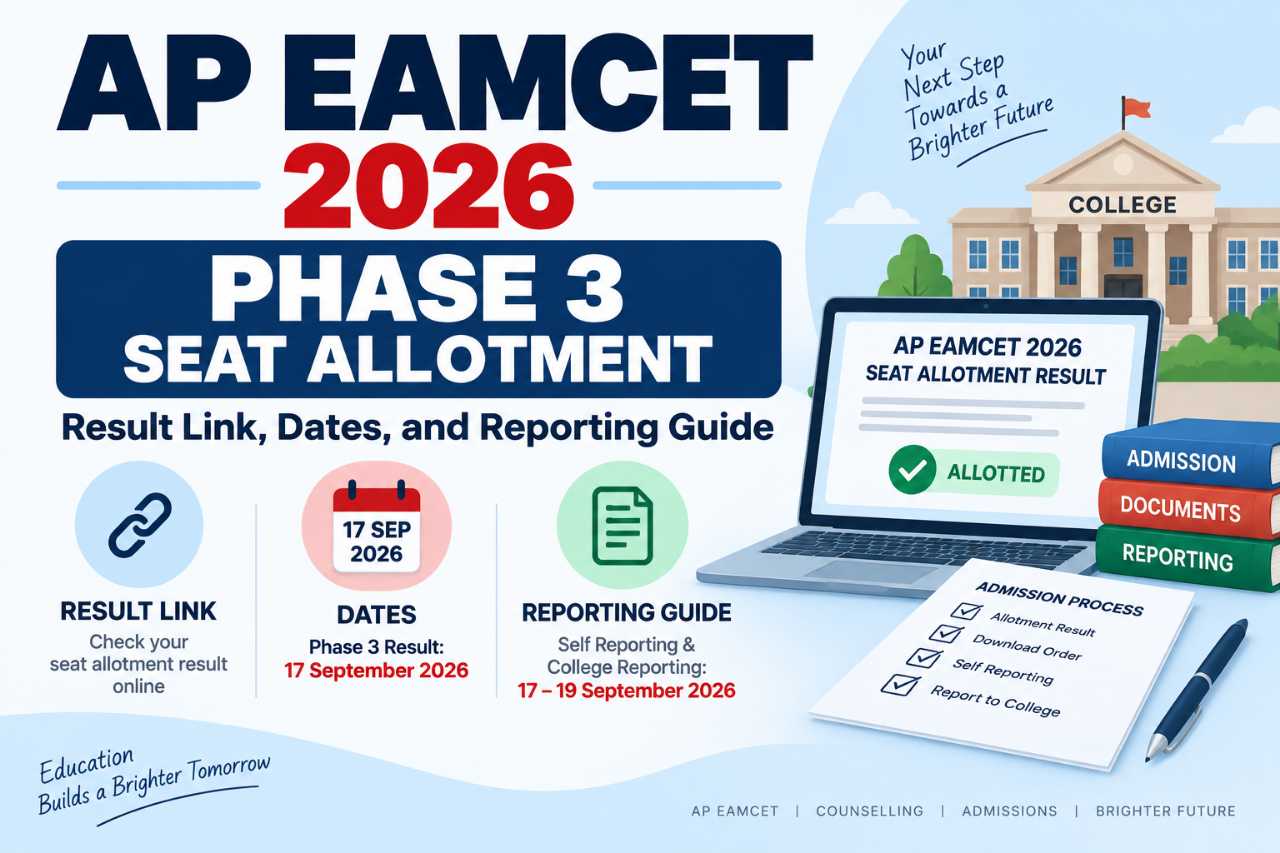
For the 2026 admission cycle, APSCHE published the Phase 2 (final phase) seat allotment for degree admissions on the CAP portal in late September 2026. Official schedules indicated that candidates could access individual allotment details after login, with self-reporting and physical reporting at allotted colleges scheduled for 28 to 30 September 2026. Always confirm the exact dates on the live notification at cap.apcfss.in, because extensions are sometimes granted for bad weather, portal load, or administrative reasons.
Phase 2 processes applications from students who:
- Registered during the Phase 2 registration window
- Completed certificate verification (online or at a Helpline Centre)
- Exercised or modified web options before the Phase 2 deadline
- Did not freeze a seat in Phase 1, or withdrew to participate again where rules allow
The allotment software matches available vacancies in each college and course against candidate merit ranks and preference order. If your higher preferences are already filled, the system moves down your list until it finds a seat or leaves you unallotted for that phase. Registering alone does not guarantee a seat; merit and preferences both matter, as APSCHE has reiterated in public instructions.
Phase 1 vs Phase 2: Practical difference
Phase 1 usually captures the first large pool of registrants and fills popular combinations early think top government degree colleges in Vijayawada, Visakhapatnam, Guntur, or Tirupati for BSc and BCom. Phase 2 reallocates seats that remain vacant after Phase 1 reporting, plus fresh registrations. Cutoffs for the same course can be slightly relaxed in Phase 2, but competitive combinations may still close quickly once allotment opens.
Eligibility and Documents You Should Already Have Verified
Before Phase 2 allotment, your certificates must be verified through the portal or at an authorised Helpline Centre (HLC). Candidates whose data is incomplete often receive SMS alerts to re-upload documents or visit an HLC. Without verified data, web options may remain blocked even if you paid the registration fee.
General eligibility requires passing or appearing in Intermediate from a recognised board, subject to final mark submission before admission confirmation. Special category claims must be backed by certificates issued by competent authorities in Andhra Pradesh.
Common documents for OAMDC verification
- SSC (Class 10) memo
- Intermediate marks memo
- Study certificates from Class 6 to Intermediate
- Caste certificate (if applicable)
- Income certificate or ration card (where required)
- EWS certificate (if claiming economically weaker section benefit)
- Physically challenged certificate (if applicable)
- Residence / local status certificate as per AP rules
- Special category certificates (sports, NCC, etc., if claimed)
Keep originals and photocopies in a folder labelled with your application number. Colleges may reject admission at the reporting desk if certificates do not match the online record.
How OAMDC Web Options Shape Your Phase 2 Allotment
Web options are your ranked choices of college + course combination. APSCHE opens option entry and edit windows before each allotment. Strategic ordering matters more than registering early alone.
Actionable tips for filling web options
- Mix ambition and safety: Place dream colleges at the top, but include realistic government or aided colleges lower down to avoid going unallotted.
- Course flexibility: If you want BSc Mathematics but seats are scarce, a related group subject in the same college may be a sensible lower preference.
- Location: Factor in hostel availability, travel time, and family support especially for rural students moving to district headquarters.
- Use the edit window: When Phase 2 edit opens, remove colleges you will definitely not join; it reduces confusion after allotment.
- Read CAF instructions: The Common Application Form must be complete; partial forms do not substitute for verified certificates and paid fees.
Official instructions allow candidates to apply across government and aided colleges in one form and to list multiple college-and-stream preferences in priority order. Treat every preference as a commitment you are willing to accept if higher choices are unavailable.
Participating Universities and College Landscape
OAMDC covers institutions affiliated to ten major universities in Andhra Pradesh, including Andhra University (Visakhapatnam), Sri Venkateswara University (Tirupati), Nagarjuna University (Guntur), Krishna University (Machilipatnam), Rayalaseema University (Kurnool), Sri Krishnadevaraya University (Anantapur), Adikavi Nannaya University (Rajahmundry), Dr BR Ambedkar University (Srikakulam), Vikrama Simhapuri University (Nellore), and Yogi Vemana University (Kadapa). Together they represent well over a thousand degree colleges.
When you receive a Phase 2 allotment, research the specific college not just the university name. Check faculty strength, lab facilities for science streams, NAAC accreditation status where published, and past student feedback. Platforms such as CollegeDwar help you compare institution profiles before you report for admission.
Registration and Application Fees (Reference for New Registrants)
If you are reading this before registering for a later spot round or the next cycle, note the standard OAMDC processing fee structure reported by APSCHE:
- OC candidates: Rs 400 per application
- BC candidates: Rs 300
- SC/ST candidates: Rs 200
Payment is online via net banking, debit card, or credit card, with small transaction charges on card and net-banking modes. The fee is generally non-refundable. After payment, you receive an application number and password on your registered mobile number store these securely; you need them for every login including Phase 2 allotment checking.
Step-by-Step: Checking Your Phase 2 Allotment Result
Once APSCHE activates the allotment link, follow the official path rather than third-party PDFs, which may be outdated or incomplete.
- Visit cap.apcfss.in or the alternate admission gateway publicised in the notification.
- Open the link labelled for Phase 2 / Final Phase seat allotment 2026 under Latest Updates or Forms.
- Log in with your application or registration number, date of birth, and security PIN or captcha as shown.
- Review allotted college, course, category, and quota details on screen.
- Download and print the provisional seat allotment order for reporting.
If the portal shows “not allotted,” read the notification for the next activity internal sliding, spot admission, or cancellation timelines instead of assuming the process has ended.
Freezing, Self-Reporting, and Fee Payment
Receiving a seat is not the final step. You must accept the allotment in the candidate dashboard, pay the prescribed confirmation or tuition fee component online where required, and freeze the seat within the stipulated time. Missing the deadline usually leads to automatic cancellation and the seat passing to the next merit candidate.
How seat freezing works in simple terms
Freezing tells the system you will join the allotted college and course. After freezing, upward movement to a higher preference in the same phase may be restricted depending on current rules read the on-screen instructions before you click confirm. If you are unhappy with the allotment and rules permit withdrawal within the window, document the deadline carefully; late withdrawal can affect eligibility for spot admissions.
Physical Reporting at the Allotted College
For Phase 2, candidates allotted seats were directed to report to their assigned colleges between 28 and 30 September 2026, subject to official confirmation. Reporting typically includes:
- Submitting printed allotment order and fee payment receipt
- Presenting original certificates for physical verification
- Completing college-specific admission forms and undertakings signed by parent or guardian
- Paying remaining tuition or other fees as per the college fee structure
- Collecting admission confirmation or provisional admission letter
Arrive early in the reporting window to avoid last-day queues. Carry passport-size photographs, parent or guardian ID, and bank details if the college accepts further online payments. Dress code is informal, but organised document files speed up verification.
What If You Are Not Satisfied With Phase 2 Allotment?
Your options depend on the post-allotment schedule APSCHE publishes each year. Common pathways include:
- Internal sliding: Movement among candidates within participating colleges when seats vacate due to cancellations
- Spot admission: Direct filling of leftover seats at colleges with a processing fee (notifications have cited Rs 400 per candidate for spot processing, plus possible late fees)
- CAT-B admissions: Separate fee-upload and admission tracks for certain management quota categories as notified later in the academic calendar
Do not skip reporting to a seat you intend to keep while waiting for sliding unreported seats are treated as rejected offers.
Planning Your Degree Path Beyond Andhra Pradesh
Many OAMDC candidates also explore programmes outside the state. Merit-based degree admission in Andhra Pradesh is different from national competitive exams. For example, medical aspirants prepare for NEET to target institutions such as the All India institite of Medical Sciences Delhi (AIIMS Delhi) or newer AIIMS campuses including AIIMS Bhopal, AIIMS Guwahati, and AIIMS Jodhpur. Those pathways do not replace OAMDC for BA or BSc seats, but they clarify how state degree counselling fits into your wider education plan.
Students comparing mission-run or private institutions elsewhere for instance the Ramakrishna Mission Vivekananda Educational and Research Institute in Howrah or MD Mission College Kota should still complete OAMDC reporting if they want a confirmed AP degree seat while keeping other applications active. Engineering-focused candidates looking at colleges such as DMI College of Engineering Chennai should remember that OAMDC does not cover B.Tech; AP engineering admissions follow separate counselling channels.
Regional AIIMS institutes from AIIMS Patna, Raipur, and Gorakhpur to Kalyani, Bathinda, and Mangalagiri illustrate how national institutions complement, rather than compete with, your local degree options. Use Phase 2 allotment as a concrete fallback while you pursue specialised goals.
OAMDC Admission Process in Five Stages
Whether you enter in Phase 1 or Phase 2, the AP degree admission workflow follows the same backbone. Knowing where Phase 2 allotment sits in this chain prevents skipped steps.
- Stage 1 – Pre-registration and fee payment: Create your account on cap.apcfss.in and pay the category-wise processing fee.
- Stage 2 – Application ID and password: Save the SMS credentials; without them you cannot check allotment.
- Stage 3 – Student details and confirmation: Fill the online application, upload photo and signature, and submit the form.
- Stage 4 – Certificate verification and web options: Complete HLC or online verification, then rank college-course preferences before the phase deadline.
- Stage 5 – Seat allotment and admission confirmation: Download Phase 2 allotment, self-report, freeze the seat, and report physically to the college.
Intermediate pass-outs should monitor APSCHE notifications weekly during August and September so they do not miss a short verification or option-edit window that blocks Phase 2 participation.
After You Join: Making the Most of Your Allotted Degree College
Once admission is confirmed, collect your college ID, library membership, and programme handbook. Science students should verify laboratory and practical batch lists on day one. Commerce and arts students should note add-on certificate courses or skill minors if the college offers them. If you later aim for postgraduate study or national-level professional exams, your undergraduate institution’s reputation and discipline matter similar to how medical aspirants later compete for seats at institutes such as AIIMS Rishikesh, AIIMS Nagpur, AIIMS Deoghar, AIIMS Jammu, and AIIMS Raebareli after clearing NEET-based pathways.
Keep every OAMDC receipt until your university registration number is issued. That paperwork proves your legitimate CAP admission if you apply for scholarships, hostel subsidies, or fee reimbursement schemes tied to Andhra Pradesh residency and category certificates.
Common Mistakes to Avoid After Phase 2 Allotment
- Ignoring SMS or email from APSCHE about verification or fee deadlines
- Assuming a downloaded allotment PDF alone completes admission without self-reporting
- Reporting to the wrong campus of a multi-college society
- Mismatch in name or date of birth between Intermediate certificate and portal data
- Paying fees to unofficial agents instead of the official CAP dashboard
- Missing spot admission notification while waiting indefinitely for a better college
Key Dates to Track on the Official Portal
Exact timestamps change every year, but the Phase 2 cycle generally follows this sequence: registration and verification, web options, allotment publication, self-reporting and fee payment, physical college reporting, admission cancellations, internal sliding, spot admissions, and later CAT-B uploads. Pin the APSCHE notification PDF for 2026 and cross-check every deadline the day before it closes. Classes for admitted students typically commence soon after Phase 2 reporting, so plan travel and hostel booking immediately after you freeze a seat.
Who Should You Contact for Help?
Technical login issues are usually resolved through the CAP helpline numbers listed on cap.apcfss.in during working hours. Certificate verification doubts should be directed to your district Helpline Centre. College-specific fee breakdowns must come from the allotted institution’s admission office APSCHE coordinates allotment but does not set individual college tuition. Parents and students should save screenshots of every payment and allotment page until final admission is confirmed in the college register.
Conclusion
The OAMDC 2026 Phase 2 seat allotment gives Andhra Pradesh students a structured, merit-based route into undergraduate degree programmes across the state’s university network. If you have been allotted a seat, treat self-reporting and college reporting between the notified dates as mandatory not optional. Verify documents, pay fees on time, and freeze your seat before the portal closes.
If you were not allotted, watch for sliding and spot admission announcements rather than losing hope. OAMDC is designed to fill thousands of seats in multiple waves. Stay logged in only through official links, keep helpline numbers from your district HLC handy, and use trusted college information resources to choose the right place to start your degree journey.