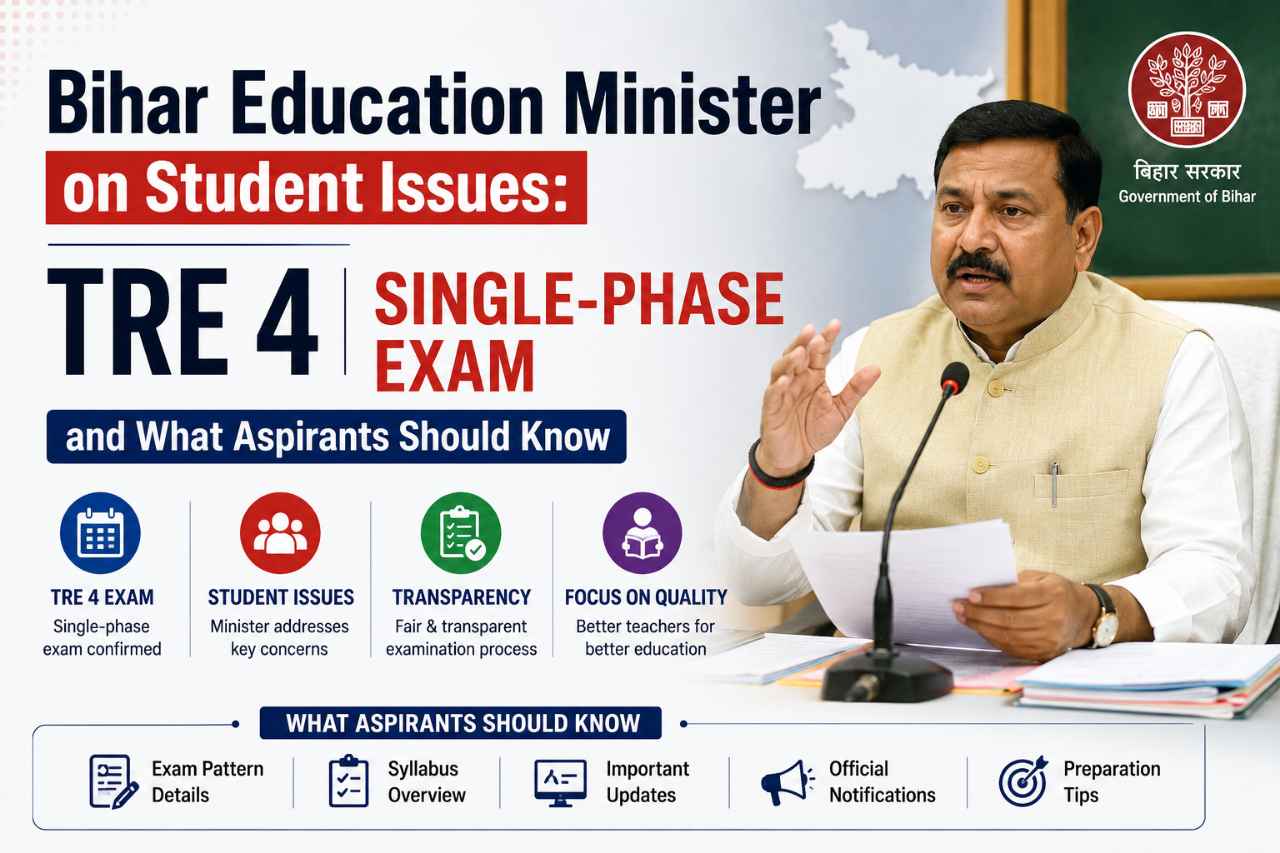

On August 28, 2026, Bihar Education Minister Mithlesh Tiwary told reporters in Patna that when students face problems, it is the moral responsibility of the government to find a solution. His statement came one day after Chief Minister Samrat Choudhary announced that the upcoming Bihar Public Service Commission (BPSC) teacher recruitment examination—widely referred to as TRE 4—would be conducted in a single phase, meeting a central demand of protesting job aspirants who had marched in the state capital demanding transparency and fairness.
For lakhs of young graduates preparing for government teaching posts, this development is more than a headline. It reflects how student-led advocacy, examination policy, and public accountability intersect in Indian higher education. Whether you are a B.Ed graduate in Bihar, a D.El.Ed holder planning to apply through state commissions, or a student comparing teacher-training pathways in Rajasthan or Delhi, understanding this episode helps you make informed career decisions.
This article breaks down what happened in Bihar, why the single-phase format matters, how governments respond to student grievances, and what actionable steps teacher job aspirants can take today—written for clarity, search relevance, and real-world usefulness.
What Happened in Bihar: From Protests to Policy Change
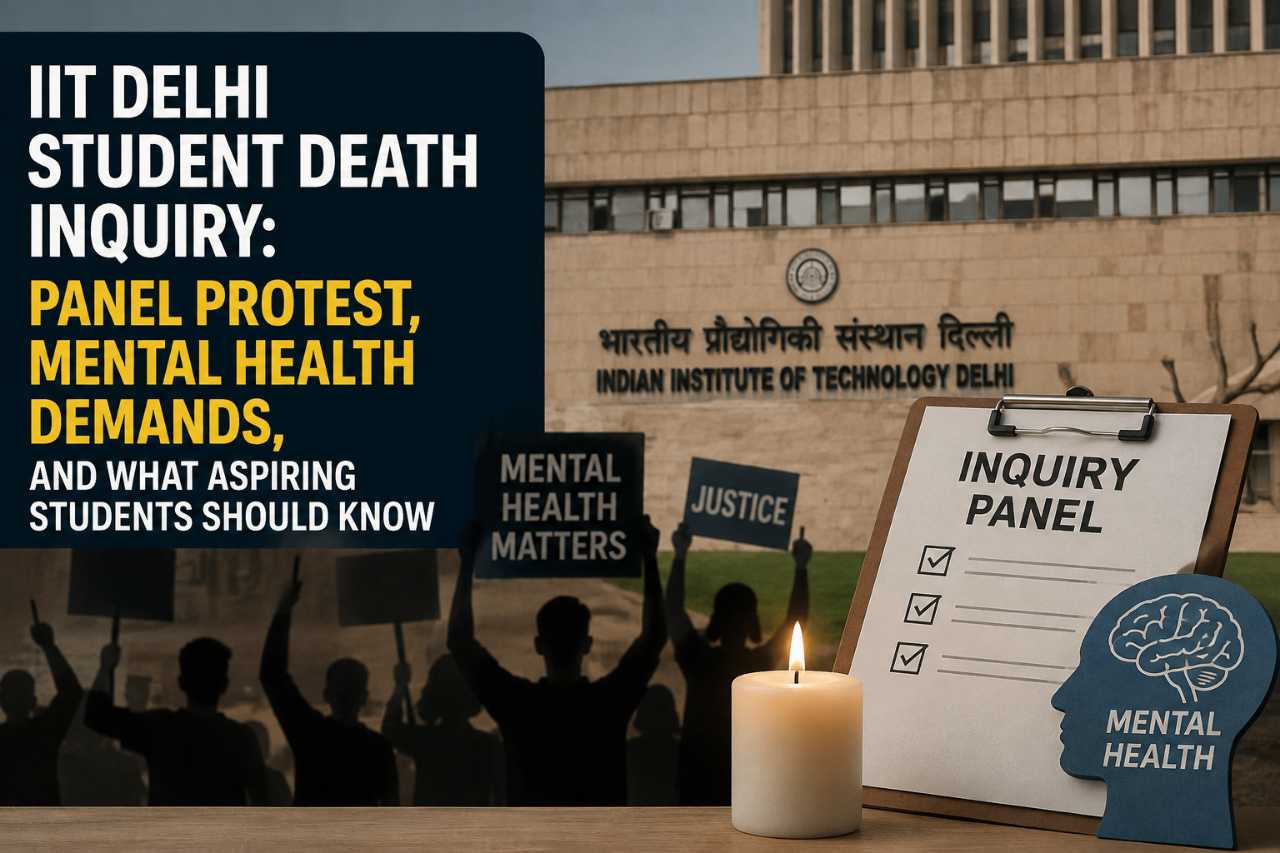
In the days leading up to the minister's statement, Patna witnessed intense demonstrations as job aspirants attempted to march toward the chief minister's residence. Protesters, many of them graduates who had invested years in degrees, coaching, and competitive preparation, demanded a single-tier teacher recruitment exam instead of a multi-phase structure they argued was confusing, costly, and unfair.
Reports described clashes between demonstrators and police—a reminder that unresolved examination grievances can escalate quickly when lakhs of careers hang in the balance. The agitation was spearheaded by the All Bihar Students' Union, which submitted a charter of 15 demands. Among them, conducting TRE 4 in one phase was the most visible.
On August 27, 2026, Chief Minister Samrat Choudhary announced on social media platform X that BPSC would hold the teachers' recruitment exams scheduled for the following month in a single phase. A protest leader called it a "historic victory for students of Bihar," noting that the government agreed to act on all 15 demands raised during the nearly three-week-long movement.
Timeline at a Glance
- Week 1–2: Job aspirants organize rallies demanding single-phase TRE 4 and transparent recruitment.
- Mid-August 2026: Demonstrations intensify in Patna; police and protesters clash during march attempts.
- August 27, 2026: CM meets delegation; announces single-phase BPSC teacher exam.
- August 28, 2026: Education Minister Mithlesh Tiwary reaffirms government's duty to resolve student issues.
Why the Single-Phase TRE 4 Decision Matters
Teacher recruitment in Bihar is not a single exam—it is an ecosystem involving eligibility rules, application windows, examination tiers, document verification, and final appointment orders. When recruitment is split across multiple phases, aspirants often face:
- Higher financial burden: Separate application fees, travel costs, and lodging for each phase.
- Preparation uncertainty: Different syllabi or weightage patterns between tiers create unequal advantage.
- Delays in appointment: Multi-phase cycles stretch timelines, leaving candidates in limbo for years.
- Perceived opacity: Students frequently question whether intermediate stages filter candidates fairly.
A single-phase examination consolidates assessment into one standardized event. For TRE 4 aspirants, this means one primary competitive window—reducing ambiguity and aligning with demands for a transparent, merit-focused process. Similar debates have played out in other states where state public service commissions and education departments manage large-scale hiring for primary, upper primary, and secondary teachers.
Single-Phase vs Multi-Phase: Quick Comparison
| Aspect | Single-Phase Exam | Multi-Phase Exam |
|---|---|---|
| Cost to aspirants | Generally lower (one application cycle) | Higher (multiple fees and travel) |
| Timeline | Faster from exam to merit list | Often extended over months or years |
| Preparation focus | One unified syllabus and pattern | May require tier-specific strategy |
| Transparency perception | Seen as simpler and fairer by protesters | Often criticized as complex or opaque |
| Administrative load | Heavy single-event logistics for BPSC | Spread across stages but harder for students to track |
The Minister's Statement and Government Accountability in Education
Education Minister Mithlesh Tiwary's remarks—that solving student problems is a moral responsibility—frame public policy in ethical terms rather than purely legal ones. Legally, governments must follow recruitment rules, court orders, and commission guidelines. Morally, as the minister suggested, they are also expected to listen when youth who represent "the future of the country" raise legitimate concerns.
This language resonates beyond Bihar. Across India, students routinely petition authorities over:
- Delayed examination results and counselling schedules
- Errors in answer keys and rank lists
- Unclear eligibility criteria for professional degrees
- Fee hikes and scholarship disbursement delays
- Recognition and affiliation issues at colleges
When officials acknowledge responsibility early, protests are less likely to turn disruptive. When grievances fester, trust erodes—not only in one exam but in the entire higher-education pipeline from college admission to employment.
E-E-A-T Perspective: Why Trust Matters in Exam News
Google's helpful content and E-E-A-T (Experience, Expertise, Authoritativeness, Trustworthiness) standards reward pages that explain events accurately, cite primary sources, and give readers practical next steps. For teacher recruitment—a high-stakes domain affecting families across Bihar and India—trustworthy guidance means verifying announcements on official BPSC portals, cross-checking ministerial statements with government orders, and avoiding rumor-driven preparation plans.
Teacher Recruitment in Bihar: Eligibility, Exams, and Career Pathways
Bihar's teacher hiring typically requires candidates to hold recognized professional qualifications such as B.Ed, D.El.Ed, or equivalent diplomas/degrees approved by the National Council for Teacher Education (NCTE). Graduates must also meet age limits, domicile or state-specific rules, and category-based relaxations as notified in official advertisements.
The BPSC conducts competitive examinations for teaching posts in government schools. Aspirants should monitor:
- Official BPSC website for notifications and corrigenda
- Eligibility matrices tied to school level (primary vs secondary)
- Document verification requirements after the written exam
- Medical fitness and character verification stages
If you are still completing your professional degree, choosing an NCTE-recognized institution is essential. Graduates from established teacher-education colleges—whether in Bihar or other states—should confirm that their institution appears on NCTE's approved list before investing in competitive exam preparation.
Building Your Qualifications: Teacher-Education Colleges Worth Researching
Rajasthan remains one of India's largest hubs for B.Ed and related programmes. Aspirants comparing colleges should review affiliation, faculty, internship ties with local schools, and past placement support. On CollegeDwar, you can explore institutions such as Jaipur College Of Education Jaipur, Sanskriti College Of Education Jaipur, Shri Ram College Of Education Jaipur, and Pink City College Of Education Jaipur to compare fees, courses, and recognition status.
Similarly, Sikar has a strong cluster of education colleges including District institute Of Education And Training Sikar, Vardha College Of Education Sikar, and Shekhawati College For Education Losal Sikar. For women's education pathways, Prince Academy Of Higher Education Girls College Sikar is among options students evaluate alongside government DIET programmes.
Outside Rajasthan, institutions like Delhi Metropolitan Education in the national capital region attract students seeking urban exposure, while Baba Saheb Ambedkar Education University serves as a dedicated education-focused university model worth studying for policy comparisons.
Student Protests and Constructive Advocacy: Lessons for Job Aspirants
The Bihar TRE 4 movement illustrates both the power and limits of protest. Organized student unions can convert scattered frustration into a structured charter of demands. However, aspirants should also use formal grievance channels alongside public demonstrations.
Effective Advocacy Strategies
- Document everything: Save official notifications, fee receipts, and prior exam patterns.
- Form clear demands: The All Bihar Students' Union's 15-point charter gave negotiators specific actionable items.
- Engage elected representatives: Meeting the chief minister's delegation channel proved decisive here.
- Use RTI and public portals: Transparency requests strengthen evidence-based arguments.
- Stay updated via credible media: Cross-verify breaking news with government handles before changing study plans.
Violent clashes rarely help candidates in the long run and may jeopardize candidature where conduct rules apply. Peaceful, organized advocacy aligned with legal rights tends to produce durable policy outcomes—as seen in the single-phase exam decision.
Preparing for TRE 4 and Similar State Teacher Exams
With BPSC moving toward a single-phase schedule, preparation strategy should emphasize comprehensive coverage rather than tier-specific shortcuts. Most state teacher exams test a combination of:
- General knowledge and current affairs (including state-specific topics)
- Teaching aptitude and pedagogy
- Subject knowledge for secondary-level posts
- Language proficiency (Hindi, English, or regional languages as applicable)
- Reasoning and quantitative ability in some notifications
90-Day Preparation Framework
Days 1–30: Download the latest syllabus and previous BPSC question papers. Build subject-wise notes aligned with NCERT school textbooks for Classes 6–12 where relevant.
Days 31–60: Attempt daily mock tests; analyze wrong answers by topic. Join a peer study group for Bihar-specific current affairs summaries.
Days 61–90: Full-length timed tests twice weekly. Revise pedagogy frameworks (constructivism, inclusive education, NEP 2020 highlights) and practice answer speed.
Candidates already enrolled in B.Ed programmes at colleges such as Satyam College Of Education Jaipur, Gyanodaya College Of Education Jaipur, or Shanti Niketan College Of Education Jaipur should integrate their coursework assignments with competitive exam topics—especially child development, assessment methods, and classroom management.
Beyond Bihar: Teacher Hiring Trends Across India
Bihar is not alone in facing scrutiny over teacher recruitment design. States manage hiring through education departments, staff selection boards, and public service commissions—with varying exam patterns, reservation policies, and contractual vs permanent posts.
Nationally, policy conversations also connect to broader reforms. The Nandan Nilekani-led high-powered task force on public examination reforms has sought stakeholder input on examination security, technology, accessibility, and student well-being—themes that overlap with what Bihar aspirants raised during the TRE 4 protests.
For students exploring alternate stable careers in education beyond school teaching, options include:
- Higher education and research: Institutes such as Indian Institute Of Science Education Research IISER Bhopal and Indian Institute Of Science Education Research IISER Kolkata represent a different pathway—research-oriented science education rather than school B.Ed routes.
- Vocational and professional education: Loyola Institute Of Vocational Education Chennai and Aklank College Of Education Kota illustrate how regional specialization shapes course choices.
- University-led education programmes: Icfai Foundation For Higher Education Hyderabad and Datta Meghe Institute Of Higher Education Research show the diversity of institutional models under India's higher-education landscape.
Legal Rights and Grievance Redressal for Examination Candidates
Indian job aspirants have several formal remedies when recruitment processes appear flawed:
- Representation to the recruiting body (BPSC for TRE 4) within stipulated objection windows
- Approach state education departments for policy clarifications
- File RTI applications for process documentation and decision records
- Seek judicial review through high courts when violations of advertised rules are alleged—common in multi-phase exam disputes nationwide
The minister's emphasis on moral responsibility does not replace legal due process—but it signals administrative willingness to engage. Candidates should therefore combine moral appeals through student unions with technically sound representations citing notification clauses.
Red Flags Aspirants Should Watch For
- Changes to exam pattern after applications close without official corrigendum
- Mismatch between advertised vacancies and final appointment lists
- Non-NCTE-compliant degrees presented as eligible qualifications
- Unofficial "agents" promising selection for a fee—always a scam indicator
Impact on Colleges, Coaching Ecosystems, and Rural Aspirants
Policy shifts in teacher recruitment immediately affect B.Ed colleges, coaching centers in Patna and Muzaffarpur, and hostel economies in cities where aspirants congregate. A single-phase exam may shorten the coaching cycle—benefiting students who cannot afford prolonged preparation but compressing timelines for those who planned multi-month strategies.
Rural and first-generation learners face disproportionate barriers: travel costs, digital access for online applications, and lack of mentorship on documentation. Governments that take moral responsibility seriously, as Minister Tiwary stated, should also invest in:
- Clear multilingual notification summaries
- Help desks at district education offices
- Transparent FAQ portals updated within 24 hours of policy changes
- Counselling for mental health during long recruitment cycles
Colleges that integrate competitive exam guidance into B.Ed curricula—examples include Vidya Bharati College Of Education Jaipur, Shri Guru Nanak College Of Education Jaipur, and Kmd Memorial College Of Education Jaipur—can reduce information asymmetry for graduates returning to their home districts to apply for state posts.
What Should Bihar Teacher Aspirants Do Now?
If you are targeting TRE 4 or future BPSC teacher notifications, prioritize official confirmation over social media speculation. Practical next steps include:
- Verify the single-phase exam announcement on BPSC and state government portals.
- Re-read eligibility for your school level and subject combination.
- Update study plans for a unified syllabus; abandon tier-only preparation materials if obsolete.
- Organize certificates: degree, B.Ed/D.El.Ed marksheets, caste/income certificates if applicable, and domicile proof.
- Monitor the All Bihar Students' Union and official channels for updates on remaining charter demands.
Students still choosing where to pursue B.Ed may also compare facilities at Shri Balaji College Of Education Jaipur, Pacific College Of Education Jaipur, Sambhal College Of Education Sikar, and Avinashilingam Institute For Home Science Higher Education For Women Coimbatore before committing fees—recognition status matters as much as rank in entrance exams.
Conclusion: Policy Wins, Persistent Challenges, and the Road Ahead
Bihar Education Minister Mithlesh Tiwary's statement—that governments have a moral duty to resolve student problems—captures a moment when sustained protest met partial policy resolution. The agreement to hold TRE 4 in a single phase addresses a tangible grievance affecting cost, clarity, and timelines for teacher job aspirants. Yet moral commitments must translate into consistent execution: timely merit lists, transparent appointments, and fair handling of remaining demands on the students' charter.
For candidates across India, the episode offers a broader lesson. Teacher recruitment is competitive and often slow—but organized, evidence-based advocacy can change rules. Choose NCTE-recognized colleges wisely, prepare with official syllabi, and use both formal grievance systems and collective student voice when processes fall short.
Stay anchored to trusted sources, keep documents ready, and treat every announcement as provisional until reflected in official BPSC notifications. That disciplined approach protects your candidature while the policy landscape continues to evolve.
Frequently Asked Questions (Quick Answers for Search)
Who is the current Bihar Education Minister? As of August 2026, Mithlesh Tiwary serves as Bihar's Education Minister and has publicly addressed teacher recruitment and student welfare issues during the TRE 4 protests.
When will the BPSC teacher exam be held? Reports following the chief minister's announcement indicated exams would be conducted the month after the August 2026 decision. Confirm exact dates only through the official BPSC calendar because schedules can shift after large policy changes.
Is B.Ed mandatory for Bihar teacher recruitment? For most notified school-level posts, a recognized B.Ed or equivalent professional qualification is required. Candidates should read each vacancy notification carefully because subject-wise and level-wise rules differ.
Additional teacher-training options for comparative research include Prabhakar College Of Education Jaipur, Mahesh College Of Education Jaipur, Shri Agrasen College Of Education Jaipur, and Sarvodaya College Of Paramedical And Nursing Education Kota for students weighing education careers against allied health pathways.
Ultimately, the Bihar government's response to TRE 4 protesters shows that examination policy is not fixed forever—student voices can reshape it. Your responsibility as an aspirant is to stay informed, prepare thoroughly, and engage through lawful channels. That combination gives you the best chance of success whether you are sitting for BPSC next month or planning admission to a B.Ed programme this academic year.