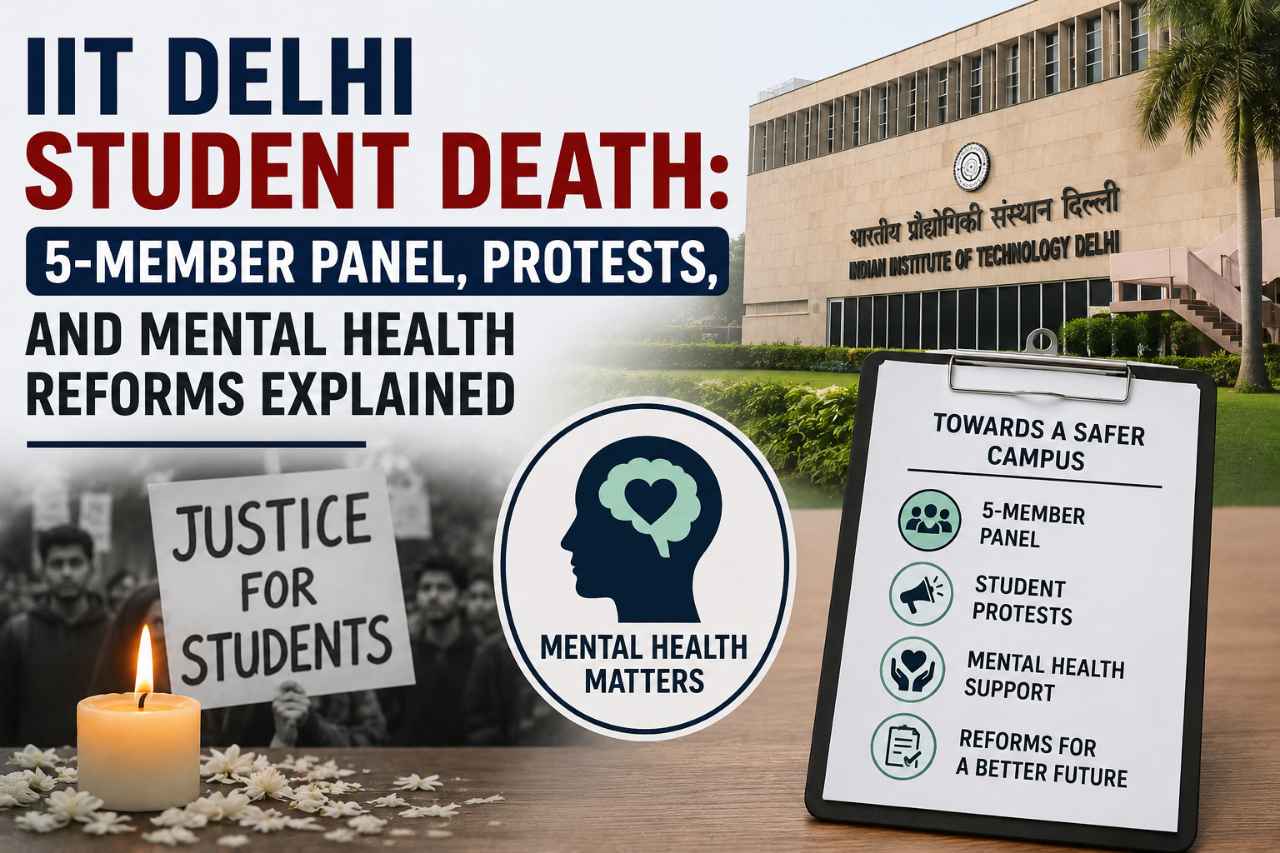
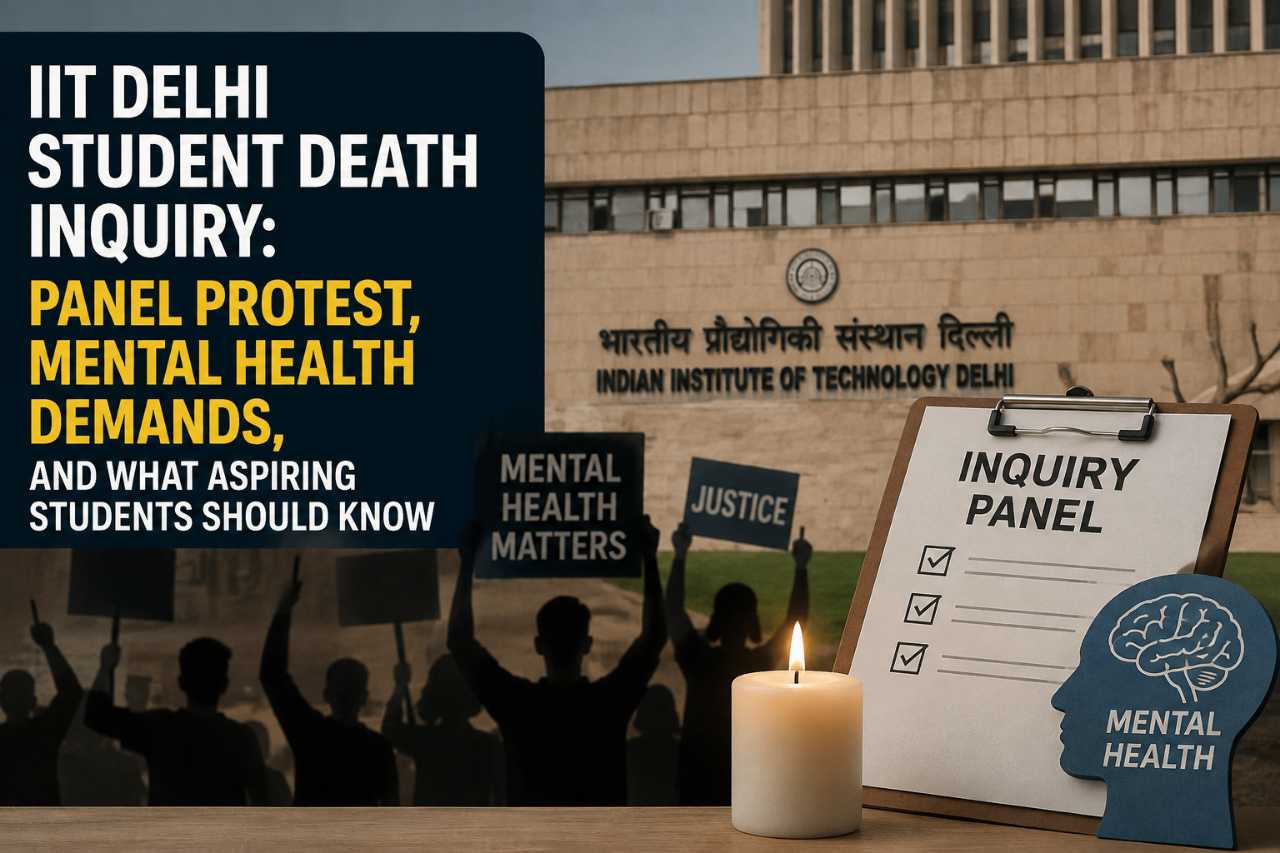

In August 2026, the campus of the Indian Institute of Technology Delhi (IIT Delhi) became the centre of a deeply emotional student protest following the death by suicide of Rishikesh Kumar, an MSc Physics scholar. What began as grief over a peer's untimely loss quickly expanded into a broader conversation about how India's premier technical institutes respond to student distress, form inquiry committees, and communicate with families.
According to reports, students gathered at the Lecture Hall Complex and issued a formal statement objecting to the administration's framing of the incident around the deceased student's "medical history." They argued that such language sidelines statements from family members, friends, and departmental peers. Protesters also questioned the appointment of certain external panel members and demanded structural reforms in student welfare, compensation for the bereaved family, and transparency in mental health protocols.
For thousands of aspirants targeting IITs, NITs, and Delhi's wider higher-education ecosystem—from Delhi Technological University (DTU) to Netaji Subhas University of Technology (NSUT)—this episode is not merely headline news. It raises practical questions about campus safety, grievance redressal, counselling access, and what "world-class" education should feel like on the ground.
What Happened at IIT Delhi: Timeline and Context
IIT Delhi is among India's most competitive destinations for engineering, science, and research programmes. Admission typically flows through national exams such as JEE Advanced for BTech, GATE for postgraduate science and engineering, and Institute -specific processes for MSc and doctoral pathways. The academic pressure at such institutes is well documented, and national data on student suicides has shown a worrying upward trend over the past decade.
The Incident and Immediate Institutional Response
Reports indicate that Rishikesh Kumar, an MSc Physics student at IIT Delhi, died by suicide on campus. The Institute formed a five-member external inquiry committee to investigate circumstances surrounding the death. Classes were reportedly affected as students organised protests, calling for accountability and reform rather than a closed administrative response.
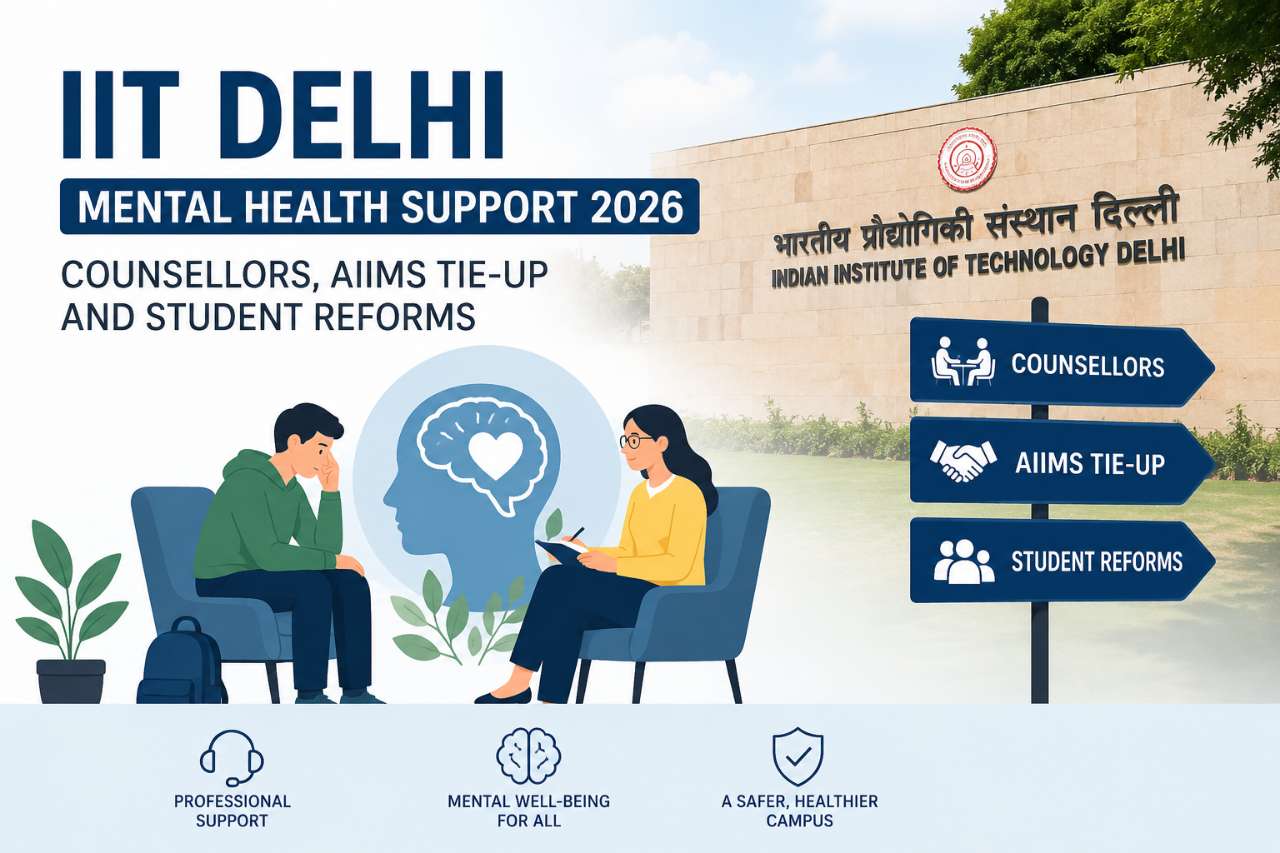
In parallel, IIT Delhi's leadership publicly reaffirmed commitment to mental health support and indicated collaborations with external counselling providers, including ties referenced in media reports with institutions such as All India Institute of Medical Sciences Delhi (AIIMS Delhi) and VIMHANS for professional mental health services. Students welcomed some measures—such as appointing an external Ombudsperson—but argued that announcements alone do not repair trust when grievance forums are created without prior consultation.
Why Students Rejected the "Medical History" Narrative
One of the most contested aspects of the administration's early communication was the emphasis on the student's medical history. Protesters contended that framing the tragedy primarily through prior health records:
- Minimises lived experiences shared by classmates who witnessed academic and personal stressors.
- Shifts focus away from institutional factors such as workload, mentorship gaps, hostel environment, and redressal delays.
- Can unintentionally stigmatise mental health struggles rather than treating them as a shared campus responsibility.
- Undermines family narratives that may point to systemic gaps rather than individual pathology alone.
Public health experts consistently note that suicide is multifactorial. While personal history matters in clinical assessment, campus inquiries intended to restore community confidence must also examine environmental and administrative variables with equal rigour.
Student Objections to the Inquiry Panel Composition
Independent inquiry committees are standard in Indian universities after serious on-campus incidents. Their credibility depends on perceived neutrality, subject expertise, and sensitivity toward student communities. At IIT Delhi, students specifically objected to the inclusion of IPS Ashok Kumar on the external panel.
Concerns About Past Remarks and Protest Culture
According to the student statement reported in media, protesters cited past public comments in which Kumar allegedly linked student rights protests to "radicalisation" and "digital terrorism." Students argued that such a worldview could compromise:
- Psychological safety for protesters who are already grieving and vulnerable.
- Fair process, if inquiry members are seen as aligned against student activism.
- Institutional learning, because students may withhold testimony if they fear punitive interpretation of peaceful dissent.
Students demanded reconstitution of the committee under a retired Supreme Court or High Court judge, with meaningful student input in nominations. This demand reflects a broader national pattern: after campus tragedies, communities increasingly expect judicial or academically independent oversight rather than panels viewed as institutionally convenient.
Key Student Demands: Compensation, Accountability, and Non-Retaliation
Beyond panel composition, IIT Delhi students articulated a detailed charter of demands that offers insight into what "student welfare" means in practice at research-intensive institutes.
Financial Support for the Bereaved Family
Protesters urged IIT Delhi to commit to Rs 1 crore in compensation for Rishikesh Kumar's family, regardless of whether funds are raised formally or informally across the institute community. Administration representatives, as per minutes shared by students, indicated that Rs 6 lakh represents standard benevolent fund disbursement, while additional voluntary staff contributions might be pursued. Students called the refusal to name a compensation figure "evasive," arguing that moral responsibility should precede fundraising mechanics.
Resignation Demand for Associate Dean of Student Welfare
Students demanded the resignation of Professor Sreedevi, Associate Dean of Student Welfare, citing loss of trust. Allegations referenced in the student statement included moral policing, insensitive handling of mental-health concerns, and remarks before and after the student's death. While individual allegations require due process, the demand highlights how student welfare portfolios carry extraordinary visibility during crises.
Assurance Against Punitive Action
Protesters also reported disparaging faculty comments against demonstrating students and sought written reassurance from the IIT Delhi Director that no punitive action—by the institute, Delhi Police, or external agencies—would target peaceful protest. Freedom to assemble and petition is a foundational element of campus democracy at universities ranging from IITs to Delhi University's Hindu College and St Stephen's College.
Mental Health Protocols: What IIT Delhi and Peer Institutes Offer
Following the tragedy, IIT Delhi's administration reiterated existing mental health infrastructure and sought student suggestions for improvement. Understanding these protocols helps aspirants compare wellness ecosystems before accepting admission offers.
Common Support Structures at Top Technical Institutes
While details vary by campus, leading Indian institutes typically provide some combination of:
- Institute counselling cells with trained psychologists or visiting professionals.
- Peer support networks and student wellness clubs.
- Hostel warden and faculty advisor systems for early intervention.
- Tele-counselling helplines, sometimes outsourced to hospital partners.
- Medical centres for referral to psychiatric care when needed.
Delhi's medical education hub—including Maulana Azad Medical College (MAMC Delhi), Vardhman Mahavir Medical College (VMMC Delhi), and University College of Medical Sciences (UCMS Delhi)—also shapes the referral networks available to universities in the National Capital Region.
Why Students Called Existing Measures a "Band-Aid"
IIT Delhi protesters rejected the administration's emphasis that students with mental health challenges primarily need "parental support." Their counter-argument is instructive for policy design: postgraduate and undergraduate students living away from home require:
- Peer communities that reduce isolation in high-pressure research groups.
- Fair academic opportunities without fear of retaliation for raising concerns.
- Empathetic faculty and staff trained in trauma-informed communication.
- Transparent escalation pathways when mentors or administrators are themselves part of the problem.
Assigning an additional faculty or student mentor, students argued, cannot substitute for fixing broken redressal systems. This distinction matters for parents comparing institutes solely on rankings and placement charts.
Transparency Demand: Publish All Protocols
Students asked IIT Delhi to publicly disclose all established mental health and grievance protocols. They noted that creating a new redressal forum without clarifying existing procedures places students in a "compromised position." Transparency enables informed consent: a first-year MSc scholar should know exactly how to report harassment, request leave, or access emergency counselling at 2 a.m.
National Picture: Student Suicides and the NCRB Data
The IIT Delhi protest did not occur in isolation. National Crime Records Bureau (NCRB) reporting cited in related coverage has noted a sharp rise in student suicides over a ten-year period, with students accounting for a measurable share of total suicides in India. Exact percentages fluctuate by reporting year, but the directional trend has alarmed educators, policymakers, and mental health advocates.
Several factors intersect:
- Exam intensity: Years-long preparation for JEE, NEET, GATE, and CAT normalises chronic stress before students even enter campus.
- Residential pressure: Hostel life, financial constraints, and distance from family support networks.
- Research culture: Publication targets, funding uncertainty, and advisor relationships affect postgraduate mental health distinctly from undergraduate experiences.
- Stigma: Reluctance to seek psychiatric help for fear of academic or social consequences.
Institutes across Delhi NCR—from NIT Delhi and IIIT Delhi to Jamia Millia Islamia—face similar imperatives to integrate wellness metrics into quality assurance rather than treating them as public relations afterthoughts.
What Aspiring IIT and Delhi-NCR Students Should Evaluate Before Admission
Rankings and cutoffs dominate admission season, yet campus culture determines daily wellbeing. Prospective students and parents can adopt a structured evaluation framework.
Questions to Ask During Open Days and Orientation
- Where is the counselling centre located, and what are its hours during exams and holidays?
- Is counselling confidential, and is it insulated from academic evaluation records?
- What is the average wait time for a first appointment?
- How are mental health emergencies handled in hostels after office hours?
- Is there an Ombudsperson or ICC (Internal Complaints Committee) with published contact details?
- What leave policies exist for mental health without penalising academic progress?
- Are faculty advisors trained in recognising distress signals?
Comparing Wellness Infrastructure Across Delhi Campuses
Aspirants often shortlist multiple institutions in the same city. Delhi offers diverse ecosystems:
| Institute Type | Example Campus | Wellness Consideration |
|---|---|---|
| IIT | IIT Delhi | High research pressure; verify postgraduate support structures |
| State Technical University | DTU | Large undergraduate cohorts; check peer mentoring scale |
| NIT | NIT Delhi | Residential norms; hostel warden responsiveness |
| Central University College | Miranda House | Day-scholar vs hosteller support differences |
| Medical Institute | AIIMS New Delhi | Clinical referral pathways for affiliated universities |
Actionable Tips for First-Year Students
- Save campus and national helpline numbers in your phone before you need them.
- Build a non-competitive peer circle outside your immediate research or project group.
- Document grievances in writing when raising formal complaints; keep copies.
- Use institute wellness services early; waiting until crisis stage reduces options.
- Involve trusted family members without shame—seeking help is a skill, not a weakness.
Role of Parents and Schools in the Admission Pipeline
Many IIT entrants arrive after years of coaching-centre schedules that prioritise marks over emotional literacy. Parents play a pivotal role in reframing success metrics before admission letters arrive.
Practical steps include:
- Discussing realistic coping strategies for failure, re-exams, and project setbacks.
- Avoiding language that equates institutional prestige with personal worth.
- Encouraging periodic check-ins beyond "How are grades?" to "Do you feel safe and supported?"
- Knowing that parental support complements—but cannot replace—institutional accountability.
Students transitioning from Delhi schools and colleges such as Kirori Mal College or Hansraj College into residential IIT life face a sharp environmental change; proactive conversations reduce shock.
Legal and Policy Dimensions of Campus Inquiries
External inquiries after student deaths serve multiple purposes: fact-finding, recommendation of systemic fixes, and community healing. Best practices emerging from university governance discourse include:
- Independent chairperson with judicial or academic standing and no current administrative ties to the institute under review.
- Trauma-informed interviewing that protects witnesses from secondary harm.
- Time-bound publication of findings with redactions only for legal necessity, not convenience.
- Implementation tracking where student representatives monitor adoption of recommendations.
When communities perceive panel bias, cooperation collapses—undermining the very purpose of inquiry. IIT Delhi students' demand for a retired judge-led committee reflects this governance logic.
Crisis Support: Helplines Every Student Should Know
If you or someone you know is experiencing suicidal thoughts, immediate support is available. You are not alone, and professional help can make a difference.
- AASRA: 9820466726 (24x7 helpline; also visit the official AASRA website)
- iCALL: 9152987821 (psychosocial support by trained counsellors)
- Tele-MANAS: National tele-mental health service (dial 14416 or 1-800-891-4416)
- KIRAN Mental Health Rehabilitation Helpline: 1800-599-0019
- Campus security and local emergency services: Use institute-published emergency numbers immediately for on-site crises
Colleges with strong hospital partnerships—such as routes connecting technical campuses to AIIMS Delhi—can facilitate referrals, but national helplines remain accessible to any student regardless of enrolment status.
What Happens Next at IIT Delhi
As of late August 2026, student protesters indicated that demonstrations would continue until the administration "reevaluates" responses to their original demands. Key flashpoints likely to shape outcomes include:
- Whether the inquiry committee is reconstituted and how students participate in selection.
- Final compensation arrangements for the bereaved family.
- Leadership continuity in student welfare roles amid trust deficits.
- Publication of complete mental health and grievance protocols with commitment to review lapses.
- Written non-retaliation guarantees for peaceful protest.
For national audiences, the case may influence how other IITs, NITs, and central universities structure crisis response playbooks before incidents occur rather than after reputational damage accumulates.
MSc and Postgraduate Pathways: Unique Pressures Students Face
Rishikesh Kumar was enrolled in the MSc Physics programme, a pathway often overshadowed by BTech narratives in popular discourse. Postgraduate science students at IIT Delhi typically enter through national eligibility tests such as GATE or Joint Admission Test for MSc (JAM), having already invested years in specialised preparation. Unlike many undergraduates who arrive straight from school coaching ecosystems, MSc scholars frequently juggle research assistantships, thesis deadlines, and uncertain career transitions toward PhD slots or industry roles.
This profile matters because wellness interventions designed for large undergraduate batches may fail postgraduate students who spend long hours in isolated laboratory settings. Departmental culture—rather than central student activities—often defines daily experience. When protests emphasise peer access and fair academic opportunity, they are pointing to structural features of research life that counselling brochures alone cannot address. Aspirants comparing MSc offers across IIT Delhi, Delhi Metropolitan Education hubs, or central university science departments should therefore interview current postgraduate students specifically, not rely solely on institute-wide wellness brochures.
Gender, Hostel Life, and Inclusive Campus Design
While public reporting on this case has centred on institute-wide governance, broader Delhi campus conversations increasingly link student welfare to inclusive infrastructure—safe hostel corridors, responsive wardens, and anti-discrimination enforcement. Women's colleges such as Lady Shri Ram College (LSR Delhi), Gargi College, and Indraprastha College for Women have long advocated trauma-sensitive grievance handling, lessons that technical institutes can adapt when designing co-ed residential policies. Inclusive campus design is not a soft issue—it directly affects whether distressed students disclose problems early or suffer in silence until crisis point.
Conclusion
The death of Rishikesh Kumar at IIT Delhi is a human tragedy that has catalysed urgent questions about inquiry integrity, mental health framing, and student voice in India's most competitive campuses. Aspirants dreaming of IIT Delhi—or neighbouring institutions like IIFT Delhi and IMI Delhi—should study not only cutoff trends and placement reports but also how institutes treat distress, dissent, and transparency when things go wrong.
World-class education must mean more than world-class laboratories. It should mean campuses where students know where to turn at midnight, where inquiries inspire confidence rather than fear, and where mental health is discussed as a shared responsibility—not dismissed as private medical history alone. Until those standards are met consistently, protests like the one at IIT Delhi will remain not anomalies, but signals that India's higher-education system still has critical homework to complete.
Disclaimer: This article summarises publicly reported developments for educational purposes. Allegations against individuals remain subject to institutional and legal due process. If you are in crisis, please contact a qualified mental health professional or emergency helpline immediately.