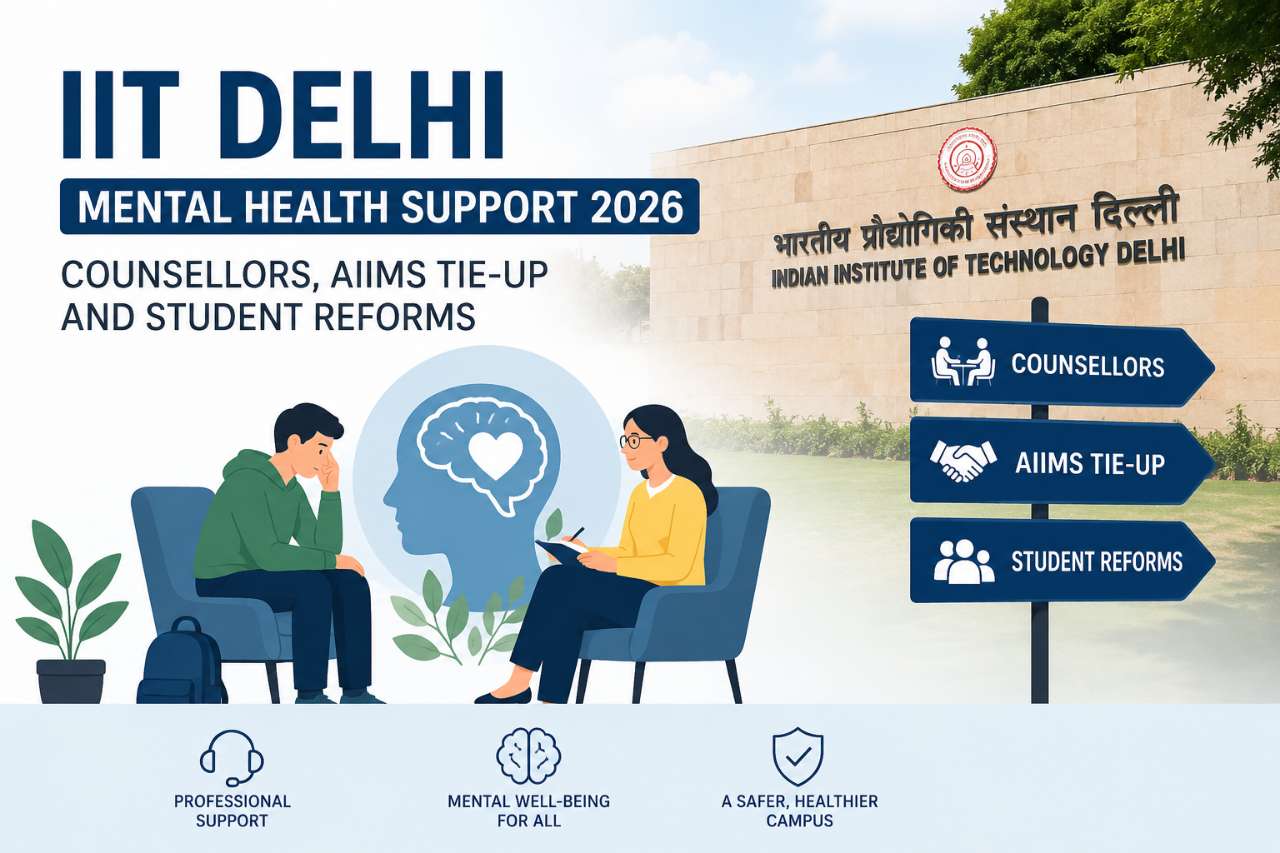
Mental health support at India's premier engineering institutes has moved from the margins to the centre of campus conversations. After the tragic death of MSc Physics student Rishikesh Kumar and subsequent protests at Indian Institute Of Technology Delhi Iit Delhi, the institute has publicly reaffirmed its commitment to student wellbeing. IIT Delhi is now actively seeking suggestions from students to improve counselling systems, strengthen grievance redressal, and build a safer academic environment. For JEE aspirants, current students, and parents evaluating top colleges, this moment offers a practical lens on how elite institutions handle mental health not just through policy statements, but through counsellor availability, psychiatric care, inquiry mechanisms, and student participation in reform.
Why Mental Health Support Matters at IIT Delhi and Top Engineering Colleges
Getting into an Indian Institute of Technology is a dream for lakhs of students who prepare through JEE Main and JEE Advanced. Yet admission to IIT Delhi or peer campuses such as IIT Bombay, IIT Madras, or IIT Kanpur brings intense academic pressure, competitive peer groups, hostel life away from family, and high expectations from society. Research and NAtional data consistently show rising stress levels among young adults in higher education.
According to the National Crime Records Bureau (NCRB), student suicides in India have increased sharply over the past decade. Engineering and professional colleges report some of the highest academic workloads. When institutions respond only after a crisis, students lose trust. When they respond with transparent systems, trained professionals, and open feedback channels as IIT Delhi is attempting now campus culture can shift from silence to support.
Common stress triggers for IIT and engineering students
- Academic load: Back-to-back assignments, quizzes, lab work, and end-semester exams in demanding programmes like B.Tech, M.Tech, and MSc.
- Placement and career anxiety: Fear of not matching peer packages or branch stereotypes, especially in core versus non-core roles.
- Hostel and social adjustment: First-year students from smaller towns often struggle with language, food, and social circles in metros like Delhi.
- Financial pressure: Education loans and family investment create guilt when grades dip.
- Research and supervisor relationships: Postgraduate and research scholars face isolation, publication pressure, and unclear timelines.
- Identity and belonging: Students from reserved categories, women in male-dominated departments, and LGBTQ+ students may face additional stress without inclusive support.
Parents comparing Delhi NCR options whether Delhi Technological University Dtu, Netaji Subhas University Of Technology Nsut Delhi, or National Institute Of Technology Delhi Nit Delhi should ask not only about cutoffs and placements but also about counselling infrastructure and grievance systems.
IIT Delhi's Mental Health Infrastructure: What the Institute Offers
Following campus unrest and student demands for accountability, IIT Delhi released a detailed statement outlining its existing mental health framework. The institute emphasised that strengthening student support is an ongoing priority, not a one-time reaction. Understanding these services helps current students use them confidently and helps future applicants set realistic expectations.
On-campus counsellors and empanelled support
IIT Delhi stated that it provides access to 15 on-campus counsellors dedicated to student mental health. In addition, students can consult empanelled counsellors outside the immediate campus network, with the institute reimbursing the cost of these sessions. This dual model matters because:
- Some students prefer familiar on-campus counsellors for quick, repeat visits.
- Others want privacy away from faculty-dominated spaces and may prefer external therapists.
- Reimbursement removes the financial barrier that stops many Indian students from seeking professional help.
Institutions like National Institute Of Mental Health Neuro Sciences Bangalore (NIMHANS) have long set benchmarks for psychiatric and psychological care in India. While IIT Delhi is not a medical university, its tie-ups with leading mental health centres signal an effort to align campus care with clinical standards.
Psychiatric care from AIIMS and VIMHANS
Beyond counselling, IIT Delhi offers psychiatric support a critical distinction because counsellors and psychiatrists serve different roles. Counsellors typically address stress, relationships, and coping strategies. Psychiatrists can diagnose clinical conditions such as depression, anxiety disorders, or bipolar disorder and prescribe medication when medically necessary.
According to the institute's statement, IIT Delhi has:
- One full-time psychiatrist on campus.
- Two part-time psychiatrists, one each from All India Institute Of Medical Sciences Delhi Aiims Delhi and Vidyasagar Institute of Mental Health, Neuro & Allied Sciences (VIMHANS).
AIIMS Delhi is among India's most trusted medical institutions, training doctors who serve across specialties including psychiatry. VIMHANS, based in Delhi, focuses specifically on mental health and neuro-sciences. For students experiencing severe distress, suicidal thoughts, or symptoms that do not improve with counselling alone, psychiatric access on or near campus can be lifesaving.
How this compares with other Delhi colleges
Delhi hosts a dense cluster of higher education institutions from Indraprastha Institute Of Information Technology Delhi Iiit Delhi to central universities and medical colleges such as Maulana Azad Medical College Mamc Delhi and University College Of Medical Sciences Ucms Delhi. Not all campuses publish counsellor-to-student ratios publicly. IIT Delhi's disclosure of 15 counsellors plus psychiatric backup sets a transparency standard that student bodies at other institutes often demand during protests or wellness audits.
Student Protests, Tragedy, and the Call for Suggestions
The institute's renewed focus on mental health followed the death of Rishikesh Kumar, an MSc student, which led to late-night protests, calls for administrative accountability, and temporary cancellation of classes. Such moments reflect a broader pattern seen at engineering and medical campuses nationwide: a single tragedy exposes gaps in support systems, communication, and trust between students and administration.
In response, IIT Delhi invited students to share suggestions and concerns so the institute can improve systems and create what it described as a safer, responsive, and supportive environment. This participatory approach aligns with best practices in student welfare policies work better when designed with input from those who use them daily.
What students typically ask for during mental health reforms
- More counsellors and shorter appointment wait times.
- 24/7 crisis helplines advertised prominently in hostels and academic blocks.
- Training for faculty and wardens to recognise distress without stigmatising students.
- Leave and academic flexibility during mental health crises.
- Anonymous feedback channels so students fear no retaliation.
- Regular mental health awareness weeks, not one-off seminars after incidents.
Students at liberal arts and science colleges such as Hindu College Delhi, Miranda House Delhi, and Lady Shri Ram College For Women Lsr Delhi face similar stressors, though academic intensity and hostel culture differ. Cross-campus learning can help IIT Delhi adopt ideas that already work elsewhere.
Five-Member External Inquiry Committee: Purpose and Leadership
Alongside wellness measures, IIT Delhi constituted a five-member external inquiry committee to investigate the circumstances surrounding the student's death. External investigation is important because internal committees alone may lack perceived independence.
The panel is led by Ashok Kumar, former Director General of Police (DGP) of Uttarakhand, Vice Chancellor of Sports University Haryana, and an IIT Delhi alumnus. The institute stated that the committee will receive necessary details to examine the matter comprehensively and recommend measures to strengthen student support systems.
Why external inquiry matters for trust
When campuses face student deaths, communities often ask whether academic pressure, supervisor conduct, hostel conditions, or delayed intervention played a role. An external panel can:
- Review emails, attendance, counselling records, and hostel logs with procedural fairness.
- Interview students, staff, and family members without internal bias.
- Publish actionable recommendations on deadlines and follow-up accountability.
For JEE and GATE aspirants eyeing postgraduate programmes, inquiry outcomes may influence future policies on research supervision, extension requests, and mental health leave areas where MSc and PhD students often feel most vulnerable.
Proposed External Ombudsperson: A New Grievance Layer
IIT Delhi also proposed appointing an external ombudsperson to address student grievances that remain unresolved through existing internal channels. Many universities of health sciences and professional education such as Maharashtra University Of Health Sciences Nashik, Kerala University Of Health Sciences, and Rajasthan University Of Health Sciences Ruhs Jaipur use ombudsman-style offices for complaints about examinations, harassment, and administrative delays.
An ombudsperson at IIT Delhi could theoretically handle:
- Unresolved harassment or discrimination complaints.
- Disputes over academic evaluation, project allocation, or supervisor behaviour.
- Hostel and infrastructure grievances linked to wellbeing.
- Cases where students feel internal committees did not act impartially.
The effectiveness of this role will depend on appointment independence, reporting lines, and whether recommendations bind the administration. Students should watch whether the ombudsperson is empowered to publish annual reports a transparency tool used globally in higher education.
Mental Health in Indian Higher Education: The Bigger Picture
IIT Delhi's announcements sit within a national conversation about student wellbeing. The NCRB has reported a significant rise in student suicides over ten years, with professional and coaching-hub pressures frequently cited in media and policy debates. Engineering colleges, law universities, and medical institutes including AIIMS-affiliated campuses and state health sciences universities like Dr Ntr University Of Health Sciences Vijaywada and Bihar University Of Health Sciences share responsibility for creating psychologically safe environments.
What national bodies and experts recommend
Education policymakers, mental health professionals, and student unions increasingly argue that wellbeing is not separate from academic quality. Key recommendations include:
- Mandatory counsellor ratios: Benchmarks such as one counsellor per 1,000 students are discussed internationally; Indian campuses rarely meet them.
- Faculty sensitisation: Professors should know referral pathways without acting as untrained therapists.
- Anti-stigma campaigns: Normalising help-seeking reduces dropout and self-harm risk.
- Peer support networks: Trained student volunteers can bridge gaps until professional appointments are available.
- Data and accountability: Institutes should track counselling uptake, wait times, and outcomes while protecting privacy.
Public health institutions such as the Indian Institute Of Public Health Gandhinagar and Phfi Institute Of Public Health Sciences contribute research and training that can inform campus wellness policy if universities choose to partner with them.
Choosing a College: Mental Health Checklist for Students and Parents
Before locking college choices during JoSAA counselling or state admission rounds, families should evaluate wellness infrastructure with the same seriousness as cutoffs and fees.
Questions to ask during open days or via student networks
- How many full-time counsellors serve the campus, and what is the typical appointment wait time?
- Is psychiatric care available on campus or through hospital tie-ups?
- Are counselling sessions confidential, and are they free or reimbursed?
- Is there a 24/7 crisis helpline listed in every hostel?
- What is the grievance redressal process for harassment, bias, or academic disputes?
- Does the institute offer mental health leave or deferral without punitive penalties?
- Are there active student wellness clubs and faculty allies?
- Has the institute published post-incident reforms after past crises?
Whether you are comparing IITs with Indian Institute Of Foreign Trade Iift Delhi for an MBA, or health administration programmes at Iihmr Institute Health Management Jaipur, mental health readiness affects retention, grades, and long-term career success not just immediate happiness.
Crisis Helplines and National Support Resources
If you or someone you know is in distress, professional help is available. You do not need a diagnosis to call.
- AASRA (24x7): 9820466726 suicide prevention and emotional support.
- iCALL (TISS): 9152987821 free telecounselling.
- Tele-MANAS: National tele-mental health service dial 14416 or 1-800-891-4416.
- Kiran (24x7): 1800-599-0019 Ministry of Social Justice and Empowerment helpline.
- Vandrevala Foundation: 1860-266-2345 / 9999-666-555 24x7 mental health support.
Campus security, local police (112), and hospital emergency departments remain options when immediate physical safety is at risk. IIT Delhi students should also save official counselling desk numbers from the institute website and hostel notice boards.
What Happens Next at IIT Delhi
The coming months will test whether IIT Delhi's commitments translate into structural change. Students, alumni, and parents should monitor:
- Implementation of student suggestions submitted to the administration.
- Findings and public summary of the five-member external inquiry committee.
- Appointment terms and first cases handled by the proposed external ombudsperson.
- Whether counsellor strength and psychiatric hours expand based on demand data.
- Integration of mental health modules into orientation for first-year B.Tech, M.Tech, MSc, and PhD cohorts.
For the wider IIT system, Delhi's response may become a reference point during IIT Council discussions, NAAC-related quality narratives, and student union negotiations at sister campuses.
Role of Parents, Faculty, and Alumni in Campus Wellbeing
Mental health reform at institutes like IIT Delhi cannot rest on counsellors alone. Parents who encourage open conversation without equating grades with self-worth help students seek help earlier. Faculty members who notice withdrawal, missed classes, or sudden performance drops should know referral pathways rather than dismissing struggles as laziness. Alumni networks can fund wellness fellowships, sponsor peer counsellor training, and share lived experiences of surviving high-pressure semesters.
Management and humanities students at colleges such as Fore School Of Management Delhi, International Management Institute Imi Delhi, and Jamia Millia Islamia New Delhi also benefit when flagship technical institutes model transparent wellness governance. Good policy in one Delhi campus often influences others through media attention, UGC discourse, and student union coordination.
Red flags parents and friends should not ignore
- Talking about being a burden, hopelessness, or wanting to disappear.
- Sharp changes in sleep, appetite, hygiene, or social withdrawal over two or more weeks.
- Giving away possessions, sudden calmness after prolonged distress, or searching online for self-harm methods.
- Repeated alcohol or substance use to cope with academic pressure.
- Expressing trapped feelings related to course, supervisor, or financial debt.
If you notice these signs, stay calm, listen without judgment, avoid promising secrecy when safety is at risk, and connect the person to campus counselling or a national helpline the same day.
Policy Lessons for Health Sciences and Professional Universities
State health sciences universities from Sri Guru Ram Das University Of Health Sciences to The West Bengal University Of Health Sciences Kolkata train doctors, nurses, and allied professionals who will later serve the public. Ironically, medical and nursing students themselves report high burnout. IIT Delhi's model of combining counsellors, hospital-linked psychiatrists, external inquiry, and ombudsperson proposals offers a template that medical colleges affiliated with Vardhman Mahavir Medical College New Delhi Vmmc Delhi can adapt.
Regional universities such as Odisha University Of Health Sciences, Kaloji Narayana Rao University Of Health Sciences, and Srimanta Sankaradeva University Of Health Sciences Guwahati can contribute epidemiological tracking of student wellbeing if data is collected ethically and anonymised. Long-term success depends on funding counsellor posts permanently not only hiring temporarily after protests.
Conclusion
IIT Delhi's reaffirmation of mental health support through 15 on-campus counsellors, psychiatric expertise from AIIMS and VIMHANS, reimbursed empanelled counselling, student suggestion drives, an external inquiry committee, and a proposed ombudsperson marks a significant moment in Indian higher education governance. The tragedy that prompted these steps should not be reduced to a headline; it is a reminder that world-class engineering education must include world-class care for the humans who study within its gates.
For aspirants preparing for JEE Advanced, parents researching IIT Delhi, and current postgraduates navigating research pressure, the lesson is clear: ask tough questions about wellbeing before and after admission. Institutions that listen to students, publish transparent systems, and invite independent oversight are better equipped to prevent the next crisis. Mental health is not a soft topic it is foundational to learning, innovation, and life itself.