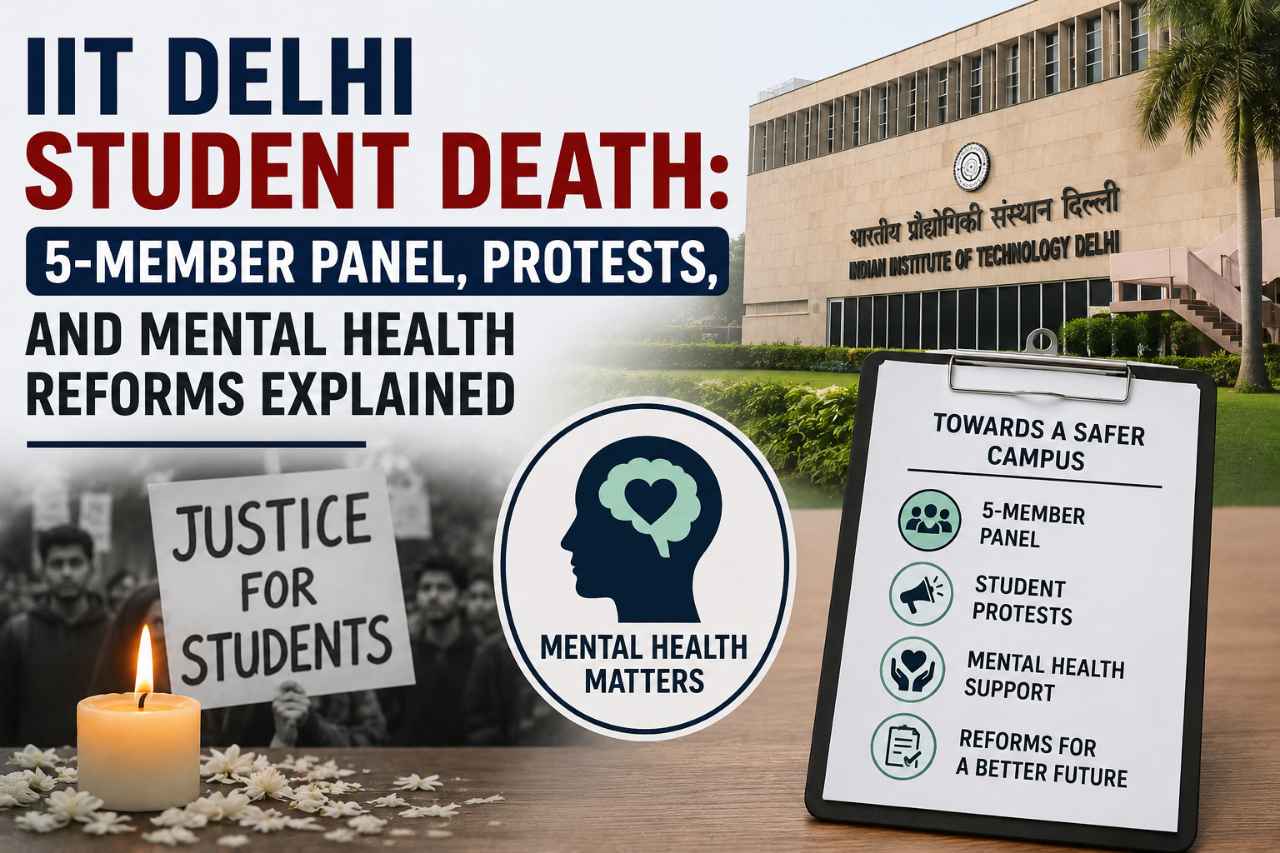

The death of MSc Physics student Rishikesh Kumar at the Indian Institute of Technology Delhi IIT Delhi campus in August 2026 has reopened urgent conversations about student mental health, institutional accountability, and campus safety across India's premier engineering and science institutions. Following the incident at the Lecture Hall Complex, students staged a prolonged protest lasting more than 14 hours, demanding a fair investigation, administrative accountability, and support for Kumar's family. In response, IIT Delhi Director Rangan Banerjee announced a five-member external inquiry committee, financial assistance measures, and new mental-health support structures.
For students preparing for JEE Advanced, GATE, or postgraduate admissions at IITs and for parents evaluating institutions in Delhi and beyond this case is a reminder that rankings and placement packages alone do not define campus wellbeing. This article explains what happened at IIT Delhi, what the Institute has announced, why students protested, and what every college aspirant in India should know about mental-health safeguards before and after admission.
What Happened at IIT Delhi: Timeline and Key Facts
Understanding the sequence of events helps separate verified institutional statements from student grievances still under investigation. Based on official communications and reported campus activity as of August 25, 2026, the following timeline outlines the case.
Background: Rishikesh Kumar's Academic Journey at IIT Delhi
According to IIT Delhi's official statement, Rishikesh Kumar joined the MSc programme in Physics in July 2025. He was allotted accommodation at Shivalik Hostel and performed well academically in his first semester. The institute noted that he maintained strong academic standing during this period, which underscores a common but often overlooked reality: high academic performance does not always correlate with stable mental health.
In March 2026, Kumar reportedly developed mental-health concerns. IIT Delhi's counsellor and psychiatrist advised that he remain under continuous parental supervision. He applied for withdrawal from the second semester, which the institute approved. From that point, he lived off campus with his parents rather than in hostel accommodation.
Return to Campus and Subsequent Withdrawal Requests
When Kumar returned to IIT Delhi in July 2026, his medical records were reviewed again by the institute's counsellor and psychiatrist. He was once more advised to continue living under parental supervision outside the campus. He had also applied for withdrawal from the third semester, and the Physics Department approved that request as well.
These details matter for two reasons. First, they show that formal counselling channels were engaged. Second, they raise questions now part of the external inquiry about whether withdrawal, hostel removal, and off-campus arrangements adequately protected the student during a vulnerable period. Students protesting on campus have argued that institutional decisions, including hostel-related actions, may have contributed to isolation rather than recovery.
The Incident and Immediate Campus Response
Kumar died by suicide at IIT Delhi's Lecture Hall Complex, an event that triggered emotional distress across the campus and led to protests lasting more than 14 hours. Demonstrations included demands for a thorough investigation, resignation of the dean, and compensation for Kumar's family. A meeting between student representatives and administration officials was held, though some student groups later urged representatives not to negotiate on core demands until broader accountability measures were addressed.
Reports also indicated that IIT Delhi cancelled classes temporarily as the campus grappled with the aftermath. Students announced marches across residential hostels and planned candle-light vigils in memory of Kumar, particularly near Shivalik Hostel, where he had previously stayed.
IIT Delhi's Five-Member External Inquiry Panel: Composition and Mandate
One of the central administrative responses has been the formation of an external inquiry committee led by Ashok Kumar, former Director General of Police (DGP) of Uttarakhand, Vice Chancellor of Sports University Haryana, and an IIT Delhi alumnus. Director Rangan Banerjee communicated this decision to the campus community via email during the night between August 24 and 25, 2026.
Who Is on the Panel?
The committee, as described in official communications, includes:
- Ashok Kumar Former DGP Uttarakhand, VC Sports University Haryana, IIT Delhi alumnus (panel head)
- Dr. Pratap Sharma Head, Department of Psychiatry, All India Institute of Medical Sciences Delhi AIIMS Delhi
- Three to four student representatives To ensure student voices are part of the review process
- Registrar Serving as secretary and convenor of the committee
The inclusion of an external law-enforcement leader, a senior psychiatrist from India's top medical institute, and student representatives signals an attempt to balance administrative rigour, clinical perspective, and campus legitimacy. However, students who remain on protest have questioned whether internal systems failed before external review became necessary.
What the Panel Is Expected to Examine
While the full terms of reference may be published separately, the panel's broad mandate appears to cover:
- Circumstances surrounding Kumar's death on campus
- Institutional handling of his mental-health case, including counselling, medical advice, and semester withdrawals
- Hostel allocation, removal, and related administrative decisions
- Communication between departments, deans, and student-support services
- Recommendations to prevent similar tragedies at IIT Delhi
For aspirants comparing IIT Delhi with other Delhi institutions such as Netaji Subhas University of Technology NSUT Delhi, Delhi Technological University DTU, or National Institute of Technology Delhi NIT Delhi, this inquiry may set a reference point for how technical universities respond to student-welfare crises.
Student Protests at IIT Delhi: Demands and Campus Climate
Protests at IIT Delhi following Kumar's death reflect a wider pattern seen at several Indianuniversities in recent years, where student communities demand transparency after on-campus tragedies. Understanding these demands helps parents and applicants assess institutional culture not just cutoffs and fees.
Primary Student Demands
Based on reported protest communications, students have broadly demanded:
- A time-bound, independent investigation into Kumar's death
- Administrative accountability, including calls for the dean's resignation
- Financial compensation and long-term support for Kumar's family
- Stronger, more accessible mental-health infrastructure on campus
- Policy changes around hostel removal and academic withdrawal for students facing mental-health challenges
Some student groups explicitly asked representatives to avoid diluting these demands through partial negotiations with the administration. They also planned hostel marches and candle-light memorials, framing the protest as both a justice movement and a mental-health awareness campaign.
Why Campus Protests Matter for Higher Education Policy
When premier institutions like IIT Delhi face sustained student action, the ripple effects extend beyond a single campus. Regulators, funding bodies, and peer institutions often review their own counselling models. Delhi's higher-education ecosystem including universities such as Indraprastha Institute of Information Technology Delhi IIIT Delhi and colleges under Delhi University like Hindu College Delhi and St Stephens College Delhi faces similar pressure to demonstrate that academic excellence and student wellbeing can coexist.
Institutional Response: Financial Support, Ombudsperson, and Mentorship
Alongside the inquiry panel, IIT Delhi Director Rangan Banerjee outlined several immediate and medium-term measures in an official statement. These announcements aim to address both family support and systemic gaps in grievance redressal.
Financial Assistance for Kumar's Family
The institute stated it would:
- Reimburse medical expenses related to Kumar's care
- Provide funding from the institute's benevolent fund
- Create a separate voluntary contribution fund involving faculty, students, and staff to support the family
While financial support cannot replace accountability, such measures are often the first tangible step institutions take after a tragedy. Families navigating medical bills, travel, and funeral costs after a student's death face enormous stress; transparent benevolent-fund processes can offer partial relief.
External Ombudsperson and Enhanced Mentorship
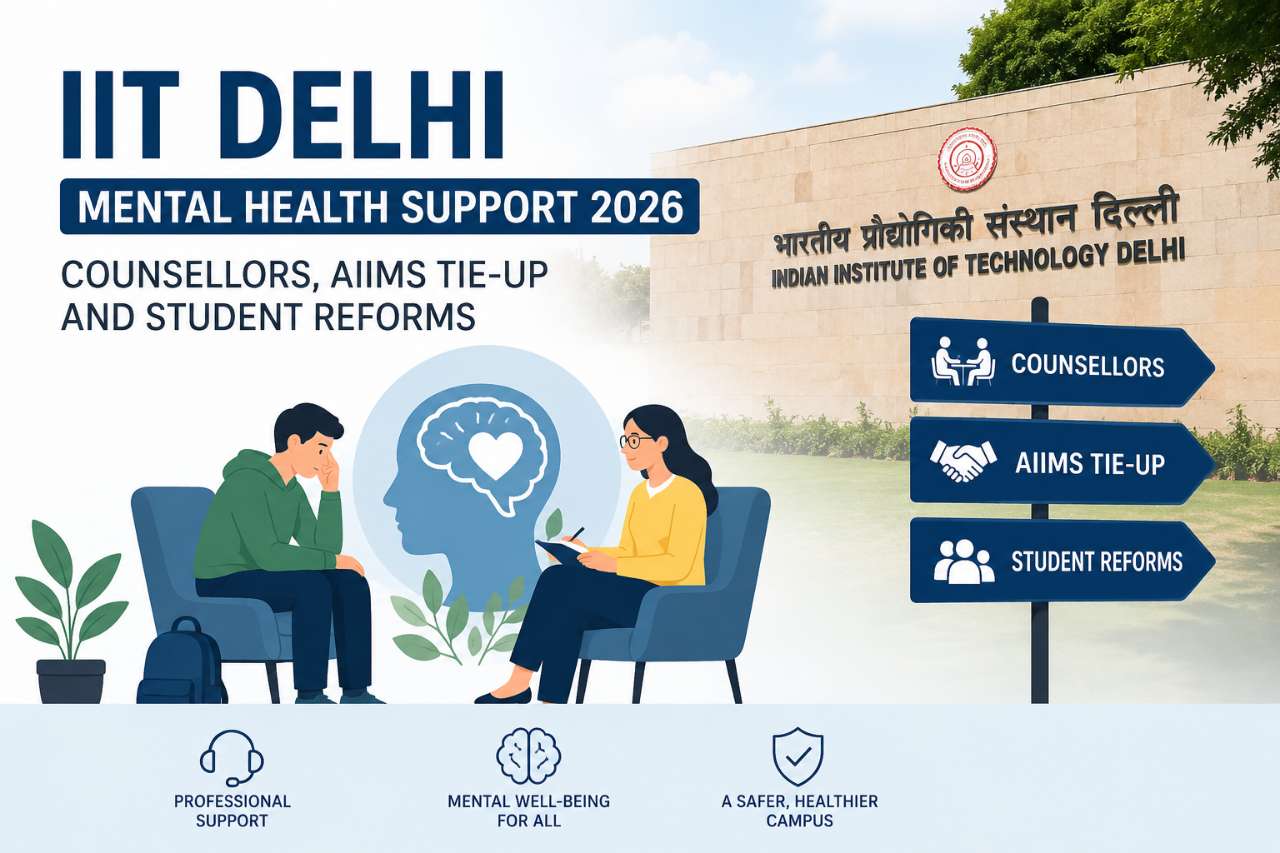
IIT Delhi also committed to appointing an external Ombudsperson to handle grievances that internal systems fail to resolve. Additionally, the institute plans to strengthen mentorship by pairing faculty mentors with student mentors specifically to support mental-health concerns.
These steps align with best practices recommended by mental-health professionals: layered support that includes peers, faculty, counsellors, and independent oversight. For comparison, medical campuses such as Vardhman Mahavir Medical College New Delhi VMMC Delhi and Maulana Azad Medical College MAMC Delhi often integrate hospital-linked psychiatry services a model IIT Delhi partially mirrors by involving AIIMS psychiatry leadership in its inquiry panel.
Mental Health at IITs and Indian Campuses: The Bigger Picture
The IIT Delhi case did not occur in isolation. National data and campus experiences across India point to rising mental-health challenges among young adults in competitive academic environments.
National Trends in Student Mental Health
According to National Crime Records Bureau (NCRB) data cited in education reporting, student suicides in India have risen significantly over the past decade, accounting for a notable share of total suicides. Engineering colleges, medical institutes, and residential campuses with high pressure, limited privacy, and intense competition often report higher distress levels among students.
Common stressors include:
- Academic workload and fear of failure or drop-out
- Isolation after moving away from home, especially for first-generation learners
- Financial pressure from fees, loans, and family expectations
- Stigma around seeking psychiatric or psychological help
- Uncertainty about placements, research output, and career paths
What IIT Delhi's Case Reveals About Support Gaps
Official statements confirm Kumar accessed counsellors and psychiatrists at IIT Delhi and received advice for parental supervision and semester withdrawal. Yet he still returned to campus and ultimately died on institute premises. This gap between support provided and outcome achieved is precisely what the external panel must analyse.
Key questions relevant to all institutions include:
- Are withdrawal and off-campus arrangements monitored with follow-up check-ins?
- Does removing a student from hostel accommodation increase isolation?
- Are faculty and hostel wardens trained to recognise mental-health red flags?
- Is there a seamless handover between counsellor, department, and family?
Students eyeing alternatives within Delhi whether Jamia Millia Islamia New Delhi, Indira Gandhi Delhi Technical University For Women, or private campuses like Delhi Technical Campus should evaluate published mental-health policies with the same seriousness as placement reports.
What Parents and Aspirants Should Check Before Choosing a College
Google's E-E-A-T framework Experience, Expertise, Authoritativeness, and Trustworthiness applies strongly to educational guidance. Responsible college research goes beyond brochure claims. Use this checklist when shortlisting institutions in Delhi or elsewhere.
Campus Wellbeing Checklist
- Counselling centre: Is there a full-time counsellor or psychiatrist? What are walk-in hours?
- Helplines: Does the institute publish 24x7 emergency numbers inside hostels and academic blocks?
- Hostel policies: How does the college handle medical leave, withdrawal, and re-admission after mental-health breaks?
- Peer support: Are there trained student mentors or anti-stigma campaigns?
- External tie-ups: Partnerships with hospitals like AIIMS or local psychiatric units
- Grievance redressal: Is there an ombudsperson or independent complaint cell?
- Transparency: Has the institute publicly shared wellbeing initiatives after past incidents?
Questions to Ask During Open Days and Counselling
During IIT Open House events, department orientations, or campus tours at institutions such as Indian Institute of Foreign Trade IIFT Delhi or International Management Institute IMI Delhi, consider asking:
- What happens if a student needs a semester break for mental-health treatment?
- Can parents receive structured updates when a student is under clinical care?
- Are hostel rooms changed or retained during medical withdrawal?
- How quickly can a student get a psychiatric appointment on campus?
Document the answers. Institutions that answer clearly tend to have more mature support systems than those offering vague assurances.
Comparing Campus Safety Across Delhi's Top Institutions
Delhi hosts one of India's densest clusters of higher-education institutions, from IITs and central universities to women's colleges and professional schools. While each campus operates independently, students often cross-compare wellbeing culture when choosing between options.
Technical institutes such as Delhi Institute of Technology and management schools like Delhi School of Management may not face identical residential-hostel pressures as fully residential IIT campuses, yet competitive exams and internship stress still affect mental health. Similarly, undergraduate students at Kirori Mal College Delhi, Hansraj College Delhi, and Gargi College Delhi benefit from day-scholar flexibility but may lack structured on-campus psychiatric services found at larger institutes.
The IIT Delhi tragedy therefore serves as a benchmark conversation for the entire Delhi NCR region not only for engineering aspirants but also for students considering medical pathways at institutes near All India Institute of Medical Sciences Rishikesh or humanities programmes at colleges such as Indraprastha College For Women Delhi.
Legal, Ethical, and Media Reporting Considerations
Responsible reporting on student deaths requires balancing public interest with dignity and suicide-prevention guidelines. The Press Council of India and WHO recommend avoiding sensational details, not speculating on causes before inquiry findings, and providing helpline information.
Readers should rely on verified institutional statements, inquiry outcomes, and reputable education news sources rather than unverified social-media posts. If you are a student journalist or campus blogger, prioritise accuracy and empathy over viral headlines.
Helplines and Emergency Support in India
If you or someone you know is in distress, help is available. You do not need to wait for a campus appointment during a crisis.
- AASRA: 9820466726 24x7 suicide prevention helpline
- iCALL (TISS): 9152987821 Free tele-counselling
- Tele-MANAS: 14416 or 1-800-891-4416 Government mental-health helpline
- KIRAN (Ministry of Social Justice): 1800-599-0019 24x7 support
- Campus security or warden: Contact immediately if someone is at immediate risk on campus
Parents in Delhi can also consult psychiatric departments at major hospitals including AIIMS Delhi and University College of Medical Sciences UCMS Delhi for referrals and long-term care planning.
How This Affects IIT Admissions and Postgraduate Planning
Aspirants targeting IIT Delhi for MSc Physics, MTech, PhD, or integrated programmes may wonder whether campus unrest affects admissions or academic quality. Historically, administrative crises at IITs have led to policy reforms hostel reforms, mental-health budgets, and revised attendance or withdrawal norms without reducing the institute's academic standing.
For undergraduate aspirants, IIT Delhi remains among the most competitive destinations through JEE Advanced. The incident underscores that once admitted, students should proactively locate counselling centres, save helpline numbers, and build peer networks early in the first semester. The same advice applies to students joining Fore School of Management Delhi, New Delhi Institute of Management, or women's colleges such as Lady Shri Ram College For Women LSR Delhi and Miranda House Delhi.
Conclusion: Accountability, Compassion, and Systemic Reform
The death of Rishikesh Kumar at IIT Delhi is a tragedy that no inquiry can undo. What it can do if conducted transparently is clarify institutional decisions, identify failures, and recommend reforms that protect future students. The formation of a five-member external panel led by Ashok Kumar, with psychiatric expertise from AIIMS Delhi and student representation, is a meaningful step only if its findings are published and acted upon.
Financial support for Kumar's family, an external Ombudsperson, and expanded faculty-student mentorship are welcome measures, but students who protested through the night have signalled that trust must be rebuilt through accountability not announcements alone. For India's higher-education community, the lesson is clear: world-class labs and high package offers cannot substitute for humane, well-resourced mental-health systems.
As you plan admissions across Delhi's rich landscape from IITs and NITs to DU colleges and professional institutes carry this perspective into your decision-making. Choose institutions wisely, ask difficult questions openly, and remember that seeking help is a sign of strength, not weakness. If you are struggling today, please use the helplines listed above or reach out to someone you trust immediately.