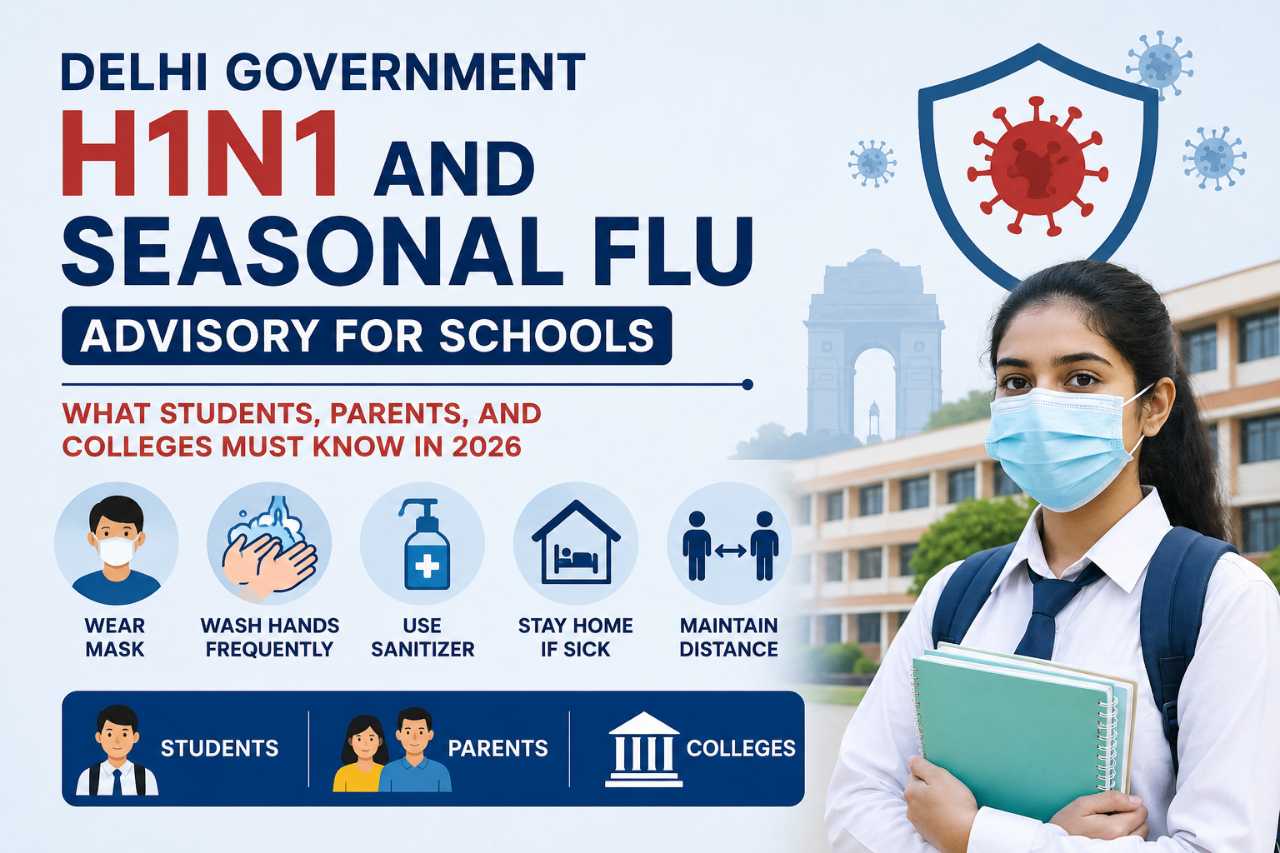

In August 2026, the Delhi government issued a health advisory directing all schools government and private to intensify preventive measures against seasonal influenza, including H1N1 (swine flu). Education Minister Ashish Sood clarified that seasonal viral infections are common during the monsoon-to-post-monsoon transition and that there is no need for panic, but alertness and basic hygiene remain essential.
For students preparing for board exams, entrance tests like NEET and JEE, and college admissions across Delhi NCR, this advisory matters beyond school gates. Hostels, coaching centres, libraries, and crowded campus corridors create similar transmission risks. Whether you study at St Stephens College Delhi, live in a PG near Hindu College Delhi, or commute daily to coaching hubs, understanding this advisory helps you protect your health without disrupting academic plans.
This article explains what the Directorate of Education (DoE) has recommended, how H1N1 and seasonal flu differ from a common cold, and practical steps students, parents, teachers, and college administrators can take right now.
What Did the Delhi Government Advisory Say?
The Directorate of Education asked schools to adopt a "Healthy School–Healthy Community" approach. The advisory is described as purely precautionary designed to raise awareness before infection numbers rise, not to signal an emergency shutdown.
Key official messages include:
- Seasonal viral infections peak during certain months; vigilance is more useful than fear.
- Schools must reinforce respiratory hygiene among students and staff.
- Personal, classroom, school, and family-level cleanliness should improve simultaneously.
- People with minor cold or cough symptoms should consider wearing a mask around others.
- District and zonal Deputy Directors of Education were directed to monitor compliance and submit reports.
Minister Ashish Sood posted on social media urging Delhi residents to follow simple precautions regular handwashing, covering the mouth while coughing or sneezing, and avoiding unnecessary alarm. For higher-education stakeholders, the same principles apply to university campuses, medical colleges, and professional institutes where large groups gather daily.
Understanding Seasonal Influenza and H1N1 in the Indian Context
What Is Seasonal Influenza?
Seasonal influenza is a contagious respiratory illness caused by influenza viruses that circulate every year in India, typically intensifying after the monsoon when humidity, temperature swings, and indoor crowding increase. Symptoms often appear suddenly and may include fever, sore throat, cough, body ache, headache, fatigue, and chills.
What Is H1N1 (Swine Flu)?
H1N1 is a subtype of influenza A virus that caused a global pandemic in 2009 and now circulates as a seasonal strain in India. It spreads through respiratory droplets when an infected person coughs, sneezes, or talks. Most cases are mild and recover with rest and medical guidance, but vulnerable groups including young children, elderly individuals, pregnant women, and people with chronic illnesses need closer monitoring.
How Is It Different from a Common Cold?
A cold usually builds gradually with milder fever and less body pain. Influenza and H1N1 tend to hit faster, cause stronger fatigue, and carry a higher risk of complications if ignored. The Delhi advisory specifically lists symptoms such as sore throat, cough, breathing difficulty, body ache, headache, fatigue, chills, and fever warning signs that should not be dismissed as "just weather change."
| Feature | Common Cold | Seasonal Flu / H1N1 |
|---|---|---|
| Onset | Gradual | Often sudden |
| Fever | Rare or low-grade | Common, may be high |
| Body ache | Mild | Moderate to severe |
| Fatigue | Mild | Can be intense |
| Complication risk | Low in healthy adults | Higher without care |
Why This Advisory Matters for College Students and Exam Aspirants
Delhi is one of India's largest higher-education hubs. Institutions such as All India Institute Of Medical Sciences Delhi (AIIMS Delhi), Indian Institute Of Technology Delhi (IIT Delhi), and Maulana Azad Medical College (MAMC Delhi) host thousands of students in close-contact environments. Even a mild outbreak can disrupt:
- Entrance exam preparation: NEET, JEE, CUET, and CLAT schedules leave little room for a week-long illness.
- Counselling and document verification: Missing a physical reporting date due to fever can complicate admission.
- Hostel and shared accommodation: Flu spreads quickly in dormitories with shared bathrooms and mess halls.
- Internships and clinical postings: Medical and nursing students at institutes like Vardhman Mahavir Medical College New Delhi (VMMC Delhi) and University College Of Medical Sciences (UCMS Delhi) face added exposure in hospital settings.
Students eyeing healthcare careers through colleges such as Government Girls School Of Nursing Sikar or Government Nursing College Kota should treat this advisory as early training in public-health awareness an essential skill in clinical practice.
Preventive Measures Recommended in the Delhi School Advisory
The DoE advisory outlines practical, low-cost steps that schools and by extension, colleges should implement immediately.
Respiratory Hygiene and Mask Use
Students and staff are urged to cover the nose and mouth while coughing or sneezing, preferably with a tissue that is disposed of safely. Where symptoms exist, wearing a mask reduces droplet spread in classrooms, labs, and common rooms. This applies equally to management institutes like Fore School Of Management Delhi and Delhi School Of Management, where case discussions and group projects involve prolonged indoor contact.
Hand Hygiene
Regular handwashing with soap and water especially before eating and after coughing or sneezing is among the most effective prevention tools. Alcohol-based sanitizer helps where sinks are unavailable, such as during field visits at School Of Planning Architecture New Delhi or outdoor research at Teri School Of Advanced Studies New Delhi.
Physical Distancing and Ventilation
Maintaining distance from people showing respiratory symptoms lowers transmission risk. Schools are asked to clean frequently touched surfaces door handles, desks, railings and ensure adequate ventilation. Engineering campuses including Delhi Technological University (DTU), Netaji Subhas University Of Technology (NSUT Delhi), and National Institute Of Technology Delhi (NIT Delhi) should audit workshop and lab airflow, especially in air-conditioned blocks.
Healthy Daily Habits
The advisory promotes adequate hydration, nutritious food, sufficient rest, and strong personal hygiene. Students pulling all-nighters before internal exams often weaken immunity making rest a legitimate academic strategy, not a luxury.
Avoid Touching Face and Self-Medication
Touching eyes, nose, and mouth with unwashed hands increases infection risk. Schools are told to discourage self-medication; antibiotics and other medicines should not be taken without medical advice. Antibiotics do not treat viral influenza misuse can cause side effects and antimicrobial resistance.
Anti-Spitting Awareness
Spitting on school premises and in public places spreads respiratory pathogens. Colleges should display clear signage and enforce norms in canteens, sports grounds, and parking areas.
How Delhi Schools and Colleges Should Communicate Awareness
The Directorate of Education recommends multi-channel awareness beyond a single notice:
- Morning assemblies and classroom talks brief, factual sessions reduce rumours.
- Notice boards symptom lists and helpline numbers in English and Hindi.
- Parent communication SMS, WhatsApp groups, and emails for early reporting of sick children.
- Digital platforms website banners, Instagram stories, and LMS announcements for college students.
Institutions preparing future managers at International Management Institute (IMI Delhi) or Indian Institute Of Foreign Trade (IIFT Delhi) can frame health communication as a leadership exercise clear messaging prevents panic and absenteeism.
Action Plan for Parents of School and College-Going Children
Parents play a critical role in breaking the infection chain between home and campus.
- Monitor children for fever, persistent cough, or breathing difficulty; keep them home when symptomatic.
- Provide clean masks, personal water bottles, and hand sanitizer in bags.
- Avoid sending sick children to coaching classes or library study groups.
- Consult a registered medical practitioner before giving any medicine.
- Update emergency contacts with hostel wardens if your child stays in a Delhi college hostel.
- During admission travel to cities like Jaipur or Kota, check local health advisories at institutions such as Govind Guru Government College Jaipur or Government Medical College Kota.
What College Students Should Do During Flu Season
If you are enrolled at any Delhi or NCR institution including Indraprastha Institute Of Information Technology Delhi (IIIT Delhi) build these habits into your routine:
- Carry a mask during commutes on Metro, DTC buses, and shared autos.
- Sanitize hands before using shared keyboards in computer labs.
- Do not share water bottles, towels, or utensils in hostels.
- Inform class representatives or hostel administration if multiple students in a batch fall ill early cluster detection helps.
- Keep digital copies of medical certificates ready if exams or assignments are missed.
- Stay updated on university health desk notifications alongside school advisories.
Students at government institutions outside Delhi such as Government Engineering College Ajmer, Rajiv Gandhi Government Engineering College Alwar, or Government College Of Engineering Chennai should mirror Delhi's preventive standards, as seasonal flu is not limited to the capital.
When to Seek Medical Help: Red Flags Students Must Not Ignore
Most seasonal flu cases resolve with rest, fluids, and doctor-prescribed treatment. However, seek immediate medical attention if you notice:
- Difficulty breathing or chest pain
- Persistent high fever lasting more than three days
- Severe dehydration or inability to keep fluids down
- Confusion, bluish lips, or extreme drowsiness
- Worsening symptoms after initial improvement
Delhi's major hospitals and medical colleges including AIIMS Delhi, MAMC, VMMC, and UCMS handle respiratory cases regularly. Do not rely on unverified social media cures or homely concoctions without informing your doctor, especially if you have asthma, diabetes, or heart conditions.
Impact on Exams, Attendance, and College Admissions in 2026
A health advisory does not automatically cancel exams, but illness can affect performance and attendance records. Here is how to plan ahead:
Board and Entrance Exams
NEET UG counselling, JEE Advanced counselling, CUET PG admissions, and state-level engineering allotments continue on tight schedules. If you fall ill during a reporting window, contact the admitting institution immediately with medical documentation. Most colleges accept reasonable delay requests when supported by a registered practitioner's certificate.
Attendance Policies
Universities often require minimum attendance for exam eligibility. Report illness through official channels do not silently miss classes. Colleges like Sawai Man Singh Government College Jaipur and Government Science College Sikar typically have grievance cells for medical leave if procedures are followed.
Hostel and Mess Operations
Some campuses may temporarily isolate symptomatic students or adjust mess seating. Cooperate with wardens; hiding symptoms puts roommates at risk and may prolong your recovery.
Role of Medical, Nursing, and Health Sciences Education
This advisory is a live case study for students pursuing healthcare degrees. Nursing aspirants training at Shri Kalyan Government Medical College Sikar or Government Polytechnic College Sikar learn that community health begins with basic hygiene messaging not only advanced treatment.
Allied health and ayurveda students at Government Ayurved Mahavidyalaya Sikar and Government Yoga And Naturopathy Medical College Sikar should note: traditional wellness practices support general immunity, but influenza vaccination and timely allopathic consultation remain evidence-backed pillars of prevention for H1N1.
Government Monitoring and Compliance Reporting
District and zonal Deputy Directors of Education in Delhi were tasked with monitoring whether schools follow the advisory and compiling compliance reports for the Directorate. While this mechanism targets schools, college administrators can voluntarily adopt similar internal audits checking sanitizer stocks, ventilation in lecture halls, and whether hostel isolation rooms are ready.
Transparency builds trust. When institutions communicate proactively, parents and students are less likely to spread misinformation on WhatsApp groups a common problem during every flu season in Indian cities.
Seasonal Flu Prevention Beyond Delhi: A National Perspective
Seasonal influenza is not a Delhi-only concern. States across Rajasthan, Tamil Nadu, and beyond report similar patterns each year. Students relocating for higher education should compare local health infrastructure when choosing colleges. Cities with strong government medical colleges Kota, Sikar, Chennai, Jaipur often have better referral pathways for respiratory emergencies.
Whether you enroll at Bharathidasan Government College For Women Chennai, Quaid E Millath Government College Chennai, or Government College Bundi, carry the same hygiene habits you would practice in Delhi schools.
Common Myths About H1N1 and Seasonal Flu Among Students
Misinformation spreads faster than viruses on student WhatsApp groups. Separating facts from myths helps you respond calmly and correctly.
- Myth: Every fever in August is H1N1. Fact: Many fevers are caused by dengue, malaria, typhoid, or simple viral infections. A doctor's evaluation matters not self-diagnosis from search results.
- Myth: Antibiotics cure flu quickly. Fact: Influenza is viral. Antibiotics work only against bacteria and should be taken only when prescribed.
- Myth: Healthy young students never face complications. Fact: Most recover fully, but exhaustion, poor nutrition, and untreated symptoms can prolong illness and affect exam performance.
- Myth: Masks are only for sick people. Fact: The Delhi advisory encourages mask use around others when symptoms exist; during outbreaks, healthy students may also wear masks in crowded indoor settings.
- Myth: Closing windows prevents infection. Fact: Poor ventilation traps germs. Open windows periodically where safe, especially in hostels and coaching classrooms.
Share verified information from your college health desk or official government channels not unverified forwards claiming miracle cures or panic-inducing statistics.
Influenza Vaccination: Should College Students Consider It?
While the Delhi school advisory focuses on hygiene and awareness, annual influenza vaccination is an additional evidence-based tool recommended by public-health experts for high-risk and high-exposure groups. Medical, nursing, and paramedical students doing clinical rotations face greater exposure and should discuss vaccination with campus health officers or family doctors.
Even non-medical students especially those in hostels, preparing for competitive exams in crowded coaching hubs, or living with elderly family members may benefit from the seasonal flu vaccine. Vaccination does not guarantee zero infection, but it often reduces severity and duration of illness, which can make a meaningful difference during a crucial admission or semester-exam week.
Vaccines are available at government hospitals, private clinics, and campus health centres in many Delhi institutions. Check availability at the beginning of the academic session rather than waiting for an outbreak. Keep vaccination records handy if your college or internship site requires health documentation.
Special Guidance for Coaching Centre and Kota-Bound Aspirants
Thousands of students leave home each year for intensive coaching in Delhi, Kota, Sikar, and other education hubs. These environments combine long study hours, shared meals, and limited personal space ideal conditions for respiratory viruses to spread.
If you attend coaching while still in school or after Class 12, treat the Delhi advisory as your daily checklist:
- Choose seating away from visibly symptomatic classmates when possible.
- Ask coaching administrators whether classrooms are ventilated and surfaces cleaned daily.
- Avoid the "push through illness" mindset resting one or two days early prevents a longer breakdown later.
- Parents should maintain direct contact with PG owners or hostel managers about hygiene standards.
Students at institutions like Government Commerce College Kota, Government Arts College Kota, or Jawahar Lal Nehru Government College Sikar should remember that local health systems may differ from Delhi's; identify the nearest government hospital or medical college at the start of your stay, not after symptoms appear.
Conclusion: Stay Alert, Not Anxious
The Delhi government's August 2026 advisory on seasonal influenza and H1N1 is a timely reminder not a reason for panic. Seasonal viral infections are expected during this period, and simple, consistent precautions offer strong protection. Schools are strengthening hygiene, awareness, and monitoring; college students and parents should extend those practices to hostels, coaching centres, and commute routes.
If you are navigating admissions, internships, or semester exams this year, treat health preparedness as part of your academic plan. Stock masks, prioritize sleep, seek medical advice early, and stay informed through official university channels. A week of prevention is far less costly than a month of missed classes, delayed counselling, or compromised exam performance.
Stay safe, stay informed, and keep your focus on both health and education because in India's competitive higher-education landscape, protecting your well-being is protecting your future.