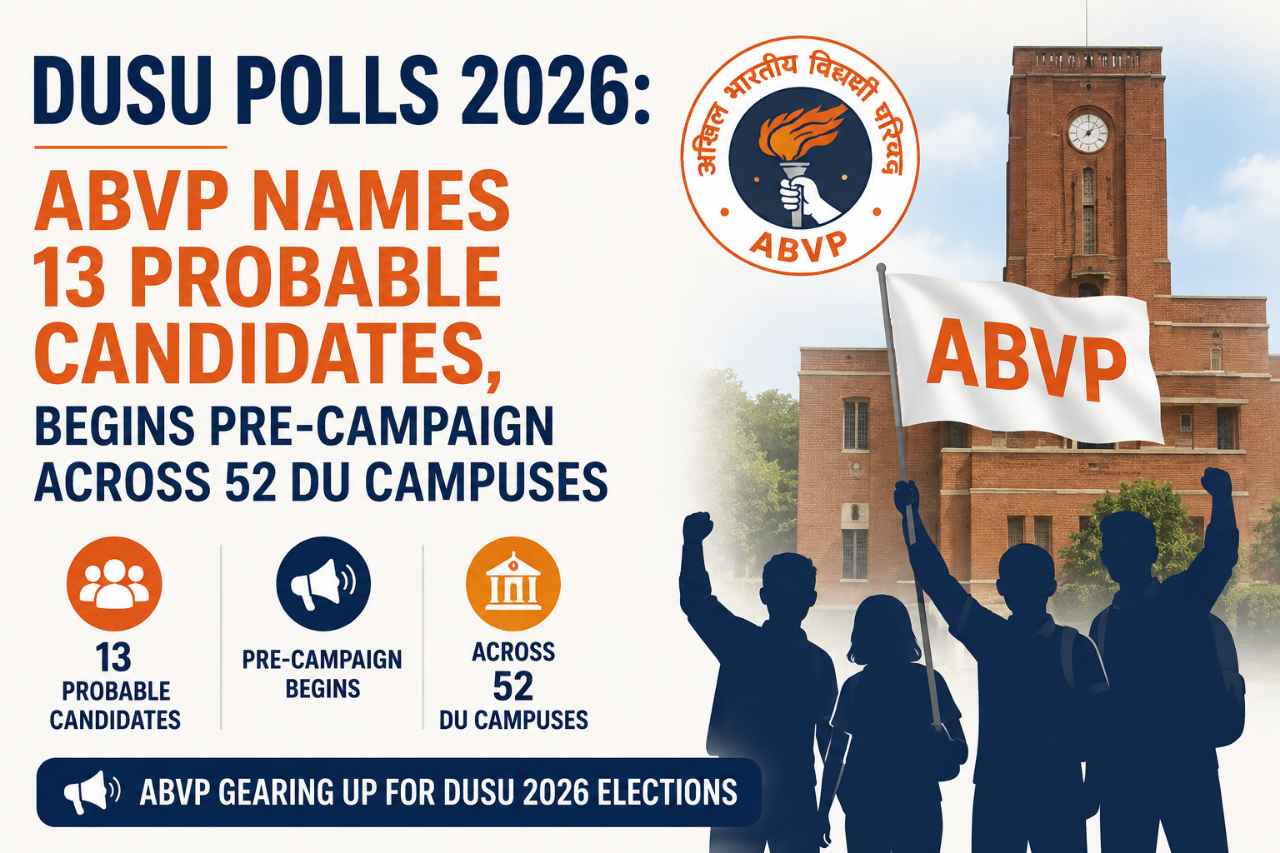

The Delhi University Students' Union (DUSU) election season is once again in full swing, and the Akhil Bharatiya Vidyarthi Parishad (ABVP) has moved early to shape the narrative ahead of voting. On September 1, 2026, ABVP released a list of 13 probable candidates for the upcoming DUSU polls and launched a week-long pre-campaign across the University of Delhi (DU). With elections scheduled for September 18, 2026, and vote counting on September 19, students across North Campus, South Campus, and off-campus colleges are already debating manifestos, panel strengths, and campus issues that matter most to them.
For lakhs of DU undergraduates—many of whom arrived through CUET and are still finding their footing in College life—DUSU elections are more than political theatre. They influence hostel policies, internship access, safety measures, fee-related grievances, and the overall student experience. Whether you study at a flagship institution like St Stephens College Delhi or a South Campus College such as Gargi College Delhi, understanding how DUSU works—and what ABVP's early moves signal—helps you participate meaningfully rather than simply watching banners go up.
This guide explains ABVP's probable candidate list, the pre-campaign plan covering 47 colleges and five departments, key election dates, past initiatives cited by the organisation, and practical tips for students who want to engage responsibly in India's most closely watched campus election.
What Are DUSU Elections and Why Do They Matter?
The Delhi University Students' Union is the apex representative body for regular students enrolled in undergraduate and postgraduate programmes across DU's constituent colleges, departments, and affiliated institutions. DUSU elections determine office-bearers—typically President, Vice President, Secretary, and Joint Secretary—who negotiate with university administration on student welfare, coordinate protests and representations, and allocate resources for cultural and academic activities.
DUSU polls are often described as a barometer of youth politics in India because DU attracts students from every state and socio-economic background. Outcomes can influence alliances at the national student level and provide visibility to emerging political leaders. For everyday students, however, the more immediate stakes involve:
- Hostel and accommodation: Allocation transparency, maintenance standards, and grievance redressal.
- Campus safety: Lighting, CCTV coverage, helplines, and gender-sensitive infrastructure.
- Internships and placements: Tie-ups, career fairs, and skill-building programmes.
- Academic support: Library hours, Wi-Fi access, scholarship awareness, and exam-related assistance.
- Fee and administrative issues: Representation during policy changes affecting students.
Unlike admissions—which students navigate through exams like CUET and college-specific cut-offs—DUSU elections depend on on-campus mobilisation, voter turnout, and how convincingly panels address local college problems. A strong campaign at Hindu College Delhi may look different from outreach at Lady Shri Ram College for Women LSR Delhi, yet both feed into the same union leadership.
ABVP's 13 Probable Candidates for DUSU 2026
ABVP, the student wing aligned with the RSS ecosystem, traditionally fields a full panel and competes fiercely with the National Students' Union of India (NSUI), Left-backed groups, and independent candidates. Ahead of formal nominations—which must be filed by September 10, 2026—the organisation has named 13 probables, signalling depth in its bench and flexibility while finalising the official four-member panel.
Full List of ABVP Probable Candidates
According to the list released on September 1, 2026, the probable candidates are:
- Alok Attri
- Ayushi Sharma
- Ishu Maurya
- Krishna Yadav
- Lakshya Raj Singh
- Nitin Tanwar
- Priyanshu Mahamana
- Riya Chhawri
- Riya Malik
- Sunny Dedha
- Tanya Mavi
- Varun Yadav
- Yash Dabas
Naming 13 probables rather than four final candidates is a common pre-election strategy. It allows the organisation to test acceptability, balance regional and gender representation, and replace a name if nomination paperwork or internal consensus shifts before the withdrawal deadline of September 11, 2026 (noon).
Students evaluating candidates should look beyond posters and social media handles. Ask about specific track records in college unions, participation in academic committees, and whether probables have engaged with issues relevant to women students, first-generation learners, and students from marginalised communities—concerns frequently raised at colleges like Kamala Nehru College Delhi and Jesus And Mary College Delhi.
How to Evaluate a Probable Before Final Nominations
Before ABVP—or any organisation—freezes its panel, students can assess probables using a simple checklist: Has the candidate previously worked on student grievances? Do they speak knowledgeably about your college's specific problems? Are they accessible without an entourage of campaigners? Have they supported inclusive events that welcome students from all backgrounds? Answers to these questions often predict post-election accountability better than catchy slogans.
Week-Long Pre-Campaign: 47 Colleges and 5 Departments
ABVP has begun a structured pre-campaign across 47 DU colleges and five university departments. During this exercise, probable candidates and office-bearers will interact with students, collect feedback, and refine the organisation's manifesto before official campaigning intensifies.
ABVP Delhi state secretary Sarthak Sharma stated that the pre-campaign aims to showcase the organisation's activities while understanding student expectations on the ground. This approach reflects a broader trend in campus politics: manifestos are increasingly built from field inputs rather than drafted entirely at the state office.
What Happens During Pre-Campaigning?
Pre-campaigning typically includes classroom-to-classroom visits, small group discussions, hostels and canteen interactions, and meetings with course representatives. Unlike full-fledged electioneering—which follows strict Lyngdoh Committee guidelines on spending, noise levels, and procession routes—pre-campaigning focuses on listening and relationship-building.
Students can use these sessions productively by raising concrete demands:
- Delays in degree or mark sheet dispatch
- Shortage of seats in college hostels
- Harassment reporting mechanisms
- Disabled-friendly campus infrastructure
- Mental health counselling availability
- Internship pathways for second- and third-year students
North Campus colleges such as Kirori Mal College Delhi, Ramjas College Delhi, and Hansraj College Delhi historically see heavy footfall during DUSU season because of dense student populations and central locations. South Campus institutions—including Daulat Ram College Delhi and Deshbandhu College Delhi—are equally critical for panel victories because close vote margins often decide outcomes.
Five Departments on the Tour
Including five DU departments alongside 47 colleges acknowledges that thousands of students study outside the traditional college system—particularly in faculties such as Arts, Science, and interdisciplinary centres. Department-level students sometimes feel excluded from union politics dominated by college campuses; targeted visits may aim to address that gap.
If you study in a department rather than a constituent college, check notice boards and course group chats for pre-campaign schedules. Department voters can influence aggregate results even when their numbers are smaller than those at large North Campus colleges.
DUSU 2026 Election Timeline: Key Dates Students Must Know
Missing a deadline can disqualify a candidate or reduce voter participation. Mark these dates on your calendar:
| Event | Date |
|---|---|
| ABVP pre-campaign begins | September 1, 2026 (week-long exercise) |
| Last date to file nominations | September 10, 2026 |
| Last date to withdraw nominations | September 11, 2026 (by 12:00 noon) |
| DUSU polling day | September 18, 2026 |
| Vote counting | September 19, 2026 |
After nominations close and withdrawals are processed, the Election Commission cell of DU will publish the final list of candidates. Campaigning rules—restricting loudspeakers, printed material, and vehicle use—then apply uniformly across campuses.
What Happens Between Nomination and Polling Day?
The window from September 11 to September 18 is when official campaigning peaks. Panels hold corner meetings, release manifestos, and seek endorsements from college societies. Students should expect increased activity near canteens, library lawns, and metro gates serving DU clusters. Plan study schedules accordingly and use official college channels to report any disruption to classes or examinations.
ABVP's "Decisive 4-0 Victory" Target Explained
Sarthak Sharma expressed confidence that ABVP will secure a "decisive 4-0 victory"—meaning wins in all four central panel posts. A clean sweep is difficult in DU's fragmented political landscape, where NSUI, Left alliances, and independents regularly split votes.
ABVP's optimism appears anchored in its incumbent track record narrative. The organisation highlighted several DUSU-led initiatives from the previous tenure:
- Great DUSU Internship: A structured internship programme connecting students with organisations and skill exposure.
- Centralised hostel system: Efforts toward streamlined hostel applications and coordination across colleges.
- Pink Booths: Dedicated assistance points emphasising women's safety on campuses.
- CCTV installation: Expanded surveillance in select areas to deter harassment and theft.
Opposition panels typically counter such claims by pointing to unresolved hostel shortages, pending infrastructure projects, or gaps in implementation. Students benefit from comparing manifesto promises against verifiable outcomes—hostel waiting lists at Deen Dayal Upadhyaya College Delhi, for example, or safety concerns during late library hours at Atma Ram Sanatan Dharma College Delhi.
Understanding DUSU Politics: Parties, Panels, and Voting Rules
Major Student Organisations in DU
While ABVP has announced probables early, other groups will declare panels closer to nominations. The main players historically include:
- ABVP (Akhil Bharatiya Vidyarthi Parishad): Right-aligned; strong organisational network.
- NSUI (National Students' Union of India): Congress-affiliated; traditionally competitive on South Campus.
- AISA / Left groups: Active in select colleges and departments.
- Independent candidates: Occasionally win or force run-offs when panel chemistry resonates locally.
Who Can Vote in DUSU Elections?
Regular students enrolled in DU programmes with valid identity documents and whose names appear on the electoral roll prepared by college authorities are eligible. Provisional or irregular admissions, certain diploma categories, or students under disciplinary suspension may be excluded—always verify with your college election officer.
Lyngdoh Committee Guidelines: What Students Should Expect
DUSU elections operate under the Supreme Court-backed Lyngdoh Committee recommendations, which cap campaign spending, ban printed pamphlets in many interpretations, restrict loud campaigning during academic hours, and prohibit defacement of campus property. Violations can lead to candidate disqualification.
These rules exist to keep colleges functioning during election season—especially important for first-year students preparing for internal assessments and for final-year students applying for postgraduate programmes and jobs.
Campus-Wise Impact: Why Every College Vote Counts
DU is not a single campus but a federation of institutions. Vote swings in off-campus or newly popular colleges can overturn North Campus dominance. Colleges with large enrolments—such as Dyal Singh College Delhi and Indraprastha College For Women Delhi—often deliver high turnout that panels aggressively pursue.
Engineering-oriented or specialised institutions affiliated with DU ecosystems, such as Bhaskaracharya College Of Applied Sciences, also contribute distinct voter blocs with issues around lab infrastructure, industry internships, and transport connectivity. Panels that ignore these nuances risk losing aggregate votes even if they dominate headline North Campus rallies.
Issues Likely to Dominate the 2026 Manifesto Debate
Based on ABVP's pre-campaign design and recurring DU concerns, expect competition around:
- Affordable and safe student housing near campus
- Metro feeder connectivity and last-mile transport for South and East Delhi colleges
- Zero-tolerance policies on ragging and sexual harassment
- Digital governance: online grievance portals that actually resolve cases
- Career bridges: internships, UPSC and competitive exam support cells
- Inclusive campus culture for Northeast students and international enrollees
Students at women's colleges—including Janki Devi Memorial College Delhi—often prioritise safety infrastructure and harassment reporting over generic slogans. Effective panels tailor messages without patronising voters.
How First-Year and CUET Students Should Navigate DUSU Season
Many voters in 2026 entered DU through CUET and may never have witnessed a DUSU cycle. Election week can feel overwhelming: loud processions, competing pamphlets (despite restrictions), and peer pressure to align with a panel.
Actionable tips for new students:
- Verify information: Cross-check claims on official DU notices and college bulletin boards.
- Attend open forums: Manifesto launches and hostel meetings reveal policy detail better than slogans.
- Know your rights: No one can force you to vote for a particular panel; secret ballot protects choice.
- Protect academics: Avoid skipping classes for rallies; participation should not cost attendance or internals.
- Document grievances: If campaigning violates Lyngdoh rules, report through college election committees.
Remember that college choice—whether you landed at a central DU arts college or a professional programme elsewhere in Delhi NCR—shapes your daily concerns, but DUSU represents collective bargaining power across the university. Students comparing institutions nationally—for instance, those also exploring options like Vardhman Mahavir Medical College New Delhi VMMC Delhi or Maulana Azad Medical College MAMC Delhi for medical pathways—should still understand that DU's union politics remain unique among undergraduate campuses.
Comparing ABVP's Pre-Campaign Strategy With Past DUSU Cycles
Early probable lists and manifesto consultations are not new, but ABVP's explicit 47-college plus five-department tour in 2026 reflects intensified outreach after competitive recent cycles. Organisations that begin listening tours before nominations often enter the official campaign with sharper, locality-specific promises—whether about Wi-Fi upgrades at University College Of Medical Sciences UCMS Delhi or sports facility access at larger off-campus colleges.
Students should compare ABVP's draft manifesto themes with announcements expected from NSUI and other rivals once nominations close. A healthy election is one where multiple panels compete on substance—hostel reform, internship quality, and safety infrastructure—not merely on visibility and star campaigners.
Role of College Election Cells and Official Notices
Every DU college maintains an election committee or designated officers who publish voter lists, designate polling booths, and receive complaints about campaigning violations. Relying on verified college notices rather than WhatsApp forwards protects students from misinformation about polling dates, candidacy, or eligibility. If your college shares digital updates, bookmark the page and enable notifications during election week.
Department students and those in evening or non-collegiate programmes should pay special attention because booth assignments may differ from mainstream undergraduate colleges. When in doubt, visit the student welfare office or election help desk rather than assuming procedures mirror those at high-profile campuses.
What Happens After September 19: Counting, Results, and Transition
Vote counting on September 19 typically takes place at a central venue with representatives from panels and election officials present. Results are declared for each post, sometimes late into the evening if recounts occur in tight races.
The elected union assumes office quickly to coordinate freshers' welcome events, festival budgets, and immediate representations on urgent issues like hostel seat allocation before winter session. Transition documents—accounts, pending MOUs, ongoing internship partnerships—determine how smoothly a new panel builds on prior work.
Responsible Participation: Ethics, Safety, and Informed Voting
Campus elections should strengthen democratic habits, not normalise intimidation. Students should reject violence, gendered slurs, and social media harassment targeting candidates—especially women probables such as those featured in ABVP's list. Healthy debate focuses on policies, not personal attacks.
Faculty and administration also play a role by keeping academic schedules stable and ensuring election officers enforce rules consistently. Parents of outstation students should encourage children to participate while staying alert to stress or unsafe situations during high-tension days.
Conclusion
ABVP's announcement of 13 probable candidates and its week-long pre-campaign across 47 colleges and five departments marks an organised opening to DUSU 2026. With nominations due by September 10, withdrawal by September 11 noon, polling on September 18, and counting on September 19, the timeline is tight and the stakes are high for millions of DU students.
Whether ABVP achieves its stated "decisive 4-0 victory" or rivals capture key posts will depend on manifesto credibility, ground outreach, and turnout across diverse campuses—from St Stephens College Delhi to South Campus hubs and department-level voters. Students who engage early, ask specific questions during pre-campaign visits, and vote on verified information will shape not only election outcomes but also the quality of student representation for the year ahead.
Stay tuned to official DU election notifications, follow your college election cell, and treat DUSU 2026 as an opportunity to practice informed citizenship—not just campus spectacle.