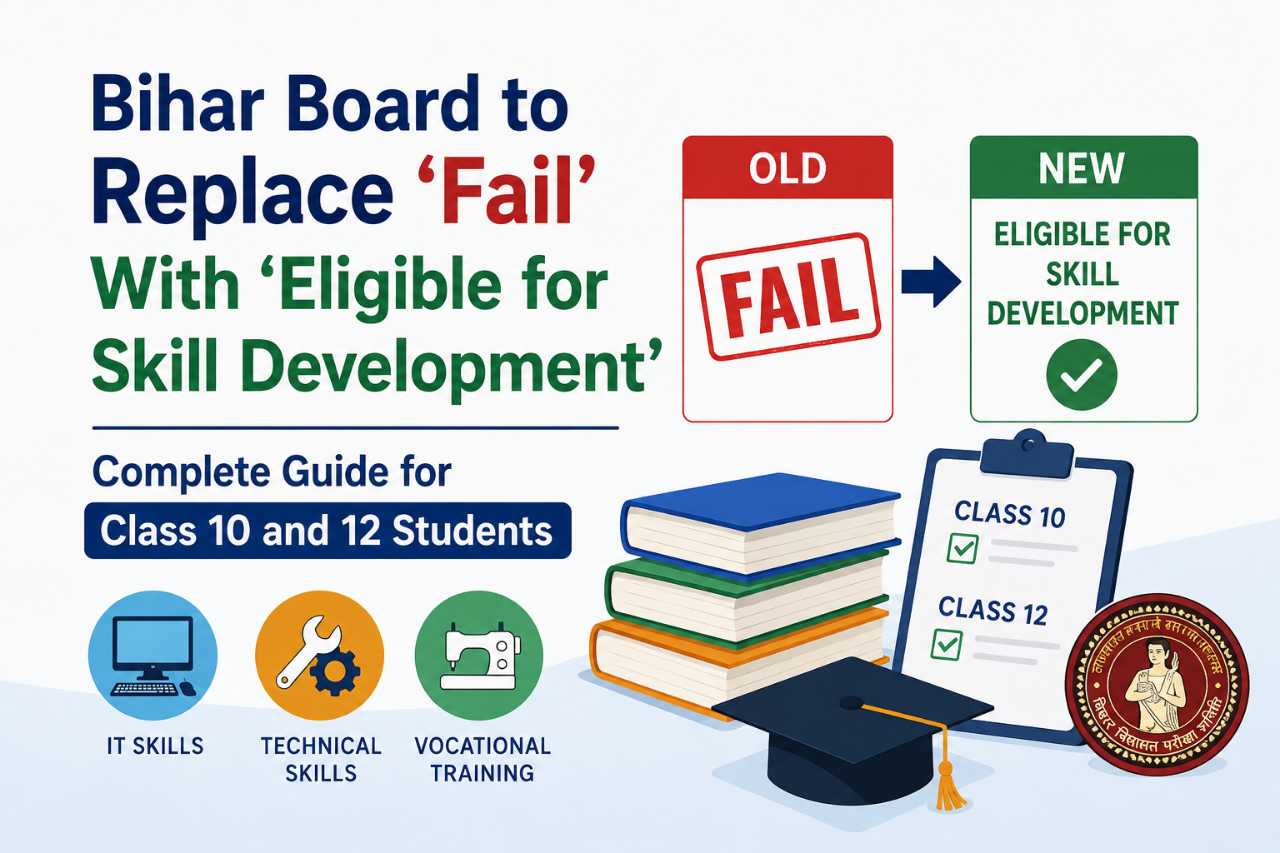

In August 2026, the Bihar government announced a significant change to how Class 10 and Class 12 board examination results are recorded on official marksheets. Instead of the word fail, students who do not secure the minimum qualifying marks will see the phrase eligible for skill development. Education Minister Mithlesh Tiwari stated that the policy will apply from the current academic session, with the Education Department amending rules and the Bihar School Examination Board (BSEB) issuing fresh instructions.
The announcement has sparked a national debate. Supporters view it as a compassionate shift that opens vocational pathways. Critics, including the State Platform for Common School System-Tamil Nadu (SPCSS-TN), warn that relabelling failure could stigmatise students, distort academic records, and narrow perceptions of what school education should achieve. For students, parents, teachers, and college counsellors across India, understanding this policy is essential—not only for Bihar board candidates but also as a case study in how states balance exam accountability with skill development goals.
This guide explains what the change means, why it was introduced, how it connects to Bihar's open schooling and skill ecosystem, what critics are saying, and what practical steps students can take next. Whether you are preparing for supplementary exams, exploring vocational diplomas, or planning degree admissions, the information below is written in clear language to help you make informed decisions.
What Exactly Is Changing on Bihar Board Marksheets?
Under the existing BSEB evaluation system, students in Class 10 (Matric) and Class 12 (Intermediate) who score below the prescribed minimum in one or more subjects have traditionally been marked as having failed in those papers or in the overall result, depending on board rules. The new policy replaces that blunt label with eligible for skill development for students who do not meet qualifying marks.
Important clarifications students should note:
- The underlying marks remain unchanged. This is a terminology change, not an automatic pass or grade upgrade.
- Minimum qualifying marks and subject-wise pass criteria still apply for promotion, compartment exams, and eligibility for many higher education programmes.
- The revised wording will appear on marksheets issued after the policy is formally implemented through amended rules and BSEB circulars.
- Students who narrowly miss the cut-off may still appear for supplementary or compartment examinations, which Bihar already conducts.
Think of the marksheet as a record of performance plus a suggested pathway—not a final verdict on a student's potential. That distinction matters when reading media headlines that suggest Bihar has abolished failure altogether.
Who Does This Policy Affect?
The change primarily affects:
- Class 10 students who do not secure minimum marks required for certification or promotion under BSEB norms.
- Class 12 students in Science, Commerce, and Arts streams who fall below qualifying thresholds in board exams.
- Parents and school administrators who guide students toward supplementary exams, open schooling, or vocational courses.
- College admission offices that evaluate Bihar board credentials during UG and diploma counselling.
Students affiliated with institutions such as Babasaheb Bhimrao Ambedkar Bihar University Muzaffarpur or Central University of South Bihar should remember that university eligibility is governed by separate admission rules, not by wording alone on a school marksheet.
Why Did the Bihar Government Introduce This Policy?
According to statements attributed to Education Minister Mithlesh Tiwari, the government's intent is to reduce the psychological burden associated with the word fail and to actively connect underperforming students with vocational training opportunities. The minister emphasised that a student's talent does not disappear because of one examination outcome.
The policy aligns with broader national priorities around employability and skill India initiatives. Bihar has been expanding its skill infrastructure, and institutions such as Atal Bihari Vajpayee Skill University represent the state's push toward structured vocational higher education. By linking board outcomes to skill development language, the government hopes to:
- Encourage students to consider vocational programmes instead of dropping out entirely.
- Route learners toward the Bihar Board of Open Schooling and Examination (BBOSE) for flexible certification and skill-oriented courses.
- Reduce exam-related stigma that contributes to stress, shame, and disengagement from education.
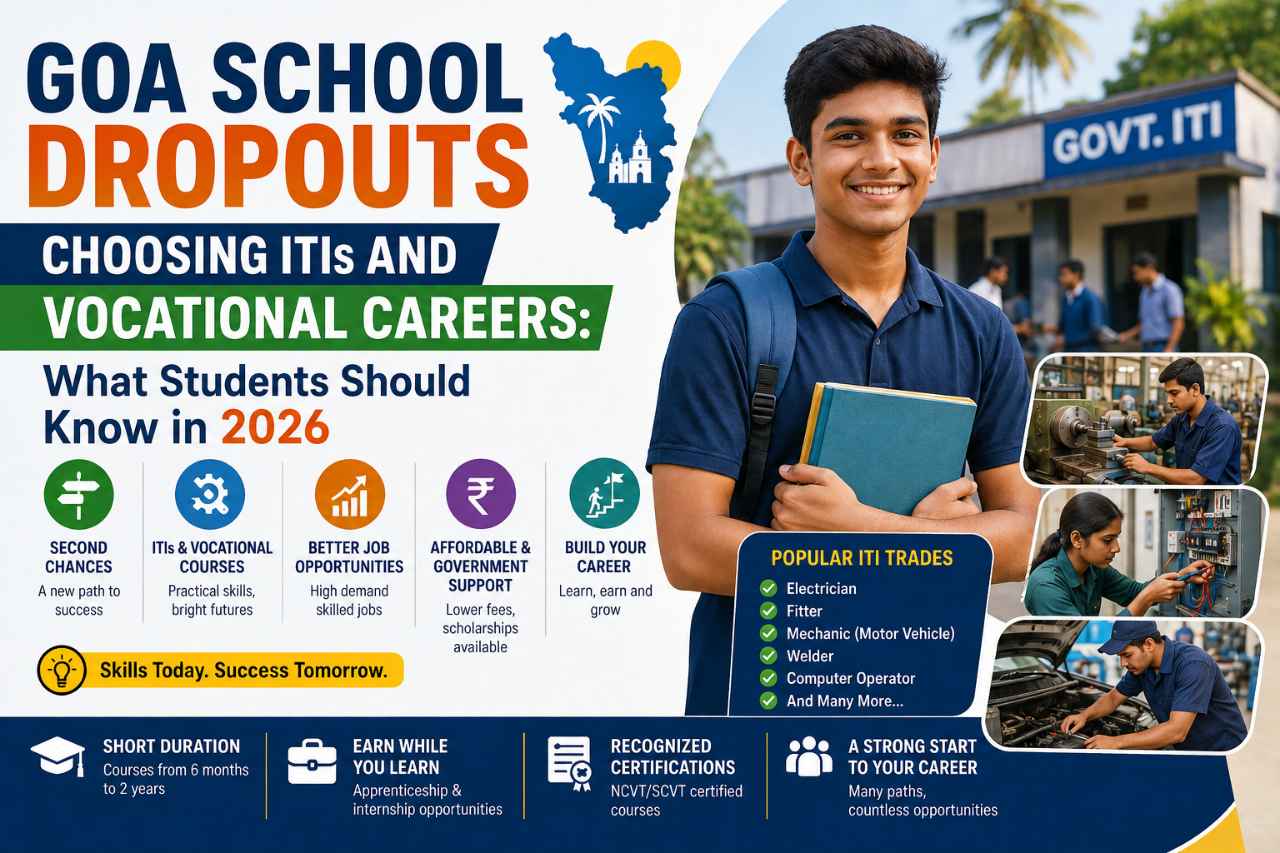
- Signal that alternative credentials—diplomas, ITI courses, NSQF-aligned programmes—are legitimate career pathways.
The government also announced special one-month preparation sessions for Class 10 students appearing in supplementary examinations, aimed at improving pass rates before results are finalised. This supplementary support suggests the policy is paired with academic remediation, not replacement of conventional schooling.
Connection to BBOSE and Vocational Pathways
BBOSE functions as Bihar's open schooling board, offering secondary and senior secondary certification along with opportunities to combine academic learning with vocational exposure. Students marked eligible for skill development may be guided toward:
- Open school re-registration and subject improvement.
- Short-term skill certificates aligned with local industry needs.
- Bridge programmes before reattempting board exams.
- Entry into ITI, polytechnic, or private skill training partners recognised by state agencies.
Nationally, similar models exist. For comparison, students exploring options outside Bihar might research Delhi Skill and Entrepreneurship University, Vishwakarma Skill University Jaipur, or Maharashtra State Skills University to understand how skill universities structure industry-linked degrees and diplomas.
Criticism and Concerns Raised by Education Groups
On August 30, 2026, SPCSS-TN issued a statement urging the Bihar government to withdraw the decision. The organisation argued that school education should not be viewed primarily through job readiness or vocational skilling alone. Its general secretary, P B Prince Gajendra Babu, highlighted that board performance is shaped by social and economic conditions, quality of teaching, learning support, and exam stress—not merely individual effort.
Key Arguments Against the Wording Change
- Stigma by another name: Critics say labelling students as eligible for skills may imply they are suited only for job-oriented training, not higher academic pursuits.
- Distortion of academic records: Marksheets should transparently show marks and minimum pass criteria so students can identify weak subjects and reappear in exams.
- Psychological impact: Educationists warn that any special category on a public document can affect self-esteem and peer perception.
- Existing alternatives are enough: Supplementary exams, vocational streams, and open schooling already exist without renaming failure.
- Precedent risk: SPCSS-TN appealed that other states and the Union government should not adopt similar wording without academic consultation.
The organisation posed a direct question: Why should students who miss the pass mark on the first attempt be stamped as qualified only for skills? That question captures the heart of the debate—whether compassionate language helps or hides structural problems in exam systems, school quality, and equitable access.
The Broader Philosophy of School Education
SPCSS-TN's statement reflects a classical view: the purpose of school education is to develop critical thinking, citizenship, creativity, and human values—not merely to produce job-ready workers. From this perspective, vocational education is valuable but should be chosen freely, not suggested through exam labels.
Balanced policy design, critics argue, would invest in remedial teaching, counsellor support, smaller class sizes, and fair examination practices rather than changing words on marksheets. They also note that students from marginalised backgrounds disproportionately face exam failure due to systemic gaps; relabelling outcomes does not fix those gaps.
Impact on Higher Education and Career Planning
One of the biggest practical concerns for students is whether the new phrase affects college admissions, scholarship eligibility, or employer screening. Here is what current understanding suggests:
Admissions to Degree Programmes
Most universities and colleges evaluate actual marks, subjects, and pass status rather than descriptive labels. However, admissions committees may notice unusual wording during document verification. Students aiming for programmes at Bihar Engineering University, Bihar University of Health Sciences, or national institutions should:
- Confirm whether supplementary or improvement exam results are required before applying.
- Keep all original marksheets and BSEB online result printouts.
- Check specific course eligibility—especially for NEET, JEE, CLAT, and other entrance exams where Class 12 pass status matters.
- Contact college admission helpdesks with scanned documents before final counselling choices.
Vocational and Skill-Focused Routes
For students who genuinely prefer hands-on careers, the policy may serve as a prompt to explore structured skill programmes. India now hosts a growing network of skill universities and institutes, including:
- Symbiosis Skills and Professional University
- Bhartiya Skill Development University Jaipur
- Footwear Design and Development Institute
- Assam Skill University Assam
- Team Lease Skills University
Vocational choice should be driven by aptitude and career research—not by feeling forced into a category because of marksheet language. Students interested in sports careers might separately explore specialised institutions such as Bihar Sports University, while agriculture-focused learners can look at Bihar Agricultural University Sabour.
Employability and Document Verification
Private employers and government recruiters typically verify educational credentials through marks, certificates, and board authentication. Unusual labels may invite questions during interviews. Students should prepare a factual explanation: the label indicates below-minimum marks in board exams and eligibility for skill programmes, not a formal skill certification by itself.
Comparing Compassionate Policy With Academic Transparency
Education policymakers worldwide wrestle with similar tensions. Some systems use terms like not yet competent or needs improvement in formative assessments, while summative board exams traditionally maintain pass/fail clarity. Bihar's approach attempts to merge summative reporting with pathway signalling—a combination that requires careful implementation.
Possible Middle Ground Solutions
Education experts have suggested alternatives that might satisfy both sides:
- Display numeric marks and subject status prominently, with optional counselling notes separate from the public marksheet.
- Provide a QR code linking to remedial resources, BBOSE registration, and supplementary exam schedules.
- Invest in pre-result interventions so fewer students reach the qualifying threshold issue.
- Run pilot programmes with student feedback before statewide rollout.
- Train teachers and principals to discuss results without stigmatising language in parent-teacher meetings.
Transparency builds trust. Students and families deserve to see exactly where marks fell short while also learning about realistic next steps.
BSEB Supplementary Exams and Result Timeline: What to Watch
Beyond the wording debate, Bihar board students should track the practical calendar that governs reattempts. BSEB typically releases supplementary exam notifications after main results, with separate registration windows for Class 10 Matric and Class 12 Intermediate streams. Missing these deadlines can delay admission by an entire academic year—a far bigger setback than any marksheet label.
Use this checklist when results are declared:
- Verify your roll number, subject codes, and marks on the BSEB official portal before downloading the marksheet.
- Identify compartment subjects versus overall result status; the two are not always identical.
- Save PDF copies in cloud storage and print two physical copies for admission folders.
- Follow BSEB social media and district education office notices for one-month remedial session venues.
- Cross-check whether your school has registered you automatically for supplementary exams or if self-registration is required.
Students planning professional courses—medicine, engineering, law, or design—should map entrance exam eligibility early. Many national tests require a clear Class 12 pass certificate with specified subjects and minimum percentages. A descriptive label on the marksheet rarely replaces those hard requirements, which is why academic recovery through supplementary exams remains the priority for aspirants targeting competitive tests.
Quick Comparison: Old Label vs New Label
The table below summarises how students should interpret the shift without confusion:
| Aspect | Earlier 'Fail' Label | New 'Eligible for Skill Development' Label |
|---|---|---|
| Marks recorded | Actual scores shown | Actual scores shown (unchanged) |
| Pass status | Below minimum qualifying marks | Below minimum qualifying marks |
| Supplementary exams | Available as per BSEB rules | Available as per BSEB rules |
| Suggested pathway | Not explicitly stated on marksheet | Vocational/open schooling signposted |
| Psychological framing | Often viewed as punitive | Intended as supportive, debated by critics |
This comparison helps answer a common question in school corridors: Has anything really changed except the word? Academically, the answer is mostly no—unless the state introduces linked counselling or automatic BBOSE referrals in future circulars. Stay alert to official amendments.
Equity, Rural Schools, and the Real Drivers of Exam Outcomes
SPCSS-TN's criticism connects to a deeper issue Bihar shares with many states: board results mirror inequality. Students in under-resourced rural schools, first-generation learners, and children facing household economic pressure often score below qualifying marks despite effort. Renaming failure does not expand library access, science labs, trained teachers, or mental health support.
Policymakers aiming for genuine reform might combine compassionate reporting with measurable investments—teacher recruitment in underserved blocks, digital learning access, mid-day meal quality, and anti-ragging counselling during exam seasons. Universities such as Karnataka State Rural Development and Panchayat Raj University illustrate how higher education can engage rural governance and community development, but the foundation still begins with equitable school years.
For students in difficult circumstances, open schooling through BBOSE, NGO-supported tutoring, and district welfare schemes may matter more than marksheet phrasing. Community leaders and panchayat education committees can help families navigate registration deadlines so vulnerable students are not left behind during supplementary exam windows.
What Bihar Class 10 and 12 Students Should Do Now
If you or your child may receive the new marksheet wording, treat it as a starting point for planning—not as a final career assignment. Use the following actionable framework:
Step 1: Read the Full Marksheet Carefully
Check subject-wise marks, grace rules, compartment subjects, and supplementary exam notices on the official BSEB website. Note which papers require reattempt.
Step 2: Prioritise Supplementary Exams When Possible
If you intend to pursue conventional higher education, clearing board exams remains the most widely recognised route. Attend the government's announced one-month preparation sessions if you are eligible for Class 10 supplementary exams.
Step 3: Explore BBOSE and Open Schooling
If regular reattempt timelines do not suit your situation, open schooling offers flexibility. Compare BBOSE subject combinations with future course requirements.
Step 4: Research Skill Programmes Deliberately
If vocational education aligns with your interests, compare NSQF levels, placement records, and fee structures across institutions. Visit pages such as GH Raisoni International Skill Tech University, Rungta International Skills University, or Medhavi Skills University only after defining your career goal—not because of exam pressure alone.
Step 5: Seek Counselling Support
Speak with school teachers, district education officers, and career counsellors. Document all conversations about admission eligibility. Parental support and realistic timelines reduce anxiety more than any label change.
Role of Parents, Schools, and Policymakers
Parents should avoid framing the result as permanent failure—or as proof that a child is only fit for skills. Schools must communicate BSEB rules clearly and help students register for supplementary exams on time. Policymakers, meanwhile, should monitor whether the policy increases vocational enrolment, reduces dropout rates, or unintentionally limits academic aspirations.
Teachers' organisations and student unions, as SPCSS-TN suggested, have a role in assessing psychological impact. Long-term success will depend on whether Bihar pairs wording reform with better classroom learning, fair examinations, and equitable rural infrastructure.
National Context: Skill Development in Indian Higher Education
Bihar's move did not happen in isolation. India has expanded skill universities, dual certifications, and industry partnerships over the past decade. Institutions ranging from Management Development Institute for executive education to Indira Gandhi Institute of Development Research Mumbai for advanced research represent the diverse landscape of post-school opportunities.
Skill universities such as Kaushalya The Skill University, Sikkim Skill University, Lamrin Tech Skills University Punjab, and Universal Skilltech University demonstrate that vocational higher education can coexist with academic degrees. The challenge is ensuring students choose pathways freely rather than through labels imposed by exam systems.
For youth development perspectives, organisations and universities focused on holistic growth—such as the Rajiv Gandhi National Institute of Youth Development Sriperumbudur—emphasise leadership, citizenship, and personal development alongside employability.
Conclusion: Labels Matter, but Systems Matter More
Bihar's decision to replace fail with eligible for skill development on Class 10 and Class 12 marksheets reflects an ambitious attempt to soften exam outcomes and promote vocational pathways through BBOSE and related programmes. Education Minister Mithlesh Tiwari's reassurance that talent persists beyond one exam score resonates with many families who have seen children struggle under high-stakes testing pressure.
Yet criticism from SPCSS-TN and other education voices reminds us that compassionate language cannot substitute for quality schooling, transparent records, and genuine choice. Students still need clear marks, fair supplementary chances, and unbiased guidance toward either academic recovery or skill careers.
For Bihar board candidates, the practical takeaway is straightforward: understand your marks, explore supplementary and open school options, research colleges and skill universities with clear goals, and seek counselling early. Whether you eventually study at a conventional university like Bihar Animal Sciences University or a skill-focused campus such as ITM Skills University, your examination result is one chapter—not the entire story.
Stay updated through official BSEB notifications, verify admission rules directly with colleges, and use trusted education resources to plan your next move with confidence.