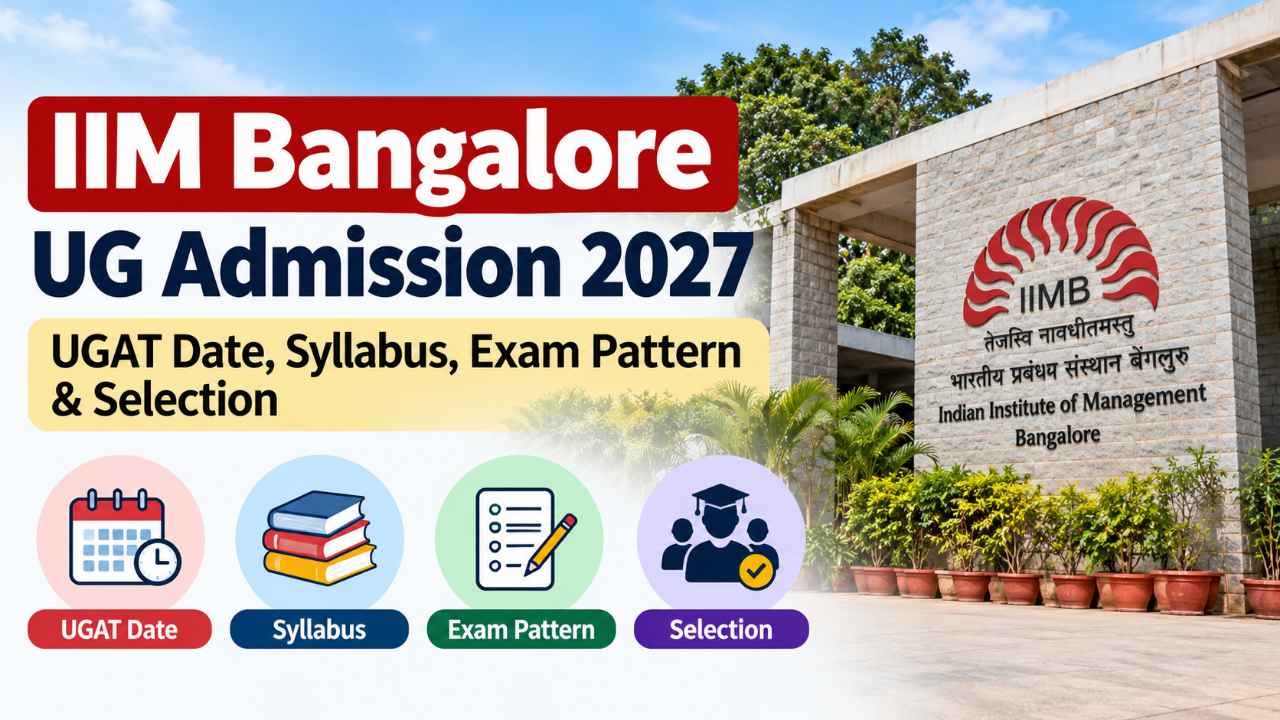
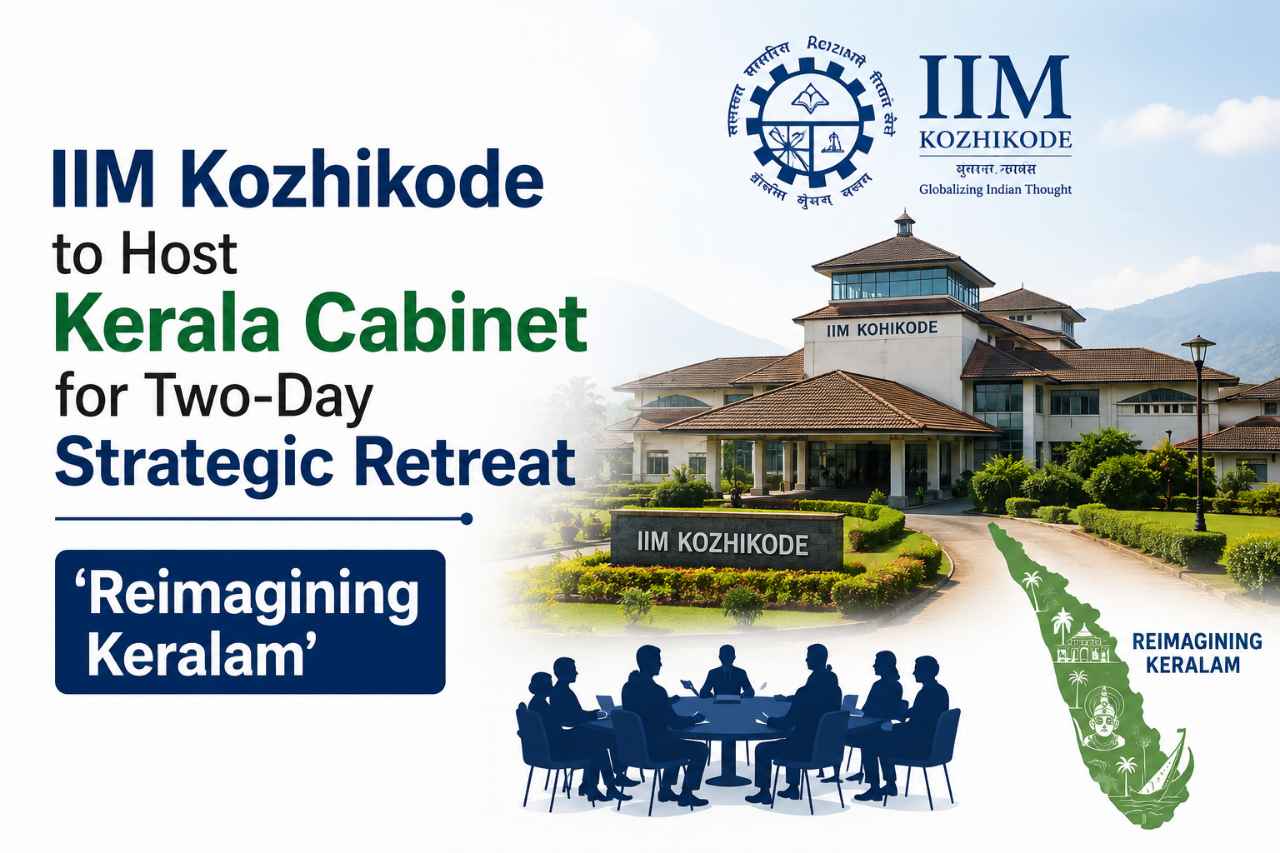
The Indian Institute of Management Kozhikode (IIM Kozhikode or IIM-K) is set to host Kerala Chief Minister V D Satheesan and the full Council of Ministers for a two-day residential strategic leadership retreat on September 4 and 5, 2026. Titled Reimagining Keralam, the programme brings together the state's political leadership, IIM-K faculty, and international scholars to discuss Kerala's long-term development roadmap beyond routine governance.
For students, educators, and policy watchers across India, this retreat is more than a headline. It signals how premier management institutes are increasingly partnering with state governments to shape education policy, employment strategy, climate planning, and global branding. If you are exploring higher education in Kerala or comparing top B-schools like IIM-K with peers such as IIM Udaipur, understanding these institutional linkages helps you see where academic research meets real-world policy.
What Is the IIM Kozhikode Kerala Cabinet Retreat?
The retreat is a closed-door, residential leadership programme designed to give Kerala's ministers uninterrupted time for strategic reflection. According to IIM Kozhikode, the event was conceptualised by Director Prof Debashis Chatterjee after his meeting with Chief Minister Satheesan. Rather than focusing on daily administrative firefighting, the sessions aim to examine broader forces shaping Kerala's future—from artificial intelligence and fiscal sustainability to public health and the emerging silver economy.
This is the second time IIM Kozhikode has hosted the Kerala cabinet for a dedicated leadership programme. The Institute previously welcomed the Council of Ministers led by former Chief Minister Oommen Chandy in 2011 for a day-long management programme. The return of the cabinet after fifteen years underlines IIM-K's continued role as a thought partner for the state, not merely an admissions destination for MBA aspirants.
Key Details at a Glance
- Event name: Reimagining Keralam
- Dates: September 4–5, 2026
- Location: IIM Kozhikode campus, Kozhikode, Kerala
- Participants: CM V D Satheesan, Council of Ministers, IIM-K faculty, international experts
- Format: Two-day residential strategic leadership retreat
- Focus: Long-term, sustainable, and inclusive growth for Kerala
Why IIM Kozhikode Was Chosen Again
Kerala hosts several nationally recognised universities and institutes, yet IIM Kozhikode occupies a distinct position in the state's intellectual ecosystem. Established in 1996 as the fifth Indian Institute of Management, IIM-K has built strong credentials in executive education, policy research, and leadership development. Its hill-top campus in Kozhikode offers a setting conducive to deep discussion—away from the noise of secretariat corridors and media cycles.
Director Prof Debashis Chatterjee has emphasised that the retreat creates a shared space for strategic reflection, enabling leaders to look beyond immediate political timelines. For management students, this mirrors what top B-schools teach in strategy and governance courses: the best decisions often require stepping back from operational urgency to assess structural trends.
Kerala's higher education landscape itself reflects the themes the retreat will address. Institutions such as the University of Kerala, Thiruvananthapuram, the Kerala University of Digital Sciences Innovation and Technology, and the Kerala University of Health Sciences are already working on digital skills, medical education, and research-led growth. The retreat connects this academic base with cabinet-level policy direction.
About IIM Kozhikode: Quick Profile
IIM Kozhikode is among India's most respected management institutes, consistently ranked among the top IIMs for its PGP, executive MBA, and doctoral programmes. The institute is known for its diverse student intake, strong faculty research output, and active engagement with industry and government. Its location in Kerala—a state with high human development indicators but complex economic challenges—gives IIM-K a natural advantage in studying inclusive growth, migration, public health, and environmental policy.
For CAT aspirants, IIM-K remains a highly competitive choice. Beyond cut-offs and placement statistics, events like the Reimagining Keralam retreat demonstrate the institute's public-facing leadership role, which can matter for students interested in policy consulting, social impact careers, and public-sector management.
Theme Areas: What Will Be Discussed?
The Reimagining Keralam agenda spans governance, economy, society, and global positioning. Sessions are expected to combine case-based learning, expert presentations, and facilitated dialogue. Below is a structured overview of the major discussion tracks and what they mean for students and citizens.
1. Transformational Leadership in the Age of Artificial Intelligence
Artificial intelligence is reshaping jobs, public services, and decision-making across India. For Kerala—a state with high literacy, strong diaspora networks, and a growing startup culture—AI presents both opportunity and disruption. Ministers will explore how governments can adopt AI responsibly in areas such as tax administration, healthcare triage, disaster alerts, and skill mapping.
Students eyeing tech-policy careers or MBA specialisations in analytics should note how leadership programmes now treat AI not as a niche IT topic but as a core governance competency. Kerala's push toward digital education through institutions like the Digital University aligns with this theme.
2. Behavioural Science and Policy Implementation
Well-designed schemes often fail not because of bad intent but because of poor implementation design. Behavioural science—nudges, choice architecture, and evidence-based communication—helps governments improve compliance, health outcomes, and financial inclusion. IIM faculty with expertise in organisational behaviour and public policy are well placed to lead such conversations.
This track is especially relevant for students of economics, psychology, and public administration who want to work at the intersection of research and government.
3. Climate Resilience and Disaster Preparedness
Kerala's geography makes it vulnerable to floods, landslides, and coastal erosion. Climate resilience is therefore not an abstract environmental slogan but a survival strategy. Discussions are likely to cover early-warning systems, infrastructure planning, insurance models, and community preparedness—topics that connect environmental science with fiscal planning.
Institutions such as the Kerala University of Fisheries and Ocean Studies, Kochi contribute specialised knowledge on marine ecosystems and coastal livelihoods, showing how sectoral universities support state-level resilience planning.
4. Public Health, Ageing, and the Silver Economy
Kerala has one of India's oldest populations and a mature public health system. The retreat will examine how the state can turn demographic ageing into economic opportunity—the so-called silver economy—through elder care services, health tourism, assistive technology, and retirement-friendly employment models.
Medical and health sciences students should follow this track closely. The Sree Chitra Tirunal Institute for Medical Sciences and Technology, Thiruvananthapuram exemplifies Kerala's strength in biomedical innovation, a foundation for health-led economic growth.
5. Economic and Fiscal Renewal
Like many states, Kerala faces questions about revenue generation, welfare spending, and long-term fiscal sustainability. The retreat will likely address tax base expansion, public-sector efficiency, investment promotion, and balancing social welfare with fiscal discipline.
For commerce and MBA students, this is a live masterclass in state-level macroeconomics—far more contextual than textbook case studies alone.
6. Employment, Entrepreneurship, and Skills
Youth employment remains a national priority. Kerala's high educational attainment does not automatically translate into enough quality jobs at home, which is why many graduates migrate. Sessions on entrepreneurship, MSME support, skill certification, and industry-academia partnerships are expected to feature prominently.
Students comparing vocational and professional pathways may also look at skill-building courses and sector-specific universities—from Kerala Agricultural University, Thrissur to the Kerala Veterinary and Animal Sciences University, Wayanad—that feed regional labour markets.
7. Higher Education and Global Branding
Kerala has long marketed itself through tourism, ayurveda, and diaspora remittances. The retreat will explore how the state can also brand itself as a hub for quality education, research, and cultural excellence. Institutions like Kerala Kalamandalam, Thrissur, preserve classical arts heritage, while newer universities expand into digital and health sciences—together forming a diverse education brand.
Central universities such as the Central University of Kerala, Kasaragod add another layer to this ecosystem, attracting students from across India and reinforcing Kerala's national academic visibility.
Retreat Agenda Overview
While the full session-wise schedule may remain private, the publicly announced themes provide a clear picture of priorities. The table below summarises each track and its likely relevance for students and citizens.
| Discussion Track | Key Focus | Relevance for Students |
|---|---|---|
| AI and Leadership | Responsible tech adoption in governance | Tech-policy, analytics, digital MBA roles |
| Behavioural Science | Better scheme delivery and compliance | Economics, psychology, public admin careers |
| Climate and Disasters | Flood and landslide resilience planning | Environmental science, civil planning studies |
| Silver Economy | Jobs and services for an ageing population | Healthcare management, geriatric care courses |
| Fiscal Renewal | Revenue, welfare, and sustainability | Commerce, finance, and policy studies |
| Skills and Entrepreneurship | Employment and startup ecosystems | MBA, vocational training, startup incubation |
| Higher Education Branding | Global positioning of Kerala's universities | Admissions, study-abroad, research pathways |
International Faculty and Global Perspectives
One distinguishing feature of the Reimagining Keralam retreat is its international faculty participation. Alongside IIM Kozhikode professors, experts from Keio University, Japan, and King's College London, United Kingdom, will lead selected sessions. This global participation matters for three reasons.
- Comparative learning: Japan offers insights on ageing societies, disaster management, and technological adoption; the UK contributes perspectives on public policy, health systems, and global higher education rankings.
- Benchmarking: Kerala can compare its governance challenges with international best practices rather than relying only on domestic examples.
- Network effects: Cross-border academic ties often lead to student exchanges, joint research, and investment linkages over time.
For Indian students aspiring to study abroad or work in multinational policy consulting, retreats like this demonstrate how global universities engage with regional governments—not only through degree programmes but through executive education and advisory roles.
Historical Context: IIM-K and the 2011 Cabinet Programme
When IIM Kozhikode first hosted the Kerala cabinet in 2011 under Chief Minister Oommen Chandy, the programme was shorter—a day-long leadership and management intervention. That event established a precedent: India's IIMs are not isolated academic islands but institutions capable of hosting high-level governance workshops.
Fifteen years later, the 2026 retreat is longer, thematically broader, and internationally staffed. The evolution reflects changing expectations from both politicians and citizens. Today's voters ask not only for welfare delivery but also for evidence-based, future-ready policymaking—a demand that management institutes are increasingly equipped to support.
The 2011 programme focused primarily on management tools for ministers. The 2026 edition expands into frontier topics such as AI governance and the silver economy, showing how the policy conversation itself has matured. For academic observers, comparing the two events offers a snapshot of Kerala's shifting developmental priorities over two decades.
What This Means for MBA and Higher Education Aspirants
If you are preparing for CAT, XAT, or other MBA entrance exams with IIM Kozhikode on your target list, the retreat offers useful context beyond placements and cut-offs.
Institutional Prestige and Real-World Impact
Top B-schools are judged not only by corporate recruiters but also by their influence on public policy and leadership development. IIM-K's repeat engagement with the state cabinet strengthens its brand as a serious governance partner—a factor that can matter for students interested in public policy, social entrepreneurship, and consulting roles with government clients.
Interdisciplinary Learning Opportunities
The retreat's agenda mirrors emerging MBA electives and executive programmes: AI for managers, behavioural economics, ESG and climate strategy, healthcare management, and innovation ecosystems. Prospective students should explore IIM-K's course catalogue, centre initiatives, and faculty research areas aligned with these themes.
Kerala as an Education Destination
Beyond IIM-K, Kerala offers diverse academic choices—general universities, health sciences campuses, agricultural institutes, and cultural academies. Students from other states sometimes overlook Kerala because of perceived language barriers or migration trends, yet the state's literacy levels, relatively safe campuses, and strong public health infrastructure remain advantages.
Research-oriented students may also explore national fellowships and exams such as CSIR NET that open doors to PhD and lectureship careers in sciences—pathways that complement Kerala's push for knowledge-economy jobs.
Academia–Government Partnerships: A Growing Trend in India
The IIM Kozhikode retreat is part of a wider pattern across Indian higher education. Universities and institutes are collaborating with state and central governments on skill missions, smart city planning, health policy simulations, and administrative training.
Such partnerships benefit multiple stakeholders:
- Governments gain access to research, structured facilitation, and neutral academic spaces.
- Institutes strengthen relevance, funding opportunities, and case-study material for teaching.
- Students receive exposure to live policy problems through internships, live projects, and guest sessions by serving officials.
- Citizens ultimately benefit when policies are informed by evidence and long-term thinking.
However, these collaborations also require transparency. Academic independence, conflict-of-interest safeguards, and public accountability remain essential so that institutes retain credibility while engaging with political leadership.
Expected Outcomes and What to Watch For
Residential retreats do not always produce immediate press releases or new legislation. Their value often lies in aligning ministerial understanding, prioritising agenda items, and building shared vocabulary around complex issues. Still, observers can watch for several potential outcomes after September 2026.
- Announcements on skill development, startup funding, or digital governance initiatives
- MoUs between IIM Kozhikode and Kerala departments for training or research
- Policy white papers on ageing, climate adaptation, or fiscal reform
- Increased executive education programmes for Kerala civil servants at IIM-K
- Higher national visibility for Kerala's education and innovation branding efforts
Students and journalists should follow official statements from IIM Kozhikode and the Kerala government rather than relying on speculation alone.
How Students Can Engage With Similar Opportunities
You do not need a ministerial invitation to learn from strategic leadership culture. Here are practical steps for college students and young professionals:
- Follow institute news pages: IIMs and central universities regularly host summits, policy conclaves, and guest lectures open to students.
- Join policy and case-study clubs: Debating real state-level issues builds analytical skills valued in MBA interviews and civil services preparation.
- Pursue internships with think tanks and NGOs: Many organisations work on Kerala-specific themes such as migration, health, and environment.
- Build interdisciplinary reading habits: Combine management, economics, environmental science, and public health sources to understand governance holistically.
- Network responsibly: Connect with faculty and alumni working in public policy; ask informed questions rather than seeking shortcuts.
As the retreat unfolds on September 4 and 5, 2026, education stakeholders across Kerala should view it as a signal of intent rather than a finished policy document. The presence of international faculty from Keio University and King's College London underscores that Kerala's challenges—ageing, climate risk, fiscal pressure, and skills gaps—are shared globally. For college students, staying informed about such high-level dialogues helps connect classroom learning with the real decisions that shape admissions trends, funding priorities, and job markets in the years ahead.
Conclusion
The Reimagining Keralam retreat at IIM Kozhikode on September 4–5, 2026, marks an important moment in Kerala's governance and higher education story. By bringing Chief Minister V D Satheesan, the Council of Ministers, IIM-K faculty, and international scholars together, the programme aims to translate strategic reflection into actionable pathways for sustainable and inclusive growth.
For students tracking Indian colleges, exams, and admissions, the event highlights why institutions like IIM Kozhikode matter—not only for MBA placements but for shaping the policy environment in which graduates will live and work. Kerala's diverse university ecosystem—from digital sciences and health sciences to agriculture, fisheries, and the arts—stands to gain when cabinet-level priorities align with academic expertise.
Whether you aspire to study at IIM-K, enrol in a Kerala university, or simply understand how India's top B-schools engage with state governments, this retreat offers a timely case study in leadership, education, and long-term development planning.