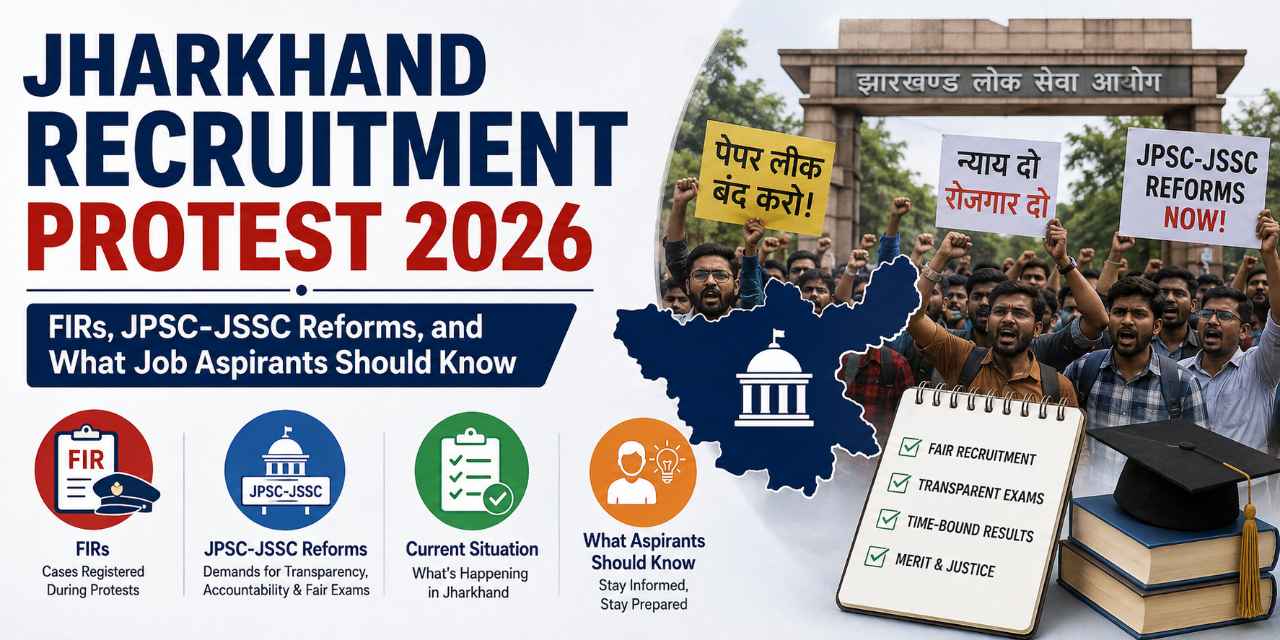
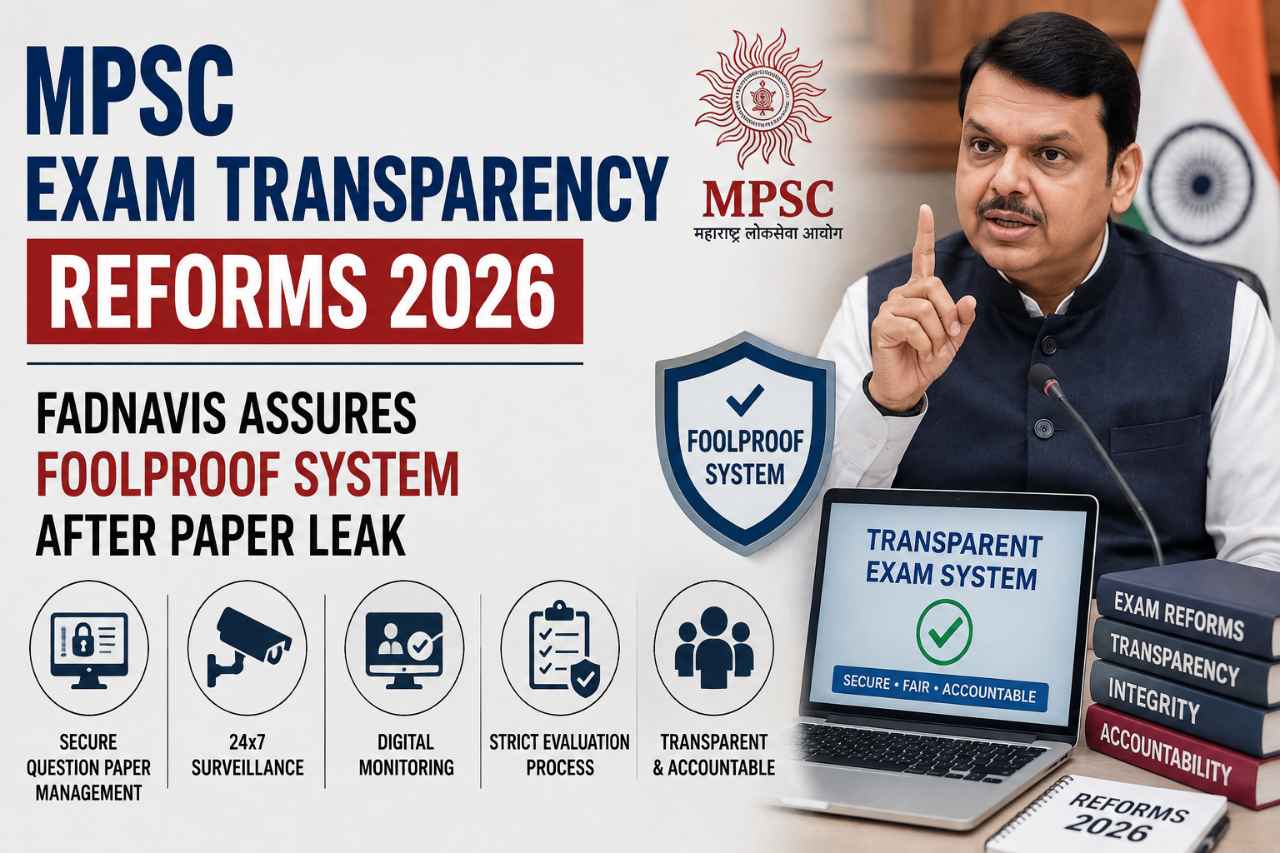

Maharashtra's public recruitment landscape is facing a critical moment of reform. On August 27, 2026, Chief Minister Devendra Fadnavis declared that the Maharashtra Public Service Commission (MPSC) must conduct every recruitment examination in a completely transparent manner, and that the state government will extend full support to implement systemic changes. The statement came a day after the Mumbai Police arrested six persons, including three MPSC officials, in connection with the alleged paper leak of the Drug Inspector Group-B examination held in March 2026.
For lakhs of MPSC aspirants across Maharashtra from Pune and Nagpur to Mumbai and Aurangabad this announcement signals both accountability and uncertainty. Transparency in competitive exams is not merely an administrative goal; it is the foundation of merit-based public service recruitment. This article explains what happened, what reforms are planned, how the paper leak affects candidates, and what steps aspirants should take while preparing for upcoming MPSC examinations in 2026.
What Is MPSC and Why Does Exam Transparency Matter?
The Maharashtra Public Service Commission (MPSC) is the constitutional body responsible for recruiting candidates to various Group A, Group B, Group C, and Group D posts in the state government. From deputy collectors and police sub-inspectors to clerks, tax assistants, and specialised roles such as drug inspectors, MPSC examinations serve as the primary gateway to stable government careers in Maharashtra.
When examination integrity is compromised, the entire merit system collapses. Deserving candidates who spent months or years preparing lose opportunities, while public trust in government institutions erodes. For comparison, other high-stakes competitive examinations in India whether medical entrance tests, univrsity admissions, or design entrances like the NIFT Entrance Exam face similar scrutiny over fairness and security protocols.
Key MPSC Examinations That Affect Maharashtra Aspirants
- State Service Examination (Rajyaseva) the flagship exam for administrative posts including deputy collector, deputy superintendent of police, and block development officer
- Combined Group B Examination recruits for posts such as drug inspector, education officer, and assistant commissioner
- Group C and Group D Examinations clerical, stenographer, and support staff positions across departments
- Departmental and Special Recruitment Examinations targeted hiring for specific cadres and technical roles
Each of these examinations involves multiple stages preliminary tests, mains written papers, and interviews making security at every stage essential. A single breach, such as a question paper leak before the exam date, can invalidate months of preparation for thousands of candidates.
The Drug Inspector Group-B Paper Leak: What Happened
The controversy centres on the MPSC Drug Inspector Group-B examination conducted in March 2026. According to Chief Minister Fadnavis, the Mumbai Police investigation revealed that the leaked question paper had reached certain individuals before the examination. Among those arrested were six persons, including three officials associated with the MPSC itself.
Drug inspector posts require specialised knowledge in pharmacology, chemistry, and pharmaceutical regulations. Candidates typically hold degrees in pharmacy, pharmaceutical sciences, or related health disciplines. Institutions such as the MGM Institute of Health Sciences Navi Mumbai and other health science colleges across India produce graduates who compete for such technical government positions.
Timeline of Events
- March 2026: MPSC conducts the Drug Inspector Group-B examination
- Post-exam: Allegations of paper leak surface; Mumbai Police begin investigation
- August 26, 2026: Police arrest six persons, including three MPSC officials
- August 27, 2026: CM Fadnavis addresses the issue publicly and announces reform measures
- Immediate action: MPSC cancels the entire Drug Inspector examination to maintain transparency
Canceling an entire examination is a significant step. It protects the integrity of the recruitment process but also means that all candidates including those who prepared honestly must wait for a re-examination. This dual impact makes transparent reform urgent rather than optional.
CM Fadnavis on Transparency: Government Stand Explained
Addressing reporters in Mumbai, Devendra Fadnavis made the government's position clear: complete transparency in all MPSC examinations is non-negotiable. He emphasised that the MPSC's decision to cancel the Drug Inspector exam demonstrated a commitment to fairness, even at the cost of administrative inconvenience.
The Chief Minister outlined a two-track reform approach:
- External committee: The state government has constituted a dedicated committee to recommend structural reforms in the MPSC examination system
- Internal reforms: The MPSC has been directed to undertake its own internal review and implement corrective measures
Fadnavis also stated that the government would provide whatever assistance the MPSC requires to conduct future examinations transparently. He criticised attempts to politicise the issue, urging stakeholders to focus on solutions rather than blame.
What "Complete Transparency" Means in Practice
Transparency in public recruitment goes beyond publishing results. It encompasses every stage of the examination lifecycle:
- Secure question paper printing, storage, and transportation
- Randomised question sets and computer-based testing where feasible
- Biometric verification and CCTV monitoring at examination centres
- Time-bound publication of answer keys and response sheets
- Independent audit trails and whistleblower protection mechanisms
- Swift action on malpractice complaints with public disclosure of findings
States such as Bihar and Rajasthan have also faced paper leak controversies in recent years, prompting similar reform discussions. Maharashtra's response combining police action, exam cancellation, and a reform committee mirrors a growing national trend toward zero tolerance for examination fraud.
Planned Reforms: Committee Visit and Foolproof System
According to CM Fadnavis, the reform committee will visit different divisions across Maharashtra and interact directly with students, teachers, and other stakeholders. The objective is to design a foolproof examination system that prevents malpractice in future MPSC recruitments.
Expected Focus Areas of the Reform Committee
| Reform Area | Proposed Direction | Benefit for Aspirants |
|---|---|---|
| Question Paper Security | Encrypted digital delivery, multi-agency custody chains | Reduces pre-exam leak risk |
| Exam Centre Monitoring | CCTV, live feeds, surprise inspections | Deters on-site cheating |
| Technology Integration | Computer-based tests for objective papers | Faster results, harder to manipulate |
| Accountability Framework | Fixed timelines, named officers, penalty provisions | Clear responsibility for delays and errors |
| Stakeholder Feedback | Division-wise consultations with students and educators | Reforms aligned with ground realities |
The committee's division-wise outreach is particularly important. Maharashtra's aspirant population is geographically diverse. A candidate preparing in Nagpur faces different logistical challenges than one in Mumbai or Kolhapur. Institutions like the International Institute for Population Sciences Mumbai and numerous government colleges across the state feed graduates into the MPSC pipeline, and their feedback could shape practical reforms.
Impact on MPSC Aspirants: What Changes and What Stays the Same
If you are preparing for MPSC examinations in 2026, the paper leak controversy and subsequent reforms affect you in several concrete ways.
Immediate Impact
- Drug Inspector exam cancelled: All candidates must await a fresh notification and re-examination date
- Possible schedule delays: Other MPSC examinations may face revised timelines as security protocols are upgraded
- Increased scrutiny: Examination centres may implement stricter identity verification and bag checks
- Renewed confidence: Transparent reforms, if implemented well, can restore faith in the merit system
Long-Term Impact
Structural reforms could modernise MPSC examinations along lines seen in all-India tests. Computer-based objective papers, encrypted question delivery, and faster answer key publication would benefit honest aspirants. However, transition periods often bring temporary confusion new rules, revised formats, and adjusted schedules.
Aspirants who also consider parallel career paths whether pursuing a postgraduate MA degree for enhanced eligibility, applying to professional courses, or preparing for other state and national examinations should keep backup plans active during this reform phase.
MPSC Exam Pattern and Eligibility: A Quick Reference
Understanding the examination structure helps aspirants prepare strategically regardless of administrative changes.
State Service (Rajyaseva) Examination Stages
- Preliminary Examination: Two objective papers General Studies and CSAT (qualifying nature for CSAT)
- Main Examination: Six descriptive papers including Marathi, English, General Studies, and optional subjects
- Interview: Personality test assessing communication, decision-making, and domain knowledge
General Eligibility Criteria
- Age limit: Typically 19 to 38 years for open category (relaxations apply for reserved categories)
- Educational qualification: Bachelor's degree from a recognised university for most posts
- Domicile: Maharashtra domicile or meeting specific residency requirements for certain posts
- Language: Proficiency in Marathi is essential for most positions
Graduates from institutions such as Sawai Man Singh Government College Jaipur, Bharathidasan Government College for Women Chennai, and ICFAI Foundation for Higher Education Hyderabad regularly compete in state PSC examinations across India. Maharashtra's reform push may eventually serve as a model for other states seeking to strengthen examination integrity.
How to Prepare for MPSC During the Reform Period
Examination reforms should not halt your preparation. History shows that dedicated aspirants who maintain consistent study routines gain an advantage when re-examinations are announced on short notice.
Subject-Wise Preparation Strategy
- History and Culture of Maharashtra: Focus on Maratha empire, social reform movements, and post-independence development
- Indian Polity and Governance: Constitution, Panchayati Raj, centre-state relations, and recent amendments
- Geography: Maharashtra-specific physical and economic geography alongside national topics
- Economy: State budget, agriculture, industry, and schemes such as Ladki Bahin and employment programmes
- Current Affairs: Daily newspaper reading with emphasis on Maharashtra-specific developments
- Marathi Language: Grammar, comprehension, and essay writing for mains and interview stages
Actionable Tips for 2026 Aspirants
- Follow official MPSC notifications only check mpsc.gov.in regularly; avoid unverified social media claims about exam dates
- Maintain a reform-aware mindset expect possible changes in exam centre protocols and be prepared for additional verification steps
- Build answer-writing practice mains papers reward structured, timed writing; start early with weekly essay assignments
- Join reputable coaching if needed centres with transparent track records matter; Kota has long been a hub for competitive exam coaching, with institutes such as the International Academy for Certification and Training Kota offering structured programmes
- Document your preparation maintain notes, test scores, and application receipts; useful if grievance redressal becomes necessary
- Stay physically and mentally healthy examination uncertainty causes stress; maintain routines and seek support when needed
Comparison: MPSC Reforms and Other Competitive Exam Systems
Maharashtra is not alone in confronting examination security challenges. Understanding how other systems respond helps set realistic expectations.
Lessons from Other Examinations
- UPSC CSE: Uses multi-stage security for civil services; question papers remain confidential until the exam hour
- NEET and JEE: National Testing Agency conducts computer-based and pen-paper tests with extensive centre monitoring
- State PSC exams: Bihar, Rajasthan, and West Bengal have all faced leak controversies, leading to CBI investigations and technology upgrades
- Professional entrance exams: Design entrances like the NIFT Entrance Exam use standardised national protocols with declared schedules and published merit lists
The MPSC reform committee's mandate to create a "foolproof" system aligns with national best practices. Aspirants in Maharashtra can reasonably expect gradual adoption of technology-driven examination delivery, though the timeline depends on budget allocation, infrastructure readiness, and political will.
Role of Coaching Centres and Educational Institutions
Coaching centres and colleges play an indirect but important role in the MPSC ecosystem. They prepare candidates, provide study material, and often serve as examination centres. Reform efforts must account for their involvement.
Kota in Rajasthan remains India's most recognised coaching hub, home to institutions like Govt JDB Girls College Kota, Govt College Ramganj Mandi Kota, and SRD Modi College for Women Kota. While these institutions primarily serve school and undergraduate students, the Kota model of intensive competitive exam preparation influences coaching culture across India, including Maharashtra's Pune and Nagpur coaching corridors.
Delhi-based institutions such as Lady Shri Ram College for Women (LSR) Delhi, Indraprastha College for Women Delhi, and Indira Gandhi Delhi Technical University for Women produce graduates who frequently appear for UPSC and state PSC examinations. Maharashtra aspirants studying at similar reputed colleges should leverage their academic foundation while adding MPSC-specific preparation.
For health-sector posts like drug inspector, graduates from medical institutions including AIIMS Nagpur and other AIIMS campuses should monitor MPSC notifications closely, especially after the cancelled 2026 examination.
Legal and Grievance Redressal: What Aspirants Should Know
When examinations are cancelled or results delayed due to malpractice, candidates have limited but important options.
- Official MPSC grievance portal: Submit written complaints with supporting evidence through prescribed channels
- RTI applications: Request information about examination conduct, centre allocation, and investigation status under the Right to Information Act
- Court petitions: High Court writ petitions are common in examination disputes; consult legal counsel before filing
- Student associations: Organised representations to the reform committee can influence policy the committee's planned stakeholder consultations create an opening for structured feedback
CM Fadnavis explicitly noted that the MPSC cancelled the Drug Inspector exam to maintain transparency. This proactive cancellation may reduce the need for individual litigation, as the commission itself acknowledged the integrity breach.
Political Context and the Maratha Community Discussions
During the same press interaction, Fadnavis addressed separate political discussions regarding the Maratha community. He stated that the Mahayuti government had taken several decisions in the community's interest since 2014 through 2026, and that discussions with community representatives were continuing. He expressed confidence that representatives would communicate government decisions to the community and indicated willingness to take further decisions if needed.
While this topic is distinct from MPSC reforms, it reflects the broader political environment in which examination policy is debated. Fadnavis cautioned against politicising the paper leak issue, suggesting that examination integrity should remain a shared priority across political lines.
What to Expect Next: MPSC Examination Calendar 2026
Based on the Chief Minister's statements and standard MPSC practice, aspirants can anticipate the following developments:
- Re-examination notification for Drug Inspector Group-B after the reform committee submits initial recommendations
- Revised security protocols for all upcoming MPSC examinations in 2026
- Committee report publication following division-wise consultations with students and teachers
- Possible adoption of technology-assisted examination delivery for objective-type papers
- Continued police investigation with potential for further arrests and detailed findings
Aspirants should treat official MPSC announcements as the sole reliable source for examination dates. Third-party websites and coaching centre claims about "confirmed dates" should be verified against mpsc.gov.in before adjusting preparation schedules.
Building a Career in Maharashtra Public Service: Beyond the Controversy
The paper leak controversy, while serious, does not diminish the value of a career in Maharashtra public service. State government positions offer job security, pension benefits, social respect, and the opportunity to contribute to governance at the grassroots level.
Posts recruited through MPSC span diverse domains:
- Administration: Deputy collector, tahsildar, and block development officer
- Law and order: Deputy superintendent of police and assistant commissioner of police
- Health and pharmaceuticals: Drug inspector and public health officer
- Education: Education officer and assistant director roles
- Finance and revenue: Sales tax officer, accountant, and auditor positions
Graduates exploring related career pathways whether in health sciences at institutions like Sree Chitra Tirunal Institute for Medical Sciences and Technology Thiruvananthapuram, research at the Jawaharlal Nehru Centre for Advanced Scientific Research Bangalore, or professional courses at Centre for Design Excellence Jaipur should view MPSC as one among several viable career routes, not the only destination.
Conclusion
Maharashtra Chief Minister Devendra Fadnavis has drawn a clear line: every MPSC examination must be conducted with complete transparency, and the state government will support the commission in achieving that standard. The cancellation of the Drug Inspector Group-B examination following the March 2026 paper leak, combined with police action against six accused including three MPSC officials, demonstrates that malpractice will not be tolerated.
For aspirants, the message is twofold. First, the reform process may cause short-term delays and procedural changes prepare for these with patience and verified information. Second, a transparent, foolproof examination system ultimately protects honest candidates who invest years in preparation. Stay focused on your syllabus, follow official notifications, participate in stakeholder consultations if opportunities arise, and maintain confidence that merit not manipulation will determine your result.
As the reform committee visits divisions across Maharashtra and engages with students, teachers, and institutions, aspirants have a rare opportunity to shape the future of public recruitment in the state. Whether you are a first-time candidate or a seasoned repeater, this is the moment to prepare with discipline and advocate for the transparent system you deserve.