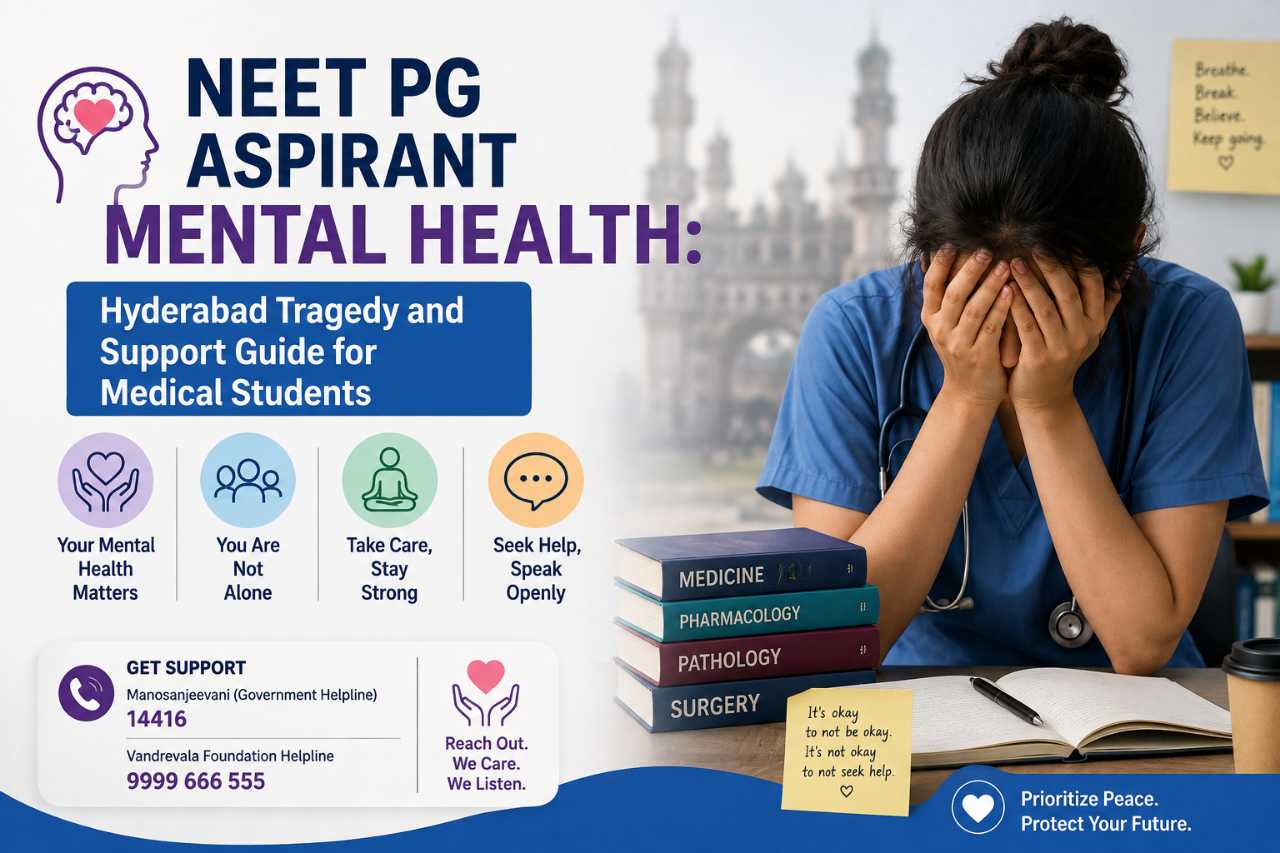

On August 29, 2026, Hyderabad witnessed a tragedy that has once again placed the mental health of medical aspirants at the centre of India's higher-education conversation. A 26-year-old female MBBS graduate from Andhra Pradesh, who had been preparing for the National Eligibility cum Entrance Test for Postgraduate courses (NEET PG) for seven months in a private hostel, allegedly died by suicide a day before she was scheduled to appear for the examination on Sunday. Police recovered a purported note and registered a case at Chikkadapally police station.
This incident is not merely a news headline. It is a reminder that behind every admit card, rank list, and counselling seat lies a human being carrying years of academic pressure, family expectations, financial investment, and often silent emotional struggle. For students, parents, educators, and policymakers tracking Indian medical admissions, the question is urgent: how can we prepare aspirants for high-stakes exams without letting preparation consume their wellbeing?
This article explains what is known about the Hyderabad case, places it in the broader context of NEET and postgraduate medical education in India, and offers practical, evidence-informed guidance on recognising distress, seeking help, and building healthier preparation routines. Our goal is helpful, responsible information — not sensationalism — aligned with Google's E-E-A-T standards for education content.
What We Know About the Hyderabad Incident
According to reports citing police officials, the deceased was a 26-year-old woman who had completed her MBBS degree and relocated to Hyderabad to prepare for NEET PG. She was staying in a private hostel and had been in dedicated preparation mode for approximately seven months. Her examination was scheduled for the following day — part of the NEET PG 2026 cycle conducted by the National Board of Examinations in Medical Sciences (NBEMS).
Timeline and Circumstances
Police stated that the aspirant consumed an unknown poisonous substance in her hostel room. Hostel staff found her unconscious and shifted her to a hospital, where she was declared brought dead. A purported suicide note was recovered from the room.
Significantly, the note reportedly mentioned that she had been suffering from depression since her intermediate education (Classes 11 and 12). It did not specifically reference NEET PG or the upcoming examination, according to the police official quoted in media reports. She was reportedly on medication for depression but appeared unable to overcome her condition.
Family Contact Before the Tragedy
On the morning of the incident, she spoke with her father, who told her that the family would visit her and accompany her to the exam centre the next day. After that conversation, she did not answer her father's calls. Concerned, he contacted hostel staff, who checked her room and discovered her in an unconscious state.
These details matter because they underline a pattern seen in many student distress cases: outward routines may appear normal — preparation continues, conversations happen, exam logistics are discussed — while internal suffering remains hidden or untreated.
NEET PG in India: Why the Pressure Feels Intense
To understand the emotional weight on postgraduate medical aspirants, one must first understand what NEET PG represents in the Indian education system. NEET PG is the gateway examination for admission to MD, MS, PG Diploma, and other postgraduate medical programmes across government and private medical colleges in India. A single day's performance can influence specialty choice, college reputation, stipend structures, career trajectory, and even geographic mobility for years to come.
The Long Road Before NEET PG
Most aspirants arrive at NEET PG after clearing NEET UG, completing five and a half years of MBBS including internship, and often navigating multiple attempts, coaching relocations, and financial strain. By the time a 26-year-old graduate enters a Hyderabad or Kota-style preparation ecosystem, she may already carry a decade of competitive-exam conditioning.
Cities such as Hyderabad, Delhi, and coaching hubs like Kota — where institutions such as the International Academy for Certification and Training Kota serve diverse student populations — concentrate thousands of aspirants in high-pressure environments. Hostel life, distance from family, irregular sleep, constant benchmarking against peers, and the fear of "wasting" an MBBS degree if PG admission is delayed all combine into a volatile emotional landscape.
Competition by the Numbers
While exact seat-to-applicant ratios vary each year, NEET PG consistently sees lakhs of candidates competing for a limited number of postgraduate seats. Even strong academic performers may miss preferred specialties or colleges by a narrow margin. Counselling processes, category rules, fee structures, and bond conditions add further complexity after the exam itself.
For many families, postgraduate specialisation is not framed as one option among many — it is treated as the natural and necessary next step. That cultural expectation can make setbacks feel like personal failure rather than statistical reality in a crowded system.
Mental Health, Depression, and Competitive Exams
The purported note in the Hyderabad case reportedly referenced depression dating back to intermediate school — long before NEET PG preparation began. This is a critical detail for parents, educators, and aspirants: exam pressure can aggravate existing mental health conditions, but it is rarely the sole root cause of suicide.
Depression Is a Medical Condition, Not Weakness
Depression is a clinically recognised mood disorder that affects sleep, concentration, motivation, self-worth, and the ability to experience pleasure or hope. When an individual is on medication yet still in severe distress, it may indicate that the treatment plan needs reassessment — not that the person is "not trying hard enough." Regular psychiatric follow-ups, therapy, and lifestyle support must work together; medication alone is often insufficient during high-stress periods.
How Exam Culture Can Worsen Existing Vulnerability
Medical entrance culture in India frequently rewards endurance narratives: waking at 4 a.m., studying 14 hours daily, postponing friendships, and treating rest as laziness. For someone with depression or anxiety, this culture can:
- Reduce help-seeking due to stigma ("doctors should be strong")
- Mask symptoms behind productivity ("she is studying, so she must be fine")
- Increase isolation in hostel settings far from home support networks
- Trigger catastrophic thinking after mock-test setbacks
- Delay treatment because "after NEET PG" feels like the only acceptable timeline
Institutions focused on science and health — from the Sree Chitra Tirunal Institute for Medical Sciences and Technology Thiruvananthapuram to research centres like the Regional Centre for Biotechnology — depend on resilient professionals. Yet resilience is built through support systems, not silent suffering.
Warning Signs Parents, Friends, and Hostel Staff Should Recognise
In the Hyderabad case, the father's morning conversation gave no immediate indication of crisis — a reality that makes vigilance essential. Warning signs are not always dramatic. They may appear gradually during the months leading to an exam like NEET PG.
Behavioural and Emotional Red Flags
- Withdrawal from phone calls or video chats with family
- Sudden drops in mock-test performance paired with extreme self-criticism
- Expressing hopelessness, burden, or statements like "you would be better off without me"
- Disrupted sleep or sleeping excessively
- Loss of appetite or unexplained weight changes
- Neglecting hygiene or daily routines previously maintained
- Increased irritability, crying spells, or emotional numbness
- Giving away belongings or speaking as if saying goodbye
- Stopping medication without medical guidance or hiding prescriptions
What to Do When You Notice These Signs
If someone shows several of these signs, treat the situation as urgent — not as exam nerves that will pass after Sunday's paper. Stay with the person if safe to do so, listen without lecturing about ranks or "positive thinking," remove access to means of self-harm where possible, and connect them to professional help immediately. In India, helplines such as AASRA (9820466726) and iCALL (9152987821) offer confidential support.
Parents who live in other states — as in this Andhra Pradesh family with a daughter preparing in Hyderabad — should schedule regular video check-ins that go beyond logistics. Ask open questions: "How are you feeling, not just how is preparation?" Validate emotions without immediately problem-solving.
The Role of Coaching Centres, Hostels, and Medical Colleges
Preparation for NEET PG often happens outside formal university settings — in private hostels, coaching institutes, and shared rental flats in cities like Hyderabad, where institutions such as the ICFAI Foundation for Higher Education Hyderabad coexist with a vast ecosystem of medical coaching. These environments have a duty of care that extends beyond academic delivery.
What Responsible Coaching Ecosystems Should Provide
- Mandatory orientation on mental health: Normalise counselling at the start of the batch, not after a crisis.
- Hostel warden training: Staff should know emergency protocols and helpline numbers.
- Structured breaks: Scheduled rest days reduce burnout without guilt.
- Confidential counselling access: On-site or tele-counselling partnerships with psychologists.
- Anti-comparison policies: Public rank shaming and toxic motivation speeches should be discouraged.
- Parent communication channels: Alert systems when students show academic or behavioural decline.
Medical Colleges and Internship Phase
Many NEET PG aspirants begin serious preparation during or after internship. Medical colleges must integrate mental health literacy into undergraduate curricula so that future doctors recognise their own symptoms as readily as they recognise clinical signs in patients. Universities and institutes engaged in health sciences research — such as the International Institute for Population Sciences Mumbai — consistently document that early intervention improves long-term outcomes.
Practical Stress-Management Strategies for NEET PG Aspirants
High stakes do not require self-destruction. Effective preparation and wellbeing can coexist when aspirants adopt structured, sustainable habits.
Build a Realistic Study Architecture
Instead of measuring worth by hours logged, measure consistency and syllabus coverage. A balanced daily plan might include:
- Three to four focused study blocks with 10-minute breaks
- One weekly half-day completely off screens and books
- Regular revision cycles rather than endless new content consumption
- Physical activity — even a 20-minute walk — to regulate mood and sleep
Separate Self-Worth from Rank
Your MBBS degree already represents years of achievement. NEET PG determines the next training pathway, not your value as a person or healer. Many successful clinicians took multiple attempts, explored alternate specialties, or pursued diplomas before super-specialisation. Flexibility reduces desperation.
Maintain Connection
Isolation amplifies depression. Schedule weekly calls with family or trusted friends. Study groups can help if they remain collaborative rather than competitive. If you are in a Hyderabad hostel or a Kota-style residential setup, find at least one peer you can speak to honestly about stress.
Continue or Start Professional Mental Health Care
If you have a history of depression — as reported in the Hyderabad case — do not pause treatment because the exam is near. Inform your psychiatrist that you are preparing for NEET PG; adjustments to therapy frequency or medication may be possible. Mental health care is part of exam preparation, not a distraction from it.
Helplines and Emergency Support in India
If you or someone you know is in immediate danger, call local emergency services or visit the nearest hospital emergency department. For emotional crisis support, the following resources are available:
- AASRA: 9820466726 (24x7 suicide prevention helpline) — aasra.info
- iCALL: 9152987821 (psychosocial helpline by TISS)
- Vandrevala Foundation: 1860-2662-345 / 1800-2333-330
- Tele-MANAS: 14416 (national tele-mental health programme)
- KIRAN (Ministry of Social Justice): 1800-599-0019
These services are confidential and staffed by trained counsellors. Seeking help is especially important in the 24 to 48 hours before a major exam, when anxiety peaks and sleep deprivation is common.
A Parent's Guide: Supporting Without Adding Pressure
The father in the Hyderabad case planned to travel and escort his daughter to the exam centre — a gesture of practical support. Loving involvement matters, but how support is communicated can either ease or intensify pressure.
Helpful Phrases and Approaches
- "We are proud of how far you have come — MBBS itself is a huge achievement."
- "Whatever the result, we will plan the next step together."
- "Your health comes first. We can always explore another attempt or pathway."
- "Would you like to speak to a counsellor? We will help arrange it."
Phrases to Avoid During Preparation
- "After so much investment, you cannot fail."
- "Our relatives are asking about your rank."
- "Just push through — everyone feels sad during exams."
- "Do not tell anyone you are seeing a psychiatrist."
Parents in towns and cities across India — whether their children study at local colleges or relocate to metros — should remember that postgraduate medical pathways include MD, MS, diplomas, DNB, and later super-speciality routes. A single exam day does not define a medical career.
Toward a Healthier Medical Education Ecosystem
Individual coping strategies alone cannot solve a systemic problem. India's medical education pipeline — from NEET UG through internship to NEET PG counselling — needs structural attention to student wellbeing.
Policy and Institutional Reforms Worth Advocating
- Mandatory mental health modules in MBBS curriculum with examination-linked credit
- Regulation of coaching centres with wellbeing standards, similar to debates around coaching laws in states like Maharashtra
- Hostel safety audits in major preparation cities including Hyderabad, Delhi, and Kota
- NBEMS and counselling authorities publishing clear, student-friendly post-exam support communications
- Reduced stigma campaigns featuring practising doctors who sought help during training
Recent initiatives — such as agreements between IIT Kanpur and organisations focused on value-based education and student wellbeing — signal growing recognition that elite technical and scientific institutions must prioritise mental health infrastructure. Medical education deserves the same urgency.
Learning From Tragedy Without Sensationalism
Reporting on student deaths should inform prevention, not fuel fear. Each incident is a call for better screening, earlier counselling referrals, hostel accountability, and family education — not for blaming the victim or reducing complex mental illness to "exam stress headlines."
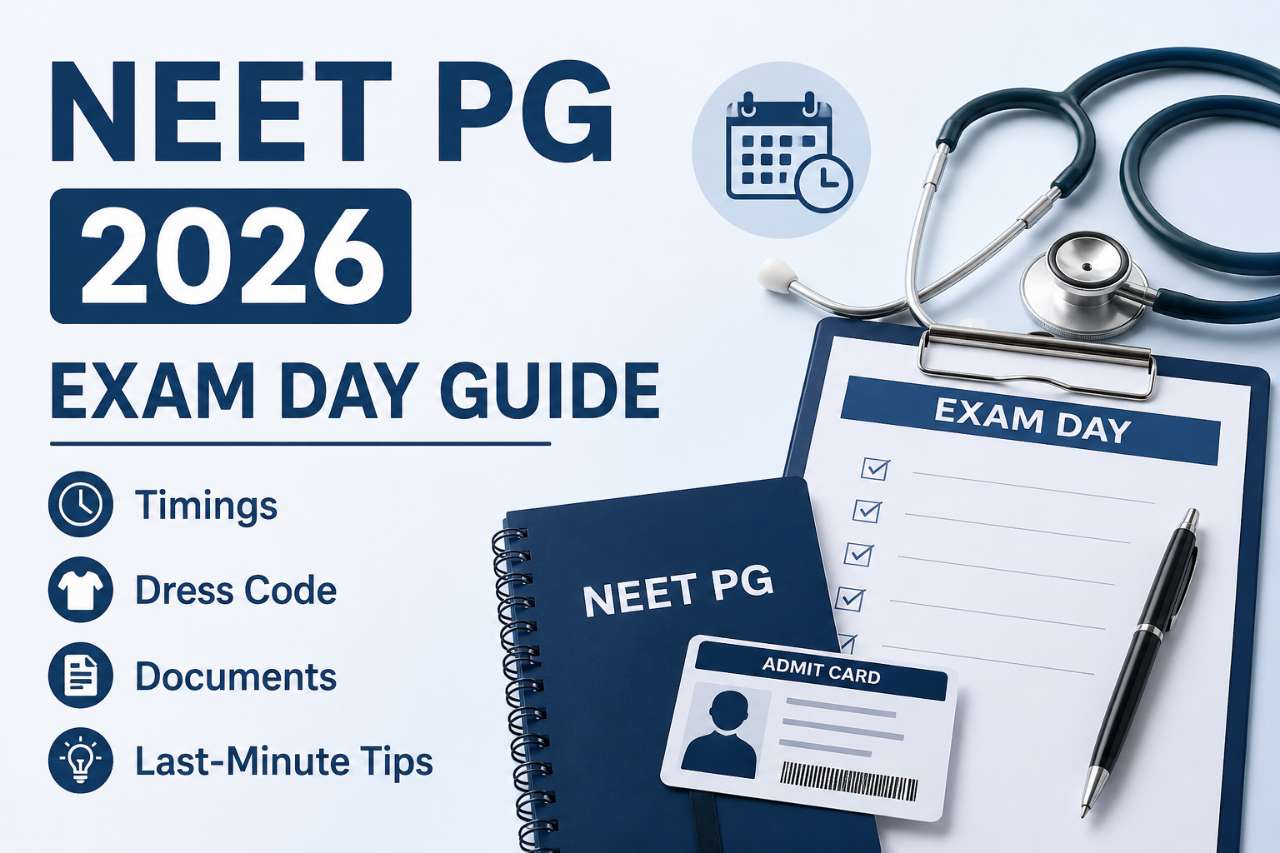
NEET PG 2026: Exam-Day Wellbeing Checklist
For aspirants appearing for NEET PG around the reported examination date, the final 24 hours should prioritise stability over cramming.
Day-Before-the-Exam Recommendations
| Area | Recommended Action | Avoid |
|---|---|---|
| Sleep | 7–8 hours; consistent bedtime | All-night revision |
| Food | Light, familiar meals; stay hydrated | Excessive caffeine or skipped meals |
| Study | Light revision of notes and formulas | Starting new heavy topics |
| Conversation | Talk to one supportive person | Comparing readiness with peers |
| Documents | Verify admit card, ID, and centre route | Panic if minor issues arise — contact NBEMS helpline |
| Mental state | Deep breathing, short walk, prayer or meditation if helpful | Catastrophic "what if I fail" spirals |
Remember: thousands of aspirants feel underprepared on the eve of NEET PG. Feeling anxious is common; feeling hopeless, suicidal, or unable to function is not something to manage alone — reach out to helplines listed above.
Conclusion: Exams Matter, Lives Matter More
The death of a 26-year-old NEET PG aspirant in Hyderabad on August 29, 2026 — a day before her scheduled examination — is a profound loss. Police reports that she had battled depression since intermediate school, was under treatment, and did not mention NEET PG in her purported note should caution us against simplistic narratives. This was not merely "exam pressure"; it was a young doctor's life interrupted by a condition that deserved sustained, compassionate care.
For every aspirant reading this while preparing for NEET PG, remember that your wellbeing is not negotiable. Rank lists refresh each year; your life cannot be retaken. For parents, educators, hostel managers, and policymakers, the actionable legacy of such tragedies is prevention: early detection, open conversation, professional treatment without stigma, and exam ecosystems that measure success in human terms as well as academic ones.
If you are struggling right now, please call AASRA at 9820466726 or iCALL at 9152987821. You deserve support — today, on exam day, and every day after.