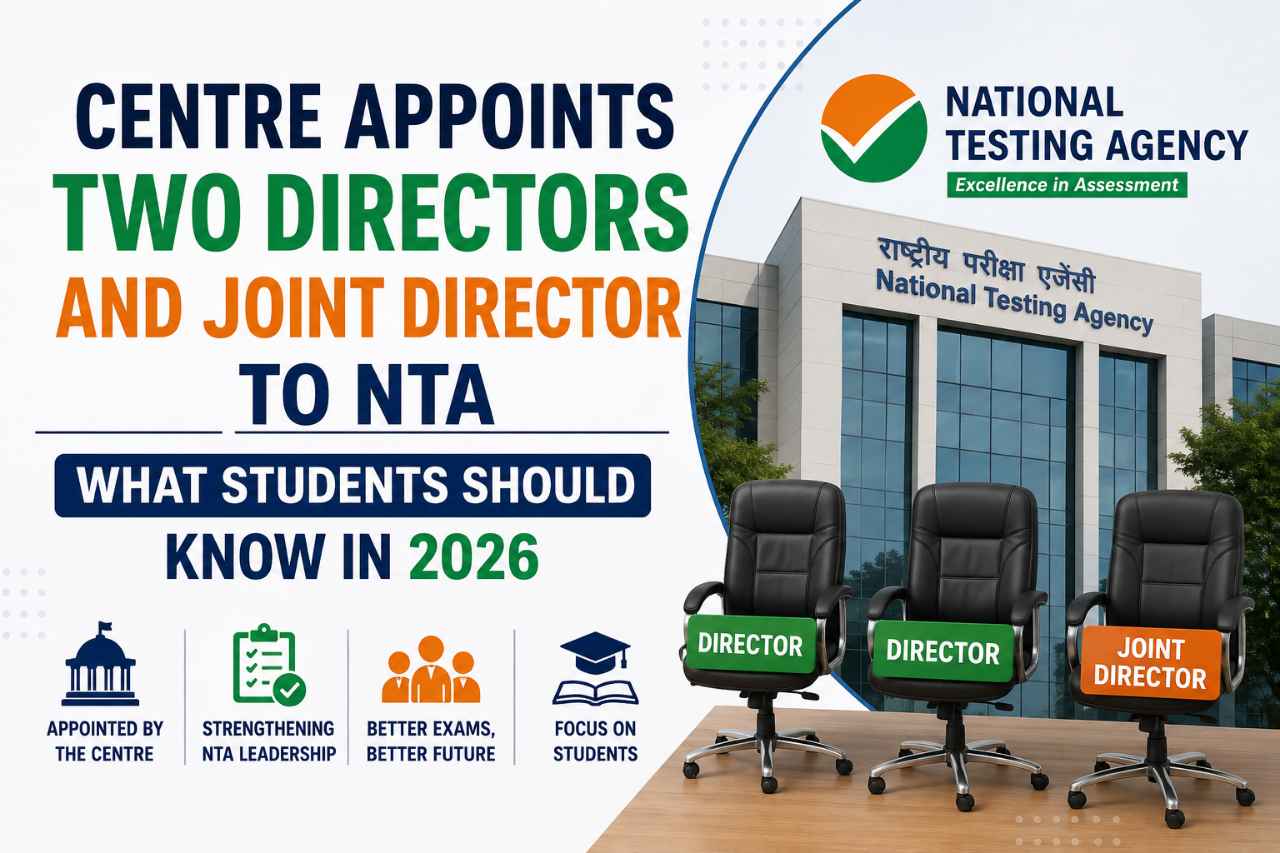
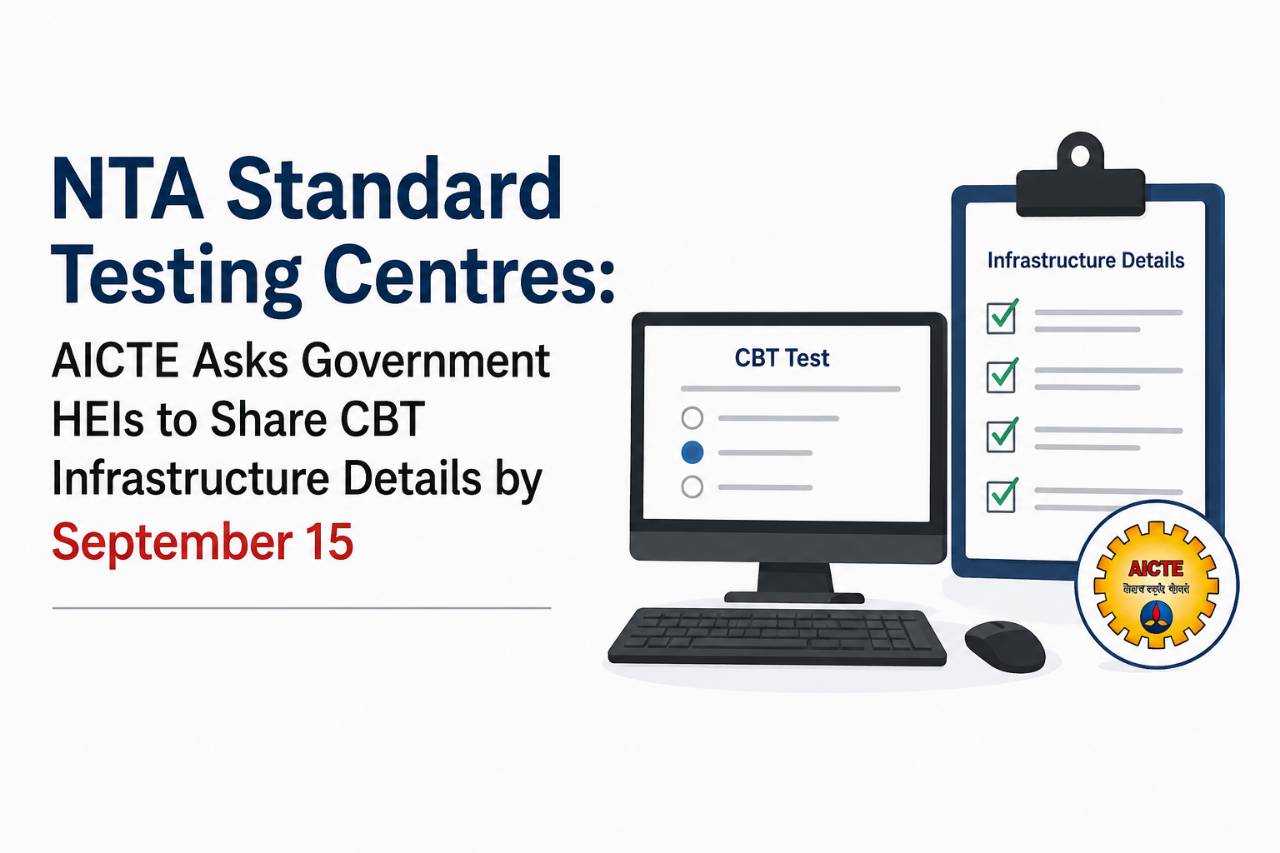

India's national entrance and eligibility examinations are moving deeper into Computer Based Test (CBT) mode and the infrastructure behind those exams is getting a major upgrade. In September 2026, the All India Council for Technical Education (AICTE) issued a time-bound directive to government technical universities and higher education institutions (HEIs) to share detailed information about their computing facilities, connectivity, security systems, and unused campus space. The request comes directly from the National Testing Agency (NTA), which is assessing whether selected government institutions can be developed into Standard Testing Centres (STCs).
For students preparing for engineering, medical, pharmacy, management, and research exams, this is not merely an administrative update. A wider, geographically distributed CBT network can reduce travel burden, improve exam-day reliability, and create fairer access for candidates in tier-2 and tier-3 cities. For colleges especially government engineering institutes, polytechnics, and AICTE-approved management institutions it is an opportunity to participate in India's national assessment ecosystem while strengthening their own digital infrastructure.
This article breaks down what the NTA–AICTE initiative means, who must respond, what data is required, and how students and institutions should prepare in the months ahead.
Why NTA Is Strengthening the Testing Centre Network
The NTA conducts several high-stakes national examinations entirely or partially in CBT format. Over the past decade, entrance tests such as JEE Main, NEET-UG, CUET-UG, and various professional eligibility exams have shifted from large-scale pen-and-paper halls to secured computer labs and dedicated exam centres. That transition has improved scalability, faster result processing, and tighter security protocols but it has also exposed a persistent challenge: centre availability is uneven across regions.
Metro cities and state capitals often have adequate CBT infrastructure, while candidates in smaller towns may face longer travel distances, limited centre choices, or last-minute centre changes during peak exam seasons. To address this, the NTA is evaluating whether government institutions nationwide can host Standard Testing Centres permanent or semi-permanent facilities equipped to NTA specifications for recurring national examinations.
According to the official communication reported in September 2026, the NTA requested AICTE to collect information on computing infrastructure and available space in government institutions across the country. The underlying goal is straightforward: build a robust, geographically balanced network that supports the progressive migration of examinations to CBT mode without compromising integrity or candidate convenience.
What Standard Testing Centres (STCs) Could Mean in Practice
While final selection criteria will be determined after data review, STCs typically imply institutions that meet baseline requirements for:
- Reliable high-speed internet and internal networking
- Adequate number of functional computer systems per batch
- Uninterrupted power supply with backup generators or UPS systems
- CCTV surveillance and controlled entry-exit points
- Physical space that can be converted into secured exam halls or dedicated CBT labs
- Institutional capacity to coordinate with NTA protocols on exam day
Institutions with strong IT infrastructure such as established engineering colleges and research-focused campuses are natural candidates. For example, campuses like the Modern Institute of Technology and Research Centre Kota and the Institute of Infrastructure Technology Research and Management (IITRAM) represent the kind of technical HEIs whose labs, server rooms, and connectivity assets may align with NTA assessment parameters.
AICTE's Directive: Who Must Submit Infrastructure Details?
AICTE has asked eligible institutions to furnish infrastructure information using the prescribed proforma (Annexure-I). Importantly, the scope is limited to government colleges and institutions approved by AICTE. Private universities and unapproved institutions are outside this specific data-collection exercise, though they may continue to function as exam centres through other NTA empanelment routes where applicable.
The following categories of institutions are expected to respond:
- Government engineering colleges and constituent departments of technical universities
- Government polytechnics with functional computer labs
- University departments under state technical universities
- AICTE-approved government management institutions with IT-enabled classrooms or labs
- Government technical universities coordinating multiple affiliated campuses
Institutions must ensure that submitted data is accurate, complete, and verified by the competent authority typically the principal, director, or registrar. Incomplete or inflated figures can delay assessment and may disqualify an institution from STC consideration.
Deadline: September 15, 2026
AICTE has marked this as an important and time-bound matter. Government HEIs must submit Annexure-I details by September 15, 2026. After compilation, AICTE will share the consolidated information with the NTA for further assessment and necessary action.
College administrators who miss the deadline risk exclusion from the first phase of STC shortlisting, even if their campus infrastructure is otherwise suitable.
Infrastructure Details AICTE Is Collecting: A Complete Breakdown
Understanding the data fields helps institutions prepare correct submissions and helps students gauge where new exam centres may emerge. Based on the official announcement, the proforma covers six core areas:
1. Number of Functional Computers
Institutions must report how many computer systems are currently functional not merely installed. NTA CBT batches require simultaneous login capacity, so labs with outdated or non-operational machines may not qualify without upgrades. Colleges should audit each lab, record serial numbers where possible, and distinguish between student-use systems and administrative machines.
2. Existing IT Infrastructure and Systems
This includes servers, LAN/Wi-Fi architecture, operating systems, antivirus and firewall setups, and software licensing status. Institutions with centralized IT departments common at universities like The Northcap University Gurgaon and its engineering wing typically maintain better documentation, which simplifies verification during NTA assessment.
3. Networking and Internet Connectivity
CBT exams depend on stable, high-bandwidth connectivity with redundancy options. Institutions should report ISP details, bandwidth capacity, uptime history, and whether backup links exist. Weak connectivity remains one of the most common reasons temporary exam centres fail NTA trials.
4. Power Backup Availability
Power cuts during national exams can disrupt lakhs of candidates simultaneously. AICTE wants clarity on generator capacity, UPS coverage per lab, and maintenance schedules. Government polytechnics and older university blocks should pay special attention to this section.
5. CCTV and Allied Security Facilities
Surveillance coverage, recording retention capacity, and biometric or access-control systems fall under this category. NTA exam protocols require continuous monitoring of labs and entry points; institutions lacking adequate CCTV may need phased upgrades before empanelment.
6. Vacant or Unutilised Space
Perhaps the most strategic field in Annexure-I is available space that could be converted into dedicated CBT infrastructure. Empty classrooms, unused workshop halls, or annex buildings may be repurposed into permanent testing zones reducing setup time before each exam cycle.
How This Move Affects Students and Exam Aspirants
If you are preparing for national-level tests, the STC expansion initiative matters for practical reasons beyond policy headlines.
More Centres in Regional Cities
Candidates from Rajasthan, Assam, Jharkhand, and other states often travel to larger hubs for exams. A government college in a district headquarters such as a centre affiliated with JJTU Jaipur Centre or a polytechnic in Kota could become a permanent CBT node, saving time and money for local aspirants.
Improved Exam-Day Stability
Permanent STCs reduce reliance on ad-hoc empanelment of unfamiliar venues. Standardized layouts, pre-tested networks, and trained invigilation teams lower the risk of technical glitches that have occasionally affected large CBT sessions in the past.
Broader Exam Portfolio Coverage
The NTA's CBT portfolio spans undergraduate entrances, postgraduate tests, and eligibility examinations. Research aspirants appearing for exams like CSIR NET and university-specific tests such as the Amity Entrance Test may indirectly benefit when baseline testing infrastructure improves nationwide even if those exams use separate empanelment processes.
What Students Should Do Now
- Continue focusing on syllabus and mock tests; centre expansion does not change exam patterns overnight.
- Watch official NTA notifications for updated centre lists in your state.
- During application, choose multiple preferred cities if the portal allows flexibility helps if new STCs are added mid-cycle.
- Verify admit card centre details early and plan logistics once confirmed.
Implications for Government HEIs and Technical Campuses
For institutions, participation in the STC network is both a responsibility and a reputational opportunity.
Infrastructure Audit as a Catalyst
Many government colleges have underutilized computer labs built during earlier digital initiatives. The AICTE proforma forces a honest audit that can justify budget requests for lab modernization, fibre upgrades, and security installations benefiting regular academic programmes long after exam day.
Cross-Department Coordination
Successful submissions require collaboration among the IT cell, estate office, finance department, and academic leadership. Universities with multiple affiliated colleges such as health sciences or multidisciplinary campuses like Dr NTR University of Health Sciences Vijaywada should designate a nodal officer to consolidate data from constituent units.
Compliance and Verification Standards
AICTE explicitly requires institutional-level verification. Principals and directors should personally review Annexure-I before submission. Overstating computer counts or internet speeds may lead to failed NTA inspections and reputational damage.
Potential Benefits for Empanelled Institutions
While financial arrangements depend on future NTA agreements, exam centre hosting historically brings:
- Revenue from centre operations during exam seasons
- Enhanced visibility among national stakeholders
- Improved campus security and IT assets usable year-round
- Experience managing large-scale, high-security events
Regional Perspective: Building a Pan-India CBT Grid
India's higher education map is diverse, and the STC initiative reflects an effort to align exam infrastructure with that diversity.
North and West India
States like Rajasthan, Gujarat, and Haryana have dense networks of AICTE-approved government engineering colleges. Institutions such as The ICFAI University Jaipur sit within ecosystems where technical education hubs could supplement NTA capacity during peak seasons though only government AICTE-approved colleges are in scope for this particular survey.
South India
Tamil Nadu, Karnataka, and Andhra Pradesh combine large student volumes with established technical universities. Research institutions and professional schools from Madras School of Social Work Chennai to biotechnology-focused campuses like the Regional Centre for Biotechnology illustrate the range of HEIs that may coexist alongside engineering-focused STC candidates in the same cities.
East and Northeast India
Expanding CBT access in Assam, West Bengal, and the Northeast remains a priority for equitable exam access. Government institutions under universities such as The Assam Kaziranga University and The University of Burdwan could play outsized roles if their infrastructure meets NTA benchmarks reducing the need for candidates to travel to Kolkata, Guwahati, or Delhi for every major test.
Skill and Professional Education Linkages
Technical and skill-focused campuses including Kaushalya The Skill University highlight India's broader push to align education infrastructure with employability. While STC selection targets government AICTE-approved institutions, the same digital readiness standards echo across vocational and professional education reforms nationwide.
CBT Mode Examinations: Context for the Infrastructure Push
To appreciate why the NTA needs more Standard Testing Centres, it helps to understand the scale of CBT adoption in India.
Major Exams Already in CBT Format
- JEE Main – Multiple sessions per year, lakhs of engineering aspirants
- NEET-UG – Single largest medical entrance examination
- CUET-UG – Gateway to central and participating universities
- UGC-NET and CSIR NET – Eligibility for assistant professorship and junior research fellowships
- Various PG and professional tests – Including pharmacy, management, and university-specific entrances
Each exam cycle stresses centre logistics, hardware compatibility, and cybersecurity. Permanent STCs allow pre-configured environments rather than temporary setups in rented halls.
Security and Fairness Considerations
CBT enables encrypted question papers, randomized item banks, and biometric authentication. However, these advantages hold only when centres meet strict technical standards. The AICTE data collection is an upstream quality filter before NTA conducts on-site inspections.
Actionable Checklist for Government AICTE-Approved Colleges
If your institution received the AICTE communication, treat the following as a practical submission roadmap:
- Appoint a nodal officer from the IT department with authority to coordinate with the principal's office.
- Conduct a physical lab audit within one week count functional PCs, test internet speed at peak hours, and inspect power backup.
- Document vacant spaces with floor area, seating capacity, and proximity to IT rooms.
- Verify CCTV coverage and note blind spots that may need correction before NTA inspection.
- Complete Annexure-I with signed certification from the competent authority.
- Submit before September 15, 2026 through the channel specified by AICTE or your affiliating university.
- Retain copies of all submissions and supporting evidence for future audits.
What Happens After September 15?
Once AICTE aggregates responses from government HEIs nationwide, the data pipeline moves to the NTA for assessment. Expected next steps based on similar government empanelment processes include:
- Shortlisting institutions meeting minimum thresholds for computers, connectivity, and security
- Physical verification visits by NTA teams or designated agencies
- Pilot CBT sessions to test network load and hardware compatibility
- Formal empanelment as Standard Testing Centres for specified exam cycles
- Periodic re-audit to maintain standards across academic years
Students and colleges should monitor official NTA and AICTE portals for updated centre lists rather than relying on unofficial social media claims about empanelment.
Broader Policy Context: Digital India and Exam Reform
The STC initiative sits within larger national priorities: Digital India, the National Education Policy (NEP) 2020 emphasis on technology-enabled learning, and ongoing exam reform after recent controversies around centre management and technical failures. By anchoring testing infrastructure in trusted government institutions, policymakers aim to combine public accountability with technical reliability.
For research-intensive campuses such as the National Brain Research Centre Gurgaon or the Jawaharlal Nehru Centre for Advanced Scientific Research Bangalore the standards demanded for STCs mirror the secure computing environments required for modern academic research, creating alignment between exam infrastructure and scholarly work.
Conclusion
The NTA's plan to strengthen its testing centre network and AICTE's September 2026 call for infrastructure details from government technical universities and approved HEIs marks a significant step toward a more equitable, reliable CBT ecosystem in India. For students, the promise is clearer: more exam centres closer to home, fewer last-minute disruptions, and standardized conditions on test day. For institutions, the deadline of September 15, 2026 is a call to document and upgrade campus IT assets honestly and promptly.
Whether you are an engineering aspirant in Kota, a medical candidate in Vijaywada, or a college administrator completing Annexure-I, staying informed through official channels and preparing early remains the best strategy. The expansion of Standard Testing Centres will unfold over months, but the data collected today will shape where lakhs of Indian students sit for their most important examinations tomorrow.