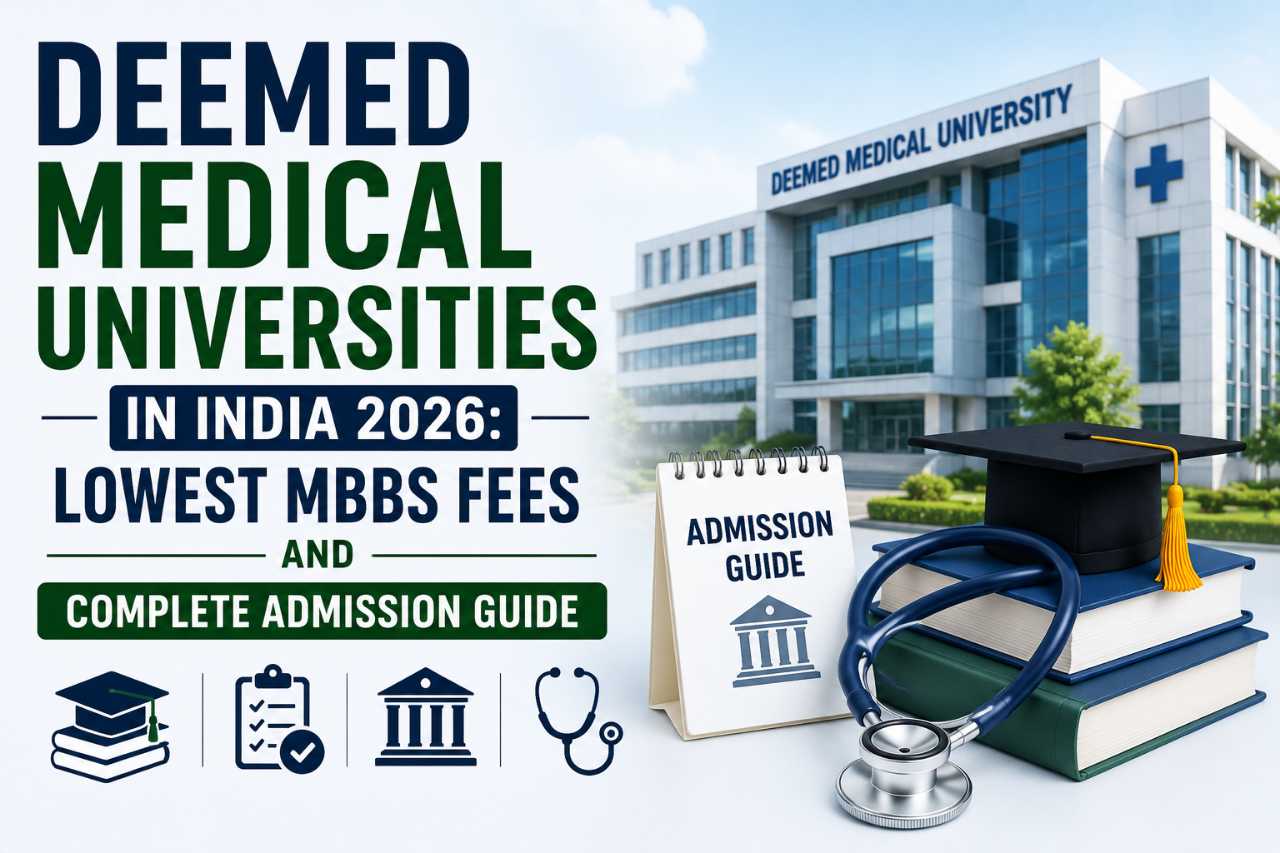

Choosing a deemed medical university for MBBS in India is one of the biggest decisions a NEET aspirant makes after the exam. Unlike state government colleges that follow domicile rules, deemed universities offer all-India seats through central counselling. For the 2026 admission cycle, annual tuition at these institutions starts from around Rs 10 lakh and can go up to Rs 30 lakh or more, depending on the college, location, and category of seat.
This guide explains what deemed medical universities are, lists the most affordable options for 2026, breaks down MCC counselling charges, and walks you through the complete admission process. Whether you are comparing deemed fees with government colleges like AIIMS Delhi or exploring private options in Rajasthan and Uttar Pradesh, the information here is structured to help you plan fees, documents, and counselling rounds with confidence.
What Is a Deemed Medical University in India?
A deemed-to-be university is an institution of higher education that the Government of India recognises under Section 3 of the UGC Act, 1956. When such a university runs a medical college, it must meet standards set by the National Medical Commission (NMC). Deemed medical universities are neither fully central institutes like AIIMS Delhi nor ordinary state government colleges such as Maulana Azad Medical College (MAMC) Delhi. They operate as autonomous institutions with their own fee structures, subject to regulatory oversight.
For students, the most important distinction is how seats are filled. All MBBS seats in deemed universities are allotted through the Medical Counselling Committee (MCC) at mcc.nic.in. There is no state domicile quota. A candidate from Kerala can compete for a seat in Gujarat on equal merit grounds, provided they qualify NEET UG 2026.
Key Features of Deemed University MBBS Programmes
- Centralised admission: Single-window counselling via MCC for all deemed university seats nationwide.
- Merit-based selection: NEET UG rank and percentile decide allotment; no separate entrance test.
- All-India eligibility: No domicile requirement for most seats under the deemed university quota.
- Higher fees than government colleges: Tuition is typically several times the fee at institutes like VMMC Delhi or UCMS Delhi.
- NMC approval mandatory: Always verify the college on the official NMC list before paying any fee.
Deemed universities often invest heavily in hospital infrastructure, simulation labs, and research. That is one reason fees are higher. Still, within the deemed category itself, the gap between the lowest and highest annual tuition can exceed Rs 20 lakh—making careful comparison essential for middle-income families.
Lowest MBBS Fees at Deemed Medical Universities in 2026
Based on publicly available fee data for the 2026 academic session, annual MBBS tuition at deemed medical universities in India starts from approximately Rs 10 lakh per year. The figures below cover the 4.5-year academic phase only and do not include the one-year compulsory rotatory internship, hostel, mess, or other charges.
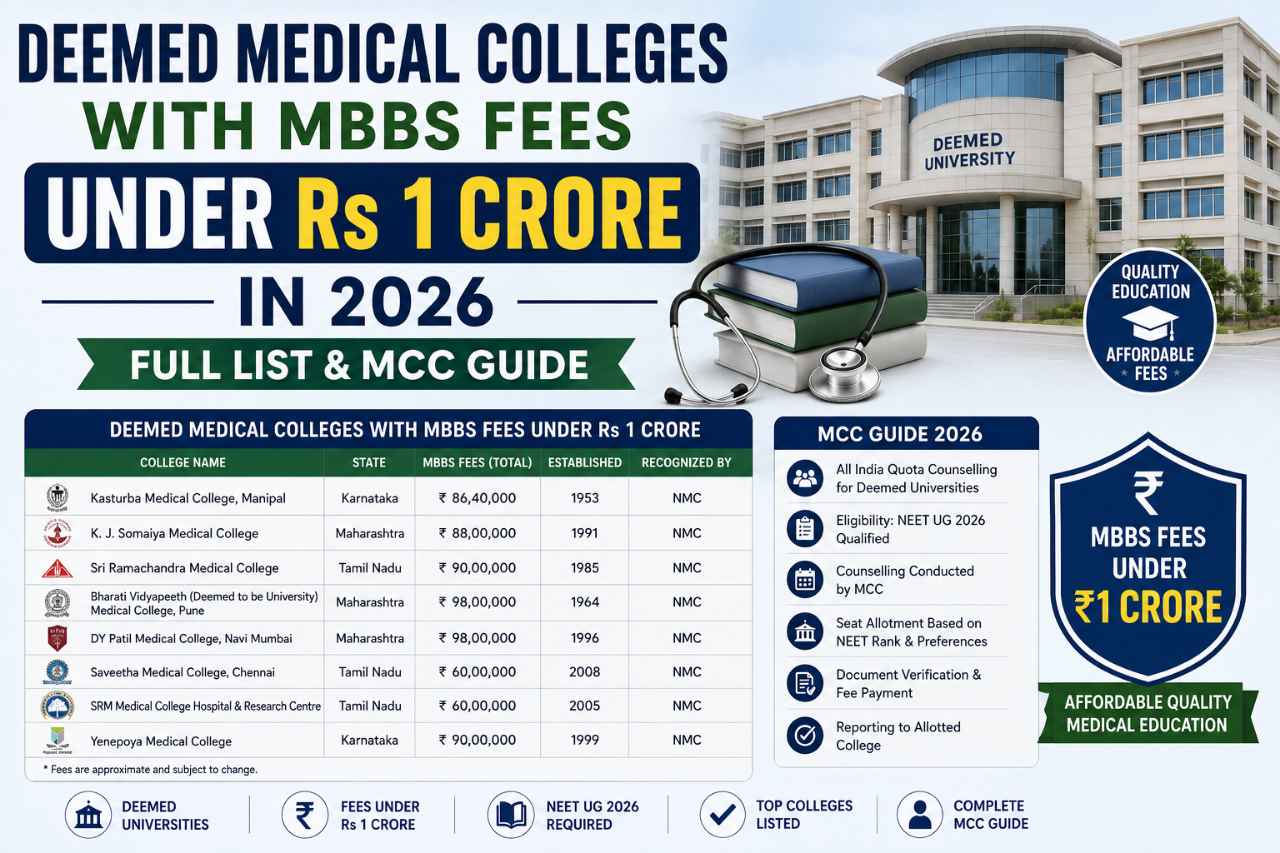
Quick answer: Symbiosis Medical College for Women, Pune, currently leads the affordability list among major deemed institutions at nearly Rs 10 lakh per year. Kasturba Medical College (KMC) Manipal and several Karnataka-based deemed colleges follow in the Rs 17–19 lakh range.
Complete List: Deemed Universities With Lowest Annual MBBS Fees (2026)
| Institute | Location | Annual MBBS Tuition Fee (Approx.) |
|---|---|---|
| Symbiosis Medical College for Women | Pune, Maharashtra | Rs 10 lakh |
| Kasturba Medical College (KMC) | Manipal, Karnataka | Rs 17.80 lakh |
| K.S. Hegde Medical Academy | Mangalore, Karnataka | Rs 18 lakh |
| JSS Medical College | Mysuru, Karnataka | Rs 18.50 lakh |
| SBKS Medical Institute (Sumandeep Vidyapeeth) | Vadodara, Gujarat | Rs 22.75 lakh |
| Bharati Vidyapeeth Medical College | Sangli, Maharashtra | Rs 25.52 lakh |
At the upper end of the deemed segment, several well-known institutions charge close to Rs 30 lakh per year. Always treat published figures as starting points. Colleges may revise fees each session after regulatory approval, and category-specific concessions can apply.
Important Notes on the Fee List
- Women-only admission at Symbiosis Medical College for Women: Only female candidates are eligible for this Pune institute. Male aspirants should not list it during MCC choice filling.
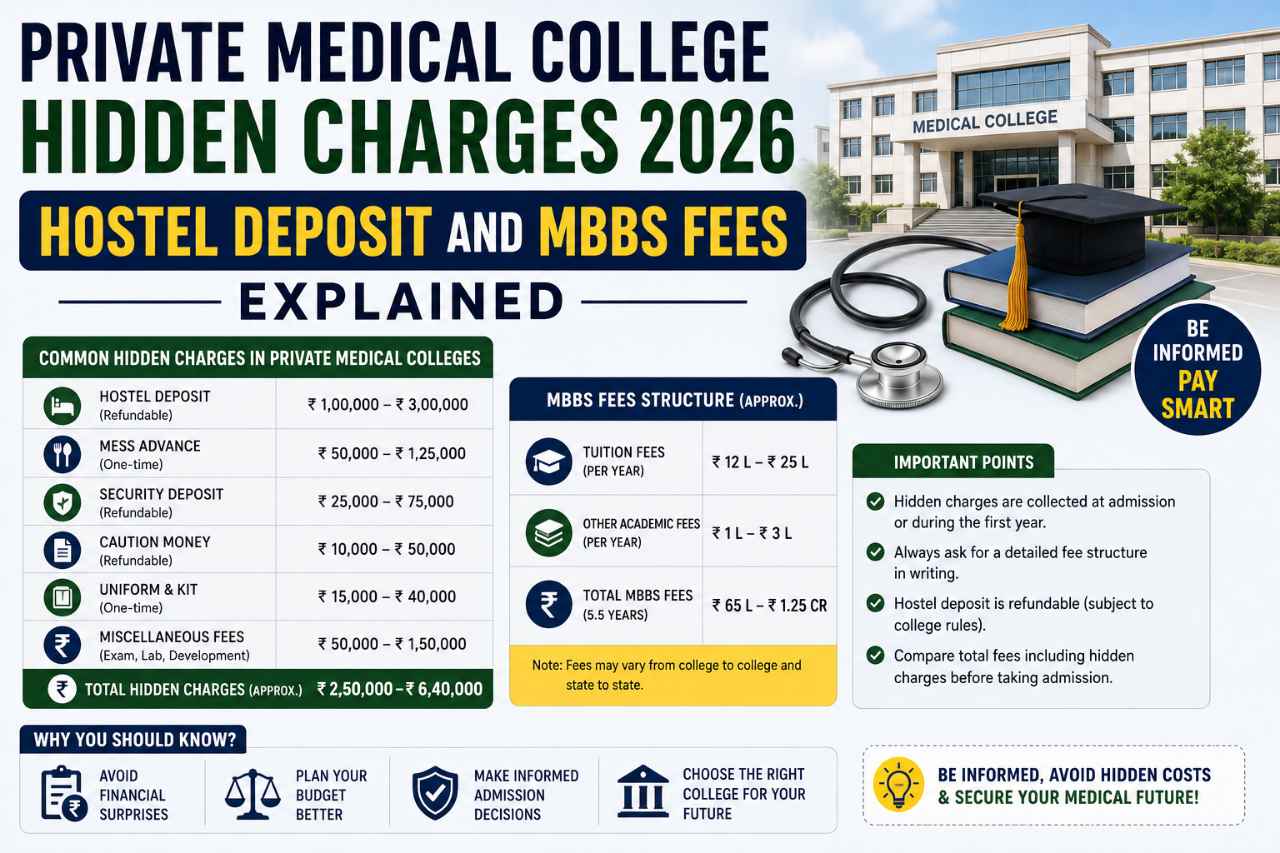
- Hostel and mess are extra: Budget an additional Rs 1 lakh to Rs 4 lakh per year for accommodation, food, laundry, and utilities at most deemed campuses.
- Caution deposit: Many colleges collect a one-time refundable deposit ranging from Rs 50,000 to Rs 2 lakh at the time of admission.
- Total programme cost: Multiply annual tuition by 4.5 years, then add hostel, mess, books, exam fees, and travel for a realistic estimate.
For context, a full MBBS at Symbiosis Medical College for Women may cost roughly Rs 45–55 lakh in tuition alone over 4.5 years, before living expenses. At KMC Manipal, tuition alone can cross Rs 80 lakh for the academic phase. Compare this with government colleges like Government Medical College Kota, where annual fees are a fraction of deemed rates—but admission cut-offs are far more competitive.
How Deemed University Fees Compare With Government and Private Colleges
Understanding fee categories helps NEET aspirants set realistic targets. India’s medical admission landscape has three broad buckets: government (central and state), deemed universities, and private medical colleges under state counselling.
Government Medical Colleges
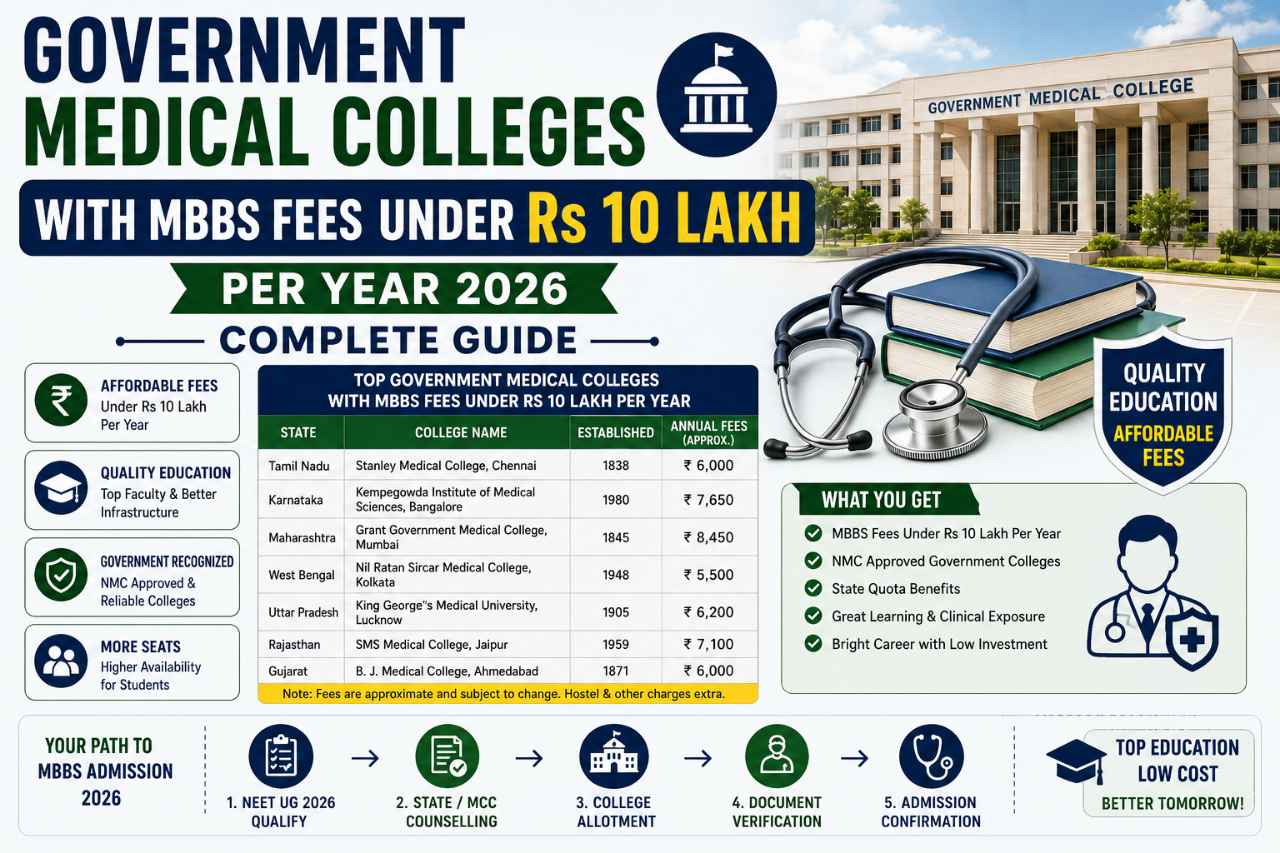
Institutes such as AIIMS Delhi, MAMC Delhi, and Shri Kalyan Government Medical College Sikar charge nominal tuition—often between Rs 20,000 and Rs 1.5 lakh per year for Indian nationals. However, NEET cut-offs for these seats are extremely high. Many students who miss government seats by a narrow margin turn to deemed universities as a merit-based alternative without state domicile restrictions.
Deemed Medical Universities
Deemed institutions sit in the mid-to-premium fee band. They are generally more expensive than state government colleges but sometimes comparable to—or slightly below—top private medical colleges in metro cities. The advantage is transparent all-India counselling through MCC and often stronger hospital attaché facilities.
Private Medical Colleges (State Quota)
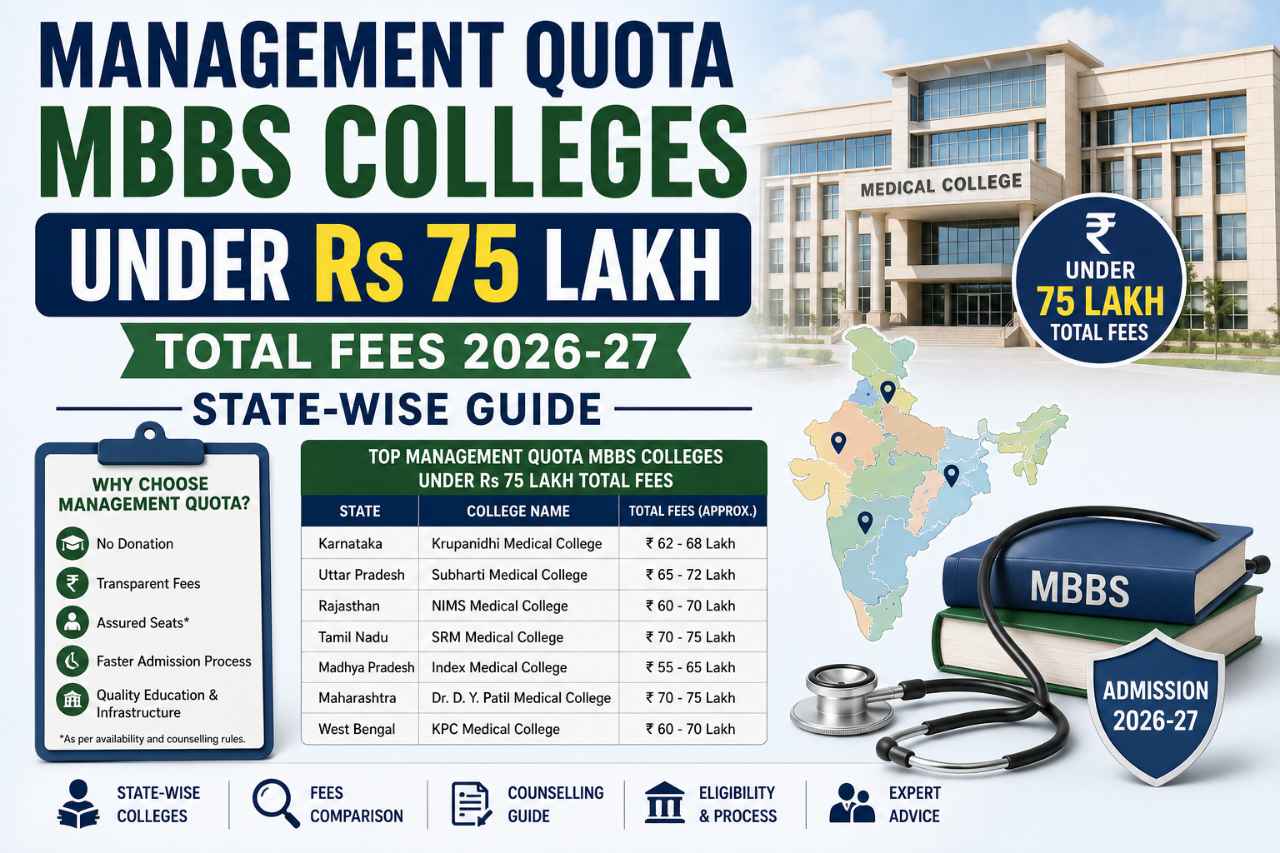
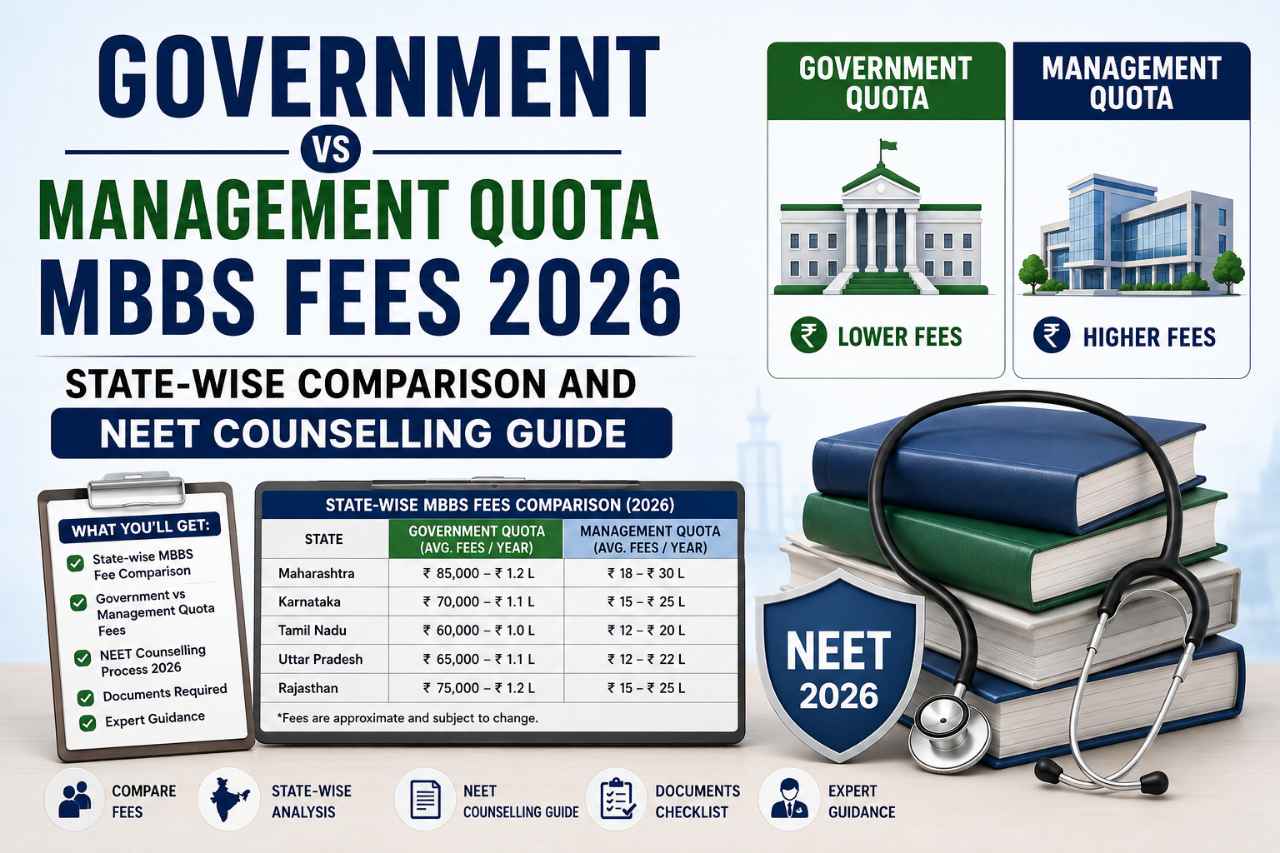
Private colleges under state counselling—such as institutions in Noida or Jaipur—may offer management quota seats at varying price points. Explore options like Noida International Institute of Medical Sciences or Mahatma Gandhi University Medical Sciences Jaipur alongside deemed choices. Management quota fees can sometimes exceed deemed rates, and rules differ by state.
MCC Counselling Fees for Deemed University MBBS Seats 2026
Every candidate who wishes to participate in deemed university counselling must register on the MCC portal. Two separate payments apply at registration: a non-refundable counselling fee and a refundable security deposit.
| Category | Registration Fee | Security Deposit |
|---|---|---|
| General / EWS | Rs 5,000 | Rs 2,00,000 |
| SC / ST / OBC | Rs 2,500 | Rs 1,00,000 |
The security deposit is refunded after counselling concludes, provided the candidate follows exit formalities correctly—whether they accept a seat, upgrade in a later round, or resign within the prescribed window. Failure to report or exit properly can lead to forfeiture.
What the Security Deposit Covers
Think of the security deposit as a commitment bond. It discourages seat blocking and ensures only serious candidates remain in the pool. Arrange Rs 2 lakh (General) or Rs 1 lakh (reserved categories) in your bank account before registration opens. UPI and card payments are usually accepted on mcc.nic.in, but net banking limits can cause last-minute failures—plan ahead.
NEET UG 2026 Eligibility for Deemed University Admission
All deemed university MBBS admissions run through NEET UG merit. There is no separate deemed university entrance examination.
Basic Eligibility Criteria
- Qualify NEET UG 2026 with the minimum percentile prescribed for your category (General, EWS, OBC, SC, ST, PwBD).
- Complete 10+2 or equivalent with Physics, Chemistry, Biology/Biotechnology, and English.
- Meet age requirements as per NMC and NEET guidelines.
- Hold Indian citizenship or meet NRI/Foreign category rules where applicable.
Because deemed counselling is all-India, your state of residence does not restrict eligibility. A student preparing alongside engineering aspirants targeting IIT Delhi or IIT Bombay can equally apply for a deemed MBBS seat in Karnataka or Maharashtra if their NEET rank permits.
NMC Directive on Internship Stipend (April 2026)
A regulatory update that every MBBS aspirant should know: the National Medical Commission issued a directive on 7 April 2026 stating that deemed medical colleges cannot charge tuition fees during the one-year compulsory rotatory internship. Instead, interns must receive a monthly stipend from the college, as applicable under existing norms.
This matters for total cost planning. Your fee calculations should cover 4.5 years of academic study. The internship year is separate. Ask each college for its stipend amount and payment schedule before admission. Some institutions have historically paid modest stipends; verify current figures on the official website or admission brochure.
Hidden and Additional Costs Beyond Tuition
The annual tuition figures in college brochures tell only part of the story. Families often underestimate supplementary expenses.
Common Extra Charges
- Hostel and mess: Rs 1–4 lakh per year at most deemed campuses.
- Books and study material: Rs 15,000–40,000 annually.
- Examination and university fees: Rs 10,000–30,000 per year.
- Health insurance and ID cards: One-time or yearly charges.
- Travel and personal expenses: Varies by city; metro locations cost more.
- Professional attire and lab equipment: White coats, dissection kits, etc.
When comparing medical programmes, request a year-wise fee break-up from the college accounts section—not just the marketing brochure. Reputable institutions publish this on their websites.
Region-Wise Deemed Medical Education Landscape
Karnataka: The Deemed Medical Hub
Karnataka hosts several of India’s oldest and most respected deemed medical colleges, including KMC Manipal, K.S. Hegde Medical Academy in Mangalore, and JSS Medical College in Mysuru. The state combines established hospital networks with moderate-to-high fees. Students who prefer South India’s climate and English-medium instruction often shortlist Karnataka first.
Maharashtra and Gujarat
Symbiosis Medical College for Women in Pune offers the lowest deemed tuition nationally for 2026, making Maharashtra attractive for eligible female candidates. Bharati Vidyapeeth Medical College in Sangli sits at a higher fee point. In Gujarat, Sumandeep Vidyapeeth’s SBKS Medical Institute in Vadodara balances fees around Rs 22.75 lakh with a strong clinical base.
North India Options
While the lowest-fee deemed list is dominated by western and southern institutes, North Indian students frequently cross-check deemed choices against local private colleges. Institutions in the NCR and Rajasthan—such as Noida International Institute of Medical Sciences—may appear in state counselling rather than the deemed MCC pool. Understand which counselling authority handles each college before filling choices.
Step-by-Step Action Plan for 2026 Aspirants
- Verify NMC recognition: Cross-check every college on nmc.org.in before listing it in MCC choice filling.
- Calculate total budget: Include tuition, hostel, mess, deposit, and travel for the full 5.5-year programme.
- Arrange the security deposit: Keep Rs 2 lakh (General) ready before MCC registration opens.
- Prepare documents in advance: Scan NEET admit card, rank letter, Class 10 and 12 marksheets, category certificate, Aadhaar, and photographs.
- Rank choices strategically: Place preferred colleges at the top, but include realistic backups based on previous year cut-offs.
- Track MCC schedule daily: Choice filling windows are short; missing a deadline can cost a year.
- Report on time: Carry originals and photocopies to the allotted college within the stipulated period.
Documents Required at the Time of Reporting
After seat allotment, candidates must report to the allotted deemed university with the following documents (originals plus attested copies):
- NEET UG 2026 admit card and rank letter / scorecard
- Class 10 certificate and mark sheet (date of birth proof)
- Class 12 mark sheet and passing certificate
- Category certificate (SC/ST/OBC/EWS/PwBD), if applicable
- Aadhaar card or valid government photo identity proof
- Passport-size photographs (as specified by the college)
- MCC provisional allotment letter
- Transfer certificate and migration certificate, if requested
- Medical fitness certificate, if required by the institution
Keep multiple sets of photocopies and digital scans on your phone and email. Delays in document verification can jeopardise admission even after allotment.
How to Choose the Right Deemed Medical University
Fee alone should not drive your decision. A cheaper college with weak hospital exposure may hurt your clinical training. Evaluate these factors together:
- Hospital bed strength and patient load: Higher footfall means more hands-on learning.
- Faculty qualifications and PG courses: Colleges with MD/MS programmes often have stronger teaching departments.
- NMC inspection history: Avoid colleges with recent recognition warnings or seat reductions.
- Location and connectivity: Consider travel home, climate, and language of local patients.
- Alumni network and placements: Research where graduates pursue PG seats and fellowships.
- Fee transparency: Prefer colleges that publish detailed fee schedules online.
If your NEET rank supports both a mid-tier deemed seat and a state private college, compare clinical facilities side by side. Sometimes paying slightly more at an established deemed university delivers better long-term value than a lower-fee private option with limited hospital infrastructure.
Common Mistakes to Avoid During Deemed University Counselling
Every year, thousands of NEET-qualified students lose seats or pay more than necessary because of avoidable errors during MCC counselling. Learning from these patterns can save both money and an academic year.
Top Counselling Mistakes and How to Fix Them
- Listing colleges without checking NMC status: A college not on the current NMC approved list cannot legally admit you. Always verify before choice filling.
- Ignoring hostel costs in budget planning: A college with Rs 10 lakh tuition but Rs 4 lakh annual hostel charges may cost more overall than a Rs 15 lakh college with subsidised on-campus housing.
- Missing choice-locking deadlines: MCC does not accept unlocked preferences. Set phone reminders for every counselling milestone.
- Blocking seats without intent to join: Improper exit from an allotted seat can lead to security deposit forfeiture and counselling bans in future rounds.
- Relying on unofficial cut-off predictions: Use previous year data as a guide only. Cut-offs shift with seat matrix changes and applicant pool size each year.
- Not reading college-specific admission rules: Some deemed universities have additional fitness tests, bond conditions, or language requirements stated in their prospectus.
Parents and students who treat deemed counselling like a structured project—with spreadsheets comparing fees, locations, and cut-offs—tend to make better decisions than those who depend on last-minute advice alone.
Financial Planning Tips for Deemed MBBS Admission
Medical education at a deemed university is a multi-year financial commitment. Smart planning reduces stress after allotment.
- Estimate the full 5.5-year outlay: Include tuition for 4.5 years, living costs for 5.5 years, and a buffer of 10–15% for fee revisions.
- Explore education loans early: Public and private banks offer loans for recognised medical colleges. Compare interest rates, moratorium periods, and collateral requirements before NEET results.
- Keep the MCC deposit liquid: Do not lock the Rs 2 lakh security amount in fixed deposits that cannot be withdrawn instantly.
- Ask about instalment policies: Some deemed universities allow semester-wise or annual fee payment. Others demand lump-sum payment at admission.
- Factor in PG preparation costs: After MBBS, most graduates appear for NEET PG. Budget for coaching and study materials during the final MBBS years.
Students from Rajasthan, Uttar Pradesh, and Delhi NCR often weigh deemed universities against local private colleges. A student considering Mahatma Gandhi University Medical Sciences Jaipur through state counselling should compare total cost, hospital exposure, and NEET cut-off trends with deemed options like KMC Manipal or Sumandeep Vidyapeeth before finalising a preference list.
Counselling Timeline: What to Expect in 2026
MCC typically conducts multiple rounds for deemed university seats: Round 1, Round 2, mop-up, and occasionally stray vacancy rounds. Each round has distinct registration, choice filling, seat allotment, and reporting dates.
Subscribe to official notifications on mcc.nic.in. Do not rely on unofficial Telegram or WhatsApp forwards for dates. The 2026 deemed university counselling schedule is expected to be released shortly after NEET UG results and AIQ round announcements. Candidates should monitor the portal daily during peak admission season from July through September.
Conclusion
Deemed medical universities in India offer a merit-based, all-India pathway to MBBS for students who miss ultra-competitive government seats at institutes like AIIMS Delhi or VMMC Delhi. For 2026, annual tuition starts from approximately Rs 10 lakh at Symbiosis Medical College for Women, Pune, and extends to Rs 30 lakh or more at premium deemed institutions. Karnataka’s KMC Manipal, K.S. Hegde Medical Academy, and JSS Medical College remain popular mid-range options.
Success in deemed counselling depends on three pillars: a strong NEET rank, careful financial planning (including MCC security deposit and hostel costs), and disciplined tracking of mcc.nic.in schedules. Verify every college on the NMC approved list, compare total programme cost—not just first-year tuition—and report to your allotted institute on time with complete documents. With structured preparation, deemed universities can be a practical and quality route to becoming a doctor in India.