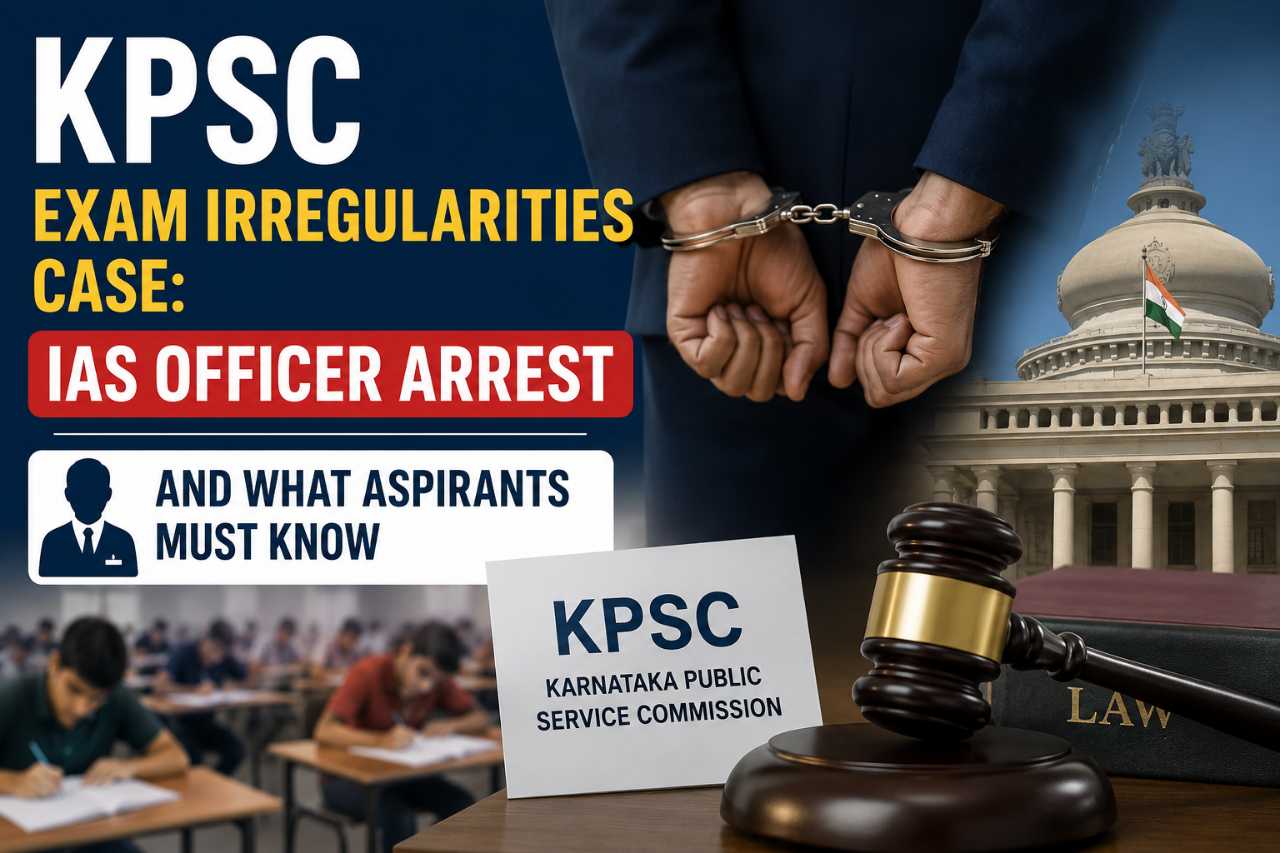

When a state public service commission faces allegations of exam malpractice, thousands of sincere aspirants worry about fairness, merit, and the value of years spent in preparation. In August 2026, Karnataka's competitive recruitment landscape was shaken again as the Criminal Investigation Department (CID) arrested IAS officer Gyanendra Kumar Gangwar in connection with alleged irregularities in a Karnataka Public Service Commission (KPSC) veterinary officers recruitment examination. The case has drawn national attention because it involves a senior civil servant who once held the sensitive post of Controller of Examinations at KPSC.
For students planning careers through government exams, professional courses, or college admissions across India, such controversies are not distant news—they directly affect cut-offs, result credibility, and trust in the selection process. Whether you are a final-year veterinary graduate awaiting appointment, a college student exploring parallel career paths, or a parent guiding someone through competitive exams, understanding how investigation and judicial processes unfold helps you respond calmly and correctly. This article explains what happened in the KPSC case, why exam integrity matters for higher education and public recruitment, and what aspirants can do to prepare wisely while staying alert to official updates.
What Happened in the KPSC Exam Irregularities Case?
According to official sources reported on August 30, 2026, CID officials in Bengaluru arrested Gyanendra Kumar Gangwar, a 2016-batch Indian Administrative Service (IAS) officer, over alleged irregularities linked to a KPSC recruitment examination for veterinary officers. He was produced before a First Additional Chief Judicial Magistrate at the judge's residence and remanded to judicial custody, after which he was taken to Parappana Agrahara prison. The magistrate directed that he be produced before open court on the following Monday, when investigators were expected to seek further custody.
The arrest followed two days of questioning on Friday and Saturday, after Gangwar appeared before the investigating officer in response to a notice. Sources indicated that he was taken into custody partly for allegedly not cooperating with the investigation. The probe focuses on his tenure as KPSC Controller of Examinations from February 2024 to March 2026, including the handling of examination records, OMR answer sheets, and the conduct of other officials connected to the recruitment process.
Key Timeline at a Glance
| Phase | Development |
|---|---|
| February 2024 – March 2026 | Gangwar serves as KPSC Controller of Examinations |
| Pre-August 2026 | Enforcement Directorate conducts searches linked to alleged KPSC irregularities |
| Friday–Saturday (before arrest) | CID questions Gangwar after he responds to notice |
| August 30, 2026 | CID arrests Gangwar; judicial remand and prison transfer |
| Following Monday | CID likely to seek custody in open court |
Who Is Gyanendra Kumar Gangwar?
Gyanendra Kumar Gangwar is a 2016-batch IAS officer who, at the time of reporting, held the post of Director of Micro, Small and Medium Enterprises (MSME) in Karnataka's Department of Industries and Commerce. Before that assignment, he occupied one of the most consequential roles in any recruitment body: Controller of Examinations at KPSC.
That position places an officer at the centre of question paper security, candidate verification, OMR processing, result compilation, and record maintenance. When investigations examine whether examination records were handled properly, the Controller's tenure becomes a natural focal point. The current case should be understood as an ongoing criminal probe; final guilt or innocence will be determined only through due legal process.
Civil servants in examination roles are expected to maintain strict neutrality because even the perception of bias can undermine public confidence. Across India, when senior officials linked to exam bodies face investigation, commissions often appoint interim controllers and issue public reassurances to stabilise ongoing and upcoming recruitment calendars.
Why the Case Triggered a Public Controversy
Beyond the arrest itself, the episode became politically and publicly sensitive because of questions around the officer's whereabouts before he appeared for questioning. Reports noted that Enforcement Directorate searches in connection with alleged KPSC irregularities had recently intensified scrutiny. Karnataka Home Minister Priyank Kharge subsequently stated that Gangwar had informed him he had travelled to his native place in Uttar Pradesh citing a family emergency related to his father's health.
Such developments fuel public anxiety when competitive exams affect livelihoods, seniority lists, and years of aspirant effort. Veterinary officer posts under KPSC attract candidates with specialised degrees in animal sciences and related fields—many of whom invest in coaching, relocation, and repeated attempts much like candidates preparing for broader entrance tests such as the NIFT Entrance Exam or state-level professional recruitments.
Separate CID and ED Investigations
Official sources clarified that the CID and the Enforcement Directorate (ED) are conducting separate investigations into alleged KPSC-related irregularities. The ED's financial probe and the CID's criminal inquiry may overlap in subject matter—examination records, possible misconduct by officials, and linked entities—but they operate under different legal frameworks. For students and job seekers, the practical takeaway is that multiple agencies reviewing the same examination cycle can delay final appointments and may lead to re-verification or legal challenges against select lists.
Understanding KPSC and State-Level Competitive Exams
The Karnataka Public Service Commission conducts recruitment for Group A, Group B, and other state services through written examinations, interviews, and document verification. KPSC notifications cover posts ranging from administrative roles to specialised technical positions such as veterinary officers, assistant engineers, and lecturers. These exams sit alongside national pathways—UPSC Civil Services, SSC, banking, and university admissions—as pillars of public-sector career planning in India.
State PSC exams differ from college entrance tests in structure but share the same expectation: transparent merit-based selection. When irregularities are alleged, affected batches may face delayed joining dates, re-counting of OMR sheets, court-ordered stays on appointment orders, fresh examinations in extreme cases, and long-term reputational damage to the commission's credibility.
How KPSC Recruitment Usually Works
A typical KPSC cycle begins with a gazette notification specifying vacancies, reservation rules, and examination scheme. Candidates apply online, download admit cards, appear for preliminary or single-stage written tests, and proceed to mains or interviews depending on the post. Document verification confirms degrees, caste certificates, and local status. Final select lists are published with cut-off marks and category-wise ranks. Any break in this chain—especially around OMR evaluation or record storage—can become the subject of forensic audit during criminal probes.
Exam Integrity and the Broader Indian Education Ecosystem
India's higher education and recruitment ecosystem has witnessed several high-profile integrity debates in recent years—from national medical entrance processes to state teacher eligibility tests and public service commissions in multiple states. Each case reinforces a simple principle for aspirants: your preparation matters, but so does the institutional framework that evaluates you.
Students entering degree programmes at institutions such as IES University or other colleges often parallel-track government exam preparation. Design, management, engineering, and professional courses build skills, while PSC and UPSC routes offer administrative and technical government careers. When a state commission faces a scandal, college students nearing graduation—especially in veterinary science, agriculture, and allied disciplines—should monitor official KPSC portals rather than rely on social media rumours.
What "Irregularities" Typically Means in Recruitment Probes
Investigators in exam-related cases commonly examine several categories of alleged misconduct. Understanding these categories helps aspirants recognise why probes take time and why commissions cannot always publish instant clarifications while evidence is being secured:
- Record tampering: Missing, altered, or improperly stored OMR sheets and attendance registers
- Process violations: Deviations from notified syllabus, marking schemes, or evaluation timelines
- Unauthorized access: Individuals handling confidential material without proper authorization logs
- Financial links: Payments or assets that may connect officials to external beneficiaries—often pursued by agencies like the ED
- Non-cooperation: Failure to assist lawful investigation, which can itself become grounds for custody in ongoing probes
In the KPSC veterinary officers matter, sources specifically mentioned examination records and OMR sheets, signalling that document custody and evaluation integrity are central to the CID inquiry.
Impact on Aspirants: What You Should Know
If you are preparing for KPSC or any state recruitment examination, news of arrests and investigations can feel discouraging. However, experience from past controversies across Indian states suggests a consistent pattern: courts and commissions eventually clarify which results stand, which candidates must re-appear, and which appointments are valid. Until then, anxiety is normal—but panic-driven decisions rarely help.
Actionable Tips for Current and Future KPSC Candidates
- Rely on kpsc.kar.nic.in for notifications, corrigenda, and result updates—not forwarded WhatsApp messages.
- Preserve your admit card, application copy, and scorecard in digital and physical form for any future verification.
- Track cause-list updates if you are among candidates already selected in a contested examination cycle.
- Continue skill-building through internships, postgraduate options, or allied exams rather than pausing your career entirely.
- Understand RTI and grievance channels if you have evidence of procedural unfairness in your specific case—without substituting legal advice from qualified professionals.
- Compare state PSC calendars with other exams you may be eligible for, so one delayed process does not block all opportunities.
Emotional and Career Planning During Uncertainty
Long investigations can stretch across semesters and graduation cycles. Counsellors recommend maintaining structured study hours while setting contingency plans—short-term internships in veterinary hospitals, dairy units, or agri-startups keep résumés active. Peer support groups are useful, but verify every claim about "leaked" re-results or guaranteed reinstatements. Ethical preparation remains the only sustainable strategy; shortcuts promoted during scandal periods often lead to disqualification in unrelated exams as well.
Legal Process After Arrest: What Happens Next
After Gangwar's arrest, he was remanded to judicial custody—a standard step when investigators seek time to file detailed reports or request police custody for further questioning. The magistrate's direction to produce him in open court allows the CID to formally apply for custody if required under the Code of Criminal Procedure.
Media reports at this stage describe allegations and investigative steps, not convictions. The officer retains the right to legal defence, and any findings about examination irregularities must survive scrutiny in court. For educational publishers and career counsellors, responsible communication means distinguishing confirmed judicial outcomes from interim investigative actions.
Possible Outcomes for the Examination Cycle
While each case is unique, historical precedents in Indian recruitment controversies suggest several potential outcomes: partial re-evaluation of OMR bundles, appointment stays until clearance, fresh interviews for shortlisted candidates, or—in the most severe findings—a court-directed re-examination. Karnataka's government may also face administrative reviews of how IAS officers are posted to examination cells and whether technical staff should retain longer tenures for institutional memory.
Lessons for Students, Colleges, and Career Counsellors
Colleges and coaching ecosystems across Karnataka and India play an indirect role in how aspirants interpret such news. Faculty and counsellors should emphasise ethical preparation, official source literacy, and mental health support when long-running cases create uncertainty. Institutions that promote transparency in their own internal assessments—fair grading, secure exam halls, documented re-evaluation policies—model the accountability that public commissions are expected to uphold.
From an E-E-A-T (Experience, Expertise, Authoritativeness, Trustworthiness) perspective, trustworthy education content on competitive exams should cite primary official sources where possible, update articles when court or commission orders change the facts, avoid sensational claims about guilt before verdicts, provide practical guidance for affected aspirants, and connect news events to broader exam-preparation literacy.
How State Exam Scandals Shape Policy and Reform
Repeated integrity concerns in public examinations have pushed demand for technology-led reforms: encrypted question delivery, blockchain-anchored result logs, independent audit firms, CCTV-monitored packing of OMR bundles, and faster public disclosure of evaluation statistics. Karnataka, like other states, may face renewed calls for structural separation between administrative postings of IAS officers and long-term technical oversight of examination cells.
For veterinary and animal husbandry graduates—the direct stakeholder group in this recruitment—the scandal underscores why diversification matters. Parallel eligibility for roles in dairy cooperatives, private agri-business, research institutes, and higher studies keeps career momentum even when one examination cycle is disputed. Graduates who also explore design, management, or interdisciplinary programmes through entrances like NIFT or university pathways diversify risk without abandoning public service ambitions.
Comparing National and State Exam Governance
UPSC and major national bodies often receive greater media scrutiny and established audit traditions, yet state commissions handle larger volumes of regional posts and therefore affect local employment at massive scale. Aspirants sometimes underestimate how consequential KPSC selections are for district-level administration, healthcare delivery through veterinary services, and agricultural extension. When governance falters at the state level, the damage is felt in taluk offices and village livestock care—not only in headline news.
Parents and students choosing undergraduate programmes should therefore treat state PSC pathways with the same seriousness as national entrances. Faculty at colleges—including private universities—can invite legal literacy sessions on recruitment rules, helping final-year students understand select lists, provisional appointments, and seniority rules before they invest emotionally in a single result sheet. Career guidance cells should also maintain updated lists of alternate exams and fellowships so that news-driven panic does not derail long-term planning for entire graduating batches.
Red Flags and Safe Practices for Competitive Exam Aspirants
Exam controversies often give rise to misinformation markets—touts claiming insider access to "corrected" merit lists, middlemen offering appointment letters, or Telegram channels selling fake answer keys. Karnataka PSC aspirants should treat every such offer as a fraud risk. Legitimate commissions never sell ranks or guarantee selection through unofficial payments. If you encounter extortion attempts linked to any recruitment cycle under investigation, document communication and report it to local cybercrime or commission grievance cells.
Safe practices extend to how you prepare. Reputed coaching can accelerate learning, but centres that promise "guaranteed selection" through opaque contacts undermine the very merit system you are trying to enter. Instead, invest in syllabus-aligned study material, timed mock tests, and physical or mental wellness routines that sustain multi-year preparation. Students at universities who balance semester exams with PSC preparation should align optional subjects and project work with Karnataka-specific general studies topics where possible—agriculture, governance, and regional history frequently appear across KPSC papers.
Finally, build a personal evidence folder for every application: screenshots of successful fee payment, email confirmations, hall ticket PDFs with download timestamps, and official result printouts. In contested cycles, this folder becomes your first line of defence if your name is omitted during re-verification. Transparency begins with how candidates manage their own records, even when institutions under scrutiny fail to meet public expectations.
Conclusion
The arrest of IAS officer Gyanendra Kumar Gangwar in the KPSC exam irregularities case marks a serious moment for Karnataka's public recruitment system. With the CID examining his tenure as Controller of Examinations and parallel ED scrutiny of related allegations, the veterinary officers recruitment examination sits under a cloud until courts and commissions issue clear directions. For India's vast community of exam aspirants—from state PSC candidates to students juggling college degrees and entrances like NIFT—the episode is a reminder that merit only truly wins when examination institutions remain transparent, accountable, and legally sound.
Stay informed through official channels, document your own exam journey meticulously, and treat news developments as signals to verify—not to abandon your goals. Integrity crises can slow hiring, but they also often lead to reforms that protect the next generation of candidates. Prepared, patient, and ethically grounded aspirants remain the backbone of India's public service, regardless of temporary storms around any single examination cycle. Your diligence today builds the credible public workforce India needs tomorrow.