India's medical admissions landscape is set for one of its biggest shifts in more than a decade. The National Testing Agency (NTA) has confirmed that NEET UG 2027 will be conducted in Computer Based Test (CBT) mode, replacing the traditional pen-and-paper format that lakhs of students have followed since the exam was introduced in 2013. To make this transition possible, NTA has reached out to the All India Council for Technical Education (AICTE) to help identify government colleges with reliable IT infrastructure that can host exam centres nationwide.
This reform comes in the wake of the NEET UG 2026 paper leak, which forced the cancellation of the May 3 exam and a re-examination on June 21, 2026. For the more than 20 lakh candidates who appear for NEET UG each year, the change is not just administrative it will reshape how they prepare, practise, and sit for India's gateway to MBBS, BDS, AYUSH, and other health-science programmes. This guide explains why the shift is happening, what infrastructure is needed, how it affects aspirants, and what you should do right now to stay ahead.
Why NEET UG Is Moving to Computer Based Test Mode in 2027
The decision to adopt CBT for NEET UG did not emerge overnight. It followed intense public scrutiny after the 2026 edition was disrupted by a confirmed paper leak. The original examination held on May 3, 2026, was cancelled on May 12, 2026, and a fresh test was conducted on June 21, 2026, for affected candidates. That episode exposed the vulnerabilities of physical question-paper handling, transport, and storage at a national scale.
Computer based delivery addresses several of these weaknesses at once:
- Digital question delivery: Papers can be transmitted to centres in encrypted form close to exam time, reducing the window for unauthorised access.
- Unique or shuffled item sets: Candidates may receive different question sequences or sets, making large-scale copying harder.
- Real-time monitoring: Standard Testing Centres (STCs) can be equipped with CCTV and server-side audit trails.
- Faster result processing: Machine-scored responses can shorten evaluation timelines compared with OMR sheet scanning at massive volume.
For policymakers, CBT also aligns NEET UG with other national assessments that already use on-screen testing. While NEET PG and several engineering and design entrances have experimented with digital formats, NEET UG's full CBT rollout in 2027 will be unprecedented for Indian medical admissions a milestone given the exam's scale and stakes.
What Triggered the 2026 Controversy?
The 2026 leak reinforced a long-standing concern: when an exam determines access to government and private medical seats worth thousands of crores in fee revenue and career outcomes, even a single breach can affect lakhs of families. Parents, coaching centres, and state governments demanded stronger safeguards. The Centre's response announcing a complete switch to CBT from 2027 signals that integrity reforms are now treated as non-negotiable for high-stakes tests.
NTA's Partnership with AICTE for CBT Exam Centres
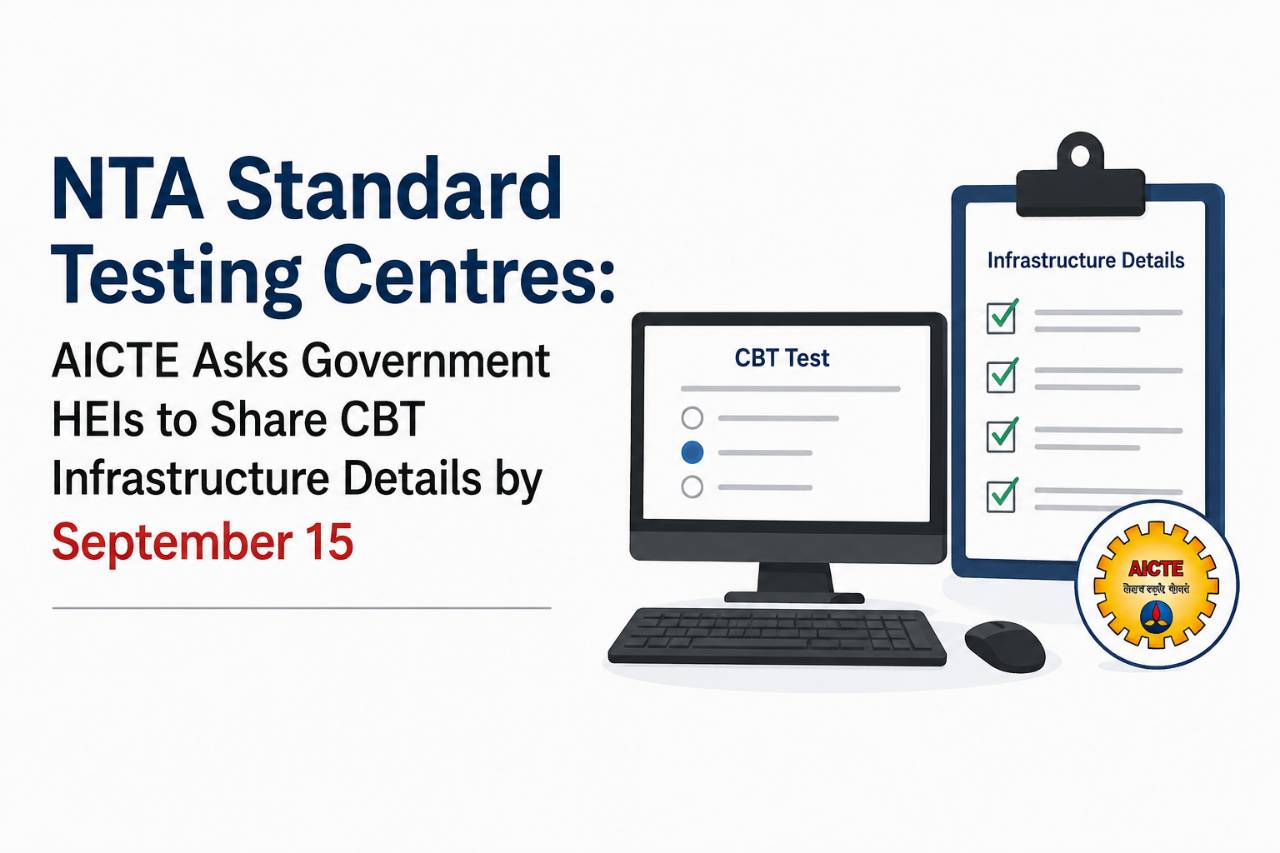
On September 4, 2026, NTA formally wrote to AICTE requesting support in mapping potential CBT centres across India. Rather than relying on ad hoc private vendors, NTA wants to use AICTE-approved government institutions as the primary pool for Standard Testing Centres.
This approach makes practical sense. Government engineering and technical colleges often already maintain computer labs, LAN networks, power backup, and campus security systems assets that private test agencies would otherwise need to build from scratch. AICTE has asked its approved government colleges to submit detailed campus data so NTA can shortlist venues that meet strict quality benchmarks.
Who Can Host NEET UG 2027 CBT Centres?
NTA has been explicit on a critical policy point: CBT centres will not be outsourced to small private players. Only government colleges vetted through AICTE's database and NTA's technical assessment will be considered. A senior NTA official cited quality control as the main reason government technical campuses typically offer standardized lab environments, established administrative oversight, and existing compliance with public-institution norms.
Institutions such as the Modern institute of Technology and Research Centre Kota represent the kind of AICTE-linked campus infrastructure that policymakers want to leverage at scale. Similar government colleges in tier-2 and tier-3 cities may become crucial for ensuring geographic equity so that rural and semi-urban aspirants are not forced to travel hundreds of kilometres solely because CBT labs exist only in metros.
Infrastructure Requirements for NEET UG CBT Centres
Not every college with a computer lab qualifies as an STC. NTA will evaluate campuses on multiple parameters before inclusion in the final centre list published in the NEET UG 2027 information bulletin.
Key Technical and Security Parameters
AICTE has asked institutions to report the following details:
- Number of functional computers available on campus during the exam window
- Quality of IT hardware processor speed, RAM, monitor resolution, and input devices
- Networking facilities and stable broadband connectivity with redundancy
- Power backup systems such as UPS units and generators for uninterrupted testing
- CCTV coverage and physical security arrangements in lab blocks
- Vacant or underutilised space that can accommodate large batches with proper seating density
Colleges offering programmes in BTech Computer Science and Engineering, Computer Applications, and related fields often maintain the deepest lab resources, though any government campus meeting NTA thresholds may qualify regardless of specialisation.
Why Infrastructure Mapping Matters for Aspirants
Centre capacity directly affects how many students can be accommodated per shift and how far candidates may need to travel. Early AICTE mapping allows NTA to identify gaps such as insufficient labs in northeastern states or hill districts and address them before registration opens. Students should monitor whether local government engineering colleges near their hometown appear on preliminary lists, as centre familiarity can reduce exam-day stress.
NEET UG 2026 to 2027 Timeline: Key Dates and Milestones
Understanding the transition timeline helps aspirants plan preparation and avoid confusion between the last pen-and-paper cycle and the first CBT edition.
| Date / Period | Event |
|---|---|
| May 3, 2026 | Original NEET UG 2026 pen-and-paper exam conducted |
| May 12, 2026 | NTA cancelled the May 3 examination due to paper leak |
| June 21, 2026 | Re-examination held for affected candidates |
| September 4, 2026 | NTA writes to AICTE for CBT centre mapping |
| 2026–27 (expected) | AICTE colleges submit infrastructure data; NTA shortlists STCs |
| Late 2026 / early 2027 | NEET UG 2027 information bulletin expected to confirm CBT pattern and centres |
| 2027 | First fully computer based NEET UG examination |
Candidates currently in Class 11 or 12 should treat 2026 as the final pen-and-paper reference year while aligning mock-test habits with CBT from the start of their 2027 preparation cycle.
How CBT Will Change the NEET UG Exam Experience
Moving from OMR sheets to screens changes more than the medium. It affects pacing, reading habits, rough-work strategy, and stress management. Students accustomed to circling options on paper must adapt to mouse clicks or keyboard shortcuts, scrolling lengthy Biology passages, and managing an on-screen timer visible throughout the session.
Subject-Wise Adjustments for Physics, Chemistry, and Biology
Physics and Chemistry: Numerical problems may require switching between the question pane and any built-in calculator or rough-note area. Practise reading diagrams on screen without the ability to mark up printed figures freely.
Biology: Long NCERT-based paragraphs can feel more tiring on monitors. Train your eyes for sustained screen reading and use highlight or flag features if the CBT interface provides them NTA's final interface specifications will appear in the official bulletin.
Time management: On paper, students often flip back and forth across sections. In CBT, navigation depends on the software's section tabs or question palette. Learn to mark questions for review and avoid excessive jumping, which wastes seconds at scale.
Comparing NEET UG CBT With Other Entrance Exams
Several national and private entrances already use computer based formats. Familiarity with timed online mocks used for exams like the NIFT Entrance Exam or the Amity Entrance Test can give aspirants a head start, though NEET UG's three-hour PCB structure and medical focus remain unique. The lesson from other CBT exams is consistent: students who practise in the same format as the final test report lower anxiety and fewer technical errors on exam day.
Security Improvements Under the CBT Format
Security is the primary driver behind NEET UG's digital transition. Understanding the safeguards helps parents and students trust the process and focus on preparation rather than rumour-driven panic.
- Encrypted delivery: Question banks reach centres through secure channels rather than physical bundles transported days in advance.
- Server-side controls: Exam administrators can monitor session integrity, detect abnormal patterns, and disable compromised terminals if needed.
- CCTV-enabled STCs: Live and recorded surveillance at government campuses adds a layer of accountability.
- Standardised centre selection: Using AICTE-vetted government colleges reduces reliance on loosely regulated third-party operators.
Research-oriented institutions such as the Regional Centre for Biotechnology and health-science universities like Dr NTR University of Health Sciences Vijaywada illustrate how regulated academic environments maintain protocol-driven operations qualities NTA appears to prioritise when selecting STCs.
Will CBT Eliminate Leaks Completely?
No system is foolproof, but digital delivery closes the most exploited gaps in pen-and-paper logistics. Combined with legal action against leak networks and faster incident response, CBT represents a meaningful upgrade. Students should still rely only on official NTA communications at neet.nta.nic.in rather than social media claims about paper sets or hacks.
Impact on Medical Aspirants Across India
NEET UG is India's largest medical entrance examination, with more than 20 lakh registrations annually. A CBT rollout at this scale affects urban and rural candidates differently, and awareness of those differences matters for equitable preparation.
Urban vs Rural Considerations
Urban students often have greater exposure to computers through school labs, coaching institute terminals, and home devices. Rural aspirants may have limited screen time, making structured CBT mock tests even more important. Government initiatives to expand digital access in schools will play a supporting role, but individual practice remains the fastest lever students control.
Coaching Institutes and Schools
Major coaching hubs from Kota to Delhi to Hyderabad are expected to roll out CBT-style mock test series, dedicated computer lab batches, and orientation sessions on interface navigation. School teachers can support NEET aspirants by integrating short online quizzes into Physics, Chemistry, and Biology revision so that screen-based assessment feels routine rather than unfamiliar.
Connection to Medical and Allied Career Pathways
NEET UG remains the primary route into MBBS and BDS seats, while allied fields continue to draw interest from health-science ecosystems. Nursing and AYUSH training centres such as those represented by campuses like Dhanwantri Ayurved Nursing Training Centre Sikar and Aditi Vikas Ayurved Nursing Training Centre Sikar remind us that the NEET ecosystem feeds a broad pipeline of healthcare careers beyond core medical degrees. A smoother, more secure entrance exam benefits the entire sector by ensuring merit-based selection.
Pen-and-Paper vs CBT: Quick Comparison for NEET UG Aspirants
| Aspect | Pen-and-Paper (until 2026) | Computer Based Test (from 2027) |
|---|---|---|
| Answer marking | Shade OMR bubbles with pen/pencil | Click options or use keyboard shortcuts |
| Question paper | Physical booklet | On-screen display with navigation panel |
| Rough work | Free space in booklet or separate sheets | May be limited to on-screen scratch pad or provided sheets confirm in bulletin |
| Leak risk profile | Higher due to physical paper chain | Lower with encrypted digital delivery |
| Centre type | Schools, colleges, varied vendors | AICTE-approved government colleges as STCs |
| Practice need | OMR timed tests | Regular CBT mocks on desktop/laptop |
Building Basic Computer Skills for NEET UG 2027
Medical aspirants do not need advanced programming knowledge to succeed in NEET CBT. However, comfort with everyday computer operations is now part of exam readiness. Students exploring foundational digital literacy through programmes like Bachelor of Computer Application (BCA) or related courses often gain confidence with interfaces quickly but NEET candidates can build sufficient skills through focused practice alone.
Essential skills include:
- Using a mouse or touchpad accurately under time pressure
- Scrolling through long passages without losing place
- Resizing or zooming text if the interface allows accessibility options
- Operating an on-screen calculator efficiently for Physics and Chemistry numericals
- Following login instructions, identity verification steps, and session rules at the centre
Even candidates pursuing diverse undergraduate paths from BA programmes to technical diplomas benefit from treating digital test fluency as a transferable life skill in an increasingly computer-mediated education system.
What to Watch for in Official NEET UG 2027 Notifications
Until NTA releases the information bulletin, some details remain subject to confirmation. Stay alert for announcements regarding:
- Final confirmation of full CBT mode and any hybrid exceptions
- Number of shifts, exam duration, and section-wise structure
- Official list of Standard Testing Centres by city and state
- Interface demo or practice login portal from NTA
- Revised instructions for persons with disabilities and assistive technologies
- Registration dates, fee structure, and document requirements
Bookmark the official NEET portal and verify any viral WhatsApp or Telegram claims against NTA's website before reacting.
State-Wise Counselling and Admission After NEET UG CBT
Regardless of whether NEET UG is pen-and-paper or computer based, the post-exam journey results, rank cards, All India Quota counselling through the Medical Counselling Committee (MCC), and state-level seat allotment follows established procedures. CBT may speed up result compilation, potentially shortening the gap between examination day and counselling registration, though exact timelines will be confirmed by NTA each year.
Aspirants should continue tracking domicile rules, category certificates, and state merit lists alongside format changes. Institutions ranging from premier medical colleges to specialised health-science campuses continue to admit through NEET scores. Keeping your documents organised Class 10 and 12 marksheets, category certificates, passport photographs, and identity proof ensures you can move quickly once results are declared, without being distracted by the novelty of the CBT interface.
Tips for Parents Supporting CBT Preparation
Parents play a quiet but important role in this transition. Arrange reliable computer access or affordable CBT mock packages if home devices are limited. Encourage healthy screen-time habits adequate sleep, regular breaks, and outdoor activity to prevent fatigue that hurts both board exams and NEET preparation. Avoid amplifying leak rumours or unofficial paper claims on family WhatsApp groups; instead, direct students toward verified NTA updates and structured study routines.
Conclusion
The shift of NEET UG to Computer Based Test mode in 2027 marks a defining reform in Indian medical admissions. Driven by the need to protect exam integrity after the 2026 paper leak, NTA's collaboration with AICTE to map government college infrastructure reflects a careful, quality-first approach to centre selection rather than a rushed privatisation of testing venues. For the more than 20 lakh aspirants who dream of white coats and stethoscopes, the change demands early adaptation: regular CBT mocks, basic computer comfort, and close tracking of official notifications.
The pen-and-paper era served NEET UG for over a decade, but digital delivery offers stronger safeguards and modern assessment standards suited to an exam of this magnitude. Students who begin CBT-oriented preparation now while continuing deep focus on NCERT concepts and timed problem solving will enter the 2027 examination hall with confidence rather than uncertainty. Watch neet.nta.nic.in, leverage credible mock platforms, and treat every official update as part of your study plan. The format is changing; your commitment to merit and preparation remains the constant that carries you toward medical college admission.