Foreign universities setting up campuses in India have moved from policy headlines to real admission cycles. Among them, University of Southampton Delhi stands out as one of the earliest and most closely watched entrants. Licensed by the university Grants Commission (UGC) under the National Education Policy (NEP) 2020 framework, the campus began operations in July 2025 at Gurugram International Tech Park in Haryana and is preparing for its second intake in August 2026.
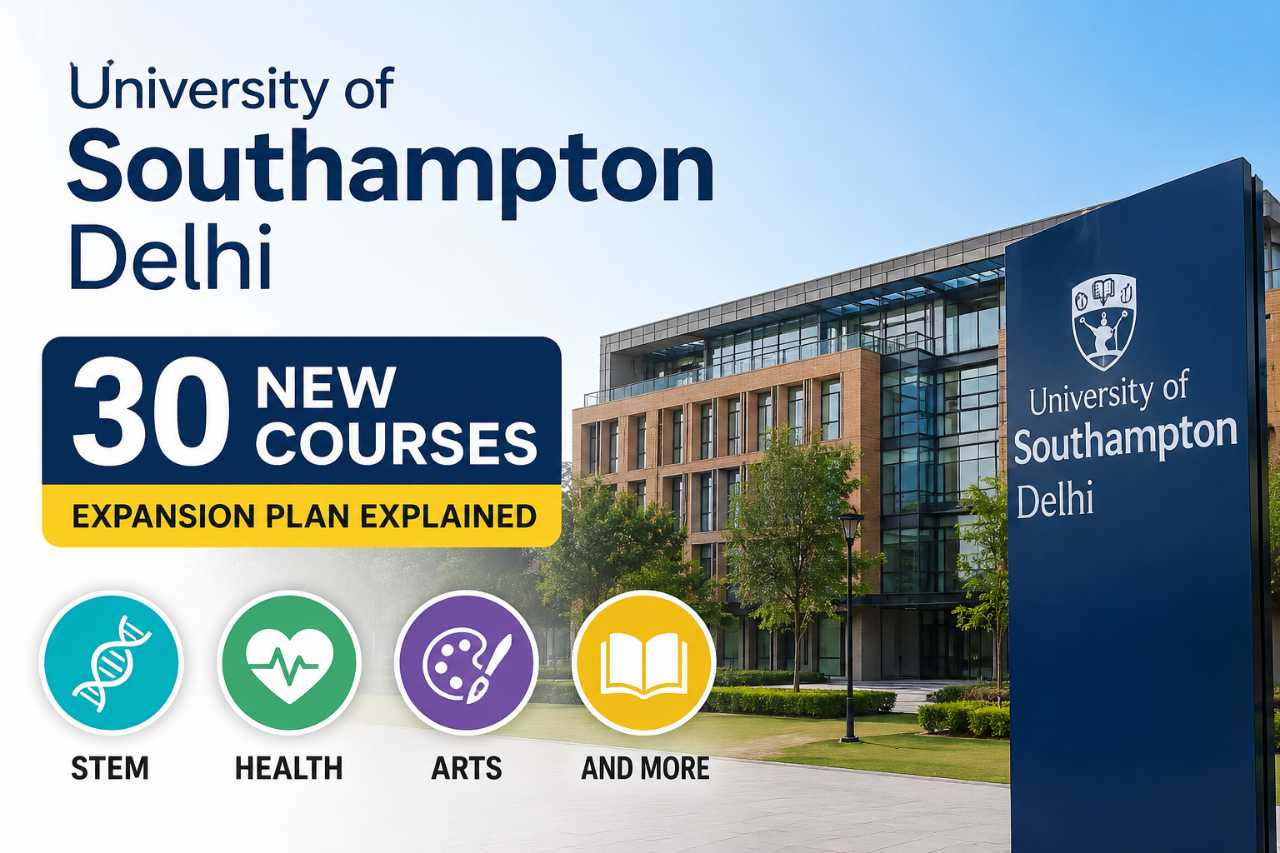
In a recent interview with Careers360, Academic Provost Eloise Phillips outlined an ambitious roadmap: the Delhi campus intends to develop more than 30 programmes over the next decade, expanding beyond its initial business and computing portfolio into STEM, health sciences, arts, law, engineering, AI, data science, and psychology. For students comparing options across Delhi-NCR — from established institutions like the University of Delhi to specialised hubs such as Netaji Subhas University of Technology (NSUT) Delhi — Southampton Delhi offers a distinctly international degree pathway without leaving India.
This article breaks down what the expansion means, who should consider applying, how fees and scholarships compare with local alternatives, and what employability support looks like on the ground.
Why university of Southampton Delhi Matters for Indian Higher Education
India's higher education landscape is undergoing structural change. NEP 2020 opened the door for top-ranked foreign universities to establish branch campuses, aiming to reduce outbound student mobility, improve quality benchmarks, and create globally aligned talent within the country. Southampton became among the first UK universities to receive UGC approval, and its Delhi campus is positioned as India's first foreign campus linked to a global top-100 institution.
That distinction matters for three groups of students:
- Students seeking a UK-standard degree locally who want the same curriculum, assessment rigour, and degree credential as peers in Southampton, UK.
- Career-focused learners in Delhi-NCR who value proximity to corporate hubs in Gurugram and New Delhi for internships and industry projects.
- Students exploring niche or emerging fields — such as creative computing, data science, or future health programmes — who may not find identical offerings at every public university nearby.
Unlike a simple twinning or exchange arrangement, this is a full campus model with dedicated faculty, governance structures, and quality assurance aligned with the parent university. That makes it closer in spirit to international branch campuses in business hubs than to short-term study-abroad partnerships.
Campus Location: Why Gurugram Was Chosen
Location is not a minor detail for foreign campuses in India. Southampton chose Gurugram deliberately because of its proximity to multinational companies, start-ups, and innovation clusters within Gurugram International Tech Park. Students study inside an active business ecosystem rather than a distant suburban academic zone.
Industry Access and Student Experience
According to campus leadership, the Tech Park setting supports guest lectures, collaborative projects, internships, and employer engagement throughout the year. Being close to New Delhi also provides access to regulators, conferences, and national policy events — useful for students in law, public policy, economics, and management programmes.
For context, Delhi-NCR already hosts strong technical and professional institutions. Students often cross-compare Southampton Delhi with Delhi Technological University (DTU), Indira Gandhi Delhi Technical University for Women, and international-facing universities such as South Asian University New Delhi. Southampton's edge lies less in low fees and more in global degree parity, UK pedagogical methods, and structured industry immersion from year one.
Campus Infrastructure Highlights
The Delhi campus has been designed for interactive, technology-enabled learning. Key facilities include:
- Large lecture theatres and seminar rooms with adjacent breakout spaces for group work
- A library modelled on the Southampton UK campus experience
- Quiet study zones, social seating areas, and recreational spaces within the Tech Park
- Access to sporting and fitness facilities available in the broader Tech Park environment
- A Business Technology Hub for industry engagement and collaborative projects
Student life is still evolving — clubs and societies around dance, books, finance, and other interests have already formed in the inaugural batch — but the physical infrastructure reflects Southampton's emphasis on flipped classrooms, collaborative learning, and holistic development rather than passive lecture-only delivery.
Current Programmes and the 30-Course Expansion Roadmap
Southampton Delhi launched with six programmes in its first year: four undergraduate degrees and two postgraduate degrees. The first intake in August 2025 enrolled roughly 120 students across all programmes, with about 60% from Delhi-NCR and 40% from other states including Bengaluru, Hyderabad, Mumbai, and the Northeast.
Programmes Running in 2025–26
- BSc Computer Science
- BSc Business Management
- BSc Accounting and Finance
- BSc Economics
- MSc International Management (one-year full-time)
- MSc Finance (one-year full-time)
Undergraduate degrees follow the standard UK three-year model. Postgraduate programmes are one-year, full-time degrees with a two-semester academic calendar. The inaugural postgraduate cohort is expected to submit dissertations by August 2026.
New and Planned Programmes for 2026 and Beyond
The campus is adding several programmes for the August 2026 intake, including:
- BSc Computing and Software Engineering
- BSc Creative Computing — blending coding with creative disciplines such as design and performing arts
- MSc Economics
- MSc Data Science
Over the next ten years, leadership plans to introduce more than 30 programmes across multiple sectors. Areas under active exploration include:
- STEM and engineering — aligning with India's demand for advanced manufacturing, software, and deep-tech talent
- Health sciences — a growing priority as India expands medical education, allied health, and trans-disciplinary healthcare models seen at institutions like University College of Medical Sciences (UCMS) Delhi and specialised health universities nationwide
- Arts and creative technology — similar in spirit to dedicated arts universities such as MIT Art Design and Technology University Pune
- Law — potentially competing for attention alongside established schools like National Law University Delhi, but with an international curriculum lens
- AI, psychology, and emerging interdisciplinary fields
Campus leadership has stated a long-term ambition to grow enrollment to around 5,000 students by 2030, with year-on-year intake expansion after a deliberately modest first cohort designed to protect academic quality and student experience.
Academic Standards: UK Parity, Governance, and AI Integration
One of the most common questions Indian students ask about foreign campuses is simple but critical: Is the degree really the same? At Southampton Delhi, leadership emphasises that curriculum design, assessment processes, moderation, and external examining follow the same protocols as the UK campus.
Quality Assurance and Governance
The Delhi campus operates within a layered governance structure that mirrors British university practice. Executive boards at the campus level feed into a joint management board, while the Academic Provost participates in senior UK governance bodies including Senate and international executive boards. This two-way oversight is intended to ensure that curriculum changes in the UK — such as new AI modules — are implemented in India as well.
Key quality markers include:
- Same external examiners across courses that go through UK examination boards
- Identical moderation procedures for student marks
- Efforts to align exam timings with the UK where feasible
- Faculty immersion visits to Southampton and close coordination with UK module leaders and programme directors
Responsible AI in the Curriculum
From September 2026, students joining Southampton Delhi will access an AI module rolled out across the university network. The module focuses on responsible AI — an area where Southampton claims significant research expertise. For computing, business, economics, and future data science students, this integration reflects how global universities are adapting core literacy rather than treating AI as an optional elective.
Localisation Without Compromising Global Benchmarks
While the curriculum structure matches the UK and Malaysia campuses, faculty localise teaching through Indian case studies in technology, sustainability, healthcare, entrepreneurship, and regional business scenarios. This hybrid approach aims to keep global theory intact while making classroom examples relevant to one of the world's fastest-growing economies.
Fees, Scholarships, and Financial Planning for 2026
Foreign campus degrees in India are premium-priced compared with most public universities, but they often undercut the total cost of studying abroad when living expenses, visa costs, and currency differences are included. Transparency around fees and scholarships is essential for families making multi-year financial commitments.
Programme Fee Structure (August 2026 Intake)
| Programme Level | Duration | Approximate Annual / Total Fees |
|---|---|---|
| Undergraduate (UG) | 3 years | Approx. Rs 13 lakh per year |
| Postgraduate (PG) | 1 year | Approx. Rs 16 lakh to Rs 23 lakh (varies by course) |
Students comparing costs should also evaluate outcome value — degree recognition, internship access, alumni networks, and placement support — rather than fees alone. For reference, local alternatives such as Dr B R Ambedkar University Delhi or Delhi Skill and Entrepreneurship University serve different price points and career pathways. Southampton Delhi targets students who prioritise a UK-aligned credential within India.
Scholarships and Bursaries Available
The campus offers multiple funding options, including:
- Delhi Presidential Scholarship — one fully funded scholarship each for one UG and one PG student
- Future Talent Scholarship
- Cambridge Scholarship Award
- Merit Scholarship
- Additional bursaries at varying levels of support
Actionable tip: apply early and prepare separate scholarship essays or financial need documentation where required. Fully funded slots are extremely limited, but partial merit awards can significantly reduce total programme cost for strong academic profiles.
Placements, Employability, and Industry Partnerships
Employability is the make-or-break factor for foreign campuses in India. Several early entrants faced scrutiny over placement outcomes relative to fees charged. Southampton Delhi appears to have front-loaded employability into campus design rather than treating it as a final-year add-on.
Employability Built Into Year One
During the two-week induction, one full week is dedicated to employability and skills development. Throughout the year, all students participate in the "Successful Futures" programme, which includes ongoing industry engagement sessions, skills workshops, and career planning support.
Corporate MoUs and Early Outcomes
The campus has signed Memorandums of Understanding (MoUs) with firms including Deloitte India, Investec, Conviva, Knight Frank, Narayana Health, and Ambit. For the first postgraduate cohort graduating in 2026, a substantial share of students had reportedly secured internships leading to placements or direct job offers before completion — though students should treat early cohort data as indicative rather than guaranteed for every programme.
Student Innovation Placement (SIP)
SIP is a non-credit, certificate-based initiative where companies bring real business problems to student teams. Over four to six weeks, students work on solutions, present to employers, and complete a 500-word reflective assignment under faculty and industry mentorship. This model mirrors a scaled-down version of initiatives at the UK campus and is especially useful for business, finance, economics, and computing students building portfolios before formal placements.
Alumni Mentoring
About 40 students are currently mentored through an official alumni mentoring scheme connecting them with Indian Southampton alumni. For a young campus, alumni bridges help compensate for limited on-campus senior cohort networks.
Faculty Recruitment and the Student Profile
Academic credibility at foreign campuses depends heavily on who teaches. Southampton Delhi reported high application volumes for faculty positions — so much so that managing applicant volume became a operational challenge rather than a shortage problem.
Recruitment follows UK-transparent processes: formal advertising, application forms, CV screening, longlisting and shortlisting against strict criteria, and multi-stage interviews. Faculty are expected to understand UK pedagogical models, especially interactive and flipped-classroom teaching, and many have international experience across the UK, US, Europe, Australia, and Indian higher education systems. Staffing is expected to more than double for the next academic cycle as new programmes launch.
The student community in the first batch reflects national diversity — not merely Delhi-NCR concentration — which improves peer learning and mirrors the multicultural environment Southampton promotes globally.
How Southampton Delhi Compares With Other Delhi-NCR Options
Choosing between Southampton Delhi and established local universities depends on goals, budget, and learning style. The table below offers a simplified comparison framework — not a ranking.
| Factor | University of Southampton Delhi | Typical Public University in Delhi-NCR |
|---|---|---|
| Degree credential | UK university degree with shared quality assurance | Indian university degree (UGC recognised) |
| Fee range | Premium — approx. Rs 13L/year UG | Lower at public institutions; varies widely at private colleges |
| Programme breadth (current) | Focused portfolio expanding gradually | Broad legacy offerings across arts, science, commerce, law, medicine |
| Industry location | Inside Gurugram Tech Park | Varies by campus; some are central, others are spread across NCR |
| Teaching style | UK model — interactive, coursework-heavy | Varies by institution and faculty |
| Best suited for | Students seeking global degree parity in India | Students prioritising low cost, local networks, or specific legacy programmes |
Students interested in pharmaceutical sciences, for example, may still prefer specialised institutions such as Delhi Pharmaceutical Sciences and Research University. Those targeting health sciences at scale may look at dedicated health universities like Maharashtra University of Health Sciences Nashik or Rajiv Gandhi University of Health Sciences Bangalore — though Southampton's future health offerings may appeal to a different segment focused on global health management or trans-disciplinary models.
Who Should Apply — and Who Should Wait
Strong Fit Profiles
- Students who want a UK degree without relocating to the UK for three or four years
- Learners targeting multinational careers in finance, consulting, technology, or analytics
- Students interested in emerging programmes like creative computing or data science at an international standard
- Families willing to invest in premium education with early employability scaffolding
Profiles That Should Compare Carefully
- Students seeking the lowest possible tuition — public universities and state institutions remain far cheaper
- Applicants set on traditional Indian professional degrees (MBBS, BTech through JEE Main state counselling, CLAT for NLUs) where licensure pathways are clearly established
- Students who prefer large, decades-old alumni networks that foreign campuses cannot yet replicate
If you are unsure, map your career goal first, then match the institution. For law aspirants comparing NLU Delhi with a future Southampton law offering, consider bar exam eligibility, curriculum focus, and internship geography before deciding.
Regulatory Context: NEP 2020 and Foreign Universities in India
Southampton's Delhi journey began with detailed engagement with the Ministry of Education and UGC in 2024, covering academic quality assurance, governance, programme design, and student outcomes. The regulatory intent under NEP 2020 is to allow top global universities to operate in India while maintaining standards equivalent to their home campuses.
For students and parents, UGC licensing means the campus operates within India's formal higher education framework rather than as an unregulated private coaching or twinning arrangement. That said, students should still verify latest UGC notifications, programme approvals, and admission brochures before enrolling — especially for newly announced degrees in health, engineering, and law that may roll out in phases.
Key Dates and Application Timeline for August 2026 Intake
As of the latest campus update, applications are open for the August 2026 intake. The academic year follows a two-semester structure. Postgraduate students from the first cohort complete dissertations by late August 2026, while undergraduate students progress into their second year.
Actionable tips for prospective applicants:
- Shortlist programmes based on career outcomes, not just brand name
- Prepare financial plans for the full programme duration, including annual fee escalation buffers
- Apply for scholarships in parallel with admission forms
- Attend campus webinars or open sessions to assess teaching style fit
- Compare employability initiatives — SIP, MoUs, mentoring — against alternatives in your budget range
Conclusion: A Growing Global Campus in India's Education Capital
University of Southampton Delhi represents a significant experiment in Indian higher education — bringing a top-ranked UK university's standards, governance, and degree credentials into one of the country's most dynamic economic corridors. Its first year proved that demand exists for internationally aligned programmes in business, finance, economics, and computing, with a nationally diverse student body and a deliberate focus on employability from day one.
The next decade will define whether the campus fulfils its promise of 30-plus programmes across STEM, health, arts, law, and AI. For August 2026 applicants, new options such as BSc Creative Computing, BSc Computing and Software Engineering, MSc Economics, and MSc Data Science widen the entry points beyond the original six degrees. Fees remain premium, but scholarships and industry-linked learning may justify the investment for students whose goals align with global careers based in India.
As with any young institution, treat early placement statistics and expansion plans as directional signals rather than guarantees. Do your due diligence, compare with established Delhi-NCR universities, and choose based on fit — academic model, budget, career pathway, and learning environment. If those align with what Southampton Delhi offers, the August 2026 intake could be a timely entry into a campus poised for substantial growth.