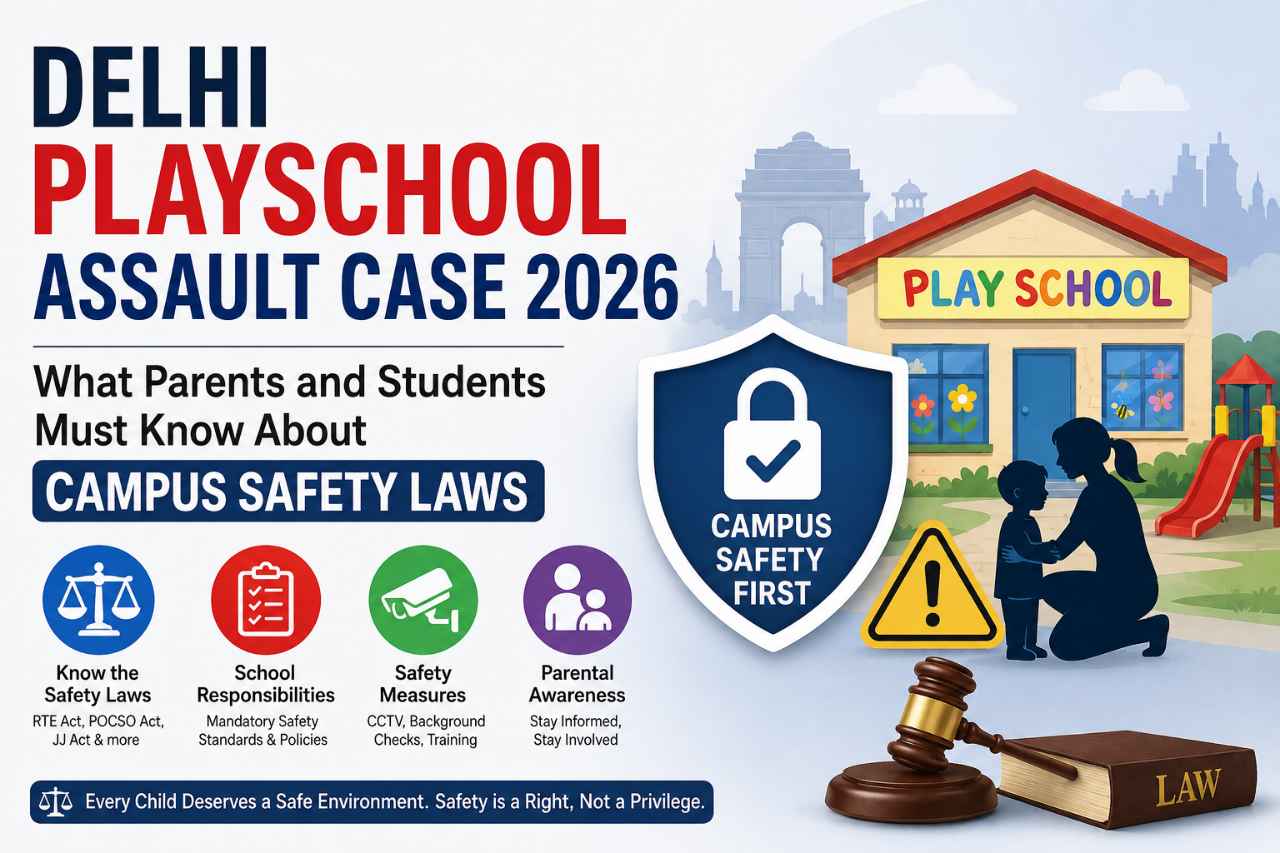
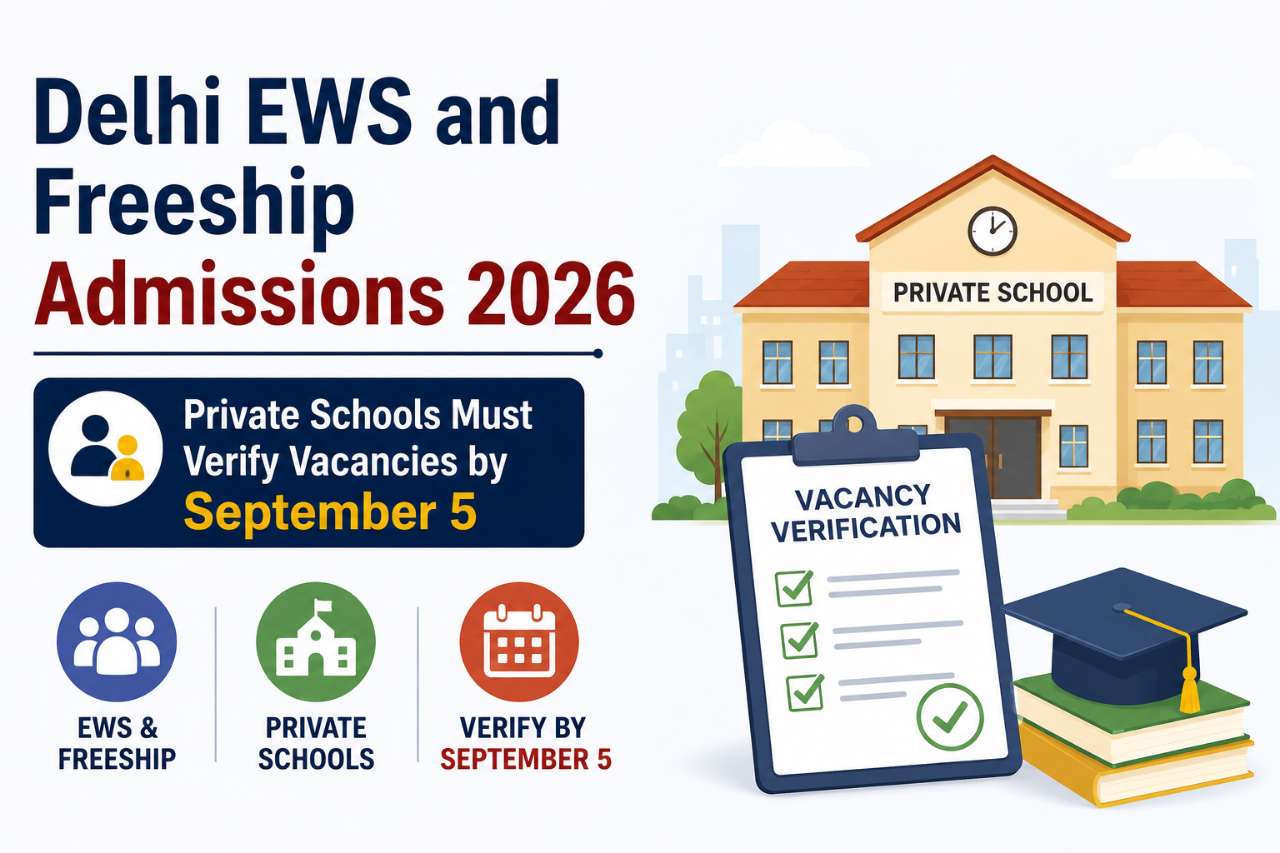

In a significant move to strengthen inclusive education in the national capital, the Delhi government has asked private unaided recognised schools to verify vacancies under the Economically Weaker Section (EWS) and freeship categories from Class 2 onwards. According to a Directorate of Education (DoE) order dated August 27, 2026, schools—except minority institutions—must review vacancy data and report discrepancies to their education zone. District Deputy Directors of Education must examine representations and submit recommended proposals by September 5, 2026.
The directive follows a Delhi High Court observation in the case Justice for All vs Directorate of Education, which held that vacant EWS seats in classes from Class 2 onwards should be filled. For parents seeking quality schooling in Delhi—and eventually pathways to institutions such as St Stephens College Delhi, Hindu College Delhi, or Indian Institute Of Technology Delhi IIT Delhi—understanding this admission cycle is essential. This guide explains the policy, eligibility, timelines, and what families and schools must do next.
What Are EWS and Freeship Seats in Delhi Private Schools?
Delhi's EWS and freeship admission framework is rooted in India's constitutional commitment to equitable access to education. Under Section 12 of the Right to Education (RTE) Act, 2009, private unaided recognised schools must reserve at least 25% of seats at the entry level (typically Nursery or Class 1, depending on the school's entry point) for children from weaker sections and disadvantaged groups. These students receive free and compulsory elementary education, including tuition fee exemption and, in many cases, support for books, uniforms, and other expenses.
EWS Category
The EWS category applies to families whose annual income falls below the threshold notified by the Delhi government—historically around ₹1 lakh per annum for general category applicants, with variations for reserved categories. Applicants must also meet residence requirements within Delhi. Income certificates, proof of residence, and identity documents are typically required during verification.
Freeship Category
The freeship category covers children belonging to disadvantaged groups (DG), including Scheduled Castes, Scheduled Tribes, Other Backward Classes (non-creamy layer where applicable), children with special needs, and other notified groups. Freeship beneficiaries also receive fee waivers and related benefits under the same broad RTE framework.
Extension Beyond Entry Level
While the 25% reservation applies at entry level, Delhi's policy has evolved to address vacant EWS/DG seats in higher classes—from Class 2 onwards—in private unaided recognised schools operating on government-allotted land. When students leave mid-stream or vacancies arise due to withdrawals, these seats are meant to be filled rather than left unused. This is precisely what the August 2026 verification drive addresses.
Key Highlights of the August 2026 Delhi Government Order
The Directorate of Education order dated August 27, 2026, sets out a clear compliance framework for private schools. Here are the main points parents and school administrators should know:
- Verification mandate: All private unaided recognised schools, except minority institutions, must verify EWS and freeship vacancy data from Class 2 onwards.
- Discrepancy reporting: Schools must report any errors in vacancy figures to the concerned education zone within the stipulated timeline (with representations due by Thursday following the order's circulation).
- Deemed acceptance: If a school submits no representation within the deadline, the published vacancy data will be treated as correct and final.
- Computerised draw: Admissions against confirmed vacancies will be conducted through an online computerised draw of lots, similar to the process used for entry-level EWS/DG admissions since 2018.
- No denial on vacancy grounds: Schools selected through the draw cannot refuse admission citing "no vacancy."
- Penalties: Schools that refuse admission may face action under the Delhi School Education Act and Rules, 1973, and the RTE Act, 2009.
- Zone-level review: District Deputy Directors of Education must examine school representations and forward recommended proposals by September 5, 2026.
This order reinforces transparency and closes a long-standing gap where vacant reserved seats in upper primary and middle classes were not always filled promptly—a concern repeatedly raised by advocacy groups and upheld by the Delhi High Court.
Background: From RTE Mandate to Computerised Draws
Understanding the current verification drive requires tracing how Delhi's EWS admission system has developed over the past decade.
RTE Act and the 25% Reservation
The RTE Act, 2009, made inclusive admission a legal obligation for private unaided schools. Delhi implemented this through nursery and entry-level admissions, with the DoE coordinating online applications, document verification, and seat allotment. The system mirrors broader educational equity goals that later extend into higher education through merit- and need-based access at universities and professional colleges across the capital.
2018 Policy: Draw of Lots for Vacant Seats
In 2018, the DoE decided that vacant EWS/DG seats from Class 2 onwards in schools on government land would be filled through a computerised draw of lots after inviting online applications. This replaced ad hoc or opaque school-level processes and aligned vacant-seat filling with the transparent method already used at entry level.
2021-22 Onwards: Online Process for Class 2+ Admissions
Since the 2021-22 academic session, the DoE has conducted an online admission process for EWS/freeship seats from Class 2 onwards in eligible private unaided recognised schools. The August 2026 order is the latest enforcement step to ensure vacancy data accuracy before the draw proceeds.
Delhi High Court Direction
The immediate trigger for intensified action was the Delhi High Court's observation in Justice for All vs Directorate of Education. The court emphasised that vacant EWS seats in classes from Class 2 onwards must be filled—a judicial affirmation that reservation benefits cannot remain on paper while seats sit empty. The DoE's verification order operationalises this judicial guidance.
Who Must Verify Vacancies—and Who Is Exempt?
Not every private school in Delhi falls under this specific verification exercise. Understanding scope helps parents target the right institutions.
Schools Covered
- Private unaided recognised schools running on government-allotted land
- Schools offering classes from Class 2 onwards with potential EWS/DG vacancies
- Institutions participating in the DoE's online EWS/freeship admission portal
Schools Exempt
Minority institutions are exempt from this verification directive. Minority-run schools operate under specific constitutional protections, and RTE reservation rules apply differently to them. Parents seeking admission at minority schools should consult each institution's own admission policy. For comparison, minority and non-minority higher-education pathways in Delhi include diverse options such as Jamia Millia Islamia New Delhi for university-level study and numerous DoE-regulated private schools at the school level.
Timeline: September 2026 Deadlines Explained
Missing a deadline in the EWS admission cycle can mean losing a seat. Here is the timeline based on the August 2026 order:
- August 27, 2026: DoE order issued; vacancy verification process begins.
- Thursday (post-order): Deadline for schools to check vacancy data and submit discrepancy representations to the education zone.
- September 5, 2026: District Deputy Directors of Education must complete examination of representations and submit recommended proposals.
- After verification: Final vacancy lists published; online applications invited; computerised draw conducted; seat allotment and document verification follow.
Parents should monitor the official DoE admission portal (edudel.nic.in) for updated vacancy lists, application windows, and draw results. Dates for application submission are typically announced shortly after vacancy confirmation.
How the Computerised Draw of Lots Works
The computerised draw is designed to eliminate bias, favouritism, and manual errors. Here is how the process generally works for EWS/freeship admissions in Delhi:
- Vacancy publication: After verification, class-wise and school-wise vacant EWS/DG seats are listed online.
- Online application: Parents register on the DoE portal, select preferred schools and classes, and upload required documents.
- Document scrutiny: Submitted applications are verified for eligibility— income, category, residence, and age criteria.
- Randomised draw: A computerised random selection allocates seats among eligible applicants for each school-class combination.
- Seat allotment: Selected candidates receive allotment letters specifying the school, class, and reporting deadline.
- Physical verification and admission: Parents visit the allotted school with original documents. The school must admit the child if documents are genuine and the draw selection is valid.
The same transparency principles underpin entrance processes at Delhi's premier institutions—whether school-level draws or competitive exams leading to colleges such as Miranda House Delhi, Lady Shri Ram College For Women LSR Delhi, or Delhi Technological University DTU.
Eligibility Criteria for EWS and Freeship Admissions
Before applying, families should confirm they meet all criteria. While exact thresholds are notified each year on the DoE portal, the following generally apply:
For EWS Applicants
- Annual family income below the notified Delhi government limit
- Proof of residence in Delhi (Aadhaar, voter ID, ration card, or other accepted documents)
- Child's age appropriate for the class sought (as per DoE age criteria)
- Not already enrolled in the same school in a paid seat for the same class
For Freeship (DG) Applicants
- Valid caste/category certificate or disability certificate as applicable
- Delhi residence proof
- Compliance with age and class requirements
- Income limits may apply for certain sub-categories—check current notification
Documents Commonly Required
- Birth certificate of the child
- Parent/guardian Aadhaar and photograph
- Income certificate (EWS) or category certificate (DG)
- Proof of residence
- Previous report card or transfer certificate (for Class 2 onwards)
Keep scanned copies ready before the application window opens. Incomplete applications are rejected before the draw, regardless of genuine need.
What Parents Should Do: Actionable Tips
If you are a parent hoping to secure an EWS or freeship seat in a Delhi private school from Class 2 onwards, these practical steps can improve your chances:
- Register early on the DoE portal when applications open; do not wait until the last day—servers often slow down near deadlines.
- Apply to multiple schools within distance and preference limits allowed by the portal to maximise allotment probability.
- Double-check income and category certificates for correct spellings, dates, and issuing authority stamps.
- Save allotment and draw result screenshots as evidence if a school delays admission.
- Report refusals immediately to the DoE helpline and your district education office if a school cites "no vacancy" after a valid draw selection.
- Understand the long-term pathway: quality school education in Delhi opens doors to senior secondary boards and later to universities such as Netaji Subhas University Of Technology NSUT Delhi, Indraprastha Institute Of Information Technology Delhi IIIT Delhi, and professional institutes including All India Institute Of Medical Sciences Delhi AIIMS Delhi.
Responsibilities of Private Schools Under the Order
School administrators bear direct compliance obligations under the August 2026 directive:
- Audit internal records to identify actual EWS/DG vacancies class-wise from Class 2 onwards
- Cross-check data against the DoE portal figures and report discrepancies within the deadline
- Cooperate with zone education officers during the review ending September 5
- Participate in the post-draw admission process without unlawful refusal
- Maintain documentation of admitted EWS/DG students for audit purposes
Schools on government-allotted land receive subsidised land benefits precisely because they commit to social inclusion. Failure to honour reserved seats undermines that social contract and exposes institutions to legal penalties.
Penalties for Non-Compliance
The DoE has explicitly warned that schools cannot deny admission to draw-selected candidates on the ground of "no vacancy." Violations may trigger:
- Action under the Delhi School Education Act and Rules, 1973
- Proceedings under the RTE Act, 2009
- Potential fines, recognition scrutiny, or other administrative sanctions
- Contempt or further judicial directions in ongoing public-interest litigation
Parents facing unlawful refusal should file a written complaint with the District Deputy Director of Education and preserve the child's draw allotment letter, application reference number, and any communication from the school.
Where to File Complaints
The Directorate of Education operates district-wise offices across Delhi's education zones—Central, South, East, North, North-West, South-West, West, and New Delhi. Each zone has a Deputy Director who oversees private school compliance. When lodging a complaint, include the child's name, application ID, allotted school, date of draw result, and a brief account of the school's response. The DoE helpline and online grievance redressal channels are listed on edudel.nic.in. Advocacy groups such as those involved in the Justice for All litigation also monitor EWS compliance and can guide parents on next steps if administrative remedies prove slow.
EWS School Admissions and the Path to Higher Education in Delhi
While this policy governs school-level admissions, its impact ripples through Delhi's entire education ecosystem. Students who enter reputable private schools through EWS quotas often pursue Class 12 from the same institution or transfer to government schools, then compete for undergraduate seats through CUET and other entrance routes.
Delhi remains India's largest higher-education hub, home to central universities, state universities, IITs, NITs, medical colleges, and premier liberal arts institutions. A child admitted today through an EWS draw in Class 3 at a South Delhi private school may, twelve years later, aspire to programmes at Kirori Mal College Delhi, Ramjas College Delhi, Gargi College Delhi, or professional courses at Fore School Of Management Delhi and International Management Institute IMI Delhi. Early access to quality schooling—secured through transparent reservation—can be life-changing for economically weaker families.
Women students, in particular, benefit from stable school education before pursuing options at Indraprastha College For Women Delhi, Indira Gandhi Delhi Technical University For Women, or Jesus And Mary College Delhi. The EWS framework at school level complements—not replaces—subsequent scholarships and reserved categories in higher education.
Comparison: Entry-Level vs Class 2+ EWS Admissions
Parents sometimes confuse entry-level and upper-class EWS processes. This table clarifies the distinction:
| Aspect | Entry-Level EWS/DG (Nursery/Class 1) | Class 2+ Vacant Seat EWS/DG |
|---|---|---|
| Legal basis | Section 12, RTE Act—25% reservation | Delhi DoE policy for vacant seats on govt land |
| Seat type | Mandatory fresh reservation each year | Only unfilled/vacant reserved seats |
| Application timing | Annual nursery admission cycle (typically Nov–Mar) | After vacancy verification (e.g., post-September 2026 review) |
| Selection method | Computerised draw | Computerised draw |
| School coverage | Most private unaided recognised schools | Schools on government-allotted land |
Common Mistakes to Avoid
- Assuming minority schools participate: They are exempt from this verification order—confirm school category first.
- Submitting expired income certificates: Most certificates are valid for one financial year only.
- Ignoring draw results: Reporting deadlines after allotment are strict; missing them forfeits the seat.
- Not escalating refusals: Schools banking on parent unawareness may deny admission—know your rights.
- Confusing EWS with management quota: EWS seats are free; no donation or capitation fee is permitted.
Frequently Asked Questions About Fee Benefits and Continuation
Once admitted under EWS or freeship, students typically retain fee exemption for the duration of their schooling in that institution, subject to annual income or category re-verification where notified. Schools cannot mid-stream convert an EWS seat into a general fee-paying seat without due process. If a family relocates within Delhi, transfer policies apply; moving out of Delhi may affect continued benefits. Parents should retain every fee receipt, waiver letter, and annual renewal acknowledgment to avoid disputes during board exam registration in Classes 10 and 12—critical years for students aiming for colleges such as Hansraj College Delhi, Maulana Azad Medical College MAMC Delhi, or National Institute Of Technology Delhi NIT Delhi.
Conclusion
The Delhi government's August 2026 order to verify EWS and freeship vacancies in private unaided recognised schools marks a firm step toward ensuring that reserved seats are real, visible, and fillable—not lost to outdated records or institutional reluctance. With District Deputy Directors of Education completing their review by September 5, 2026, and admissions proceeding through a transparent computerised draw, eligible families from economically weaker and disadvantaged backgrounds gain a fairer shot at quality schooling in the capital.
For parents, the message is clear: prepare documents, watch the DoE portal, apply promptly when the window opens, and assert your rights if allotted seats are denied. For schools, compliance is both a legal duty and a moral obligation under the RTE framework. Together, accurate vacancy verification and honest admission practices strengthen Delhi's reputation as an education centre—from foundational schooling through to its world-class colleges and universities.