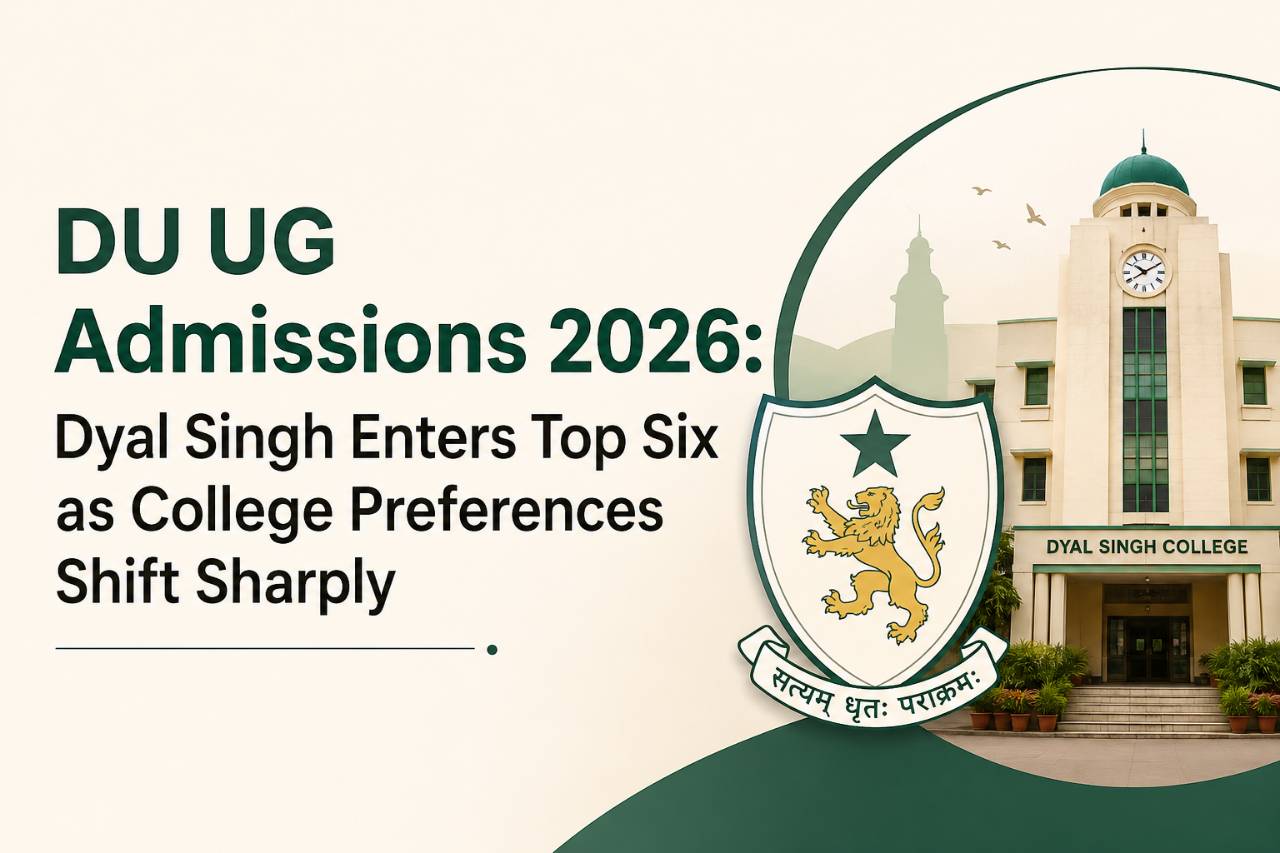

Delhi University undergraduate admissions for 2026 have entered a decisive phase, and the preference data from Common Seat Allocation System (CSAS) Phase 2 tells a story that many applicants did not expect. For years, commerce aspirants treated Shri Ram College of Commerce (SRCC) as the default first choice. This cycle, aggregate student preferences show a sharper reshuffle: Dyal Singh College Delhi has entered the top six preferred colleges for the first time, while SRCC has slipped out of the top five. Sri Venkateswara College also features among the leading choices.
If you are a CUET UG candidate waiting for seat allocation, this shift is not just headline news. It directly affects simulated ranks, expected cut-offs, and how you should reorder preferences before Round 2. This guide explains what changed, why it matters, key CSAS dates, and a practical action plan grounded in the latest DU admission cycle.
What CSAS Phase 2 Preference Data Reveals About DU UG 2026
Delhi University allots undergraduate seats through CSAS on the official portal at admission.uod.ac.in. After CUET UG scores are normalised and mapped to programmes, the system matches each candidate to the highest-ranked College on their preference list where they meet eligibility and category rules. Phase 2 preference filling closed on July 11, 2026, and simulated ranks were released on July 12, 2026.
The aggregate preference chart built from choices filed by thousands of applicants across streams reflects where student demand is clustering this year. Three signals stand out:
- Dyal Singh College breaks into the top six for the first time in recent preference history.
- SRCC exits the top five, a notable change for India's most recognised undergraduate commerce destination.
- Sri Venkateswara College holds a top-six position, reinforcing its appeal across science and commerce programmes.
Preference charts do not replace individual cut-offs, but they indicate directional pressure. Colleges that move up in collective rankings often see tighter closing ranks in high-demand courses. Colleges that slip may record slightly softer cut-offs in select programmes though SRCC's brand strength means demand usually remains high in absolute terms.
Why Aggregate Preferences Matter More Than College Reputation Alone
Many students choose colleges based on legacy rankings or social media buzz. CSAS, however, runs on mathematics: your CUET score, your category, your programme eligibility, and the order in which you listed choices. When thousands of applicants rank a college higher simultaneously, competition for seats at that institution intensifies even if its NIRF rank or public profile has not changed overnight.
Think of the preference chart as a demand map. If Dyal Singh College Delhi campuses collectively attract more first-choice listings, B.Com (Hons), Economics (Hons), and popular science combinations at the college may close earlier than in 2025. Conversely, if fewer applicants keep SRCC at Rank 1, some SRCC programme cut-offs could ease marginally though it typically remains among the most competitive DU colleges.
Understanding the Dyal Singh College Rise in DU Preferences
Dyal Singh College has long been respected among South Campus institutions, known for disciplined academic culture, active societies, and strong performance in commerce and science streams. Its entry into the top six preference bracket in 2026 suggests that student priorities are evolving beyond a single prestige ladder dominated by North Campus names.
Factors Behind Dyal Singh's Improved Preference Ranking
Several practical reasons explain why more CUET applicants are prioritising Dyal Singh this year:
- Location and connectivity: Central and South Delhi access matters for daily commuters. Dyal Singh's positioning appeals to students who want a DU degree without extreme travel times.
- Affordable fee structure: Compared with many private universities in the National Capital Region, DU colleges offer significantly lower tuition. In a year when families are comparing value across institutions including options like Amity University Noida or Galgotias University Greater Noida affordability remains a decisive filter.
- Stream strength: Commerce and science programmes at Dyal Singh carry consistent placement and higher-education outcomes. Students targeting professional courses after graduation often prefer colleges with established departmental track records.
- Perception shift through outcomes: Alumni networks, internship culture, and CUET-normalised score bands influence how current applicants rank colleges. When a college consistently places students into CA, MBA, civil services, and postgraduate pathways, preference momentum builds organically.
- Strategic preference filling: Counselling creators and school mentors increasingly advise realistic top-three choices based on simulated ranks rather than prestige alone. That guidance lifts well-rounded colleges into higher aggregate slots.
Dyal Singh entering the top six is therefore not a random spike. It reflects a broader pattern in DU admissions: students are optimising for programme quality, commute, fees, and realistic cut-off alignment not just brand recall.
SRCC Slipping Out of the Top Five: Context, Not Collapse
Shri Ram College of Commerce remains one of India's most recognised undergraduate commerce institutions. SRCC moving out of the top five in aggregate Phase 2 preferences does not mean the college has lost academic standing. It means that, at the system level, more applicants ranked other DU colleges above SRCC in their preference lists this cycle.
Possible Reasons for the SRCC Preference Shift
- Score-reality alignment: CUET normalisation produces tight score clusters. Applicants with scores just below historical SRCC cut-offs may rank SRCC lower and prioritise colleges where simulated ranks show safer admission probability.
- Diversification of commerce destinations: Colleges such as Sri Venkateswara, Hindu College, Hansraj, and now Dyal Singh compete aggressively for commerce aspirants. Students spread choices across multiple strong programmes instead of defaulting to SRCC at Rank 1.
- Increased awareness of alternatives: As counselling content expands including comparisons with universities like Guru Gobind Singh Indraprastha University GGSIPU and Jamia Hamdard University students make more informed trade-offs between DU colleges and private options before finalising CSAS lists.
- Category and programme granularity: Preferences are filed programme-wise. Aggregate charts combine thousands of individual lists. A college can remain ultra-competitive in B.Com (Hons) while losing aggregate top-five status because science applicants ranked it lower.
For applicants, the takeaway is nuanced: SRCC will likely remain highly competitive, but you should not assume last year's cut-off will repeat exactly. Use simulated ranks and category-specific trends instead of guesswork.
Sri Venkateswara College Among the Top Six: Steady Premium Demand
Sri Venkateswara College (Venky) appearing in the top six alongside Dyal Singh reinforces a South Campus–Central Delhi corridor of high demand. Venky is widely known for science and commerce strength, vibrant campus life, and consistent academic results.
Students who prioritise Venky often cite faculty engagement, co-curricular depth, and location as deciding factors. Its presence in the top six suggests that applicants treat it as a primary target rather than a backup which can tighten cut-offs for popular combinations such as B.Com (Hons), B.Sc (Hons) Mathematics, and Economics-linked programmes.
DU CSAS 2026 Key Dates Every Candidate Should Track
Missing a CSAS deadline can cost a seat even after a successful CUET result. Mark these official timelines on your calendar:
| Event | Date and Time |
|---|---|
| Preference filling deadline (Phase 2) | July 11, 2026, 11:59 PM |
| Simulated ranks release | July 12, 2026, 5:00 PM |
| First CSAS seat allocation list | July 16, 2026, 5:00 PM |
| Second CSAS seat allocation list | July 25, 2026 |
| Preference reordering after Round 2 | Until July 28, 2026 |
After the first allocation list, candidates must complete seat acceptance, document upload, and fee payment within the window specified on admission.uod.ac.in. Treat every deadline as hard-cutoff unless DU publishes an official extension.
How CUET UG Scores and Preferences Interact in CSAS
Delhi University does not conduct a separate entrance test for most undergraduate programmes. Admission is driven primarily by CUET UG scores, subject eligibility, and the preference order you submit. CSAS evaluates your highest preference first. If your score meets the effective cut-off for that college-programme-category combination and seats are available, you are allotted there. If not, the system moves to your next preference.
Practical Example of Preference Order Impact
Suppose a General category candidate scores 780 in CUET UG and lists preferences as follows: (1) SRCC B.Com (Hons), (2) Dyal Singh B.Com (Hons), (3) Sri Venkateswara B.Com (Hons). If SRCC's effective closing rank is above the candidate's rank, CSAS skips SRCC and checks Dyal Singh next. If Dyal Singh closes within range, the allotment stops there the candidate will not receive Sri Venkateswara even if they preferred it as a backup emotionally but listed it third.
This is why the 2026 preference shift matters. If more applicants rank Dyal Singh above SRCC, Dyal Singh may close earlier, pushing borderline candidates toward Venky or other colleges. Your personal strategy must reflect simulated ranks, not last year's WhatsApp forwards.
Common CSAS Mistakes to Avoid During Allocation
Even strong CUET scorers lose seats because of process errors. Avoid these pitfalls during Round 1 and Round 2:
- Listing too few preferences: DU allows multiple programme-college combinations. Candidates who stop at three or four choices risk blank allotment if cut-offs move unexpectedly.
- Ignoring category-specific simulated ranks: General, OBC, EWS, SC, ST, and PwBD lists move differently. Always read the column that matches your registered category.
- Missing seat acceptance windows: An allotted seat is provisional until you accept online and pay fees. Calendar alerts on July 16 and July 25, 2026, are essential.
- Uploading incorrect documents: Blurry scans or mismatched names delay verification. Cross-check spelling against your CUET and board records before uploading.
Expected Cut-Off Trends After the 2026 Preference Reshuffle
No official cut-off is final until allocation rounds conclude, but preference movement provides reasonable expectations:
- Dyal Singh College: Higher aggregate preference may increase competition in flagship programmes. Borderline candidates should keep realistic backups above and below their simulated rank band.
- SRCC: A slip in aggregate top-five preference could soften cut-offs slightly in some categories, but demand typically remains intense. Do not treat SRCC as an easy admit.
- Sri Venkateswara College: Top-six placement suggests continued pressure on popular courses. Early preference ranking among high scorers can elevate closing ranks.
- Mid-tier DU colleges: When top preferences cluster in fewer colleges, secondary choices may see unpredictable movement. Always maintain a ladder of eight to twelve thoughtful preferences per programme.
Students also exploring non-DU options such as Delhi Technological University DTU, Netaji Subhas University of Technology NSUT Delhi, or GGSIPU Engineering should run parallel counselling timelines so they do not miss acceptance windows elsewhere while waiting for DU Round 2.
Action Plan for CUET Candidates After Simulated Ranks
Simulated ranks are a diagnostic tool. They estimate where you stand before actual seat allocation. Use them actively:
- Log in to admission.uod.ac.in and note your simulated rank for each programme you applied to.
- Compare rank movement against colleges in your current preference list, especially Dyal Singh, SRCC, and Sri Venkateswara if you target commerce or science.
- Identify logic gaps: Avoid ranking a far-reach college at Position 1 if simulated data shows zero realistic path you may accidentally block better matches if CSAS rules or upgrade options are misunderstood.
- Prepare documents early: Category certificates, board marksheets, CUET scorecards, and identity proofs should be scanned before the first allocation list.
- Plan finances: DU fees are moderate, but hostel and commute costs add up. Budget before acceptance to avoid last-minute delays.
- Track Round 2 reordering: Preference reordering after Round 2 remains open until July 28, 2026. Adjust based on actual allotment patterns, not rumours.
Should You Reorder Preferences After the Preference Shift?
Reorder only when you have evidence simulated ranks, prior year category trends, and programme-specific demand supporting the change. Do not panic-move SRCC to Rank 10 without analysis, and do not place Dyal Singh at Rank 1 simply because of headlines if your rank suggests safer targets elsewhere. Balanced lists mix ambition with admit probability across at least two campus zones and multiple programme variants where eligible.
Delhi University vs Other NCR Institutions: Making an Informed Choice
DU's preference reshuffle happens while parallel admission seasons are active across the National Capital Region. Understanding how DU compares with alternatives clarifies why students still prioritise certain colleges:
- Delhi University colleges offer low fees, established faculty systems, and deep alumni networks in civil services, law, finance, and research.
- State and private universities such as GGSIPU Management or Jamia Hamdard Engineering provide specialised infrastructure and industry-linked modules at different fee points.
- Technical institutions including DTU and NSUT serve engineering aspirants who may not be in the DU CSAS commerce-science preference pool but share overlapping counselling timelines.
If your CUET scores place you on the borderline for top DU commerce colleges, compare outcomes, fees, commute, and long-term career plans before rejecting private options or lower-ranked DU programmes. The best choice is the one that matches your score band, financial reality, and degree goals not the one with the loudest brand marketing.
Expert Tips for Phase 2 and Post-Allotment Success
Based on patterns from recent DU cycles, these practices reduce admission errors:
- Read CSAS bulletins on the official portal daily during allocation week. Policy clarifications often appear as PDF notices rather than social media posts.
- Use programme-specific preferences rather than copying generic lists from friends. Eligibility subjects differ across BA, BCom, BSc, and vocational programmes.
- Keep proof of every submission preference saves, allotment letters, fee receipts, and upload confirmations.
- Attend document verification at the allotted college on schedule. Missing verification can cancel an otherwise valid seat.
- Discuss upgrade strategy before Round 2 if you accept a lower preference but aim to move up when vacancies emerge.
For medical aspirants comparing pathways, institutions like University College of Medical Sciences UCMS Delhi operate outside DU CSAS UG commerce-science preferences but represent the broader Delhi education ecosystem students navigate simultaneously.
What Parents and Counsellors Should Know About the 2026 Shift
Parents often anchor expectations to legacy brand names. The 2026 preference data suggests students themselves are ranking differently — prioritising fit, commute, fees, and realistic cut-offs. Counsellors should walk families through simulated ranks on admission.uod.ac.in rather than relying on outdated hierarchy charts from pre-CUET years.
Encourage students to maintain a balanced preference ladder, keep parallel options at institutions such as Guru Gobind Singh Indraprastha University, and treat the first CSAS list on July 16, 2026, as the start of a multi-round process not the final verdict on their academic future.
Conclusion
Delhi University UG admissions 2026 have entered a defining stage with one of the sharpest preference reshuffles in recent years. Dyal Singh College entering the top six, SRCC slipping out of the top five, and Sri Venkateswara College maintaining premium demand together signal that students are ranking choices more strategically under CSAS. Simulated ranks are already out; the first seat allocation list follows on July 16, 2026.
Your next steps are clear: verify simulated ranks, refine preferences using evidence rather than hype, meet every CSAS deadline, and keep parallel options open across DU and other NCR institutions until you confirm a seat. In a year of shifting preferences, prepared candidates gain the advantage not necessarily those with the loudest default first choice.