
If you are planning to appear for GATE 2027 with a focus on textiles, one of the biggest updates you cannot ignore is the restructuring of the Textile Engineering and Fibre Science (TF) paper. IIT Madras, the organising institute for GATE 2027, has discontinued TF as a standalone test paper and integrated it into the Engineering Sciences (XE) paper as sectional subject XE9. This is not a minor label change — it alters how you register, how marks are distributed, and how you must prepare.
For thousands of B.Tech graduates from textile, fibre science, and related programmes across India — including students from institutions such as Galgotias College of Engineering and Technology, Krishna Institute of Engineering and Technology, and Noida Institute of Engineering — this shift demands an early and informed preparation plan. Whether your goal is an M.Tech seat at IITs/NITs, a research fellowship, or PSU recruitment, understanding XE9 is now essential.
This CollegeDwar guide breaks down the official GATE 2027 framework in simple language: what changed, why it matters, the full XE9 syllabus outline, exam pattern, college options, and actionable preparation tips aligned with Google's helpful content and E-E-A-T standards.
What Has Changed: TF Paper Merged into XE (Section XE9)
Until GATE 2026, candidates could select TF (Textile Engineering and Fibre Science) as an independent 100-mark paper. From GATE 2027, TF no longer exists as a separate code on the application form. Instead, textile content appears under the umbrella paper XE (Engineering Sciences) as optional section XE9 — Textile Engineering & Fibre Science.
According to the official GATE 2027 website (gate2027.iitm.ac.in), the conversion is clearly marked in the sectional code mapping table:
- GATE 2026 code TF → GATE 2027 code XE9 (Textile Engineering & Fibre Science — Converted)
- TF aspirants must now register for paper code XE, not TF
- During the exam, textile questions appear only if you select XE9 as one of your two optional sections
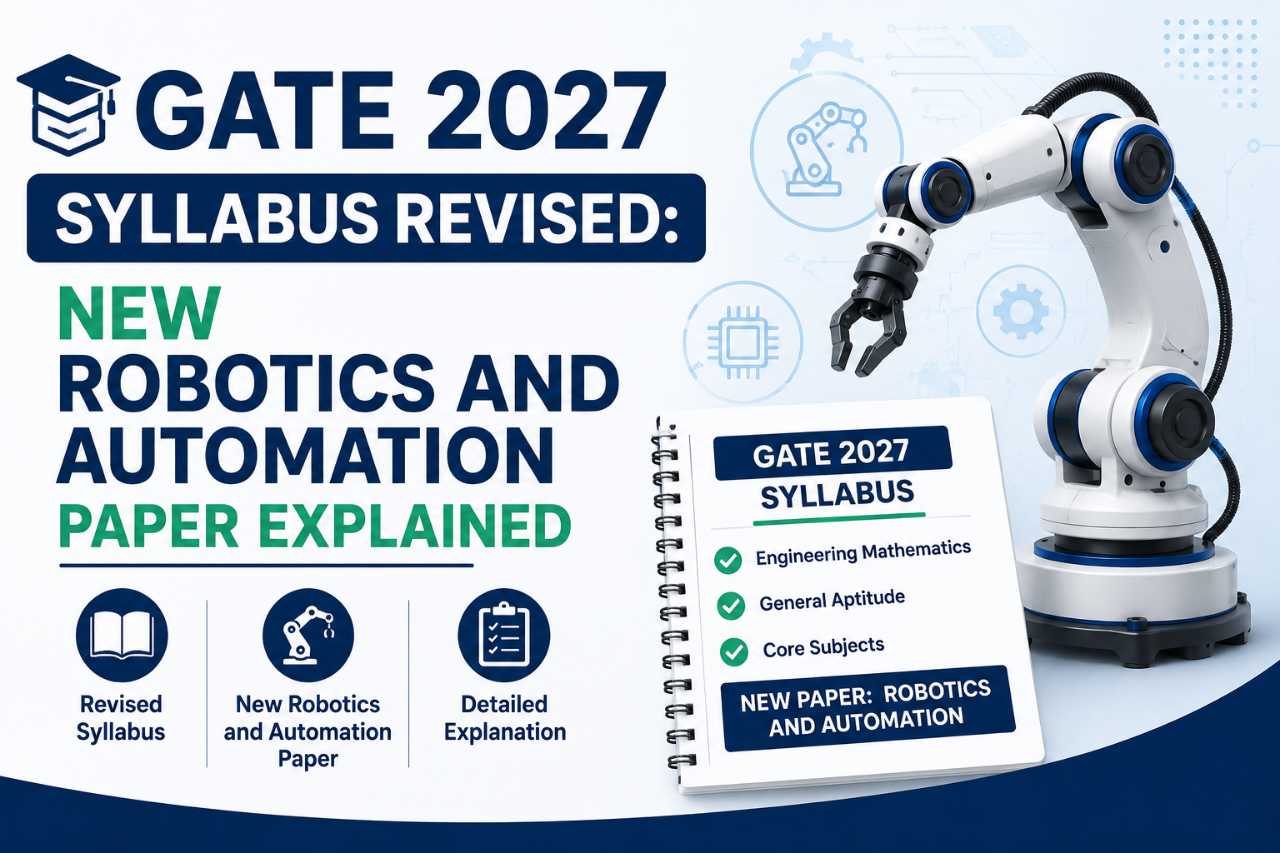
GATE 2027 will be conducted across 30 test papers, including the newly introduced Robotics & Automation (RA) paper. The TF-to-XE9 merger is part of a broader syllabus revision aimed at keeping GATE aligned with emerging interdisciplinary fields while consolidating niche engineering branches under flexible multi-section papers.
Why Did IIT Madras Merge TF into XE?
While IIT Madras has not issued a separate public justification document exclusively for the TF merger, the official notification states that syllabi have been revised "to keep up to date with the growing demands" of engineering education and industry. Consolidating textile engineering under XE reflects a broader GATE trend:
- Interdisciplinary flexibility: XE allows candidates to combine textile knowledge with polymer science (XE5), materials science (XE2), or thermodynamics (XE4) — all directly relevant to modern fibre and fabric industries.
- Resource optimisation: Niche standalone papers with relatively smaller candidate pools are merged into sectional formats, simplifying exam logistics while preserving subject coverage.
- Future-ready skill mapping: Technical textiles, smart fabrics, and composite materials overlap with polymer and materials engineering — areas already covered in other XE sections.
For aspirants, the practical takeaway is simple: textile specialisation remains fully available, but you must master Engineering Mathematics (XE0) and General Aptitude alongside your chosen XE sections.
GATE 2027 XE Paper Structure: New Section Codes Explained
The Engineering Sciences (XE) paper has undergone a significant coding update for GATE 2027. Earlier, sections were labelled XE-A through XE-I. The new system uses XE0 through XE9, making the structure clearer on both the application portal and the computer-based test interface.
Complete XE Section Code Table (GATE 2027)
The following table reflects the official mapping published by IIT Madras:
- XE0 — Engineering Mathematics (Compulsory, 15 marks) — formerly XE-A
- XE1 — Fluid Mechanics (Optional, 35 marks) — formerly XE-B
- XE2 — Materials Science (Optional, 35 marks) — formerly XE-C
- XE3 — Solid Mechanics (Optional, 35 marks) — formerly XE-D
- XE4 — Thermodynamics (Optional, 35 marks) — formerly XE-E
- XE5 — Polymer Science and Engineering (Optional, 35 marks) — formerly XE-F
- XE6 — Food Technology (Optional, 35 marks) — formerly XE-G
- XE7 — Atmospheric and Oceanic Sciences (Optional, 35 marks) — formerly XE-H
- XE8 — Energy Science (Optional, 35 marks) — formerly XE-I
- XE9 — Textile Engineering & Fibre Science (Optional, 35 marks) — converted from TF
Important: You cannot attempt all optional sections. You must choose exactly two optional sections from XE1 to XE9 during the examination. For dedicated textile aspirants, XE9 is mandatory as one of those two choices. The second section should be selected strategically — many experts recommend XE5 (Polymer Science) or XE2 (Materials Science) because of syllabus overlap with fibre chemistry and composite materials.
GATE XE Exam Pattern 2027: Marks Distribution
Understanding the mark distribution is critical because the old TF paper allocated roughly 72% of marks to core textile subjects with Engineering Mathematics embedded differently. Under XE, the structure is modular and fixed:
- General Aptitude (GA): 15 marks — common to all GATE papers
- XE0 Engineering Mathematics: 15 marks — compulsory for every XE candidate
- Two optional sections (your choice): 35 marks each, totalling 70 marks
- Total: 100 marks | Duration: 180 minutes (3 hours)
The XE paper typically contains around 65 questions in mixed formats: Multiple Choice Questions (MCQs), Multiple Select Questions (MSQs), and Numerical Answer Type (NAT) questions. Negative marking applies to MCQs only — MSQs and NAT questions do not carry negative marks, which is a strategic advantage for candidates strong in numerical textile calculations.
How XE Differs from the Old TF Paper
Previously, TF candidates answered GA (15 marks) plus a single consolidated textile syllabus (85 marks). Now, even if you select XE9, you receive only 35 marks of textile-specific questions in the exam. The remaining 55 marks come from GA (15), Engineering Mathematics (15), and your second chosen XE section (35).
This means textile aspirants must broaden their preparation beyond yarn and fabric technology. Engineering Mathematics and General Aptitude now carry 30% of total marks — a proportion you cannot afford to neglect.
XE9 Syllabus: Textile Engineering & Fibre Science Section Details
The core textile syllabus under XE9 retains the five major sections that defined the earlier TF paper. Candidates should download the official syllabus PDF from the GATE 2027 portal for the exact topic list. The section-wise breakdown is as follows:
Section 1: Textile Fibres
Covers classification of textile fibres, essential requirements of fibre-forming polymers, gross and fine structures of natural fibres (cotton, wool, silk), bast fibres, properties and uses of natural and man-made fibres including carbon, aramid, and UHMWPE fibres. Topics also include physical and chemical methods of fibre and blend identification, molecular architecture, amorphous and crystalline phases, glass transition, plasticization, crystallization, melting, polymerization processes, melt/wet/dry/gel spinning, post-spinning operations, texturing methods, and fibre structure investigation techniques (XRD, SEM, TEM, IR spectroscopy, DSC, DMA, TGA).
Section 2: Yarn Manufacture, Yarn Structure and Properties
Includes principles of ginning, opening, cleaning and blending, blow room machinery, carding fundamentals, card setting and clothing, draw frame, comber, speed frame, ring/spindle/rotor/air-jet spinning systems, yarn tension and twist, yarn structure-property relationships, and quality parameters in yarn manufacturing.
Section 3: Fabric Manufacture, Structure and Properties
Encompasses weaving preparatory processes, loom mechanisms, shedding, picking, beat-up, warp and weft knitting fundamentals, nonwoven fabric production methods, fabric geometry, cover factor, crimp, tensile and tear properties, and fabric handle and drape characteristics.
Section 4: Textile Testing
Focuses on sampling techniques for fibres, yarns and fabrics, sample size and sampling errors, measurement of linear density, twist, strength, elongation, moisture content, standard testing atmosphere, evenness testing, fabric thickness, abrasion resistance, pilling, colour fastness, and statistical analysis of test data.
Section 5: Chemical Processing
Covers preparatory processes (desizing, scouring, bleaching), mercerization, dyeing mechanisms and classification, printing methods, finishing processes (easy-care, water repellent, flame retardant), environmental aspects of textile wet processing, and energy conservation in chemical processing.
Additionally, candidates must prepare XE0 Engineering Mathematics, which includes linear algebra, calculus, differential equations, complex analysis, probability and statistics, and numerical methods — topics that engineering graduates from colleges like Chandigarh Engineering College, Chitkara University Engineering, and Lovely Professional University Engineering typically cover in the first two years of B.Tech.
Who Should Choose XE9 in GATE 2027?
XE9 is designed for candidates with undergraduate backgrounds in textile engineering, fibre science, clothing technology, and related disciplines. You should opt for XE with XE9 if you aim for:
- M.Tech/PhD admission in Textile Engineering, Fibre Science, or Apparel Technology at IITs, NITs, and centrally funded institutions
- PSU recruitment through GATE scores in textile and manufacturing sectors
- Research careers in technical textiles, smart fabrics, and sustainable textile processing
- Interdisciplinary roles combining textiles with polymers, composites, or materials science
Candidates from general engineering programmes who developed a strong interest in textiles during electives or projects may also consider XE9, provided they invest time in building fibre and fabric fundamentals from standard textile engineering textbooks.
Top Textile and Engineering Colleges for GATE Aspirants
India has a mix of dedicated textile institutes and general engineering colleges offering textile-related coursework. While IIT Delhi (Textile Technology), PSG College of Technology, and NIT Jalandhar remain premier choices, many students begin their journey at regional engineering colleges before targeting GATE.
If you are currently in a B.Tech programme or recently graduated, explore options on CollegeDwar to compare infrastructure, placements, and programme strengths:
- Graphic Era University Engineering — popular among North India engineering aspirants
- Guru Gobind Singh Indraprastha University Engineering — Delhi-NCR affiliated programmes
- Inderprastha Engineering College and Northern India Engineering College — established NCR institutions
- Jamia Hamdard Engineering — option for Delhi-based students
- Dronacharya College of Engineering, Bpit Engineering College, and Iec College of Engineering — Gurgaon and NCR belt
- Government Engineering College Ajmer and Rajiv Gandhi Government Engineering College Alwar — affordable Rajasthan government options
- Sharda University Engineering, Gautam Buddha University Engineering, and Integral University Engineering — Uttar Pradesh private universities
Regardless of your alma mater, GATE normalises opportunity — a strong XE rank with XE9 can open IIT doors even if you graduated from a tier-2 or tier-3 institution.
GATE 2027 Important Dates and Registration Timeline
Based on official announcements from IIT Madras, the expected GATE 2027 schedule is:
- GATE 2027 website launch: Already live at gate2027.iitm.ac.in
- Registration start: Expected from 14 August 2026
- Registration deadline (without late fee): Expected till 21 September 2026
- Examination dates: 6, 7, 13, 14, 20, and 21 February 2027
- Score validity: Three years from the date of result declaration
During registration, select paper code XE. You will specify your optional section preferences as per the portal instructions. Fill only one application — duplicate applications may be rejected without refund.
Two-Paper Combination: Can You Still Appear in TF and Another Paper?
GATE allows candidates to appear in one or up to two test papers from permitted combinations. Since TF no longer exists, former TF candidates who previously paired TF with papers like EE or XE must check the updated two-paper combination list on the official GATE 2027 portal before applying.
Common strategic pairings for textile-background candidates may include:
- XE + CH (Chemical Engineering) — for chemical processing and polymer specialisation
- XE + ME (Mechanical Engineering) — for textile machinery and manufacturing
- XE + BT (Biotechnology) — for biomaterials and medical textiles
Always verify allowed combinations on the official portal, as ineligible pairings will be rejected during application processing.
Preparation Strategy for GATE 2027 XE with XE9
Step 1: Download Official Syllabus and Previous TF Papers
Start with the official XE9 syllabus PDF from gate2027.iitm.ac.in. Solve GATE TF papers from 2010 onwards — the core textile questions remain highly relevant even though the paper format has changed.
Step 2: Allocate Time Across Four Study Pillars
A balanced weekly plan for working professionals and final-year students might look like this:
- 30% — XE9 Textile Core: Fibres, yarn, fabric, testing, chemical processing
- 25% — Second XE Section: Preferably XE5 (Polymer) or XE2 (Materials Science)
- 25% — XE0 Engineering Mathematics: Calculus, linear algebra, probability, numerical methods
- 20% — General Aptitude: Verbal ability, numerical ability, data interpretation
Step 3: Use Standard Reference Books
Recommended textbooks include:
- Textile Fibres: Man-made fibre texts by Moncrieff or similar; Physical Properties of Textile Fibres by Morton & Hearle
- Yarn Manufacturing: Spinning technology references by Lawrence or Klein
- Fabric Manufacturing: Watson's Textile Design and Colour; knitting and weaving technology handbooks
- Textile Testing: Handbook of Textile Testing by Grover and Hamby
- Chemical Processing: Textile Processing and Properties by Vigo and Vigo
- Engineering Mathematics: B.S. Grewal or Kreyszig for GATE-level problems
Step 4: Take Sectional Mock Tests Under XE Format
Shift from full-length TF mocks to XE-format mocks where you attempt GA + XE0 + XE9 + one more section. This builds stamina for switching between mathematics, textile theory, and your second optional section within a single three-hour window.
Step 5: Join Test Series and Revise High-Yield Topics
In the final 60 days, prioritise frequently repeated TF topics: spinning calculations, fabric geometry, dyeing mechanisms, moisture regain, and statistical quality control. Engineering Mathematics revision should focus on calculus, matrices, and probability — these appear every year in XE0.
Career Outcomes After GATE XE9
A competitive GATE score in XE with strong XE9 performance unlocks multiple pathways:
- M.Tech at IIT Delhi (Textile), IIT Kharagpur, NIT Jalandhar, PSG, DKTE and other textile-focused institutes
- Junior Research Fellowships (JRF) through CSIR-UGC NET/GATE qualified routes in materials and textile research
- PSU opportunities in organisations that recruit through GATE in manufacturing and materials domains
- Industry R&D roles in technical textiles, geotextiles, medical textiles, and sustainable fashion supply chains
India's textile and apparel sector contributes significantly to exports and employment. With the global push toward sustainable fibres and smart textiles, GATE-qualified textile engineers with interdisciplinary XE training are increasingly valued.
Common Mistakes to Avoid After the TF-to-XE9 Merger
- Registering for a non-existent TF code — always select XE on the application form
- Ignoring Engineering Mathematics — XE0 alone is worth 15 marks and supports numerical questions in other sections
- Choosing an unrelated second XE section — pick a section with syllabus overlap to reduce study load
- Relying only on old TF cutoffs — XE rank trends may differ; monitor GATE score calculators after results
- Skipping General Aptitude — 15 easy-to-medium marks can significantly boost your normalised score
- Not checking two-paper combination rules — invalid pairs lead to application rejection
Conclusion
The merger of GATE Textile Engineering (TF) into XE section XE9 for GATE 2027 is one of the most important structural changes textile aspirants have faced in recent years. Administered by IIT Madras, the revised format preserves the full textile syllabus while requiring broader preparation in Engineering Mathematics, General Aptitude, and a strategically chosen second XE section.
Start early, download the official syllabus from gate2027.iitm.ac.in, solve previous TF papers for XE9 practice, and build your second-section strength in polymer or materials science. Whether you graduate from an IIT, a government engineering college, or a private institution such as Manav Rachna University Engineering or Niet Engineering College, GATE remains one of the fairest gateways to postgraduate education and public-sector careers in India.
Stay updated with CollegeDwar for the latest GATE 2027 notifications, college guides, and exam preparation resources tailored for Indian students.