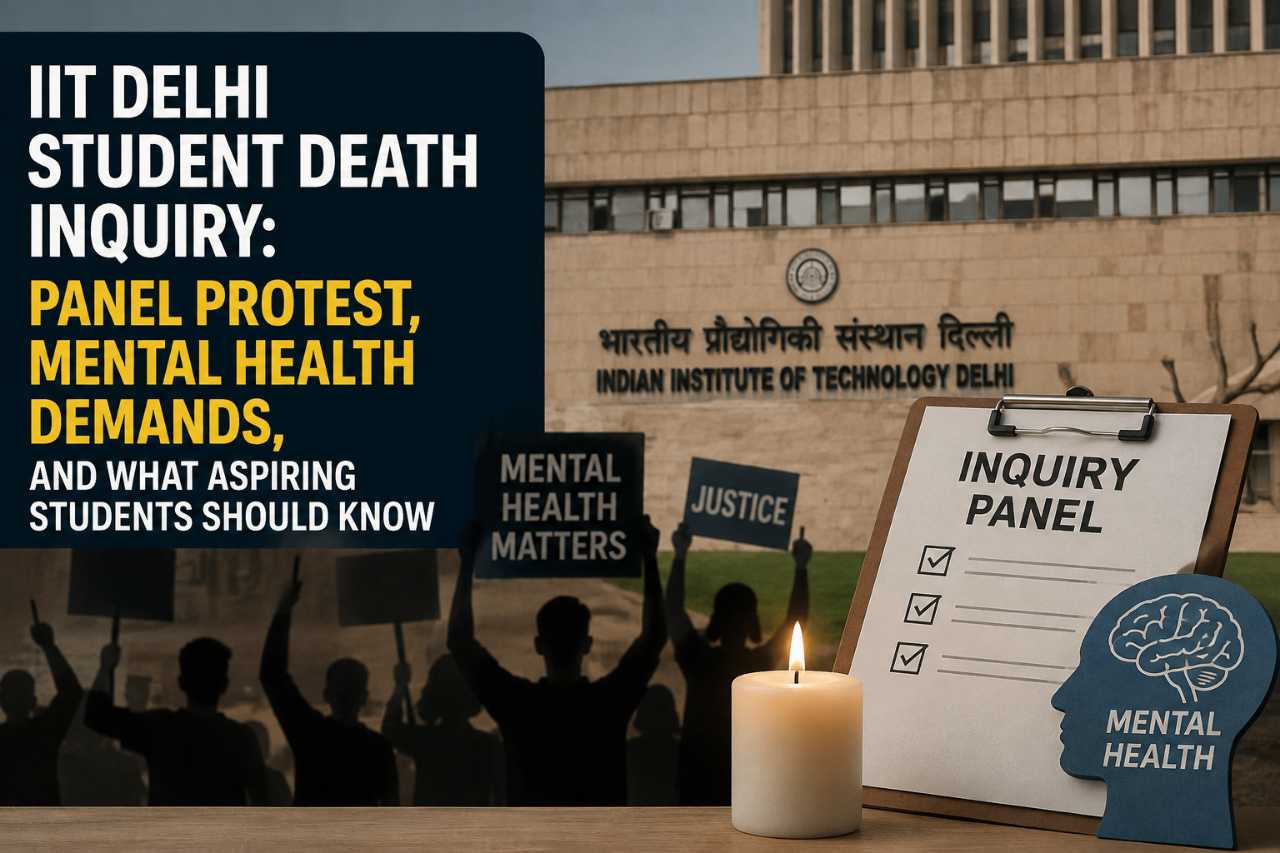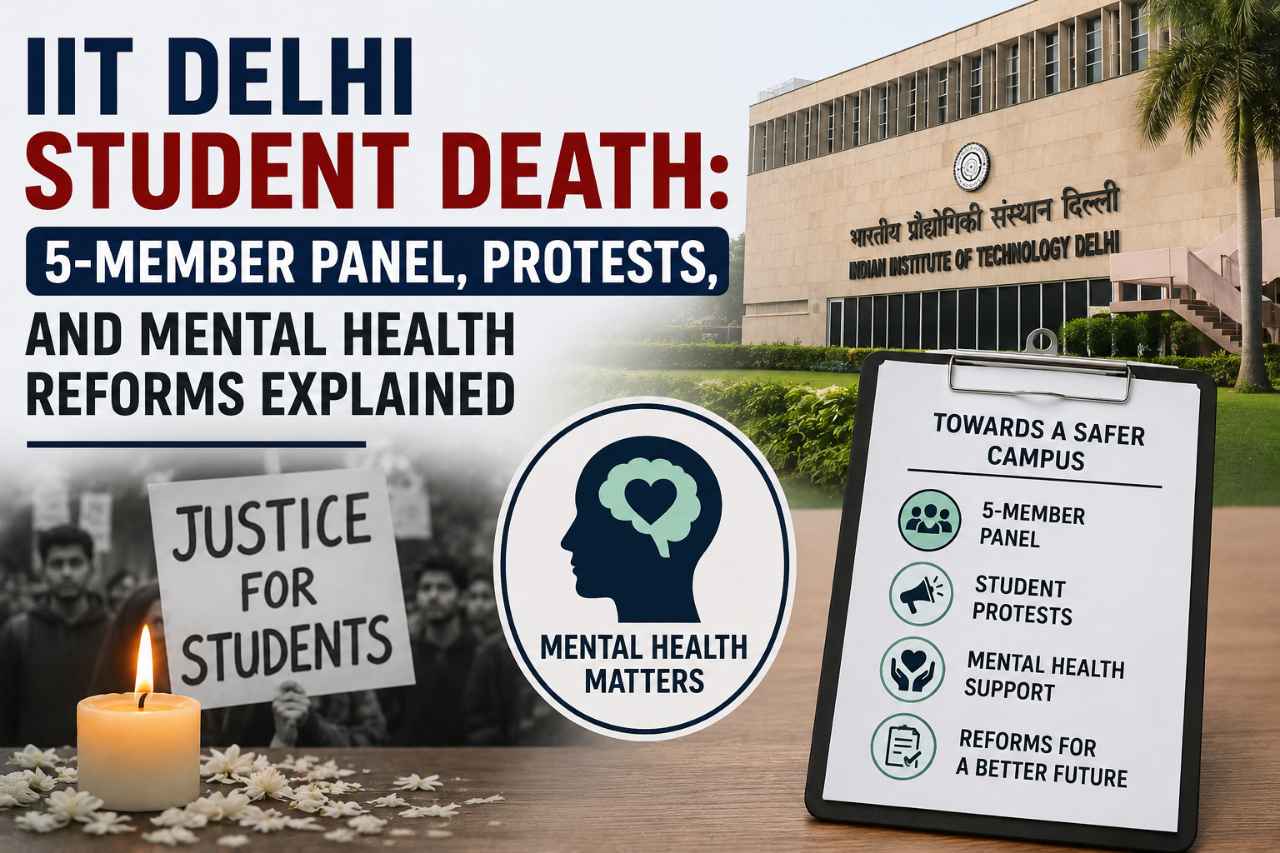
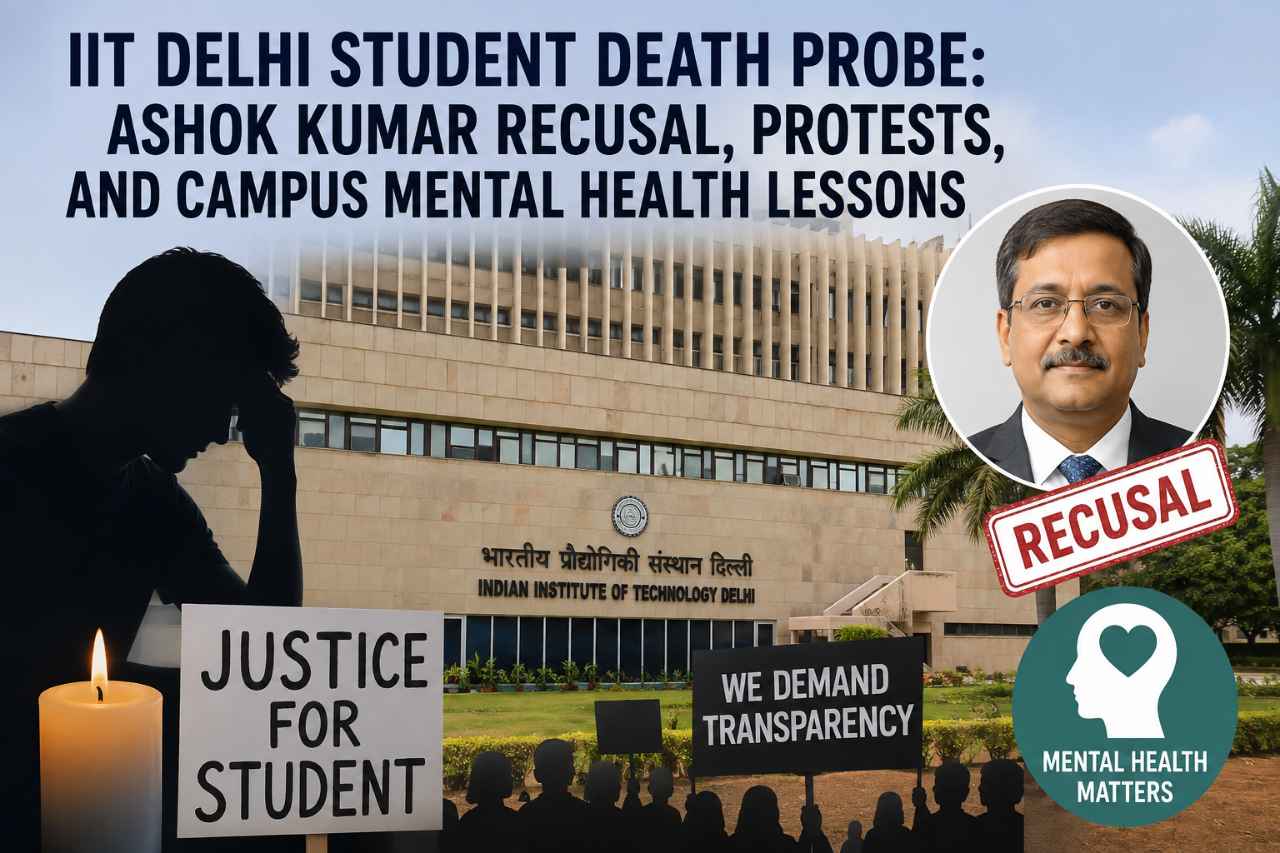

The death of an MSc Physics student at Indian Institte of Technology Delhi (IIT Delhi) has reopened urgent conversations about student welfare, campus accountability, and the credibility of institutional inquiries in Indian higher education. On August 22, 2026, a 31-year-old scholar reportedly died by suicide after jumping from the Lecture Hall Complex on the IIT Delhi campus. Delhi Police registered a case of abetment to suicide against unidentified persons, while students staged protests for multiple days, demanding transparent investigation and administrative accountability.
In response, IIT Delhi constituted a five-member external probe panel on August 26, 2026. Former Uttarakhand Director General of Police Ashok Kumar an IIT Delhi alumnus was named chair. Within hours, Kumar recused himself citing personal reasons. The institute has confirmed that a new committee will be formed soon, but students remain sceptical about composition, framing, and independence. For aspirants preparing for JEE Advanced, parents evaluating Delhi's top engineering ecosystem, and enrolled students across IITs and NITs, this case is not merely headline news it is a practical lesson in how campus culture, hostel policy, research access, and mental health infrastructure intersect with academic success.
What Happened at IIT Delhi: Timeline and Verified Facts
Understanding the sequence of events helps separate confirmed facts from allegations still under investigation. According to police and institute statements reported in August 2026, the following timeline has emerged.
August 22, 2026: The Incident on Campus
Preliminary inquiry suggests the student entered IIT Delhi through the main gate around 8:00 AM and proceeded to the Lecture Hall Complex. He reportedly took a lift to the sixth floor and jumped from the front side of the building. Campus medical staff declared him brought dead at the institute hospital. A PCR call was logged around 8:30 AM at Kishangarh police station, after which a police team, crime unit, and forensic laboratory personnel visited the campus to collect evidence.
Key verified details at this stage include:
- No suicide note was recovered from the spot, according to early police statements.
- A mobile phone found in the deceased's possession was seized for digital examination.
- Police sought counselling records and related institutional information from IIT Delhi.
- The case was registered under abetment to suicide provisions against unidentified persons.
August 25–26, 2026: Protests and Administrative Response
Student protests intensified on campus, prompting IIT Delhi to suspend classes on Monday. Protesters raised concerns about hostel accommodation, research project exclusion, and the perceived framing of the death around medical history rather than systemic campus issues. On Tuesday, the director announced a five-member external committee to examine circumstances leading to the student's death. By August 27, protests continued for a third consecutive day as the institute prepared to reconstitute the panel after its chair stepped down.
The Probe Panel and Why Ashok Kumar Recused Himself
Institutional probe committees are meant to restore trust after tragedies. In practice, their credibility depends on member selection, mandate clarity, and perceived independence from administration.
Original Five-Member Committee Composition
IIT Delhi's initial panel, as reported in August 2026, included:
- Ashok Kumar former Uttarakhand DGP and IIT Delhi alumnus (appointed chair)
- Pratap Sharma Head of Department of Psychiatry, All India Institute of Medical Sciences Delhi (AIIMS Delhi)
- Vice Chancellor of Haryana Sports university
- Two student representatives
- IIT Delhi Registrar
Students and faculty observers questioned whether a former police officer was the appropriate chair for a probe where police had already registered an abetment-to-suicide case. Critics argued this created an appearance of overlap between criminal investigation and institutional fact-finding. Others noted that psychiatric expertise represented by AIIMS faculty was essential, but should be balanced with independent academic governance and student welfare specialists.
Recusal and Reconstitution
Sources confirmed that Ashok Kumar recused himself from the panel citing personal reasons. IIT Delhi stated that a new committee would be announced soon. Recusal itself is not unusual in inquiry bodies; however, when it occurs within days of formation amid active campus protests it signals that initial appointments failed to meet stakeholder expectations for neutrality.
For institutions across India from National Institute of Technology Delhi (NIT Delhi) to Delhi Technological University (DTU) the lesson is procedural: probe panels should be announced with a published terms-of-reference, conflict-of-interest disclosures, and a timeline for interim safety measures before investigative work begins.
Student Protests: Demands, Grievances, and Campus Climate
Protests at premier institutions often reflect accumulated structural stress rather than a single triggering event. At IIT Delhi, student statements reported in media coverage highlighted several recurring themes relevant to postgraduate life at research-intensive universities.
Hostel Accommodation and PG Student Vulnerability
Postgraduate and research scholars frequently face hostel shortages at top Delhi campuses. Unlike undergraduate batches with relatively stable hostel allotments, MSc and PhD students may spend semesters in temporary arrangements, paying high rents outside campus, or commuting long distances. Lack of stable housing correlates with sleep disruption, financial strain, and social isolation risk factors that counselling centres track globally.
Students alleged that the deceased scholar struggled without hostel accommodation. Whether or not each allegation is substantiated in the final probe report, the grievance pattern is familiar across IITs, where infrastructure expansion has not always kept pace with rising PG enrolment.
Research Access, Supervision, and Academic Pressure
Another allegation involved exclusion from research projects. In MSc Physics and allied programmes, project allocation affects thesis quality, publication prospects, and future PhD admissions. When students perceive arbitrary exclusion whether due to lab capacity, supervisor preference, or informal gatekeeping it can amplify imposter syndrome and career anxiety.
Delhi's research ecosystem spans multiple institutions where similar dynamics exist: Netaji Subhas University of Technology (NSUT Delhi), Indraprastha Institute of Information Technology Delhi (IIIT Delhi), and central universities. Aspirants should evaluate not only NIRF rank and placement charts but also PG support systems, lab-to-student ratios, and published hostel policies.
Framing, Communication, and Trust Deficit
Students objected to early communication that emphasised medical history. Mental health professionals caution against reducing suicide to individual pathology without examining environmental stressors hostel policy, financial aid delays, bullying, discrimination, or academic gatekeeping. Ethical campus communication acknowledges privacy while still committing to systemic review.
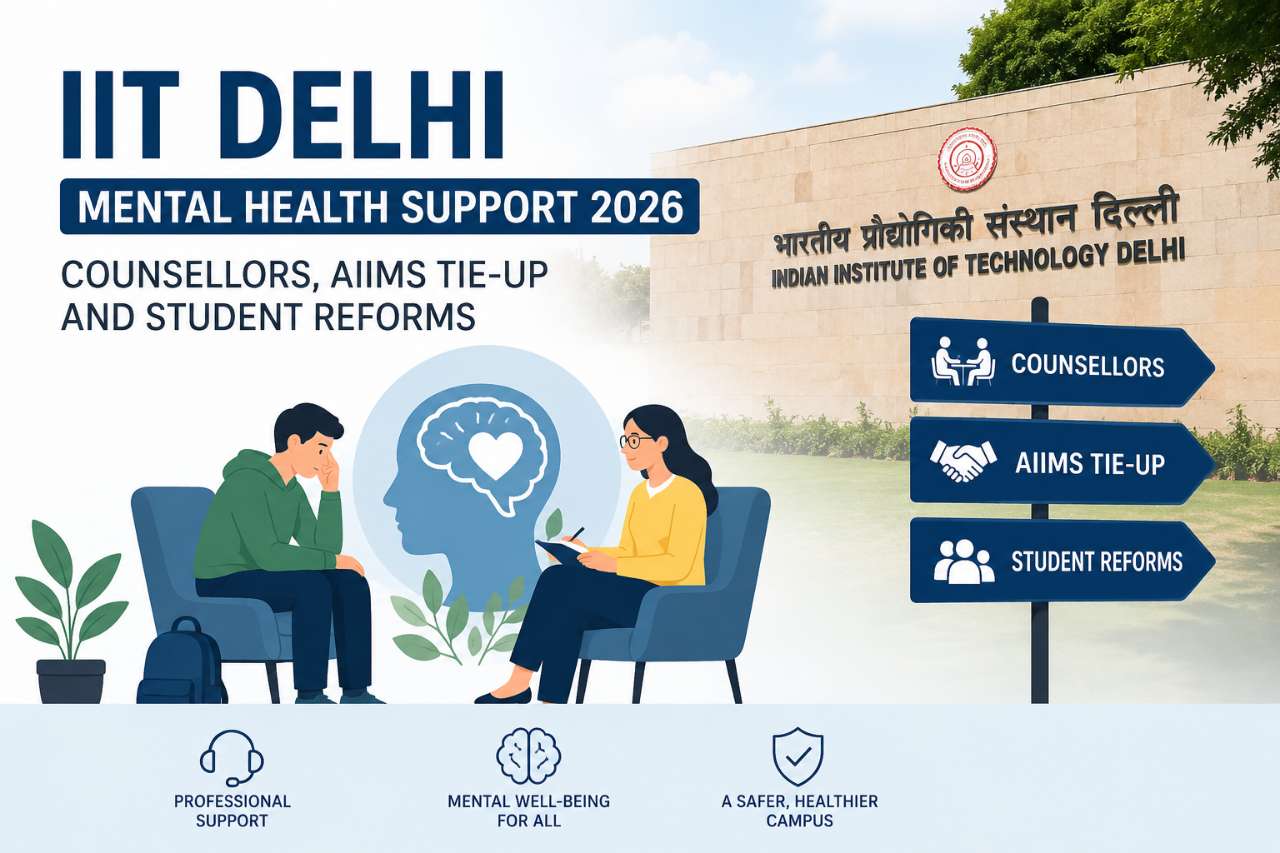
IIT Delhi later reaffirmed commitment to mental health support and invited student suggestions a step in the right direction, though trust rebuilding typically requires sustained action beyond statements.
Police Investigation: Abetment to Suicide and Institutional Records
Parallel to IIT Delhi's internal probe, Delhi Police are conducting a criminal investigation. Registration of an abetment-to-suicide case against unidentified persons indicates investigators are examining whether any conduct by others contributed to the death. This is distinct from the institute's administrative inquiry, though both may rely on overlapping evidence.
Evidence Collection and Digital Forensics
Police seized the student's mobile phone for forensic analysis. Digital evidence messages, browser history, notes apps often shapes timelines in campus death investigations. Counselling records requested from IIT Delhi may reveal prior help-seeking behaviour, wait times, and referrals. Institutions must balance police cooperation with student confidentiality norms and consent frameworks.
What Abetment to Suicide Means in Practice
Indian law treats abetment to suicide as a serious offence where prosecution must establish instigation, conspiracy, or intentional aid. Campus cases are legally complex because academic pressure, harsh feedback, or administrative neglect while ethically troubling do not automatically meet criminal thresholds. This is why students demand administrative accountability even when criminal cases move slowly.
Mental Health Infrastructure at IITs and Delhi Universities
The IIT Delhi tragedy sits within a broader national conversation about student mental health. Premier campuses advertise counselling cells, yet utilisation rates, counsellor-to-student ratios, and after-hours crisis response vary widely.
What Strong Campus Mental Health Systems Include
- 24/7 crisis helplines publicised at hostels, labs, and department noticeboards
- Walk-in counselling without mandatory faculty referral
- Psychiatric referral pathways to hospitals such as AIIMS Delhi or Vardhman Mahavir Medical College New Delhi (VMMC Delhi)
- Peer support networks trained in basic psychological first aid
- Faculty sensitisation on recognising distress without punitive responses
- Annual anonymous climate surveys with published action plans
Students at Delhi's diverse institutions from St Stephen's College Delhi and Hindu College Delhi to Jamia Millia Islamia New Delhi should confirm what services exist before enrolment, not after a crisis emerges.
Postgraduate-Specific Stressors
PG students face unique pressures: funding uncertainty, publication demands, visa complications for international conferences, and age-related social expectations in Indian society. A 31-year-old MSc scholar may experience isolation distinct from a 19-year-old B.Tech fresher. Counselling models designed only for undergraduates often miss these needs.
Lessons for Indian Higher Education Governance
The IIT Delhi case offers governance lessons extending beyond a single campus. State and private universities in neighbouring regions face parallel challenges. For example, students at National Institute of Technology Uttarakhand, Dev Bhoomi Uttarakhand University, and Uttarakhand Open University also navigate hostel shortages and rural-urban relocation stress context relevant given the former Uttarakhand DGP's brief role in the Delhi probe.
Designing Credible Inquiry Panels After Campus Deaths
Best practices emerging from university governance literature and student movements suggest:
- Appoint chairs with academic administration or student welfare expertise, not active or recent law enforcement leadership when police investigations run concurrently.
- Include independent mental health experts, hostel wardens from other IITs, and elected student representatives with voting rights.
- Publish interim recommendations within 30 days covering hostel waitlists, project allocation transparency, and counselling wait times.
- Separate clinical reviews (medical privacy) from policy reviews (systemic failures).
- Commit to public summary reports with redactions only for legal and privacy reasons.
Hostel and Research Policy Reforms
Long-term reforms should address measurable indicators:
- Maximum hostel wait time for verified PG students
- Published criteria for research project assignment in MSc programmes
- Financial hardship grants for off-campus rent
- Mandatory supervisor-student meeting logs submitted to departments anonymously for audit
Delhi's expanding higher education map including indra Gandhi Delhi Technical University for Women, Delhi Skill and Entrepreneurship University, and professional colleges such as Maulana Azad Medical College (MAMC Delhi) should integrate these standards into NAAC and NBA self-study reports.
Guidance for JEE Aspirants, Enrolled Students, and Parents
If you are preparing for IIT admission or already enrolled at a competitive institute, this tragedy underscores questions worth asking before and during your degree.
Before Admission: Due Diligence Beyond Rank Lists
JEE Advanced opens doors to IITs, but campus quality-of-life varies by institute and programme. Research:
- Hostel guarantee policies for PG entrants
- Counselling centre staffing and hours
- Student senate minutes on welfare debates
- Gender sensitisation and anti-discrimination cells
- Alumni forums discussing MSc not just B.Tech experiences
Compare alternatives in Delhi NCR: Indian Institute of Foreign Trade (IIFT Delhi) for management economics, Fore School of Management Delhi for MBA pathways, or strong undergraduate colleges like Miranda House Delhi and Kirori Mal College Delhi if your goal is foundational science before postgraduate specialisation.
During Enrolment: Protective Habits and Support Pathways
Academic excellence should not require silent suffering. Practical habits include maintaining friendships outside your lab, documenting administrative interactions over email, knowing your institute's grievance redressal officer, and using counselling services early not only at breaking point.
Parents should maintain regular communication without adding performance pressure. Sudden withdrawal, sleep disruption, or hopeless talk warrant professional consultation. Women students at institutions such as Lady Shri Ram College for Women (LSR Delhi), Gargi College Delhi, and Indraprastha College for Women Delhi should additionally verify ICC (Internal Complaints Committee) accessibility.
For Uttarakhand and Outstation Students in Delhi
Many IIT Delhi scholars relocate from hill states. Universities back home Sri Dev Suman Uttarakhand University, Uttarakhand University of Horticulture and Forestry Bharsar, and Uttarakhand State Sports University (USSU) often serve students who later pursue PG degrees in metro cities. Transition support (regional student associations, holiday hostel stay policies) reduces isolation.
Comparing Campus Welfare Across Delhi and Uttarakhand Institutions
Context matters when evaluating whether a headline reflects one institute's failure or a sector-wide pattern. Delhi hosts India's densest cluster of centrally funded universities, while Uttarakhand has expanded its state university network rapidly over the past decade. Both ecosystems produce graduates who compete for IIT postgraduate seats.
Institutions such as Uttarakhand Ayurved University, Uttarakhand Sanskrit University Hardwar, and University College of Medical Sciences (UCMS Delhi) operate under different regulatory frameworks, yet share common student welfare obligations under UGC norms. Minimum standards include anti-ragging committees, internal complaints committees, and accessible health facilities.
Aspirants comparing Daulat Ram College Delhi, Deen Dayal Upadhyaya College Delhi, or Atma Ram Sanatan Dharma College Delhi with IIT postgraduate programmes should note that residential availability, faculty mentoring culture, and departmental transparency differ sharply even when brand prestige favours the IIT tag.
Media Coverage, E-E-A-T, and Responsible Reporting
Education journalists and bloggers covering campus deaths carry ethical obligations. Reporting should avoid sensational speculation, respect family privacy, cite official statements alongside student voices, and signpost helplines. Google's E-E-A-T (Experience, Expertise, Authoritativeness, Trustworthiness) framework rewards content that contextualises breaking news with actionable guidance hostel policy explainer, counselling access maps, and legal process clarifications rather than thin rewrites of press releases.
For AI Overview and featured snippet optimisation, clear definitional paragraphs help: What is an institutional probe panel? A committee appointed by a university to investigate incidents, recommend policy changes, and restore community trust, operating separately from criminal courts unless members are legally compelled to testify.
What Happens Next at IIT Delhi
As of August 27, 2026, three developments will shape outcomes:
- Reconstituted probe panel IIT Delhi must announce new membership acceptable to student representatives and faculty senate observers.
- Continued protests Until interim welfare measures are implemented, disruptions to academic schedules may persist.
- Police investigation Forensic and counselling record analysis may take weeks; abetment cases rarely conclude quickly.
The institute's reaffirmed commitment to mental health support and solicitation of student suggestions indicates awareness that procedural investigation alone will not calm campus anger. Tangible reforms published hostel timelines, transparent project allocation, expanded counselling hours will be the real test for every research university in India.
Conclusion
The death of an MSc Physics student at IIT Delhi and the subsequent exit of former Uttarakhand DGP Ashok Kumar from the institute's probe panel highlight a fault line in Indian higher education: world-class academic reputations still struggle with welfare governance when crises occur. Police investigation, student protest, and administrative inquiry are now running in parallel a scenario that demands careful separation of roles, transparent communication, and rapid systemic fixes.
For millions of JEE and GATE aspirants, Delhi remains the dream destination hosting IIT Delhi, AIIMS Delhi, DU colleges, and emerging universities. That dream persists only if institutions treat mental health, hostel equity, and fair research access as core academic infrastructure not optional extras. Students choosing among Hansraj College Delhi, Ramjas College Delhi, Dyal Singh College Delhi, engineering campuses, or IIT postgraduate programmes should weigh welfare indicators as seriously as cutoffs and placements. The IIT Delhi tragedy is a reminder that the most important ranking is whether a campus is safe not just prestigious.
Helplines (India): Tele-MANAS 14416 or 1-800-891-4416; Kiran Mental Health Helpline 1800-599-0019; iCall 9152987821 (Mon–Sat).