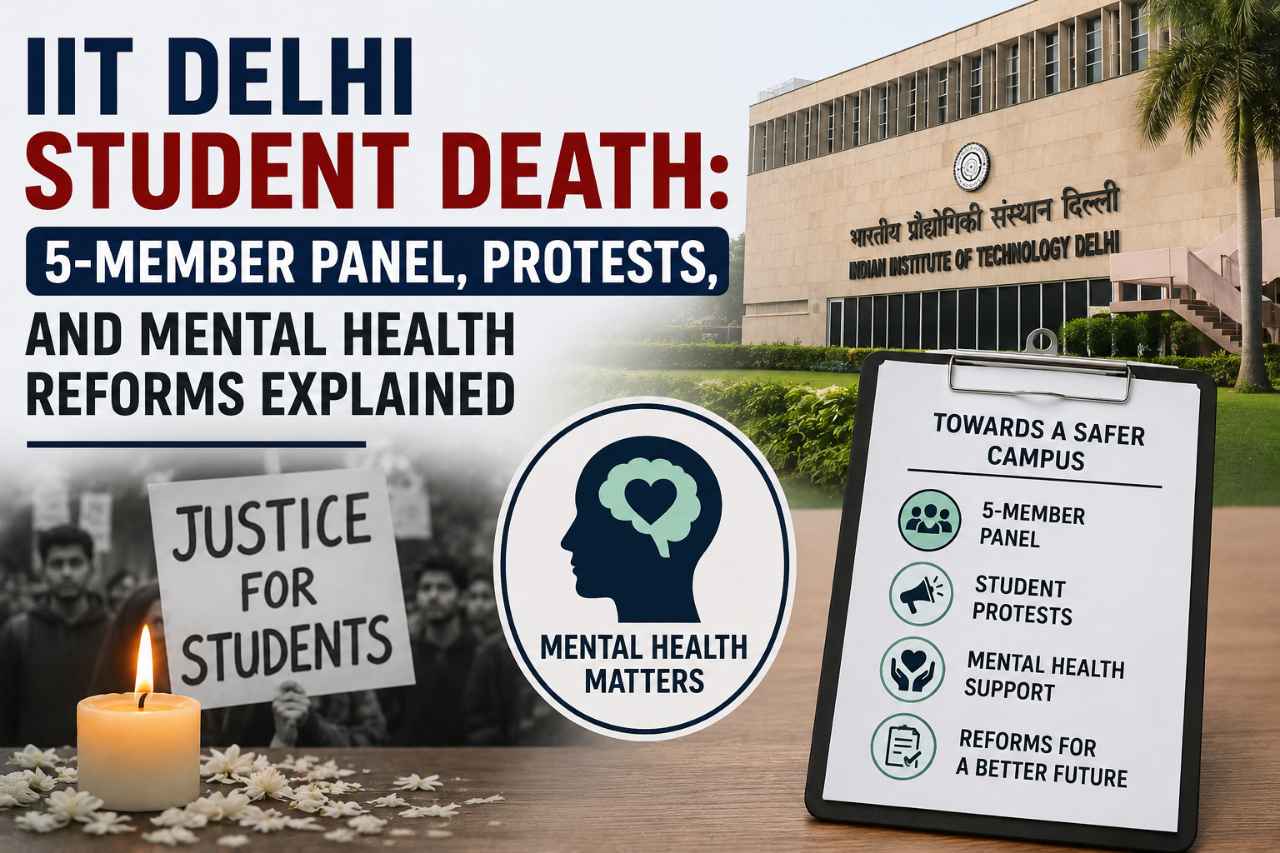
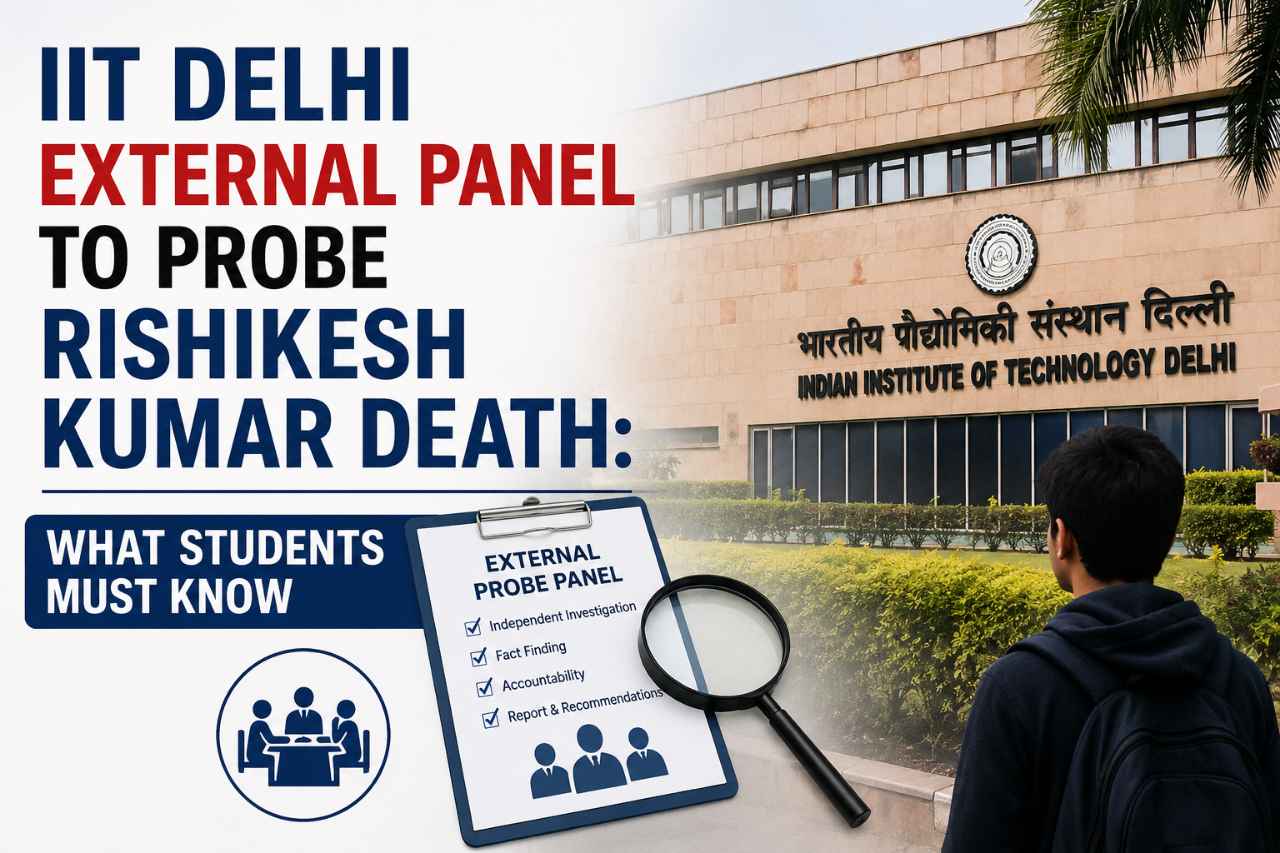

The Indian Institute of Technology Delhi has constituted an external inquiry committee to investigate the circumstances surrounding the death of MSc Physics student Rishikesh Kumar, a development that has drawn national attention to campus mental health, hostel policy, and student welfare at India's premier engineering institutions. For lakhs of JEE and GATE aspirants who dream of studying at Indian Institute Of Technology Delhi IIT Delhi, the case is a sobering reminder that admission to a top-ranked institute is only the beginning of a long and often stressful academic journey.
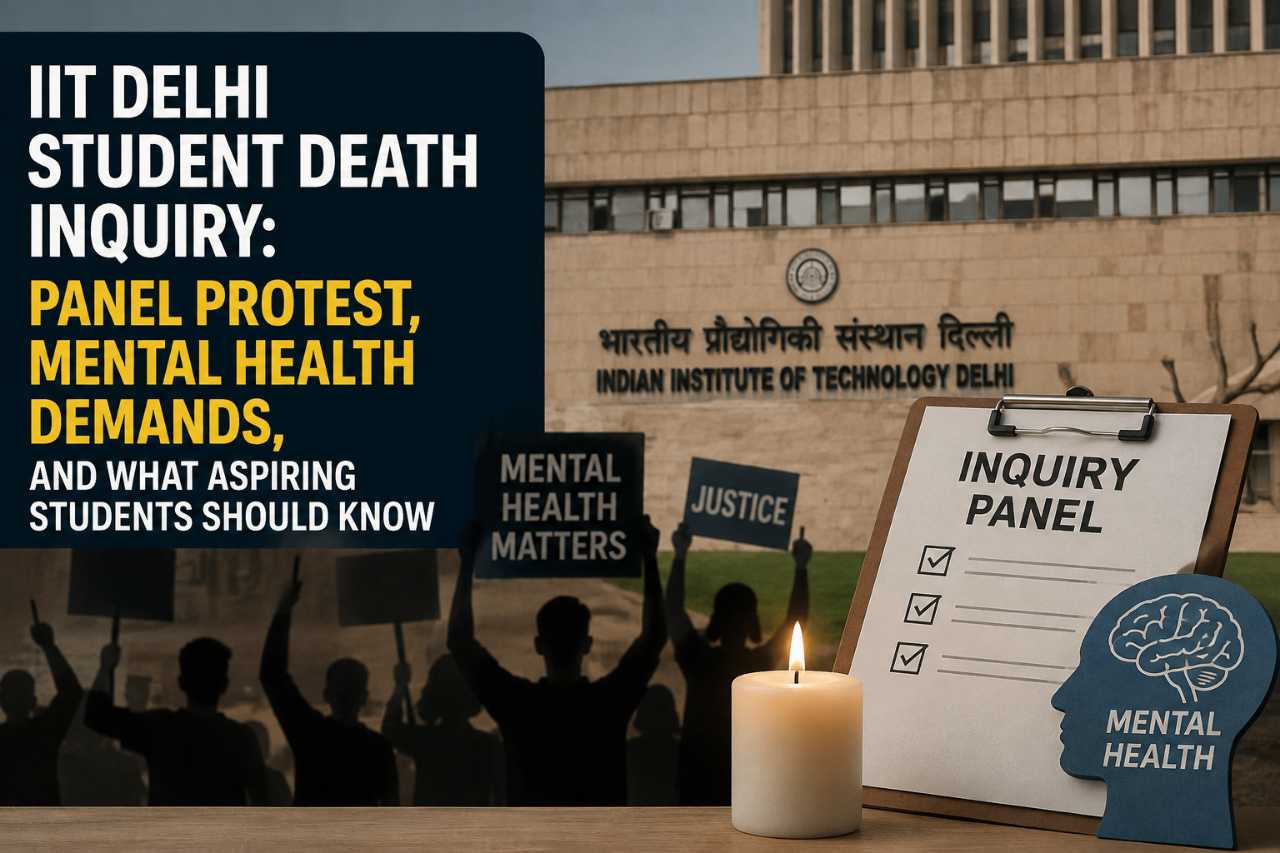
Retired Delhi High Court judge Justice Mukta Gupta will chair the panel, which also includes a senior psychiatrist from All India Institute Of Medical Sciences Delhi AIIMS Delhi and two student representatives. The committee has been asked to submit its report within two weeks. This article explains what the panel will do, why students protested, what parents and applicants should know about welfare systems at IITs and Delhi colleges, and how the broader higher-education ecosystem can respond with accountability and care.
What Happened: IIT Delhi Forms External Panel After Student Death
According to an official notification from IIT Delhi, the institute has set up an independent inquiry committee to examine the events leading to Rishikesh Kumar's death. The move follows sustained protests on campus, a meeting between student representatives and the institute director, and parallel investigations by Delhi Police, who registered a case related to abetment to suicide.
The external panel marks a shift from an earlier internal or semi-internal setup that students had criticised. Protesters had questioned the composition and mandate of the first committee, particularly after concerns were raised about framing the tragedy around a student's medical history rather than institutional response, accommodation hardship, and alleged insensitive conduct by administrators.
Who Is on the IIT Delhi Inquiry Committee?
The reconstituted committee brings together legal expertise, mental-health professionals, and student voices. Its known composition includes:
- Chairperson: Justice Mukta Gupta, retired judge of the Delhi High Court
- Member: Dr Pratap Sharan, Head of the Department of Psychiatry at AIIMS, New Delhi
- Student members: Saket Kumar (MSc Physics) and Vikas Choudhary (MSc Mathematics)
- Secretary and convenor: Atul Vyas, Registrar, IIT Delhi
- Secretarial assistance: Abhishek Kumar and Durvesh Yadav
Students had earlier proposed names including Justice Mukta Gupta, Justice S. Muralidhar, and Justice Asha Menon for an independent committee. The administration's acceptance of Justice Gupta as chairperson and student-nominated members was seen by protesters as a partial but important concession after days of agitation, including cancelled classes and demands for administrative accountability.
What Is the Committee's Mandate and Timeline?
The notification states that the committee will:
- Discuss the matter with relevant students, faculty, and administrative offices
- Review existing protocols and processes related to student welfare
- Make recommendations for institutional improvement
- Submit its report within two weeks
Protesting students, however, have asked for clearer terms of reference. They want the inquiry to explicitly examine alleged insensitive actions by staff and administrators referenced in a statement Rishikesh's mother made to the police. They argue that without examining those allegations, any report risks addressing symptoms rather than root causes.
Why Students Protested: Demands Beyond the Panel
Campus unrest at IIT Delhi did not begin and end with the announcement of a committee. Student groups issued detailed position statements outlining immediate and long-term reforms. Understanding these demands helps parents, counsellors, and future applicants evaluate how seriously an institution treats welfare.
Scope of the Inquiry
Students acknowledged that the director agreed to change the committee chairperson and include student-nominated members. Yet they said the email outlining the mandate did not clearly state whether administrators' conduct would be investigated. They want the panel to evaluate serious allegations made by the student's family and consider accountability of concerned individuals where evidence supports it.
For students at peer institutions such as Delhi Technological University DTU, Netaji Subhas University Of Technology NSUT Delhi, and National Institute Of Technology Delhi NIT Delhi, the IIT Delhi case sets a precedent: when tragedy occurs, students increasingly expect transparent, externally credible investigations rather than closed-door reviews.
Interim Leadership During the Probe
Protesters have called for the appointment of an acting associate dean of hostel management and an acting associate dean for student welfare for the duration of the inquiry. Their reasoning is procedural fairness: officials whose roles may be under scrutiny should not simultaneously oversee day-to-day welfare decisions that affect witnesses and complainants.
Disclosure of Mental Health Protocols
Another core demand is public disclosure of IIT Delhi's mental health support systems and distress-response protocols. Students argue that transparency allows peers to know exactly where to go in a crisis, reduces stigma around help-seeking, and creates benchmarks other Delhi institutions can adopt.
Delhi's higher-education landscape includes large residential campuses, commuter colleges, and specialised institutes. Whether a student attends Indraprastha Institute Of Information Technology Delhi IIIT Delhi, St Stephens College Delhi, or Hindu College Delhi, knowing how counselling, hostel wardens, faculty advisors, and emergency helplines connect is essential.
Compensation and Economic Hardship
Students have also highlighted compensation for Rishikesh Kumar's family as an urgent issue. Their statement refers to an administration proposal involving benevolent funds, medical expense coverage, and a fundraiser targeting around Rs 1 crore. Protesters want the institute to coordinate fundraising actively, share a timeline, and commit to bridging any shortfall if the target is not met.
They linked this demand to what they described as the student's economic precarity and the hardship of finding accommodation outside campus. Hostel seat shortages at top institutes are not unique to IIT Delhi; they affect many government and private colleges across the capital. Families comparing options among Jamia Millia Islamia New Delhi, Kirori Mal College Delhi, and engineering schools should ask about guaranteed housing, subsidised mess charges, and emergency financial aid before admission—not after a crisis.
IIT Delhi at a Glance: Context for Aspirants and Parents
IIT Delhi consistently ranks among India's top engineering institutes for undergraduate B.Tech programmes through JEE Advanced and postgraduate programmes including MSc through GATE. The Hauz Khas campus hosts thousands of residential students across UG, PG, and research programmes. Prestige, research output, and placement records attract applicants from every state—but the Rishikesh Kumar case has shifted public conversation toward what happens after the admission letter arrives.
MSc Physics and MSc Mathematics scholars like those represented on the inquiry committee often live in a different welfare ecosystem than undergraduate batchmates. Stipend-based funding, shared research labs, and variable hostel allotment policies create distinct stress profiles. Parents comparing IIT Delhi with Delhi Institute Of Technology or Delhi Technical Campus should ask programme-specific questions about PG housing, not assume UG hostel guarantees apply uniformly.
Quick Comparison: What to Evaluate Across Delhi Tech Institutes
| Factor | What to Ask | Why It Matters |
|---|---|---|
| Hostel guarantee | Is a seat assured for your year and programme? | Off-campus rent adds financial and mental strain |
| Counselling access | How many full-time counsellors serve your campus? | Low ratios mean long wait times in crises |
| Grievance channel | Is there an independent redressal officer? | Department-led complaints may feel biased |
| Emergency SOP | Is the distress-response protocol published online? | Students should know steps before they need them |
| Financial aid | Are benevolent funds and emergency grants documented? | Economic precarity worsens academic pressure |
Timeline of Key Developments in the IIT Delhi Case
Understanding the sequence of events helps readers separate verified institutional actions from ongoing demands still under negotiation.
- Student death and campus grief: The tragedy involving Rishikesh Kumar, an MSc Physics scholar, prompted mourning, questions, and initial administrative response.
- Protests and class disruptions: Students organised demonstrations, questioned early inquiry framing, and called for leadership accountability.
- Police registration: Delhi Police registered a case related to abetment to suicide, adding a criminal investigation track.
- First panel controversy: Objections to committee composition—including concerns over framing around medical history—led to demands for restructuring.
- Director-student meeting: Negotiations produced agreement on a new chairperson and student-nominated members.
- External panel notification: Justice Mukta Gupta was named chair; AIIMS psychiatry head and two MSc students joined; two-week deadline set.
- Ongoing demands: Clearer terms of reference, acting deans, protocol disclosure, and family compensation remain active student priorities.
Campus Mental Health at IITs and Delhi Colleges: What the Data and Debate Show
Engineering and science institutes in India combine intense coursework, competitive grading, research pressure, and—for many students—first-time separation from family. MSc and PhD scholars face additional layers: funding uncertainty, publication demands, advisor relationships, and limited social networks.
Common Stress Triggers for Higher-Year and PG Students
- Academic load: Back-to-back assignments, qualifying exams, and lab deadlines
- Financial strain: Stipend delays, rent for off-campus rooms, family expectations
- Isolation: Moving to a new city without local support systems
- Administrative friction: Hostel rules, leave approvals, documentation for medical or personal emergencies
- Stigma: Fear that seeking counselling will affect evaluations or reputation
Institutions such as Indira Gandhi Delhi Technical University For Women, Lady Shri Ram College For Women LSR Delhi, and Miranda House Delhi have expanded counselling cells and peer-support programmes in recent years, but capacity and awareness remain uneven nationwide.
What Good Welfare Infrastructure Looks Like
Experts in college mental health—including psychiatrists at centres like AIIMS—often recommend a layered model:
- Primary support: Hostel wardens and faculty advisors trained in basic distress recognition
- Professional counselling: On-campus or tie-up counsellors with confidential appointments
- Clinical referral: Formal links with hospitals such as AIIMS Delhi or Vardhman Mahavir Medical College New Delhi VMMC Delhi
- Crisis protocol: 24/7 helplines, emergency room pathways, and post-crisis follow-up
- Policy clarity: Published SOPs on leave, re-examination, and anti-harassment redressal
IIT Delhi has publicly reaffirmed commitment to student well-being and sought suggestions on mental health support, including engagement with external counsellors. The external panel's review of protocols will test whether those commitments translate into documented, auditable systems.
Legal and Police Dimensions: Abetment Case and Institutional Inquiry
Parallel to the institute's committee, Delhi Police registered a case related to abetment to suicide. Criminal investigation and administrative inquiry serve different purposes but often overlap in public discourse.
An institutional panel typically recommends policy fixes, administrative action, and cultural changes. Police investigation focuses on whether specific offences under applicable criminal law provisions are substantiated. Families and students understandably want both tracks to proceed without one undermining the other.
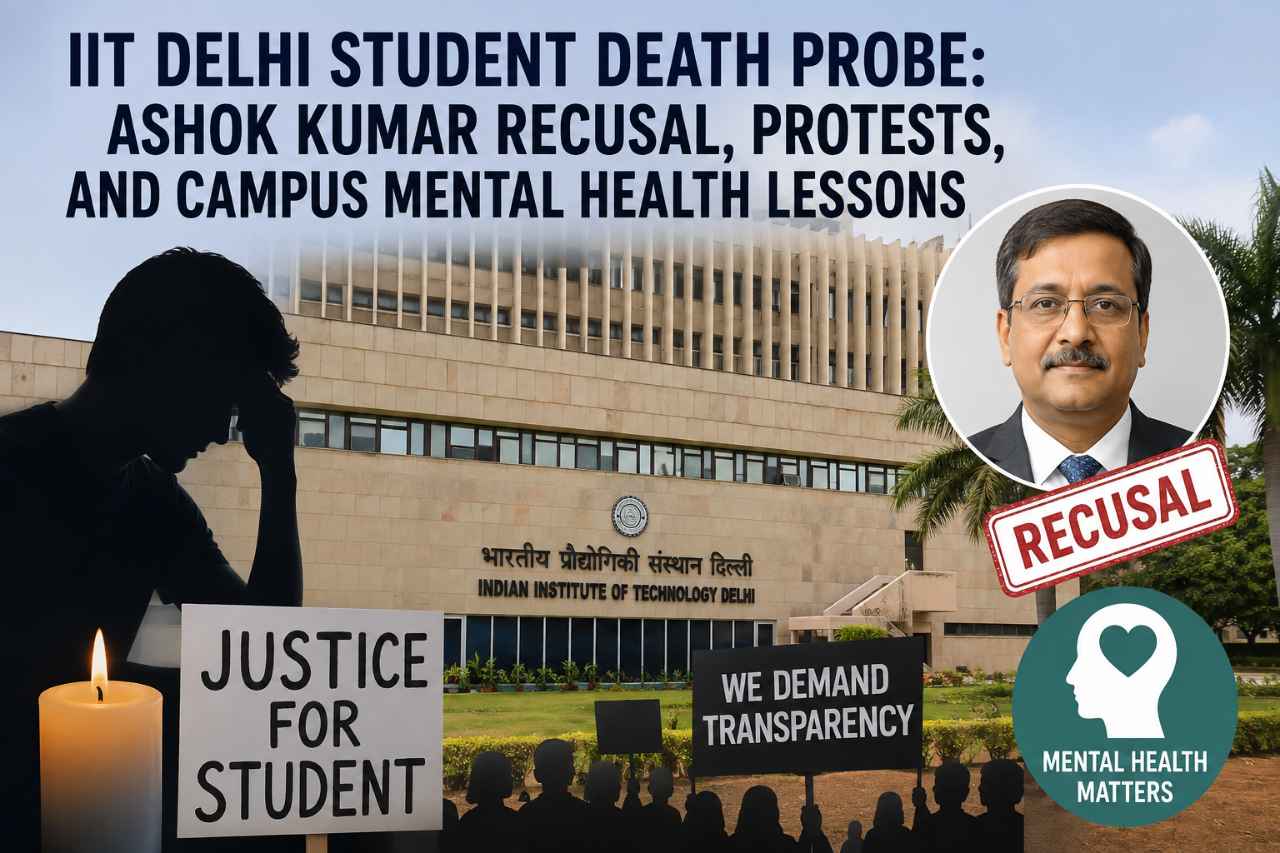
Former Uttarakhand DGP Ashok Kumar, who had initially been associated with an earlier probe setup, subsequently stepped down from the panel after student objections—illustrating how perceived conflicts of interest can erode trust even when individuals carry distinguished records.
What Aspiring Students and Parents Should Ask Before Choosing a College
Rankings and placement packages dominate admission season conversation. The IIT Delhi tragedy underscores that welfare infrastructure deserves equal weight in college selection, especially for students moving far from home.
Checklist for Campus Safety and Support
- Is on-campus hostel accommodation guaranteed for your programme and year?
- What is the student-to-counsellor ratio, and are sessions confidential?
- Is there a published grievance redressal mechanism independent of department heads?
- How does the institute handle medical leave, mental-health leave, and re-examination?
- Are there peer-support or mentorship programmes for first-year and PG students?
- What financial aid, benevolent funds, or emergency grants exist?
Students weighing Maulana Azad Medical College MAMC Delhi, University College Of Medical Sciences UCMS Delhi, or management institutes like Indian Institute Of Foreign Trade IIFT Delhi and Fore School Of Management Delhi should apply the same checklist. Medical and professional courses carry their own intensity; support systems must match that pressure.
Role of Families and Schools in Transition Planning
Class 11 and 12 coaching culture often normalises exhaustion. When students arrive at IITs or central universities, sudden autonomy without coping skills can be disorienting. Parents can help by:
- Discussing realistic academic expectations before JEE Advanced or GATE results
- Encouraging help-seeking as strength, not weakness
- Keeping open communication channels after hostel move-in
- Researching local support at the destination city—Delhi NCR alone hosts dozens of reputable colleges from Hansraj College Delhi to Ramjas College Delhi
Delhi as an Education Hub: Welfare Lessons for All College Types
Delhi NCR is home to central universities, IITs, NITs, medical institutes, and dozens of DU-affiliated colleges. The welfare debate at IIT Delhi resonates across this ecosystem because similar structural gaps—counsellor shortages, opaque hostel rules, and stigma around mental health—affect many campuses.
Women's colleges such as Indraprastha College For Women Delhi, Jesus And Mary College Delhi, and Kamala Nehru College Delhi often provide strong peer communities that buffer stress, yet commuter students face long travel hours and safety concerns that require institution-city coordination. Mixed campuses like Deshbandhu College Delhi and Dyal Singh College Delhi must ensure non-residential students know where to access counselling outside hostel-based networks.
Medical aspirants comparing AIIMS Delhi with All India Institute Of Medical Sciences Rishikesh should note that psychiatry departments at leading hospitals often partner with nearby universities on student referrals—a model IIT Delhi's inclusion of Dr Pratap Sharan from AIIMS reflects at the inquiry level and could reinforce at the welfare level if recommendations are implemented.
Actionable Tips for First-Year Students Joining Delhi Campuses
- Attend orientation sessions on counselling services even if you feel fine—knowing locations and hours prevents panic later.
- Join one society or peer group in the first month; isolation is a modifiable risk factor.
- Keep a shared document with parents listing warden, advisor, and emergency numbers.
- If placed off-campus, budget for rent, commute, and meals realistically; financial shock triggers distress.
- Report insensitive remarks by staff through formal channels; patterns left unreported rarely self-correct.
Management aspirants evaluating Delhi School Of Management or Delhi Metropolitan Education should apply identical scrutiny: corporate-style programmes market leadership and resilience, but institutional kindness in administrative interactions matters just as much as case-study rigour.
Broader Implications for Indian Higher Education Policy
The Rishikesh Kumar case joins a growing list of campus tragedies that have pushed UGC, IIT Council, and individual institutes to revisit mental health guidelines. National conversations now include mandatory counselling hours, faculty sensitisation, and anti-discrimination policies.
Why External Inquiries Matter for Credibility
When institutions investigate themselves without external oversight, findings—however fair—may be viewed skeptically by students and the public. Retired judges, independent medical experts, and elected student representatives signal a willingness to accept scrutiny. Other IITs and NITs watching IIT Delhi may adopt similar templates if the two-week report is substantive and acted upon.
Hostel Capacity and Off-Campus Housing Risk
A recurring theme in student statements is off-campus accommodation. Rent burden, long commutes, and loss of peer community can amplify stress. Institutes expanding intake without proportional hostel investment push vulnerable students into unstable housing markets. Delhi's college belt—from Gargi College Delhi to Acharya Narendra Dev College Delhi—faces similar pressures during admission spikes.
Moving from Crisis Response to Prevention
Inquiry committees respond to tragedy. Prevention requires continuous investment: hiring counsellors, training wardens, tracking anonymised wellness metrics, and integrating mental health literacy into orientation week. Management schools such as International Management Institute IMI Delhi and New Delhi Institute Of Management increasingly teach leadership ethics; technical institutes must treat student care with comparable seriousness.
What Happens Next: Timeline and Possible Outcomes
Within the announced two-week window, the committee is expected to gather testimony, review documents, and draft recommendations. Possible outcomes include revised hostel and welfare SOPs, disciplinary recommendations, expanded counselling capacity, and a compensation framework endorsed by the institute.
Students have indicated they will continue monitoring whether recommendations are implemented, not merely published. For applicants tracking GATE counselling dates or cutoffs at Delhi engineering institutes, staying informed about welfare reforms is as relevant as tracking admission statistics. Colleges such as Atma Ram Sanatan Dharma College Delhi, Daulat Ram College Delhi, and Deen Dayal Upadhyaya College Delhi may not face identical scrutiny, but students there benefit when flagship institutes model transparent accountability.
Conclusion: A Pivotal Moment for IIT Delhi and Indian Campuses
IIT Delhi's decision to form an external panel led by Justice Mukta Gupta, with psychiatric expertise from AIIMS and student representation, responds to a campus crisis that no ranking table or placement statistic can overshadow. The death of Rishikesh Kumar has become a focal point for debates on mental health, administrative sensitivity, hostel policy, and institutional accountability.
For students preparing for JEE, GATE, or Delhi University admissions, the lesson is clear: choose institutions not only for academic prestige but for documented welfare systems you can rely on in difficult moments. For IIT Delhi, the next two weeks will determine whether this inquiry rebuilds trust or deepens skepticism. For Indian higher education as a whole, the case is a call to treat student well-being as a core institutional responsibility—not an optional add-on after tragedy strikes.
Disclaimer: This article is intended for general informational purposes for students and parents exploring higher education in India. It is not legal advice. Facts are based on publicly reported information as of August 27, 2026.